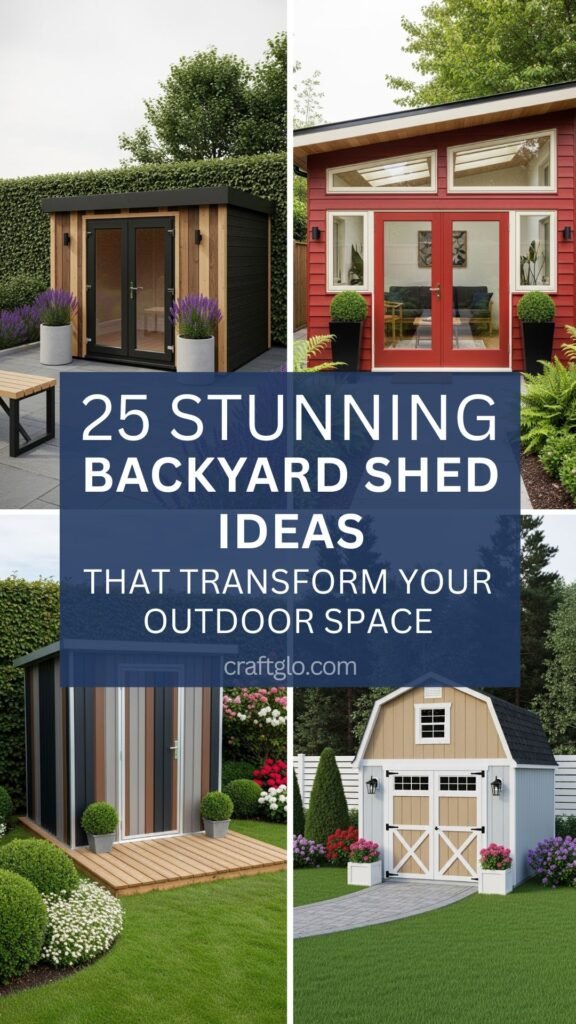
The Utility Hook
The backyard shed is no longer just a dusty graveyard for rusty lawnmowers and forgotten holiday decorations. In 2026, the humble shed has evolved into a high-value extension of the home. Homeowners are increasingly turning these structures into dedicated creative studios, home offices, and serene retreats to escape the noise of daily life. This shift is driven by a need for versatile living space without the massive cost of a full home addition. Whether you need a functional storage solution or a “she shed” sanctuary, the right design can increase your property value and improve your lifestyle. Below, we explore 25 specific designs that blend aesthetics with practicality.
Key Takeaways
- Versatility is King: Modern sheds serve dual purposes, functioning as both storage units and livable rooms like offices or gyms.
- Material Matters: Choosing between wood, metal, and resin affects not just the look but the long-term maintenance and durability of your structure.
- Curb Appeal: A well-designed shed acts as a focal point in your garden, using color and architectural details to enhance your landscape design.
- DIY Potential: Many of these looks can be achieved with prefabricated kits or weekend DIY projects using reclaimed materials.
Table of Contents
- Stylish Metal Shed Retreat
- Charming Cottage Hideaway
- The Ultimate Backyard Bungalow
- Sleek Modern Storage Oasis
- Quaint Corrugated Sanctuary
- The Cozy Timber Box
- A Stylish Shed with a Cool Twist
- The Hip Little Hideout
- Serene Garden Escape
- A Splash of Color Shack
- Tiny Fortress in the Green
- A Rustic Haven Amidst Greenery
- Minimalist Chic Outdoor Shelter
- The Little Blue Wonder Hut
- The Boldly Minimalist Box
- The Secret Lumber Locker
- The Whimsical White Haven
- The Striped Haven in the Woods
- A Charming Outpost of Calm
- The Dapper Shingle Chateau
- Compact Zen Zone
- The Bright Blue Blossom Shed
- The Timbered Toy Box
- The Barnyard Bliss Box
- The Pint-Sized Palace
- Popular Asked Questions
- Conclusion
Stylish Metal Shed Retreat
Industrial design meets backyard comfort in this trend-setting structure. The use of galvanized steel siding offers a sleek, monochromatic look that contrasts beautifully with soft garden greenery. Unlike traditional wooden structures that may rot over time, metal offers superior resistance to pests and fire. The interior often features polished concrete floors and exposed beams, creating a raw yet refined studio space. To soften the harshness of the metal, designers often incorporate large glass sliding doors that flood the space with natural light.
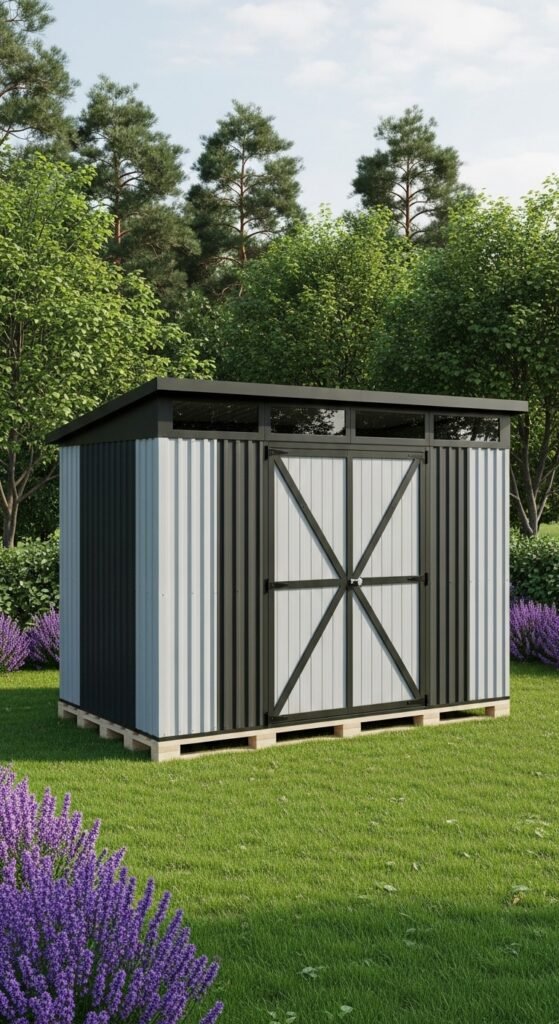
This aesthetic works particularly well in modern or xeriscaped gardens where clean lines are prioritized. You can accessorize the exterior with magnetic planters or string lights to add warmth. Inside, insulating the metal walls is crucial if you plan to use it as a workspace during colder months.
Pro Tip: Apply a clear matte sealant to the exterior metal to prevent rust while maintaining that desirable industrial sheen.
Charming Cottage Hideaway
This design brings the storybook aesthetic of the English countryside right to your property. Characterized by a steep pitched roof, scalloped trim, and a welcoming front door painted in soft pastels, this shed is as decorative as it is functional. The exterior usually features clapboard siding and window boxes overflowing with geraniums or petunias. It serves perfectly as a potting shed or a quiet reading nook.
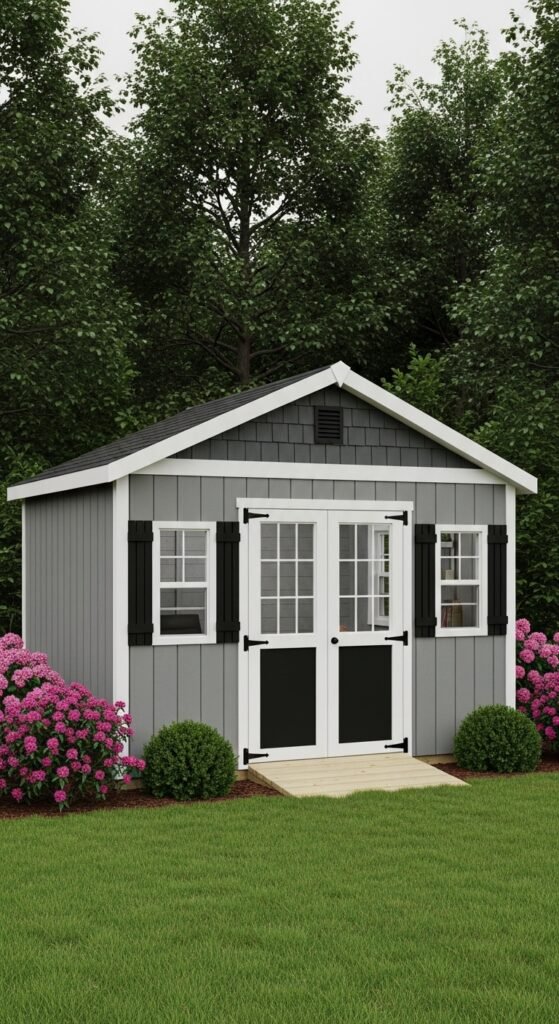
The key to this look is in the details. Vintage hardware, such as iron hinges and crystal doorknobs, elevates the structure from a simple box to a miniature house. Inside, beadboard walls and open shelving provide storage for gardening tools without sacrificing style. The flooring is often brick or reclaimed wood, which handles muddy boots well while adding rustic charm.
Pro Tip: Install a small skylight or cupola to improve air circulation and keep your plants healthy during hot summers.
The Ultimate Backyard Bungalow
For those seeking a true extension of their living area, the backyard bungalow offers a mini-home experience. This substantial structure often includes a small front porch complete with railing and space for a rocking chair. It mimics the architectural style of the main house, using matching siding and roofing materials to create a cohesive property flow. This is the ideal setup for a guest suite or a dedicated home office that feels entirely separate from domestic distractions.
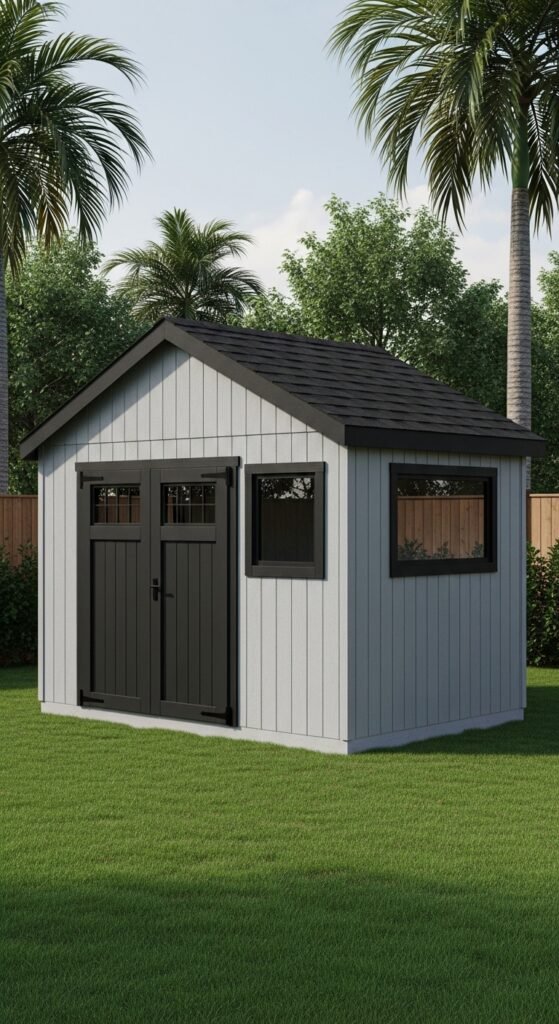
The interior is typically finished with drywall and electrical wiring, allowing for all the comforts of home, including heating and cooling. Large windows are essential here to prevent the space from feeling claustrophobic. Furnishing it with a daybed and a small desk transforms it into a multi-functional room that adds tangible square footage to your property appraisal.
Pro Tip: Extend the roofline over the porch by at least three feet to create a usable dry zone for removing shoes or enjoying a rainy afternoon.
Sleek Modern Storage Oasis
Minimalism defines this storage solution, which prioritizes function without clutter. The design features a flat or single-slope roof and smooth exterior cladding, often in charcoal, black, or deep cedar tones. The doors are frequently hidden or designed to blend seamlessly with the siding, creating a monolithic appearance. This style is perfect for urban backyards where space is tight and visual noise needs to be minimized.
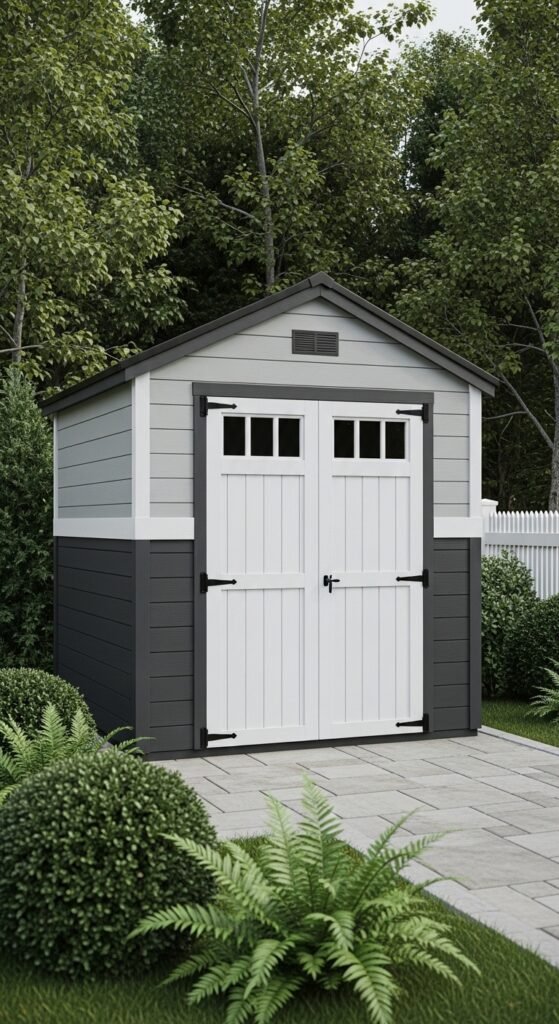
Inside, the organization is paramount. Vertical slat walls allow for adjustable shelving and hooks, maximizing every inch of vertical space. This is an excellent choice for storing bikes, kayaks, or modern lawn equipment. The lack of ornamental overhangs means it can be placed closer to fences or property lines, adhering to setback regulations while maximizing yard space.
Pro Tip: Use horizontal slat fencing around the base to hide the foundation and integrate the shed into your patio design.
Quaint Corrugated Sanctuary
This style embraces the “wabi-sabi” aesthetic, finding beauty in imperfection and age. Corrugated metal sheets, often reclaimed or allowed to naturally patina, form the skin of this unique shed. It evokes a sense of nostalgia, reminiscent of old farm outbuildings but scaled down for a residential setting. The rust and grey tones of the metal pair exceptionally well with native grasses and wildflower gardens.
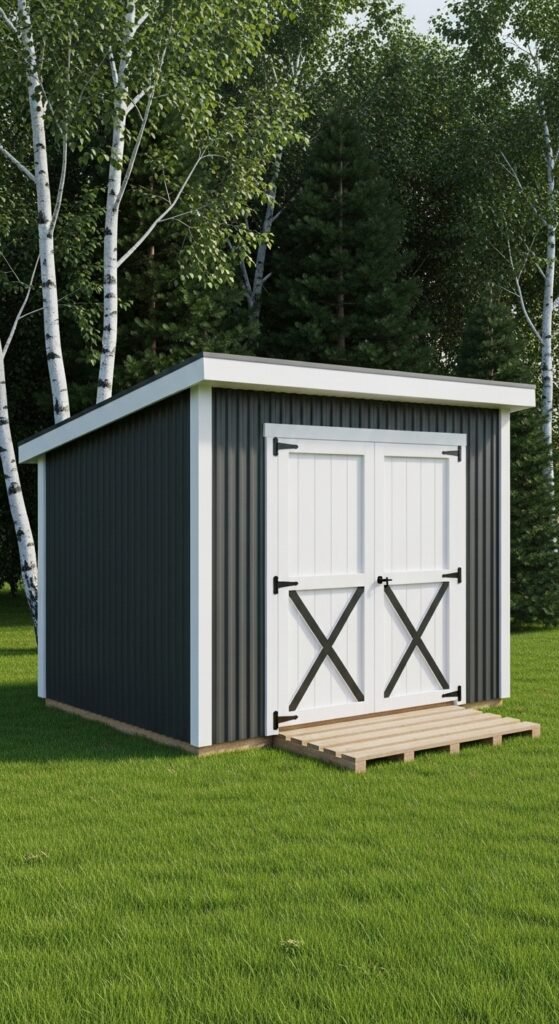
While the exterior looks weathered, the interior can be surprisingly modern and watertight. High-quality insulation behind the corrugated panels ensures the space remains temperate. This type of shed is often used as an art studio, where the rustic exterior inspires creativity. Large, salvaged windows are a common feature, bridging the gap between the indoors and the natural world outside.
Pro Tip: Save this idea to your Pinterest if you love upcycling. Use a rust converter primer on the interior side of the metal to stop corrosion from eating through to your insulation.
The Cozy Timber Box
Celebrating the natural beauty of wood, the Timber Box uses vertical cedar or pine siding left in its natural state or sealed with a clear coat. The focus here is on texture and grain. Over time, the wood may weather to a silvery grey, allowing the structure to disappear into a wooded backyard. This design is warm and inviting, often featuring a simple lean-to roof that directs rainwater away from the entrance.
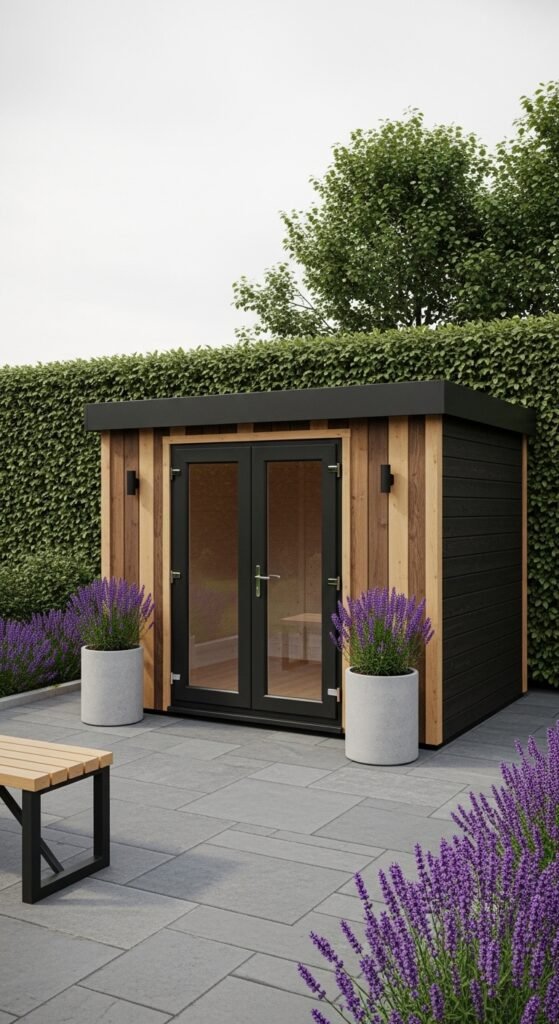
The interior is a sensory experience, often smelling of fresh cedar. It is a popular choice for saunas or meditation rooms. Because wood is a natural insulator, it stays cooler in summer and warmer in winter compared to metal. Large timber beams may be left exposed on the ceiling to enhance the cabin-like atmosphere.
Pro Tip: Use a UV-protective oil stain every two years to maintain the rich color of the wood and prevent it from turning grey if you prefer the “new wood” look.
A Stylish Shed with a Cool Twist
This design breaks the mold with asymmetrical architecture. The roofline might pitch dramatically to one side, or the floor plan might be a trapezoid to fit a quirky corner of the yard. The “twist” often comes from a bold pop of color on the door—think electric blue or canary yellow—set against a neutral background. It is a statement piece that says the owner cares about design and isn’t afraid to take risks.
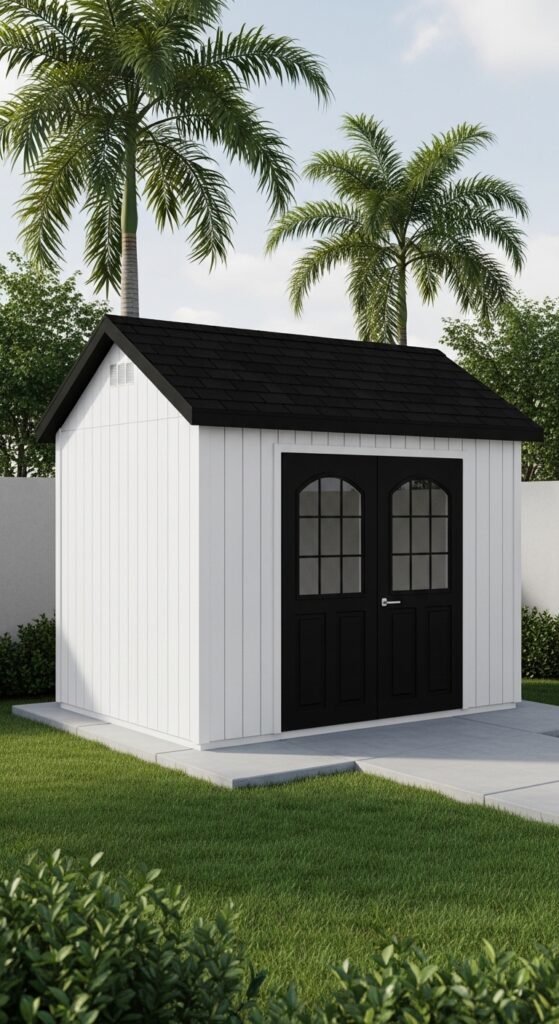
Functionally, the high side of the roof allows for transom windows, which let in light without sacrificing privacy. This is ideal for suburban neighborhoods where you want sunlight but don’t want neighbors peering in. The interior layout is often open-concept, allowing for flexible use as hobbies change over time.
Pro Tip: Install a rain chain instead of a traditional downspout to turn rainwater drainage into a kinetic water feature.
The Hip Little Hideout
Bohemian flair meets backyard utility in this relaxed retreat. The structure itself might be simple, but the styling is eclectic and layered. Think macramé plant hangers, vintage rugs covering the floor, and low seating like bean bags or poufs. The exterior is often painted in earthy terracotta or sage green hues. It is the ultimate “chill zone” for teenagers or a creative writing spot for adults.
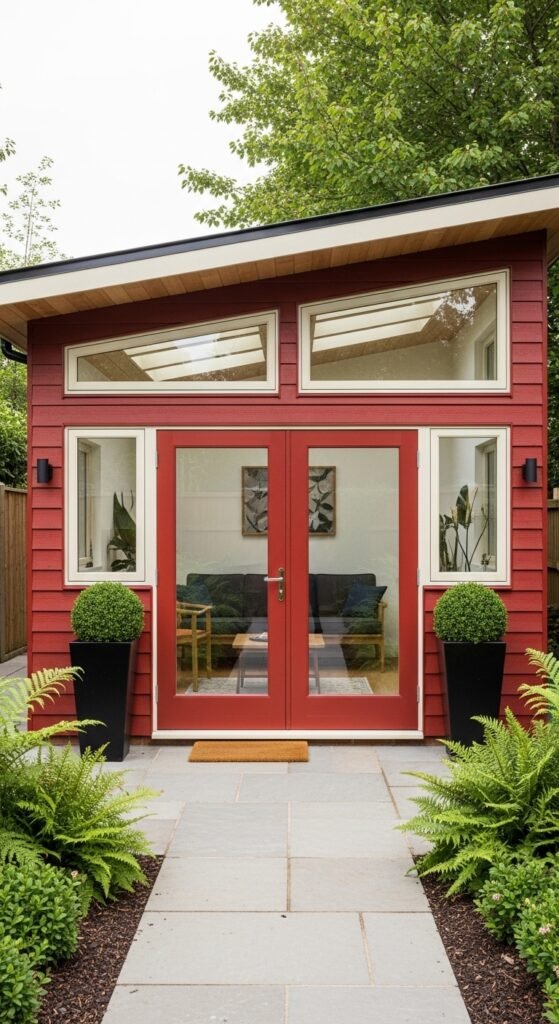
The construction often prioritizes airflow, with large double doors that can be flung open to merge the indoor space with the garden. A small deck or gravel patio in front extends the footprint. String lights are mandatory here, draped generously inside and out to create a magical nighttime ambiance.
Pro Tip: Use solar-powered lanterns and string lights to avoid the hassle and expense of running underground electricity to the shed.
Serene Garden Escape
Designed for the avid gardener, this shed blurs the line between a storage unit and a greenhouse. At least one wall or roof section is made of polycarbonate or tempered glass, creating a sun-drenched interior perfect for starting seeds or overwintering tropical plants. The exterior usually features a potting bench built directly under a window, allowing for easy access to tools and soil.
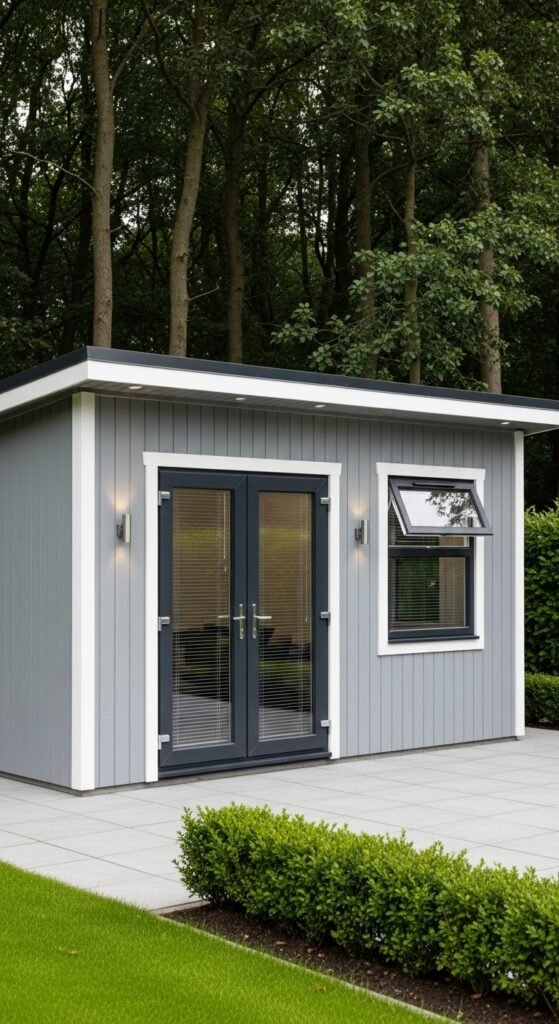
The interior organization is specific to gardening needs: open slat shelves for airflow, hooks for hanging dried herbs, and a durable stone or dirt floor that can be hosed down. It is a working building that manages to look beautiful. The glass elements reflect the surrounding greenery, making the structure feel lighter and less obtrusive.
Pro Tip: Install an automatic vent opener on the roof windows. These wax-filled cylinders expand in the heat to open the vent and prevent your plants from cooking on hot days.
A Splash of Color Shack
For those who find traditional beige and brown boring, this shed is a joyful rebellion. The entire structure is painted in a vibrant hue—teal, coral, or sunflower yellow. It acts as a piece of large-scale garden art. To keep it from looking tacky, the architectural lines are usually kept very simple and clean. The color does all the talking.
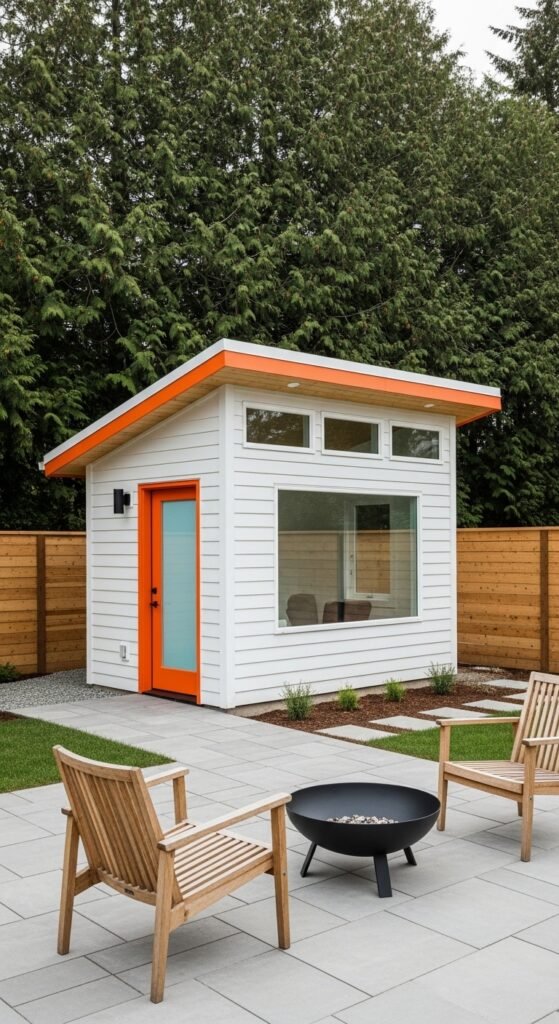
This high-visibility design is great for families with young children, as it can double as a playful clubhouse. Inside, the decor matches the energy of the exterior, with bright shelving and fun patterns. It is a fantastic way to brighten up a shady corner of the yard where flowers might struggle to grow.
Pro Tip: When painting a shed a bright color, use a high-quality exterior paint with a built-in primer to ensure the color stays saturated and doesn’t peel after one season.
“Get The Look” Essentials
Want to transform a basic shed into a custom retreat? Here are the tools and items you need:
- The Power Trio: A cordless drill, a circular saw, and a level are the backbone of any shed modification.
- Organization: Heavy-duty magnetic strips are perfect for holding metal tools against the wall, saving shelf space.
- Lighting: Battery-operated LED sconces provide a high-end look without the need for an electrician.
- Flooring: Interlocking vinyl floor tiles are moisture-resistant, easy to install, and instantly upgrade the feel of the room.
Tiny Fortress in the Green
Security and durability are the hallmarks of this robust design. Built with stone veneer or reinforced concrete blocks, this shed looks like a permanent fixture of the landscape. It is often covered in climbing ivy or creeping fig, which softens the hard stone edges and integrates the structure into the garden. This “ruin” aesthetic is timeless and adds a sense of history to the property.
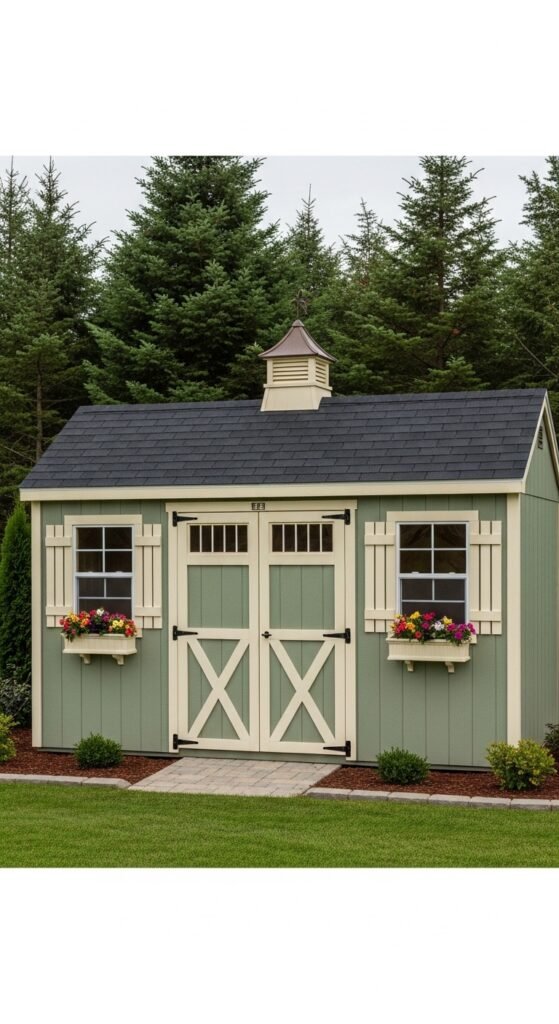
The thick walls provide excellent thermal mass, keeping the interior cool in summer and stable in winter. It is the perfect place for storing temperature-sensitive items like wine or paint. The door is usually heavy solid wood with iron strapping, reinforcing the fortress vibe.
Pro Tip: Plant “Boston Ivy” for rapid coverage, but be sure to trim it away from windows and roof vents to prevent moisture trapping.
A Rustic Haven Amidst Greenery
This shed is designed to look like it grew out of the forest floor. It utilizes rough-sawn lumber, live-edge siding, and perhaps a living roof planted with sedums and moss. The goal is camouflage. It is the antithesis of the modern, sleek box. This style appeals to nature lovers who want their man-made structures to bow to the beauty of the natural environment.
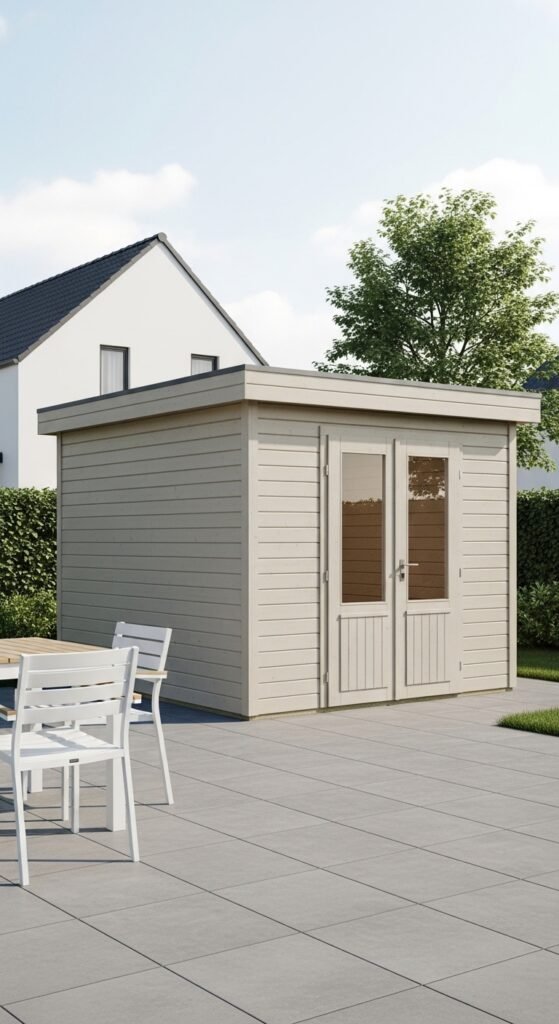
Inside, the theme continues with exposed framing and plywood walls that can be stained rather than painted. It’s a rugged space, ideal for a woodworking shop or a place to repair bicycles. The natural materials age gracefully, meaning the shed actually looks better ten years down the line than it does on day one.
Pro Tip: Save this idea to your Pinterest. If you opt for a green roof, ensure your roof framing is reinforced to handle the significant extra weight of wet soil and plants.
Minimalist Chic Outdoor Shelter
Taking cues from Scandinavian design, this shed features stark white or light grey vertical siding, a simple black door, and absolutely no unnecessary ornamentation. The beauty lies in the proportions and the negative space. It creates a calming visual break in a busy, colorful garden.
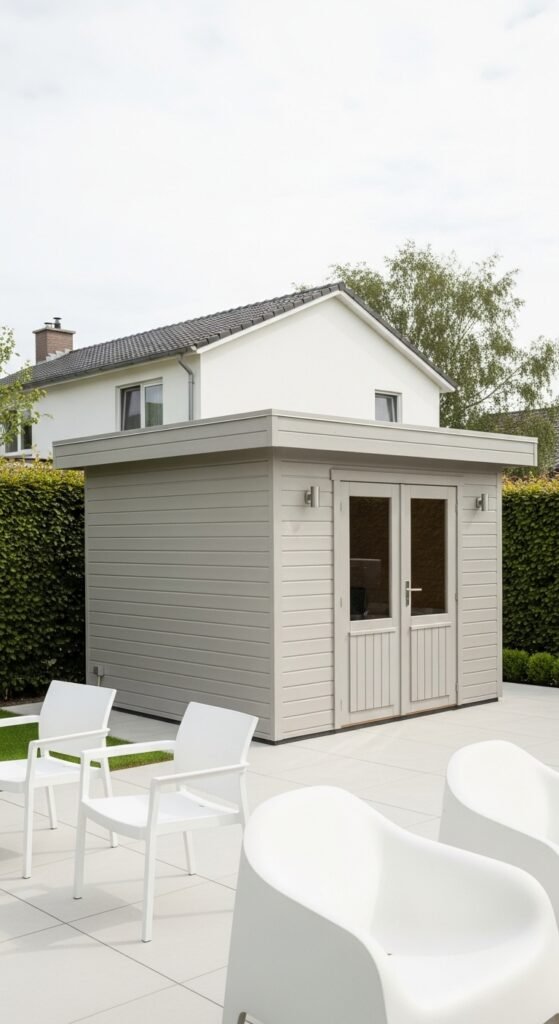
The interior is often finished like a high-end room, with drywall, white paint, and pale wood floors. It is frequently used as a yoga studio or a quiet home office. The furniture is kept to a minimum—a single desk, a chair, and a floating shelf. The lack of clutter promotes focus and tranquility.
Pro Tip: Use “hidden” gutters integrated behind the fascia board to maintain the ultra-clean lines of the roof.
The Little Blue Wonder Hut
A nautical theme drives this charming design. Painted in a deep navy or maritime blue with crisp white trim, it evokes the feeling of a seaside changing hut or a boat house. A round “porthole” window is a signature feature that adds character and reinforces the theme.
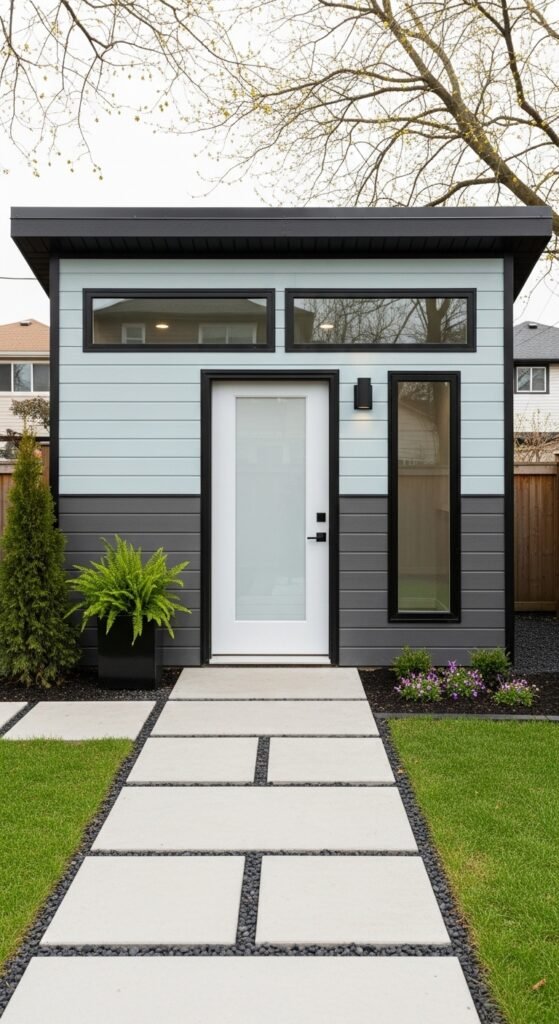
This style is particularly popular in coastal areas or for sheds located near a pool. Inside, moisture-resistant materials are key. Beadboard made from PVC or treated wood resists humidity and looks classic. Hooks for towels and storage for pool noodles make it a highly functional addition to a swimming area.
Pro Tip: Use brass exterior light fixtures. They will patina to a beautiful verdigris color over time, enhancing the nautical aesthetic.
The Boldly Minimalist Box
This is the shed for the ultra-modernist. It is often a perfect cube, clad in matte black fiber cement panels or charred wood (Shou Sugi Ban). There is no roof overhang; the water drains via an internal slope. A single, floor-to-ceiling window creates a dramatic connection with the outdoors, turning the view of the garden into a living painting.
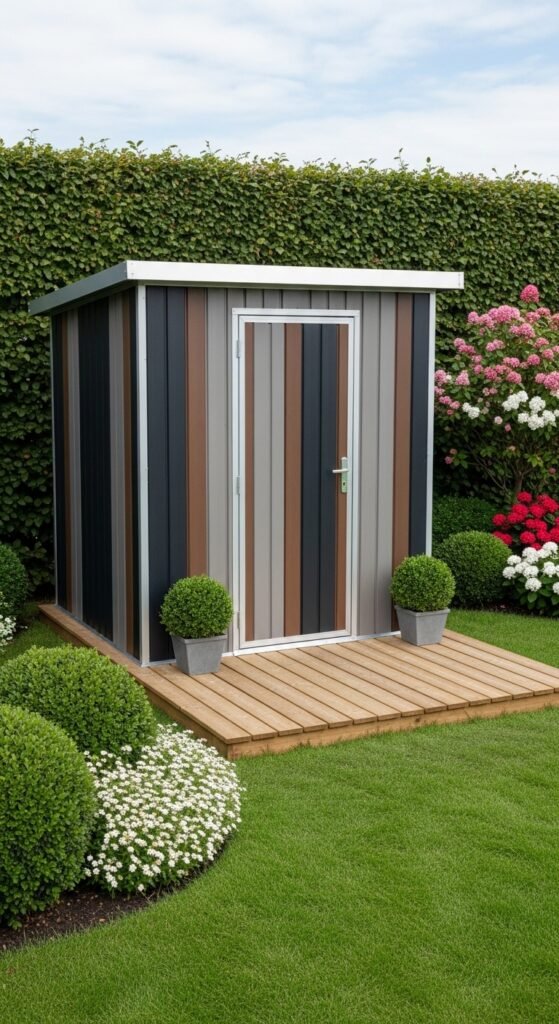
The interior is often painted dark as well, creating a cozy, womb-like atmosphere that is surprisingly conducive to concentration. It serves well as a recording studio or a coding cave. The dark exterior absorbs heat, so active ventilation is required in warm climates.
Pro Tip: Shou Sugi Ban (charred wood) is not just an aesthetic choice; the charring process makes the wood fire-resistant and rot-resistant without chemicals.
Pro Tip: Climate Control for Sheds
If you plan to use your shed as a workspace year-round, insulation is not optional.
- Floor: Insulate the floor before you build the walls. Rigid foam blocks between the floor joists are the most effective method.
- Walls: Rockwool batting is superior to fiberglass as it is moisture-resistant and rodent-resistant.
- Ventilation: A solar-powered roof fan can lower the internal temperature by 15 degrees in the summer with zero electricity costs.
The Secret Lumber Locker
Designed specifically for makers and woodworkers, this shed prioritizes the storage of long materials. The exterior often features a long, horizontal profile with multiple doors to allow easy loading of lumber and pipes. The design is utilitarian but handsome, often using horizontal wood slats that allow for natural ventilation—crucial for drying wood.
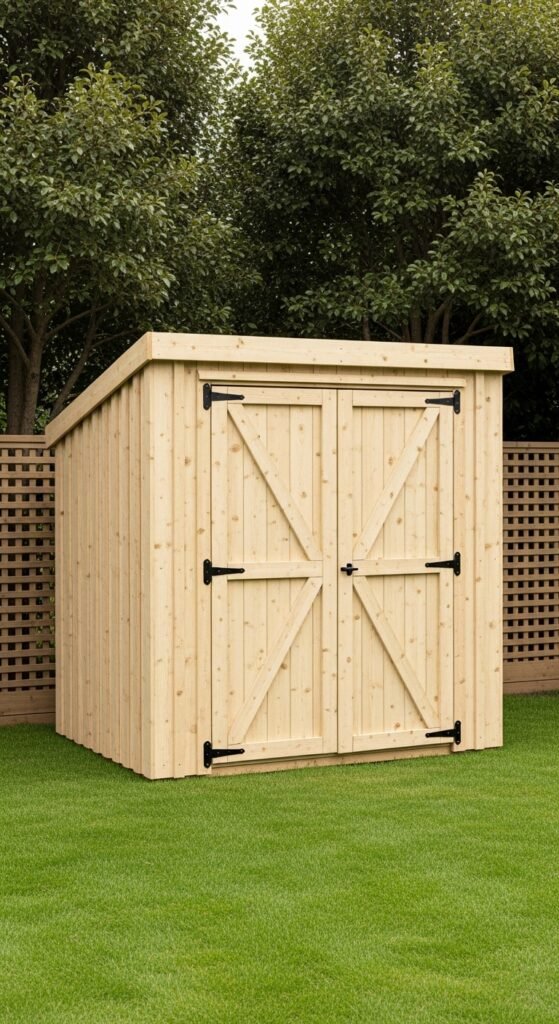
Inside, cantilevered racks line the walls, holding boards off the ground. A chop saw station is usually built into the longest wall. It is a workshop first and a building second, but the orderly storage of materials creates its own kind of industrial beauty.
Pro Tip: Install a “lumber door” or a small hatch on the end wall. This allows you to slide in 12-foot boards without trying to navigate them through the main door.
The Whimsical White Haven
Inspired by the “She Shed” movement, this structure is a feminine, dreamy escape. Painted entirely white—walls, trim, and even the roof shingles—it looks like a cloud grounded in the garden. Vintage architectural salvage, such as old french doors or decorative corbels, gives it a sense of age and romance.
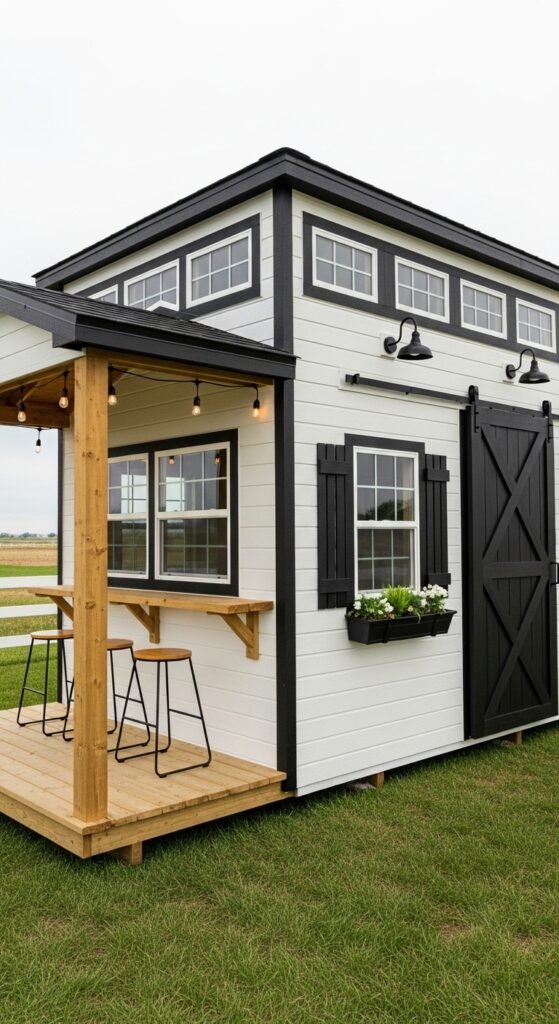
The interior is a textural wonderland: sheepskin rugs, linen curtains, and a crystal chandelier hanging from the rafters. It is a space for tea, reading, or crafting. The white palette reflects light, making even a small 8×10 shed feel spacious and airy.
Pro Tip: Use high-gloss paint on the exterior trim. It contrasts beautifully with matte siding and is easier to wipe clean of dirt and spiderwebs.
The Striped Haven in the Woods
Playfulness is the defining characteristic here. The siding is painted in alternating horizontal stripes, perhaps grey and white or two shades of green. This optical illusion can make a narrow shed look wider or a short shed look taller, depending on the orientation of the stripes. It feels like a beach cabana transported to the backyard.
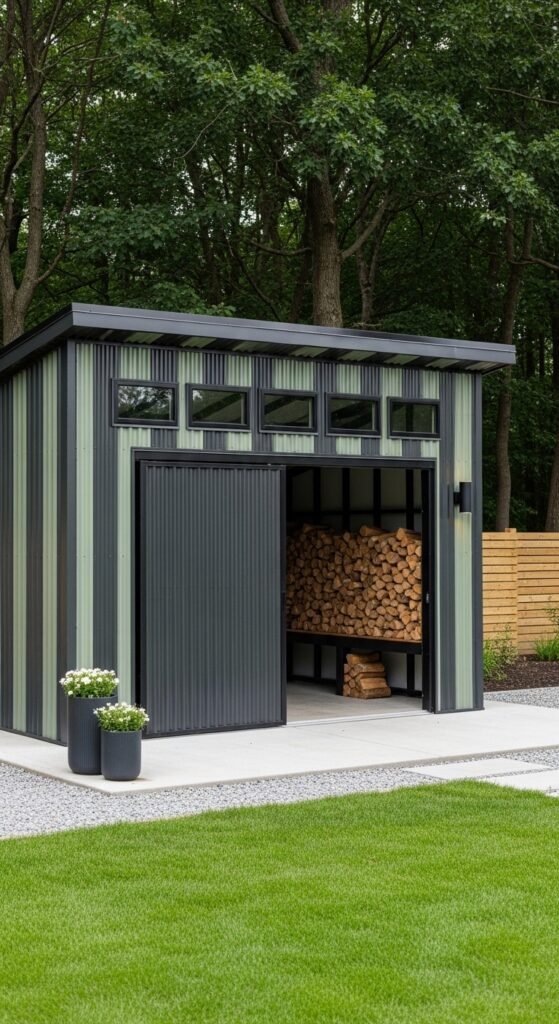
This design works well for pool houses or kids’ playrooms. The interior is usually durable and easy to clean, with rubber flooring or painted plywood. It’s a casual space where wet swimsuits and muddy feet are welcome.
Pro Tip: Use painter’s tape and a laser level to get crisp lines. Bleed-through is the enemy of a good striped paint job, so seal the tape edge with the base color first.
A Charming Outpost of Calm
This shed is dedicated to mindfulness. The design is simple, often influenced by Japanese tea houses. It sits slightly elevated on piers to give a sense of floating. Materials are natural—bamboo, cedar, and paper screens (shoji) over the windows. The entrance often features a small engawa (veranda) for sitting and removing shoes.
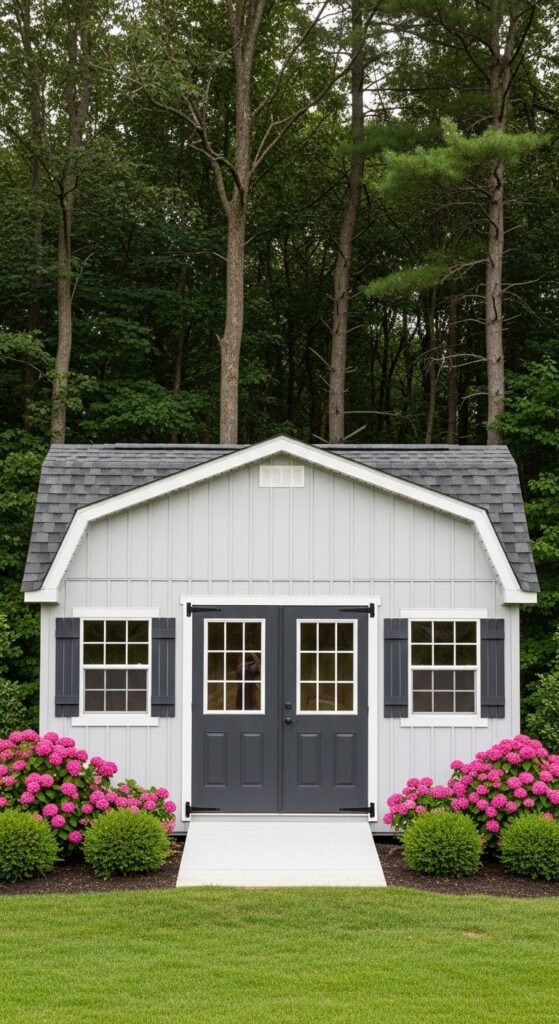
The interior is sparse. A yoga mat, a meditation cushion, and perhaps a small altar are the only furnishings. The focus is on the view and the silence. Insulation is heavy to dampen outside noise, creating a true sanctuary.
Pro Tip: Orient the main window to face East. This allows you to use the space for sunrise meditation, filling the room with the first golden light of the day.
The Dapper Shingle Chateau
This is the luxury option. Clad entirely in cedar shakes or high-end slate shingles, this shed exudes wealth and permanence. It mimics the style of grand coastal estates. The roof often features copper flashing and gutters, which will age to a distinguished brown or green.
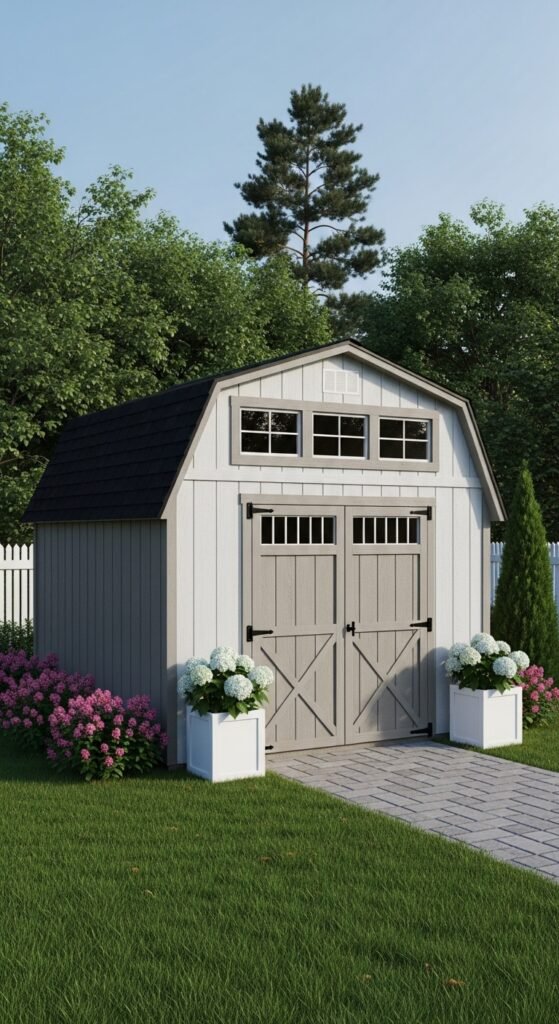
It is often used as a high-end office or a guest cottage. The interior features vaulted ceilings with tongue-and-groove paneling and custom cabinetry. It is a significant investment, but it adds genuine equity to the property.
Pro Tip: Cedar shingles need to breathe. Install them over a “rain screen” mesh to allow air to circulate behind them, preventing cupping and rotting.
Compact Zen Zone
For small urban yards, the Compact Zen Zone offers a retreat without a large footprint. It is often a 6×8 structure with a sliding barn door to save swing space. The aesthetic is clean and modern, often using vertical wood slats to create privacy screens that extend beyond the shed walls.
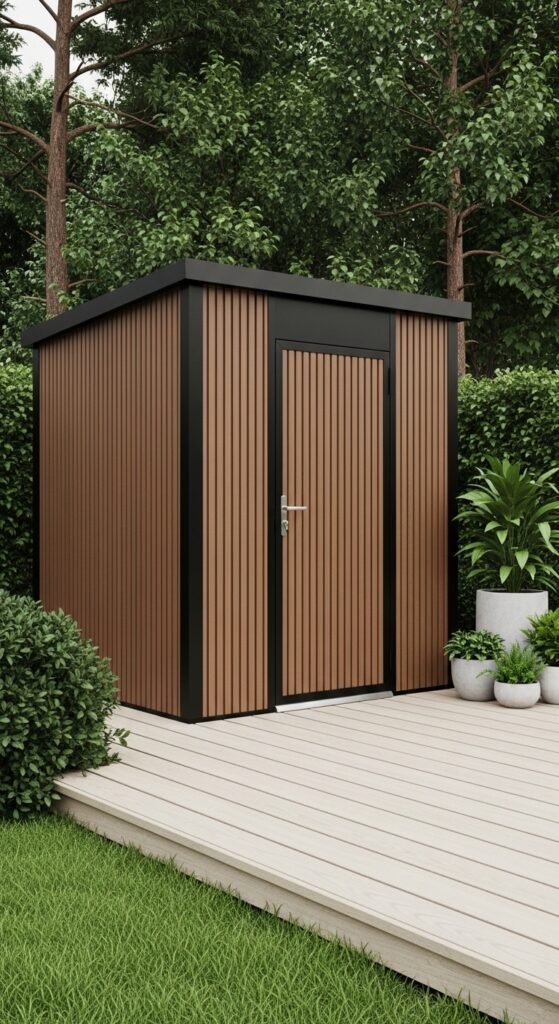
Inside, a fold-down desk and wall-mounted storage keep the floor clear. It creates a “pocket office” that is physically separate from the house but only steps away. The landscaping around it is crucial—gravel, large stones, and bamboo complete the Zen look.
Pro Tip: Use a light-colored roof material to reflect heat, as small sheds can heat up very quickly in direct sunlight.
The Bright Blue Blossom Shed
This shed is designed to be the center of a cutting garden. Painted a cheerful sky blue or periwinkle, it features trellises attached directly to the exterior walls, allowing climbing roses or clematis to wrap the structure in blooms. It feels alive and integrated with the garden beds.
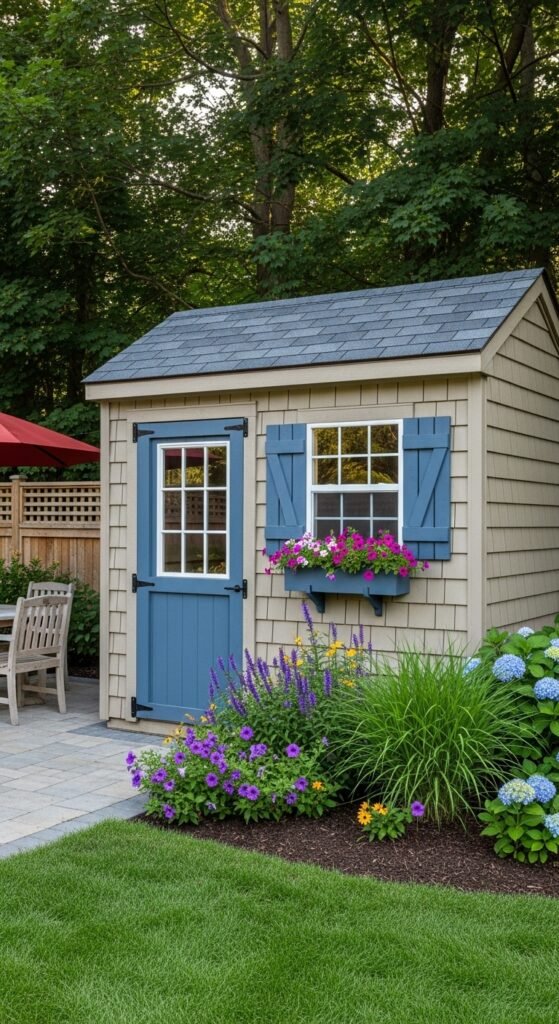
The interior is practical, with a potting bench and storage for vases and shears. It often has a Dutch door (where the top and bottom halves open independently), allowing fresh air and bird songs to enter while keeping the family dog out.
Pro Tip: If you attach trellises, mount them on hinges or spacers. This allows you to swing the plants away from the wall when you need to repaint the shed.
The Timbered Toy Box
A shed for the kids that doesn’t look like a plastic eyesore. Built with quality timber, it mimics a log cabin or a fort. It is sized for children but built with adult-grade materials so it can be converted into a storage shed once they grow up. Features might include a trap door, a slide exit, or a rooftop lookout.
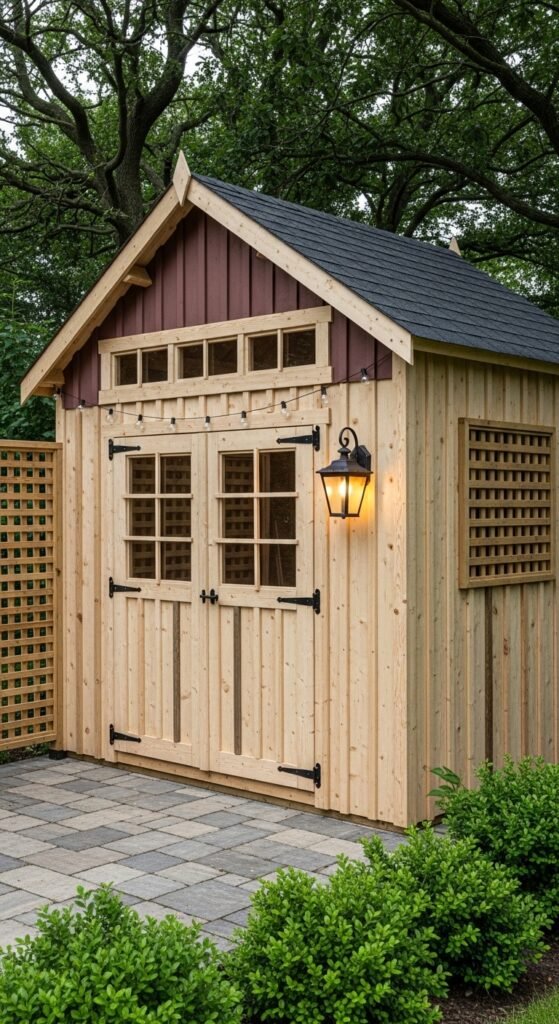
Safety is the priority here—shatterproof windows, finger-safe door hinges, and non-toxic paints. The interior is a blank canvas for imagination, often featuring chalkboard walls.
Pro Tip: Build it with a standard door height (80 inches). Even though it’s for kids now, you don’t want to hit your head when you repurpose it for lawnmower storage in ten years.
The Barnyard Bliss Box
The classic gambrel roof (barn style) gives this shed maximum overhead storage. Painted traditional barn red with white trim, it adds a touch of Americana to any yard. It is the most practical shape for storage, as the loft area can hold a tremendous amount of seasonal gear.
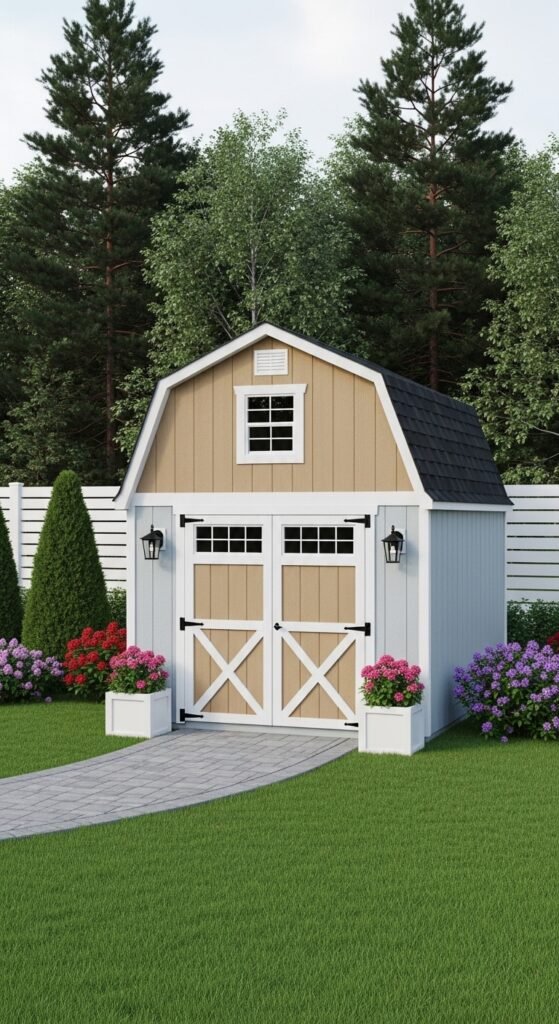
The double doors are usually wide and reinforced with “Z” bracing. It is a hardworking shed suitable for ride-on mowers and heavy equipment. The aesthetic is nostalgic but the functionality is pure utility.
Pro Tip: Install a loft hatch with a pulley system. This saves your back when trying to hoist heavy boxes of holiday decorations into the overhead storage.
The Pint-Sized Palace
Small in stature but grand in design, this shed proves size doesn’t matter. It might only be 4×6 feet, but it features architectural columns, a slate roof, and a stained glass window. It is often used to house pool equipment or as a decorative folly at the end of a garden path.
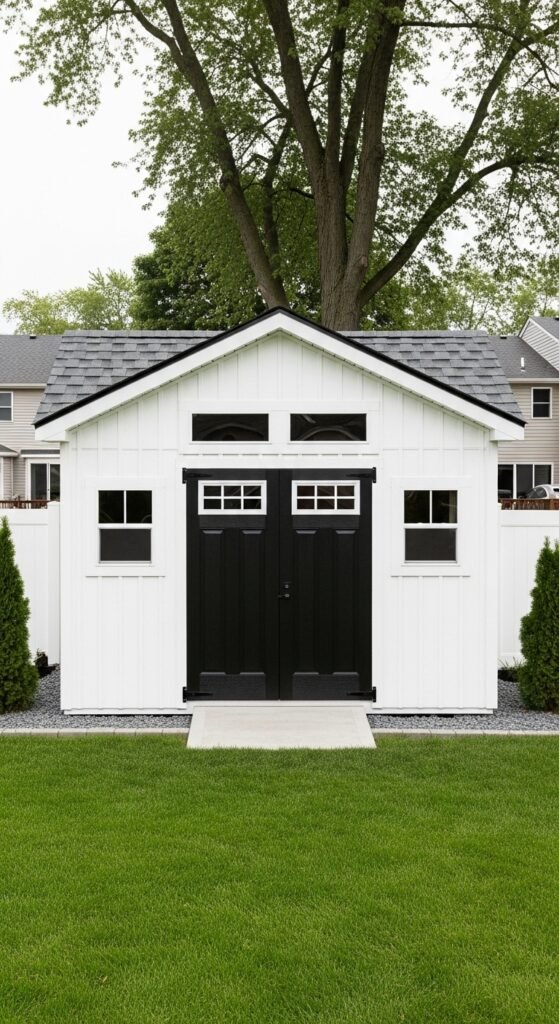
The interior is strictly utilitarian, housing pumps or tools, but the exterior is a jewel box. It shows that even purely functional structures can be beautiful additions to the landscape.
Pro Tip: Use mirrors on the exterior walls of a tiny shed in a small garden. It creates an optical illusion that expands the space and reflects the surrounding greenery.
Popular Asked Questions
Do I need a permit for a backyard shed?
In most locations, you generally do not need a building permit for a small shed that is under a certain size, typically 100 to 120 square feet. However, if you plan to add electricity, plumbing, or a permanent concrete foundation, a permit is almost always required. Additionally, local zoning laws often dictate “setbacks,” meaning you cannot build the shed too close to your property line or fence. Always check with your local municipality before buying materials.
What is the cheapest way to build a backyard shed?
The most cost-effective way to build a shed is to use pallets or reclaimed wood for the frame and siding. Pallets can often be found for free. For the foundation, using concrete deck blocks and pressure-treated lumber is much cheaper than pouring a concrete slab. If you aren’t building from scratch, a prefabricated resin or metal shed kit is usually cheaper than buying all the raw lumber and roofing materials for a custom wood build.
Can I turn a shed into a bedroom?
Technically yes, but legally it is complicated. To legally use a shed as a “habitable space” (a bedroom or guest house), it must meet strict building codes. This includes having proper insulation, heating, a minimum ceiling height, and an emergency exit (egress window). It also usually requires a permit and inspections. If you just put a bed in a shed without these upgrades, it is considered an “accessory structure” and cannot be legally rented out or claimed as a bedroom for home value.
Which material is best: Wood, Metal, or Resin?
It depends on your needs. Wood is the strongest and most attractive but requires yearly painting or staining to prevent rot. Metal is durable, fire-resistant, and cheap, but it can rust and is hard to insulate. Resin (Plastic) is the easiest to maintain (just wash it with a hose) and easiest to assemble, but it cannot be customized or painted, and it can become brittle in extreme cold.
How much does it cost to build a shed in 2026?
Prices vary wildly based on size and finish. A simple DIY kit from a big-box store might cost between $600 and $2,000. A custom-built wooden shed with windows and a shingle roof typically costs between $3,000 and $6,000. High-end “studio” sheds with insulation, electricity, and modern finishes can range from $10,000 to over $25,000.
Conclusion
The backyard shed has graduated from a simple storage locker to a vital part of the modern home. Whether you choose the industrial cool of a Stylish Metal Shed Retreat or the cozy charm of a Timber Box, the potential to transform your outdoor space is limitless. By selecting the right materials and design, you not only solve your storage problems but also create a sanctuary that enhances your lifestyle.
Which of these shed styles would best fit your backyard vibe? Tell us in the comments below!
Follow us on Pinterest for more Backyard Shed Ideas inspiration.