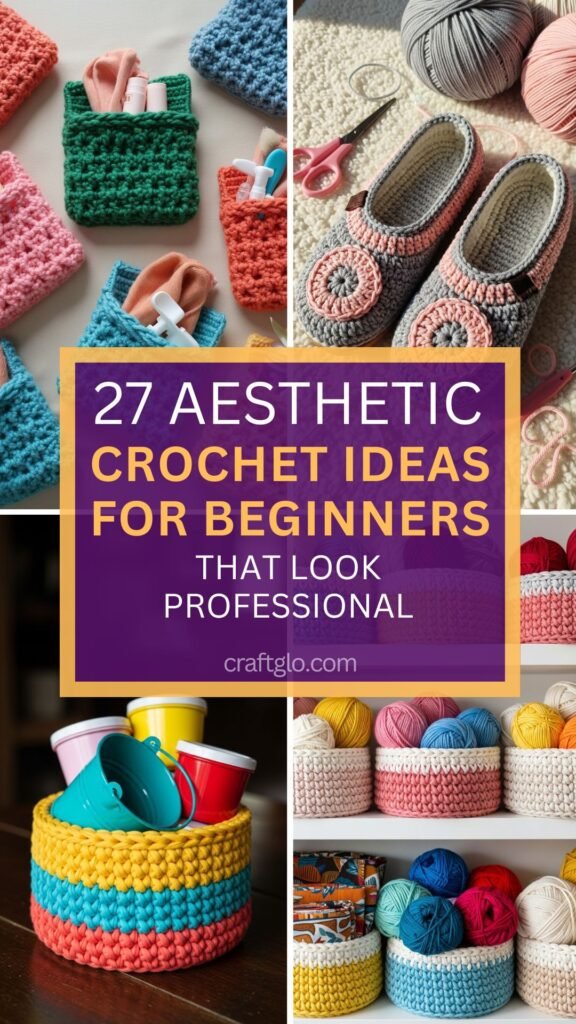
Start your journey into the world of fiber arts with confidence. If you have been scrolling through Pinterest and feeling intimidated by complex lace patterns or intricate garments, this guide is your solution. You do not need years of experience to create stunning, high-quality pieces. The current “slow fashion” and DIY home decor trends rely heavily on simple textures and minimalist designs, which are perfect for novices.
This comprehensive guide curates 27 specific crochet ideas for beginners that prioritize impact over difficulty. We focus on projects that use basic stitches—like single and double crochet—to create professional-looking results. Whether you want to make eco-friendly home goods or stylish accessories, these projects will help you master tension and hook control without the frustration.
Check out our related guide on [Choosing the Right Yarn for Beginners].
Key Takeaways
- Master the Basics: All projects listed here rely on fundamental stitches like Single Crochet (SC) and Double Crochet (DC), ensuring you build a strong foundation.
- Quick Wins: Most of these items can be completed in a few hours, providing immediate gratification and motivation.
- Eco-Friendly Focus: Many ideas utilize cotton yarn, making them sustainable alternatives to single-use household items.
- Gift-Ready: These aesthetic designs are perfect for personalized, handmade gifts that look expensive and thoughtful.
Table of Contents
- Eco-Friendly Cotton Dishcloths
- Simple Crochet Coasters
- Cozy Crochet Scarves
- Twisted Crochet Headbands
- Simple Plant Hangers
- Baby Booties
- Granny Square Blanket
- Easy Crochet Bags
- Crochet Keychains
- Cute Phone Cases
- Crochet Pouches
- Fun Crochet Cup Sleeves
- Crochet Bookmarks
- Crochet Flowers
- Crochet Pet Toys
- DIY Crochet Baskets
- Crochet Wall Hangings
- Crochet Slippers
- Crochet Pillows
- Crochet Travel Pouches
- Crochet Table Runner
- Crochet Coffee Cup Caddy
- Crochet Pet Beds
- Crochet Kumihimo Bracelets
- Crochet Summer Hats
- Crochet Mini Baskets
- Crochet Toppers for Jars
- Popular Asked Questions
- Conclusion
Eco-Friendly Cotton Dishcloths
The humble dishcloth is widely considered the absolute best starting point for any crochet beginner. Visually, these pieces offer a rustic and spa-like aesthetic that immediately upgrades a kitchen or bathroom sink area. The texture is key here. By using a 100% cotton yarn, you create a fabric that is durable, absorbent, and scrubby enough to clean dishes without scratching them. Unlike acrylic yarn, which does not absorb water well, cotton softens with every wash while maintaining its structural integrity.
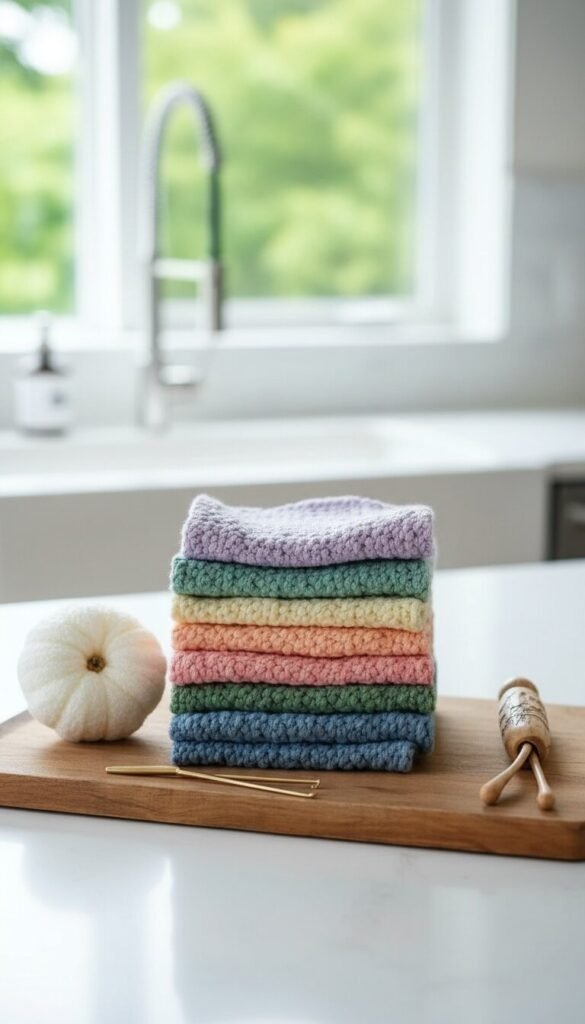
From a design perspective, the dishcloth is a perfect square canvas to practice maintaining straight edges. You can stick to a simple Single Crochet stitch for a dense, durable fabric, or experiment with the Moss Stitch (alternating single crochet and chains) to create a woven look. The repetition allows you to focus entirely on your tension without worrying about complex shaping or size adjustments. If you make a mistake, it is easy to unravel and start again without losing hours of work.
Pro Tip: Use a slightly smaller hook size than recommended on the yarn label to create a tighter stitch that holds up better to scrubbing.
Simple Crochet Coasters
Coasters are essentially miniature versions of dishcloths, making them an excellent project for using up scrap yarn. These small squares or circles add a pop of color and texture to coffee tables and dining settings. A set of four matching coasters tied with a piece of twine makes for an incredibly thoughtful and professional-looking housewarming gift. The visual appeal comes from the stitch definition. Since the item is small, intricate stitches like the “linen stitch” or standard “double crochet” rounds stand out clearly.
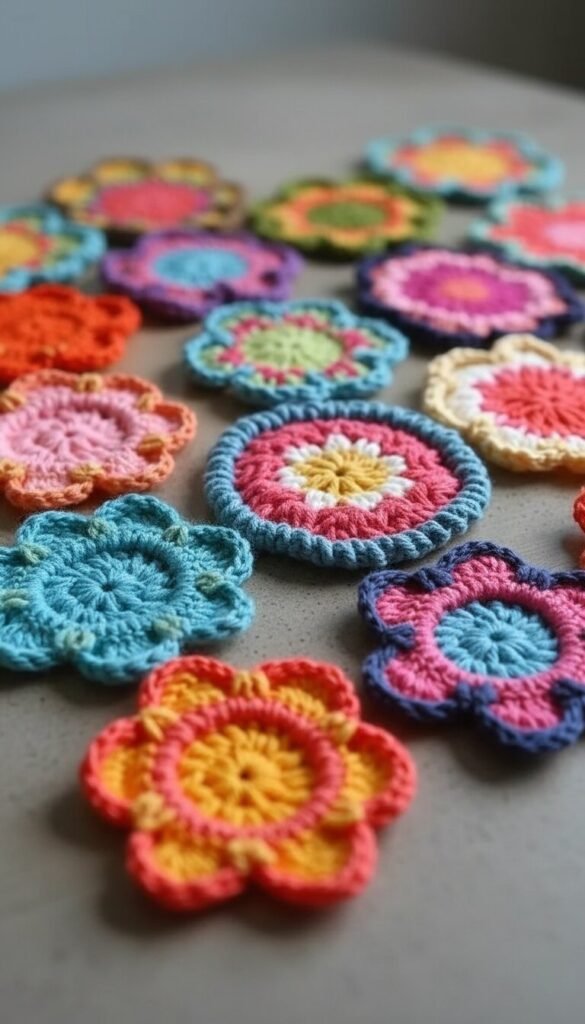
When designing these, consistency is your main goal. You want your coasters to be flat so they can safely hold a drink. This teaches you the importance of counting stitches. If you are working in the round to make a circular coaster, you will learn the fundamental rules of increasing (adding two stitches into one) to keep the circle flat rather than cupping into a bowl shape. This small project builds the muscle memory needed for larger circular projects like rugs or hats.
Pro Tip: Block your finished coasters by pinning them to a foam board and spraying them with water to ensure they dry perfectly flat and square.
Cozy Crochet Scarves
A chunky scarf is the quintessential winter accessory and a rite of passage for crocheters. The visual impact of a long, oversized scarf is undeniable. It adds texture and layers to any winter outfit. For beginners, the beauty of a scarf lies in its forgiving nature. You can choose a bulky weight yarn and a large hook (9mm or 10mm), which allows the project to grow rapidly. You can see your progress in minutes, which is a huge confidence booster.
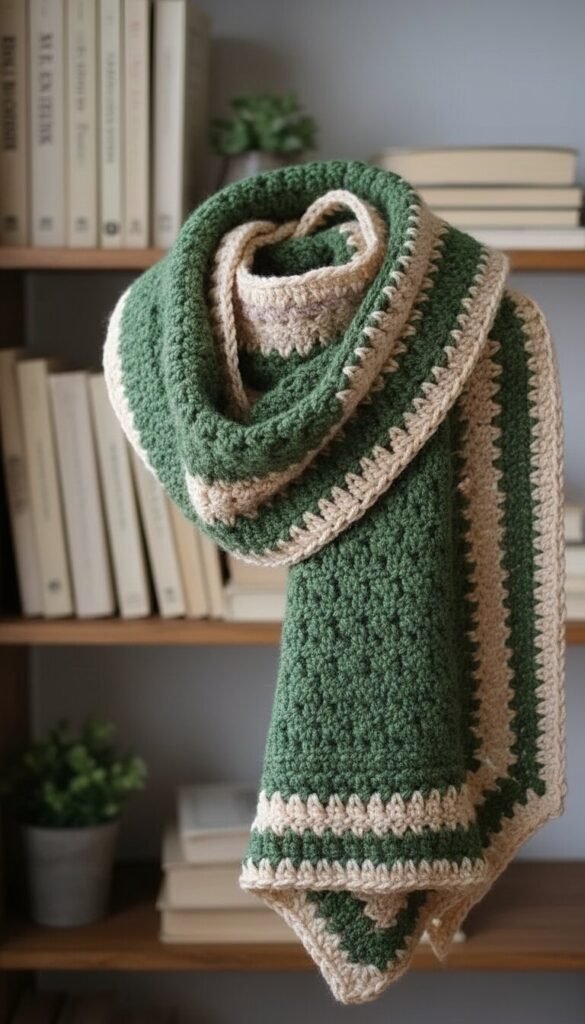
The design principle here is simple repetition. You are creating a long rectangle, which means you only need to master turning your work at the end of a row. This is the perfect project to practice the “Half Double Crochet” stitch, which offers a nice balance between the tightness of a single crochet and the height of a double crochet. The result is a fabric that has a lovely drape and squishiness. To make it look more high-end, add long tassels or fringe to the ends. This simple addition elevates a basic rectangle into a trendy fashion statement.
Pro Tip: When adding fringe, use a crochet hook to pull the yarn strands through the edge stitches to ensure they are evenly spaced and secure.
Twisted Crochet Headbands
Twisted headbands have taken Pinterest by storm because they look intricate but are surprisingly simple to construct. The “twist” at the front gives the accessory a chic, boutique-style appearance that frames the face beautifully. This project is ideal for those who want to make wearable accessories but aren’t ready to tackle fitted garments like sweaters. The texture is usually achieved by working in the back loops only, which creates a ribbed effect that mimics knitting.
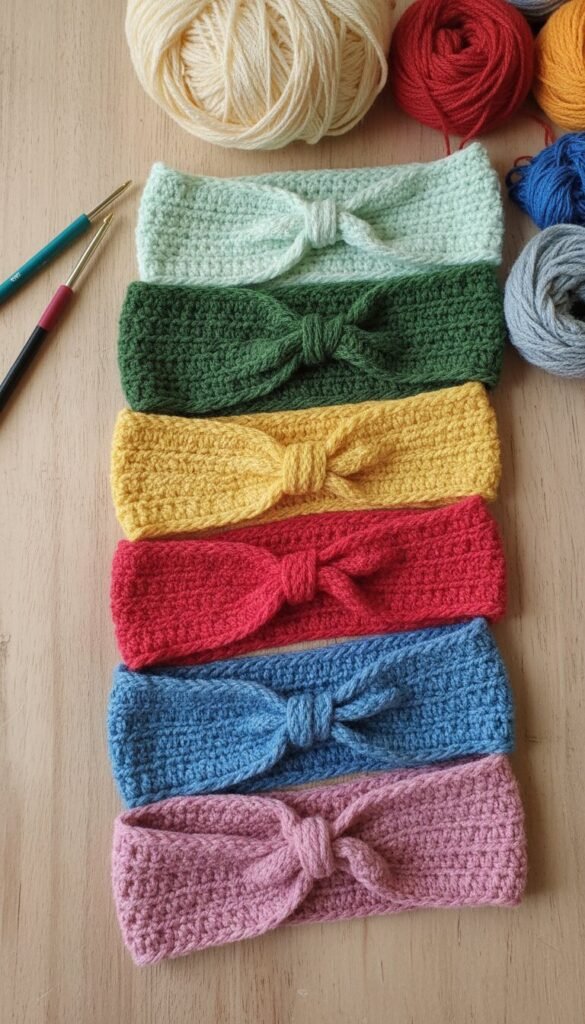
To make this, you simply crochet a long, narrow rectangle—just like a mini scarf. The magic happens in the assembly. You fold the rectangle in a specific way and seam the edges together to create the permanent twist. This introduces you to the concept of seaming and finishing, which are vital skills for intermediate projects. Because it uses very little yarn, you can often make one with less than a single skein, making it a budget-friendly option for gifts or personal use.
Pro Tip: Measure the circumference of your head and subtract about two inches for the length of your rectangle to account for the stretch of the yarn.
Simple Plant Hangers
With the rise of “jungalow” and bohemian interior design, crochet plant hangers have become a staple in modern decor. These hangers add vertical interest to a room and bring greenery into unused spaces. Unlike macramé, which requires learning complex knots, a crochet plant hanger uses basic chain stitches and single crochets to create a sturdy net. The visual lightness of the chains allows the pot and plant to remain the focal point while the yarn adds a soft, handmade touch.
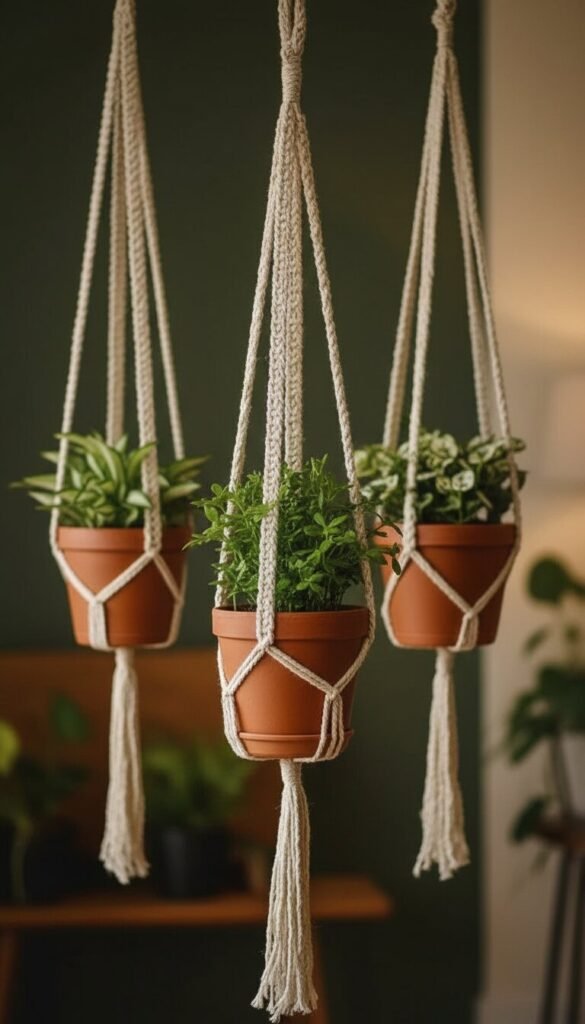
This project teaches you how to work with negative space. You aren’t creating a solid fabric; you are creating a mesh. This requires you to trust your stitch counting, as the structure depends on symmetrical loops. It is also a great introduction to working with different materials. While wool or acrylic might stretch too much under the weight of a pot, cotton or even nylon cord provides the necessary strength and lack of elasticity.
Pro Tip: Place the pot you intend to hang inside the hanger as you work to ensure the fit is snug before you finish the final rounds.
Save this idea to your Pinterest.
Comparison: Cotton vs. Acrylic Yarn for Beginners
| Feature | Cotton Yarn | Acrylic Yarn |
|---|---|---|
| Texture | Smooth, firm, inelastic | Soft, fuzzy, slightly stretchy |
| Best For | Dishcloths, plant hangers, bags | Scarves, blankets, beanies |
| Durability | High, withstands heat/scrubbing | Medium, can pill over time |
| Water | Absorbent (great for cleaning) | Water-resistant (holds warmth) |
| Price | Moderate | Generally the cheapest option |
Baby Booties
Baby booties are adorable, quick to make, and always impressive at baby showers. They may look intimidating because of their 3D shape, but they are often constructed from simple T-shapes or small ovals that are folded and stitched. Visually, they offer a chance to play with color blocking and cute embellishments like tiny buttons or pom-poms. The small scale means you can finish a pair in a single evening.
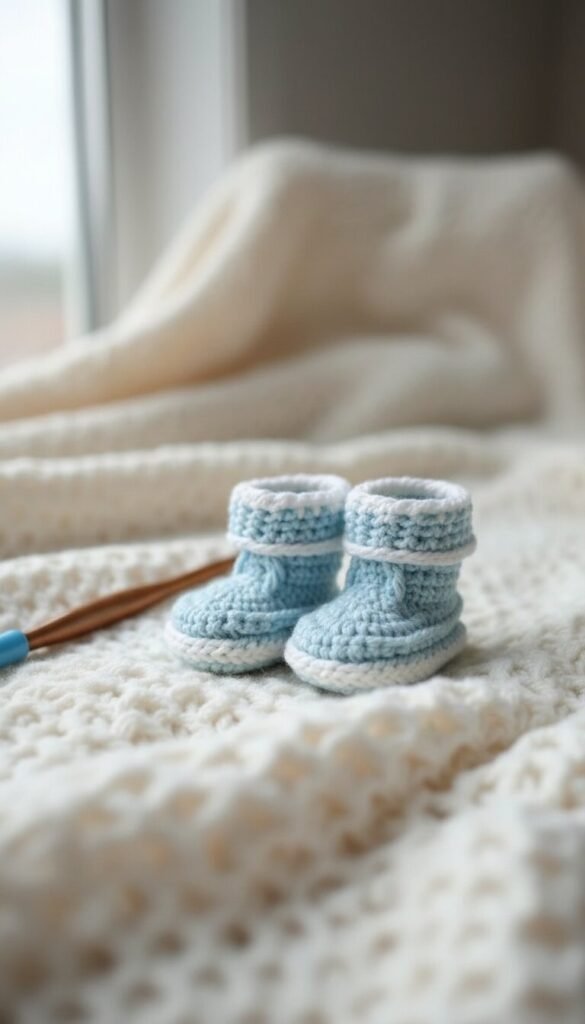
The construction of a bootie introduces beginners to shaping. You will likely learn how to “decrease” stitches (crocheting two stitches together) to shape the toe area. This is a crucial concept for eventually making socks, hats, or sleeves. Because babies have sensitive skin, this project also teaches you about fiber selection—opting for soft, hypoallergenic yarns that are machine washable is essential for new parents.
Pro Tip: Use a stitch marker to mark the center of the toe area so your decreases are perfectly symmetrical on both the left and right bootie.
Granny Square Blanket
The granny square is perhaps the most iconic motif in crochet history. A granny square blanket is a “patchwork” project, meaning you don’t have to carry a massive heavy blanket around with you while you work. You make individual small squares—which are portable and quick—and then join them together at the end. Visually, this style offers endless possibilities. You can go for a retro 70s vibe with earth tones or a modern look with monochrome squares.
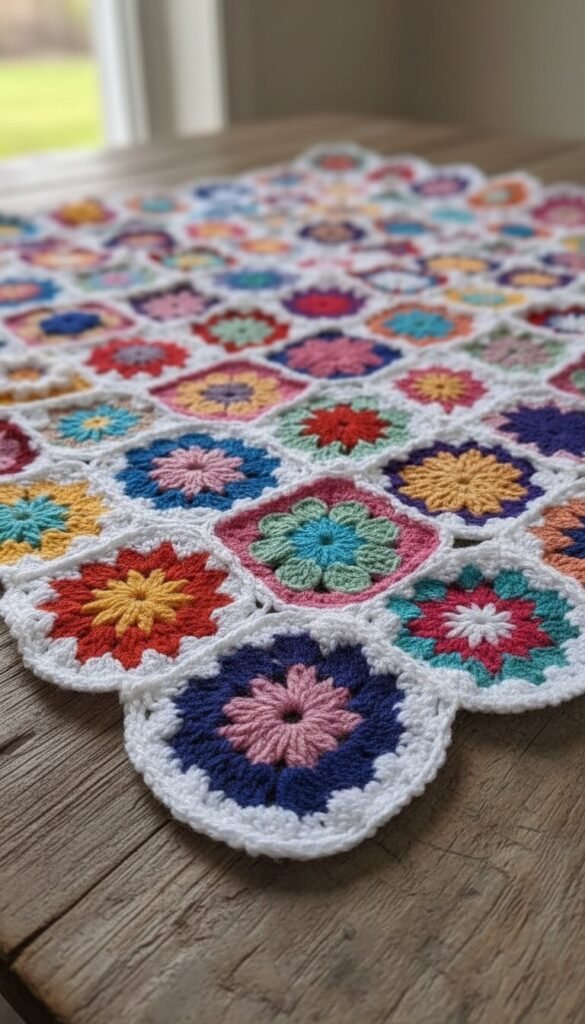
Learning the granny square teaches you how to work in rounds and how to create corners using chain spaces. Once you master the basic formula (usually clusters of three double crochets), you can make squares of any size. The final step of joining the squares is a skill in itself, teaching you methods like the “whip stitch” or the “join-as-you-go” crochet method. This project is a marathon, not a sprint, but the result is a family heirloom.
Pro Tip: Weave in your ends after finishing each square. Do not wait until you have 100 squares, or the finishing process will feel overwhelming.
Easy Crochet Bags
Reusable market bags are functional, eco-friendly, and very trendy. A mesh market bag expands to hold a surprising amount of groceries or beach gear. The aesthetic is airy and casual, perfect for summer. Because the mesh structure is open, these bags work up incredibly fast. You are essentially creating a net, which uses less yarn than a solid tote bag.
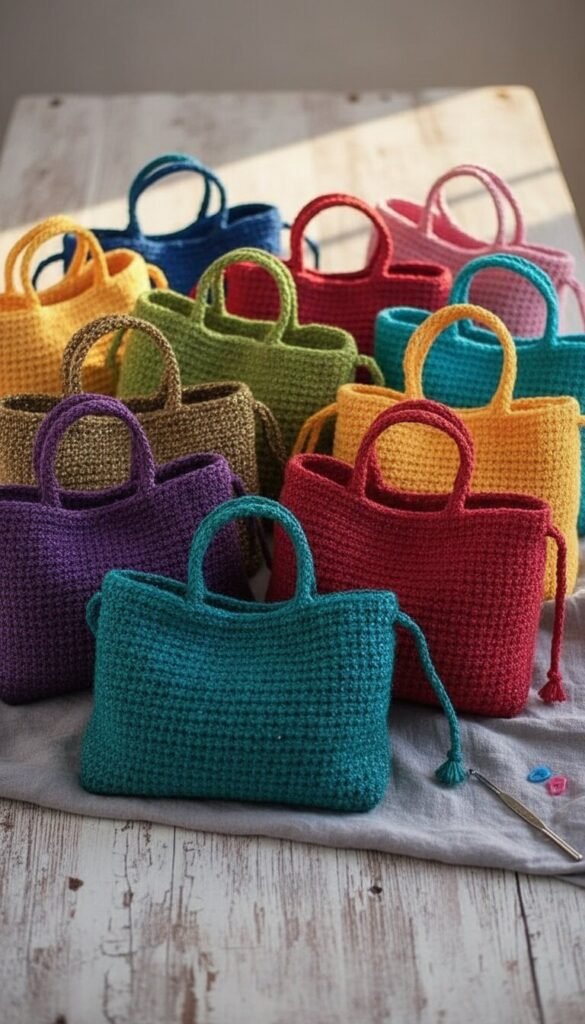
This project reinforces the skills of working in the round and creating handles. The handles need to be sturdy, so you will often learn how to reinforce them by crocheting over a previous row of stitches or using a tighter stitch tension. Cotton is the mandatory material here to prevent the bag from stretching all the way to the ground when filled with heavy items like apples or canned goods.
Pro Tip: When making the strap, make it slightly shorter than you think you need, as the weight of the items will inevitably stretch it out over time.
Crochet Keychains
Keychains are the ultimate “instant gratification” project. They are tiny, require very little yarn, and can be highly personalized. Popular designs include boho tassels, mini hearts, or simple wristlet straps. Visually, these add a touch of handmade charm to a handbag or set of keys. They are also fantastic items to sell at craft fairs because they have a low price point and high curb appeal.
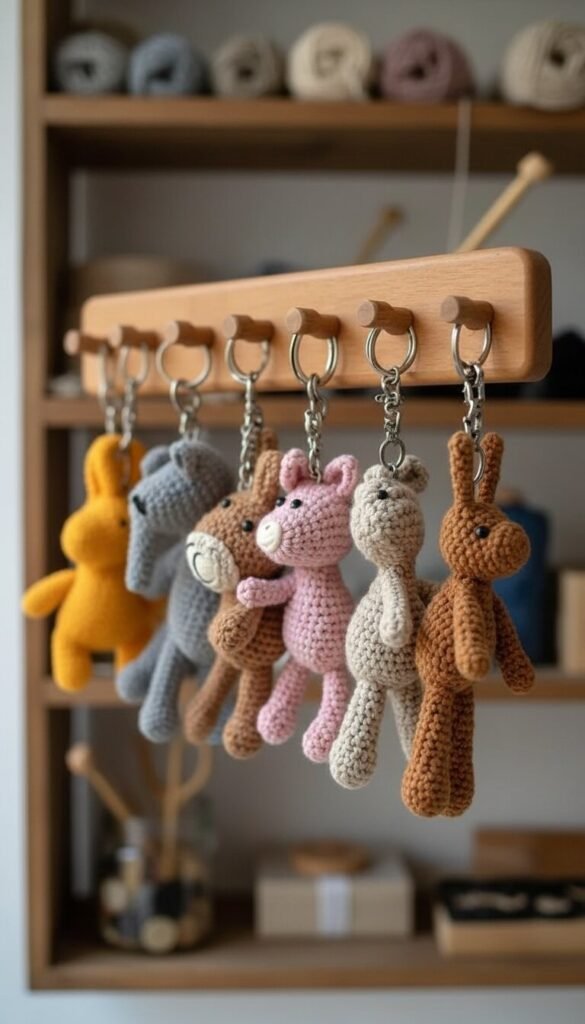
For a beginner, a wristlet keychain is a practical way to practice the “thermal stitch” or other thick, sturdy stitches that can withstand daily wear and tear. You will also learn how to attach hardware, such as a metal lobster clasp or a key ring, directly into your crochet work. This integration of mixed media (yarn + metal) gives the final product a professional finish.
Pro Tip: Use a smaller hook to create very tight stitches so the keychain maintains its shape and doesn’t snag easily on keys.
Cute Phone Cases
A crochet phone case is a cozy, protective sleeve that keeps your device safe from scratches. The aesthetic is soft and personalized; you can add stripes, flowers, or even embroider your initials on it. It’s a functional accessory that combines tech with tactile comfort. The design is essentially a rectangular pouch, which is very straightforward to execute.
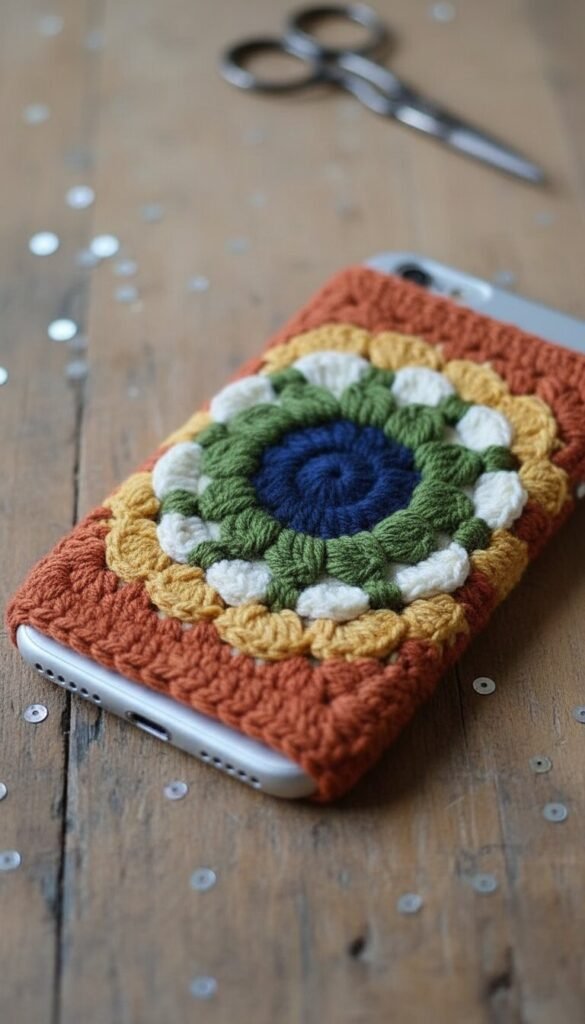
This project is great for practicing “gauge.” Your phone has specific dimensions, so your crochet piece must match them exactly. You will learn to measure your work as you go and adjust your hook size if your sleeve is coming out too big or too small. It also offers a chance to practice buttonholes—usually just a simple chain loop that skips a stitch—to secure the top flap.
Pro Tip: Make the case slightly tighter than the phone initially, as the yarn will relax and loosen up after a few days of use.
Save this idea to your Pinterest.
Get The Look: Essential Tools for Beginners
- Ergonomic Hook Set: Prevents hand cramping during long sessions. Look for soft-grip handles.
- Stitch Markers: Locking plastic markers are essential for counting rounds.
- Tapestry Needle: A blunt metal needle with a large eye for weaving in yarn tails.
- Sharp Scissors: Small embroidery scissors are best for clean cuts.
- Measuring Tape: Crucial for checking gauge on wearables like hats and phone cases.
Crochet Pouches
Zippered pouches or buttoned clutches are versatile organizers for makeup, pencils, or crochet hooks. Visually, a lined crochet pouch looks incredibly high-end. The texture of the crochet exterior contrasts beautifully with a smooth fabric lining. You can experiment with textured stitches like the “bobble stitch” to create fun, raised polka dots on the surface.
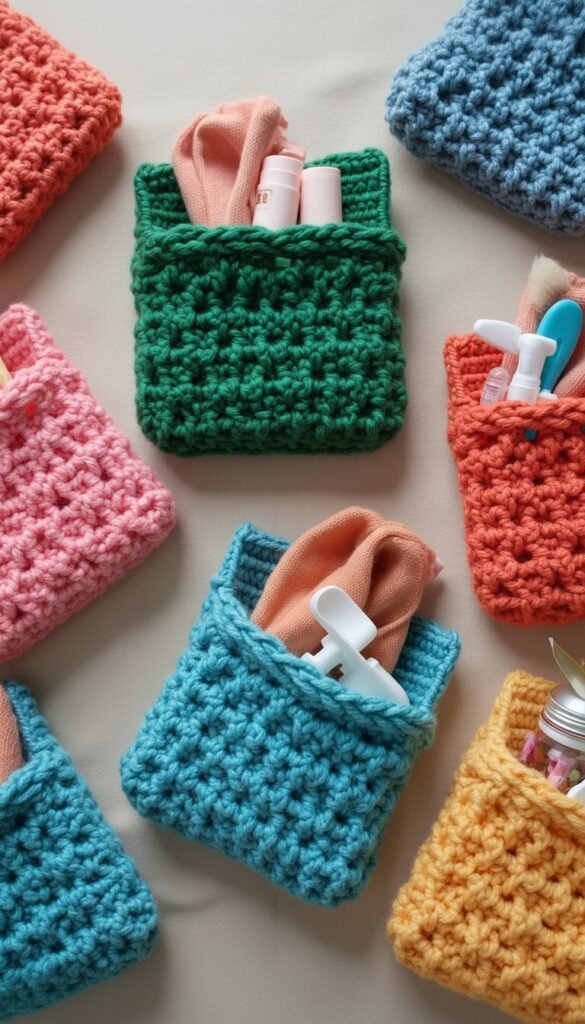
While the crochet part is a simple rectangle, this project often introduces beginners to basic sewing skills. You may need to hand-sew a zipper or a fabric lining into the crochet piece. This hybrid crafting skill allows you to create items that are not just pretty, but fully functional and durable. If you prefer to avoid zippers, a simple envelope-style flap with a button is an easier alternative that still looks chic.
Pro Tip: If you are intimidated by sewing a lining, use a very tight stitch like the Single Crochet so small items don’t poke through the holes.
Fun Crochet Cup Sleeves
Cup sleeves, or “cozies,” are eco-friendly alternatives to the cardboard sleeves you get at coffee shops. They keep your drink hot and your hands cool. These are fantastic scrap-busters and make excellent gifts for teachers or coworkers. The aesthetic can range from simple ribbed designs to character-themed sleeves with ears and faces.
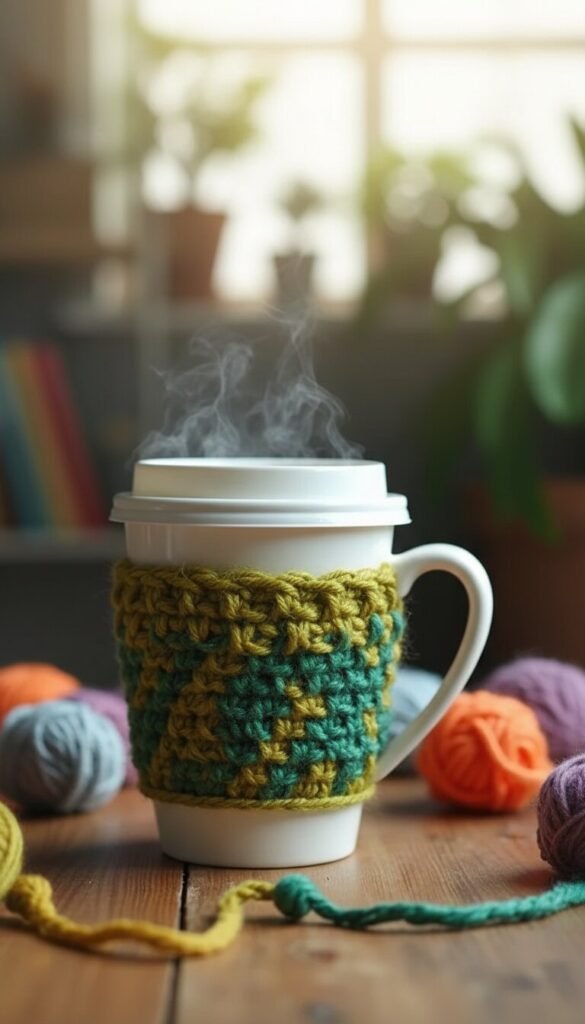
Designing a cup sleeve requires working in the round but often joining at the end of each row. It’s a small cylinder. The challenge here is ensuring the diameter fits a standard cup. This project is perfect for testing out new stitch patterns. Because the area is small, you can try a complex cable stitch or a shell stitch without committing to a giant blanket. It’s a low-risk way to learn high-level textures.
Pro Tip: Use cotton or wool yarn rather than acrylic, as acrylic can melt if it comes into contact with extremely high heat (though a coffee cup is usually safe, cotton is safer).
Crochet Bookmarks
For book lovers, a crochet bookmark is a delicate and charming accessory. Unlike bulky metal bookmarks, a soft yarn bookmark won’t damage the spine or pages of your book. Visually, these can be as simple as a thin strip of lace or a flower with a long stem. They evoke a vintage, cottagecore aesthetic that is very popular right now.
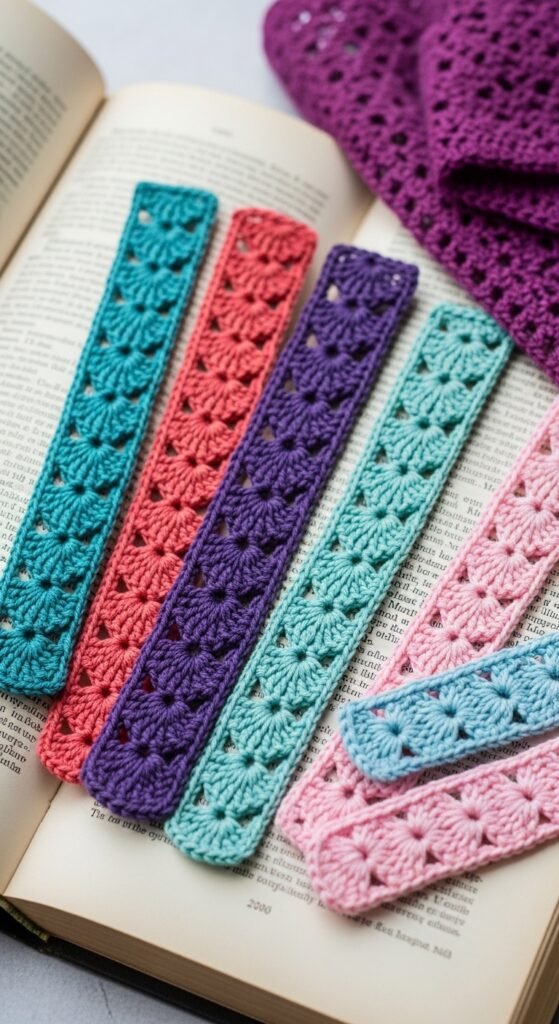
This is a “micro” project that focuses on precision. You are often working with thinner yarn (DK or sport weight) and a smaller hook. This helps refine your fine motor skills. You might learn how to crochet a “cord” or how to create a flat, lacy motif. Because they are so small, you can make a dozen in different colors to give away as gifts or to keep for your own library.
Pro Tip: Stiffen your bookmark with a mixture of water and white glue (or commercial fabric stiffener) so it lays flat and doesn’t curl up inside the book.
Crochet Flowers
Crochet flowers are versatile embellishments that can be attached to hats, bags, or even strung together to make a garland. A single rose or daisy can turn a plain beanie into a boutique item. The aesthetic is feminine and playful. You can create realistic flowers by layering petals or abstract floral shapes for a modern look.
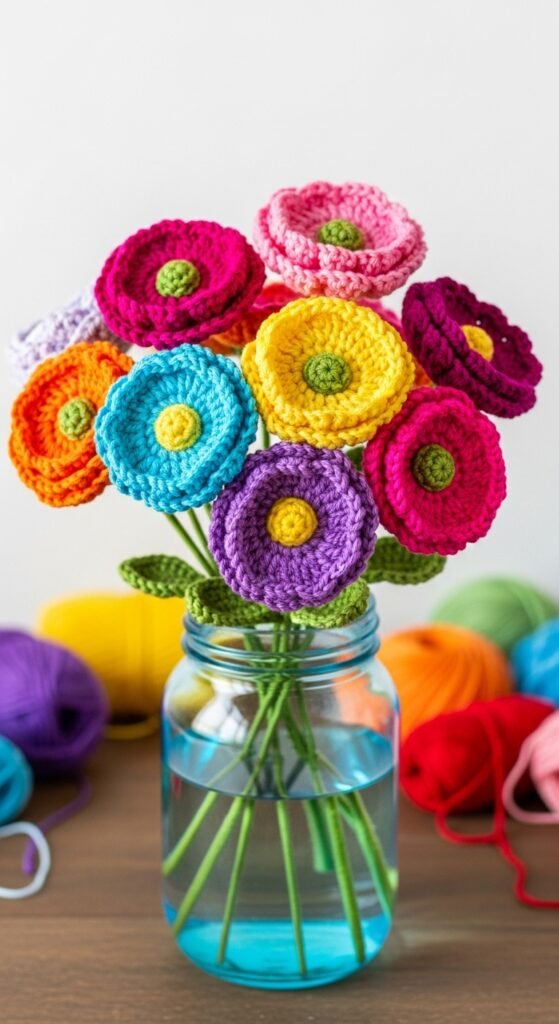
Making a flower usually involves working in the round and using stitches of varying heights (SC, HDC, DC, Treble) in the same stitch to create the curve of a petal. This teaches you how stitch height affects shape. It is a fantastic lesson in structural crochet. You will learn that a short stitch pulls the fabric down, while a tall stitch pushes it up, creating the undulation of a petal edge.
Pro Tip: Leave a long tail when you start and finish so you can use it to sew the flower onto your final project easily.
Crochet Pet Toys
Pet toys are fun, durable, and usually hilarious. A crochet mouse filled with catnip or a small ball for a dog can provide hours of entertainment. The aesthetic is less about perfection and more about durability and fun shapes. Bright colors and high-contrast patterns are great for pets.
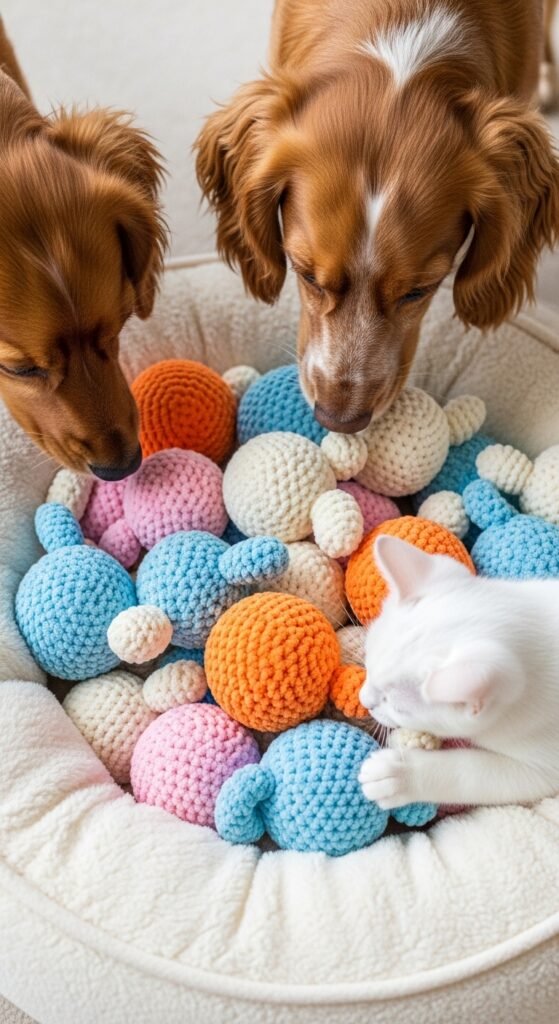
Safety is the primary design principle here. You must crochet very tightly (amigurumi style) so that stuffing does not come out. You also learn to avoid plastic safety eyes or small parts that could be swallowed; instead, you will embroider eyes and noses with yarn. This project teaches you how to create 3D spheres and cylinders, which are the building blocks for all stuffed animals.
Pro Tip: Use a cotton yarn for dog toys as it is digestible in small amounts if they manage to chew through it, unlike synthetic acrylic fibers.
Save this idea to your Pinterest.
Comparison: Hooks for Different Projects
| Project Type | Recommended Hook Size | Why? |
|---|---|---|
| Amigurumi (Toys) | 2.5mm – 4.0mm | Creates a tight fabric so stuffing doesn’t show. |
| Scarves/Blankets | 5.5mm – 8.0mm | Creates a soft drape and cozy feel. |
| Chunky Beanies | 9.0mm – 12.0mm | Works with thick yarn for a quick, warm finish. |
| Lace/Doilies | 1.5mm – 2.5mm | Necessary for fine thread and intricate detail. |
DIY Crochet Baskets
Sturdy crochet baskets are perfect for organizing your home. They can hold remote controls, keys, or even your yarn stash. The aesthetic is clean, modern, and organizational. Using a super bulky yarn or “t-shirt yarn” gives the basket thick, rigid walls that stand up on their own.
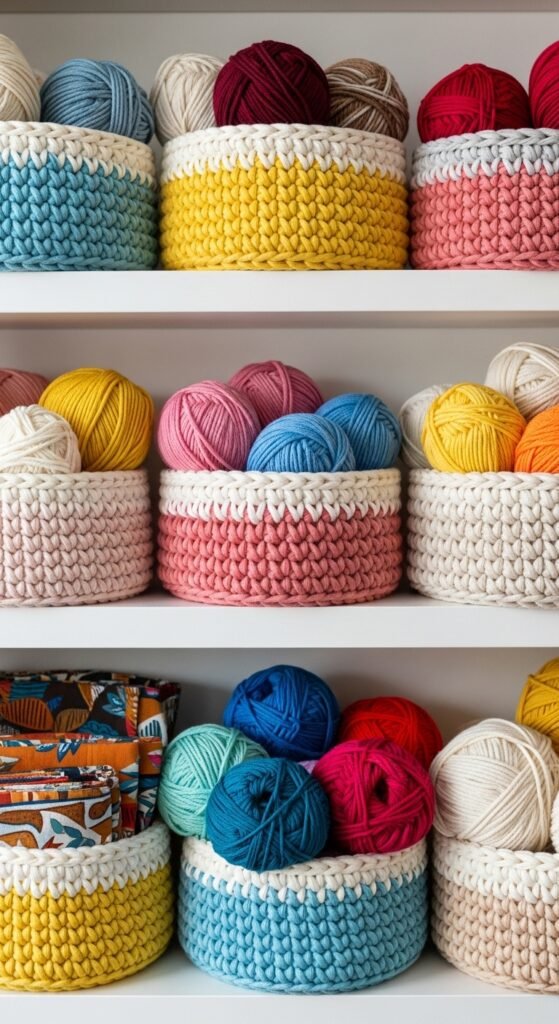
The key to a good basket is a stiff gauge. You will likely use a hook that is smaller than recommended for the yarn to create a very dense fabric. This project reinforces the concept of creating a flat circle base and then transitioning to the walls by crocheting in the back loops only. This creates a sharp 90-degree angle at the bottom of the basket, giving it a professional, structured look.
Pro Tip: If your basket sides are floppy, try holding two or three strands of yarn together as you crochet to increase the thickness and stability.
Crochet Wall Hangings
Wall hangings are art pieces that add texture and warmth to a gallery wall. They can range from abstract fringe designs to pictorial scenes. The aesthetic is often boho-chic or minimalist Scandinavian. You can hang your work from a piece of driftwood or a copper pipe for an extra design element.
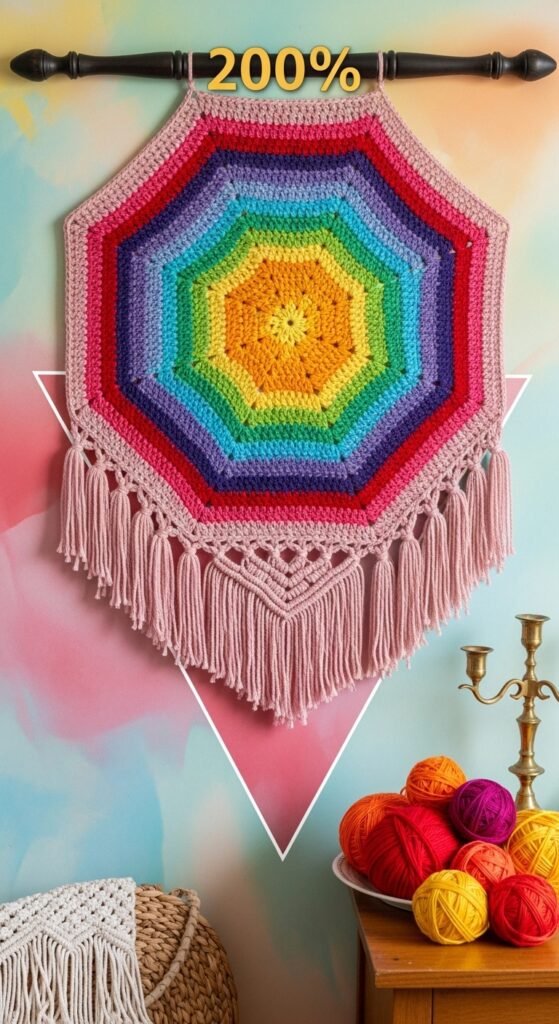
This project is an excellent introduction to “colorwork”—changing colors in the middle of a row to create a design. You might follow a grid chart (like pixel art) to create a geometric pattern or a simple image like a sun or moon. It teaches you how to manage multiple balls of yarn and how to carry yarn along the back of your work.
Pro Tip: Steam your finished wall hanging to relax the fibers. This ensures the fringe hangs straight and the main panel doesn’t curl at the edges.
Crochet Slippers
Crochet slippers are the ultimate cozy comfort item. They can be made as simple slide-ons or full boots. Visually, they look inviting and warm. You can add leather soles to the bottom to make them non-slip and more durable.
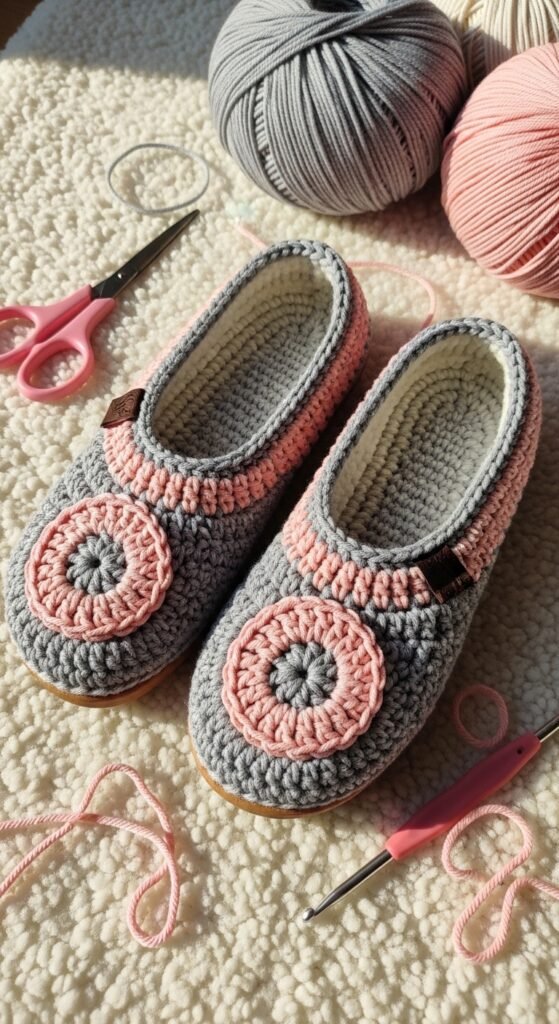
Slippers are often constructed from a simple rectangle that is folded and seamed at the heel and toe. This is known as the “ballet flat” construction method and is incredibly beginner-friendly. It demystifies footwear construction. You will learn how to customize the fit to your own foot size by adding or subtracting rows.
Pro Tip: Use a wool blend yarn for slippers. Wool has natural temperature-regulating properties that keep your feet warm without making them sweaty.
Crochet Pillows
A crochet throw pillow can change the entire look of a sofa. You can make a removable cover for an existing pillow insert. The aesthetic can be highly textured—think popcorn stitches, cables, or waffle stitch. These textures look expensive and high-end, mimicking designer home goods.
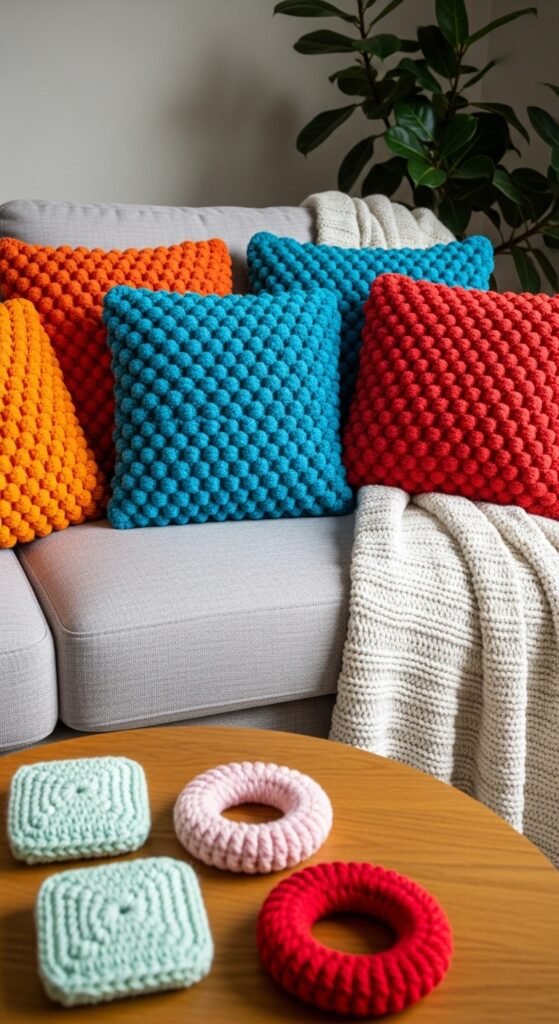
This project is essentially a large square or rectangle. It is the perfect canvas for learning advanced textured stitches. Because you don’t have to worry about the drape (stiffness is actually good for a pillow), you can experiment with thick, yarn-eating stitches that create a plush surface. You will also practice seaming two squares together or adding buttons for a closure.
Pro Tip: Make your crochet cover 1 inch smaller than the pillow insert. This ensures a plump, full look rather than a saggy, loose fit.
Crochet Travel Pouches
These are specialized pouches designed for specific items like sunglasses, earbuds, or passports. Visually, they are sleek and functional. A sunglass case, for example, is a long, thin pouch that protects lenses from scratching in your bag.
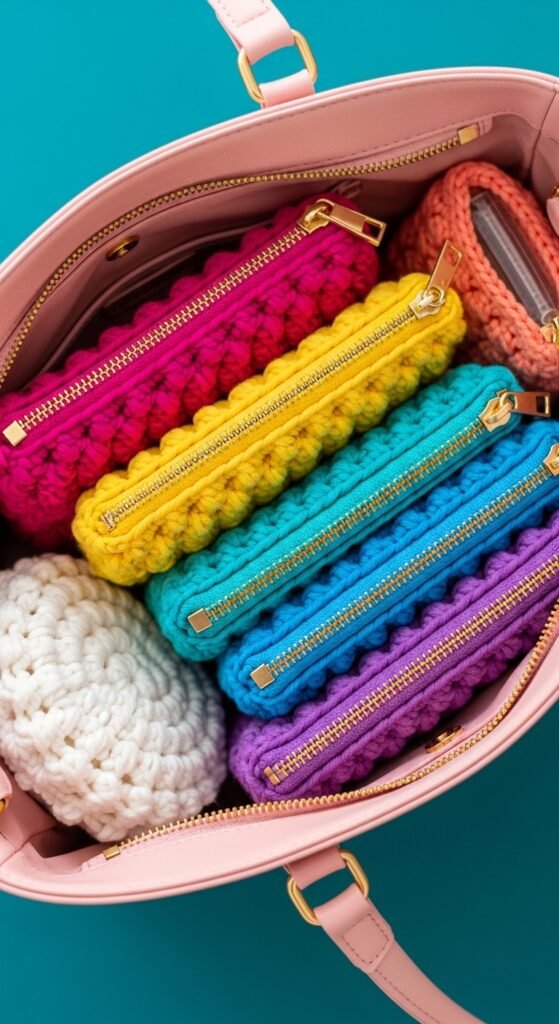
This project focuses on utility and sizing. You need to measure the object you are covering precisely. It is a quick project that uses very little yarn. You can add a drawstring closure, which teaches you how to weave a cord through a row of stitches. It’s a practical skill that applies to bags, clothing, and more.
Pro Tip: Use a soft cotton or bamboo yarn for sunglass cases to ensure the fiber doesn’t scratch the lenses.
Crochet Table Runner
A table runner adds a festive or elegant touch to a dining table. It is essentially a very long, narrow scarf for your table. The aesthetic can be lacy and delicate for a wedding vibe, or chunky and colorful for a fiesta vibe.
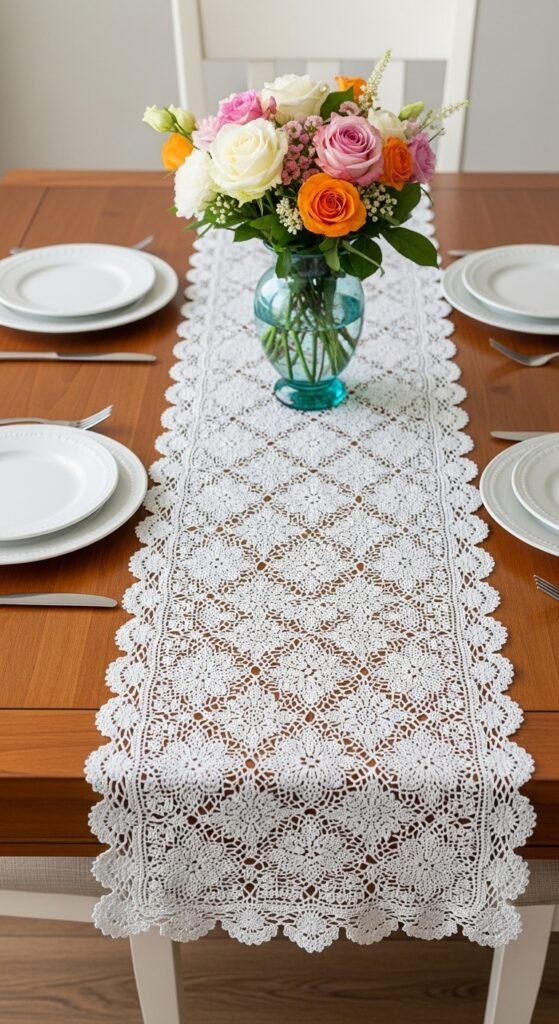
This project tests your endurance and consistency. It is a long repetitive pattern, which can be very meditative. It is a great way to practice a “shell stitch” or “chevron” pattern. The chevron (zigzag) is particularly popular for table runners as it adds dynamic movement to the table setting. You will learn how to increase and decrease in the same row to create the peaks and valleys of the ripple.
Pro Tip: Count your stitches at the end of every row on a chevron pattern. It is very easy to accidentally drop a stitch at the “valley” of the ripple.
Crochet Coffee Cup Caddy
A coffee cup caddy is a carrier that allows you to hold multiple cups or hang a cup from a stroller or bike handle. It’s a very niche but useful item. Visually, it looks like a harness for your cup. It’s a brilliant eco-friendly solution for those who walk to get their morning brew.
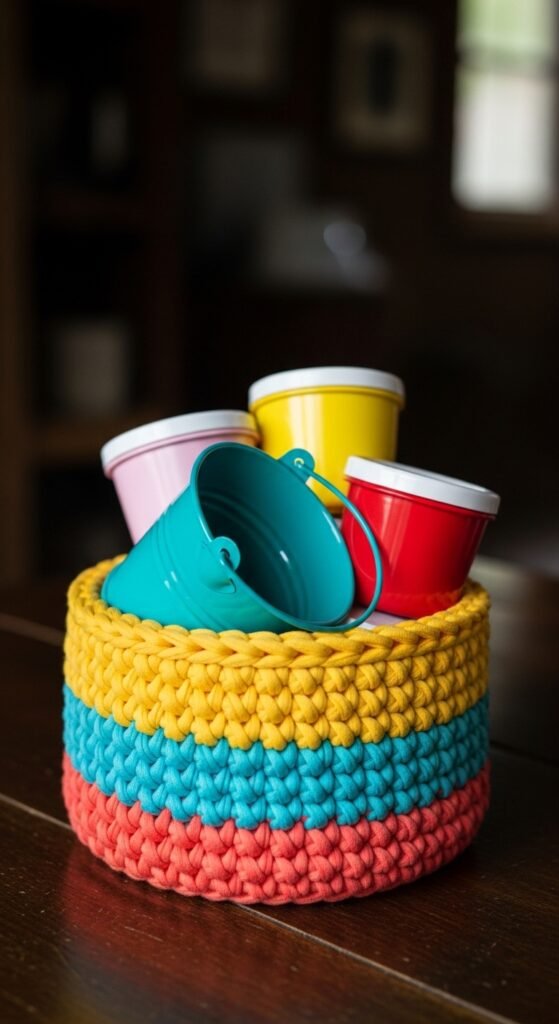
This project relies heavily on structural integrity. You need to create a base that is solid and straps that are reinforced. It teaches you about weight distribution in crochet. You will learn that chains alone are not strong enough for straps; they need to be worked back over with slip stitches or single crochets to prevent snapping.
Pro Tip: Use a non-stretchy cotton yarn. If the yarn stretches, your hot coffee might sag dangerously low while you are carrying it.
Crochet Pet Beds
A crochet pet bed is a luxury item for your furry friend. Using super chunky yarn or even old blankets cut into strips, you can make a plush, donut-shaped bed. The aesthetic is cozy and substantial. It looks like a high-end piece of furniture rather than a cheap plastic bed.
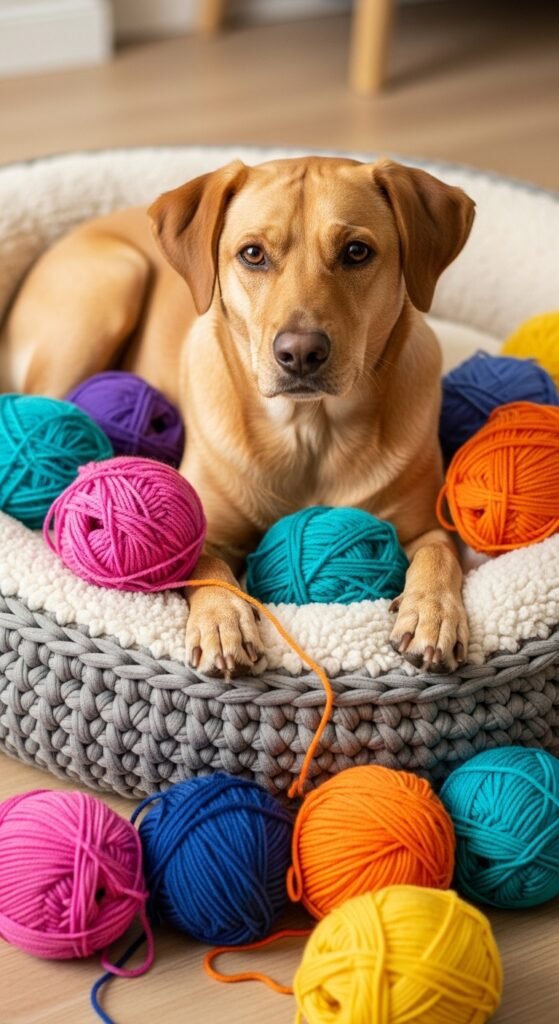
This is a large-scale project that works up quickly due to the thickness of the yarn. You will work in a large spiral, creating a flat base and then building up the sides. It is an exercise in managing heavy materials. Your hands and wrists will get a workout, but the result is incredibly satisfying.
Pro Tip: If you don’t want to buy expensive jumbo yarn, hold 4 or 5 strands of regular worsted weight yarn together to achieve the same thickness.
Crochet Kumihimo Bracelets
While Kumihimo is a Japanese braiding technique, you can combine it with crochet by crocheting a thin cord and then braiding it, or by adding beads to your crochet chains. The look is intricate and jewelry-like. These bracelets are stackable and colorful.
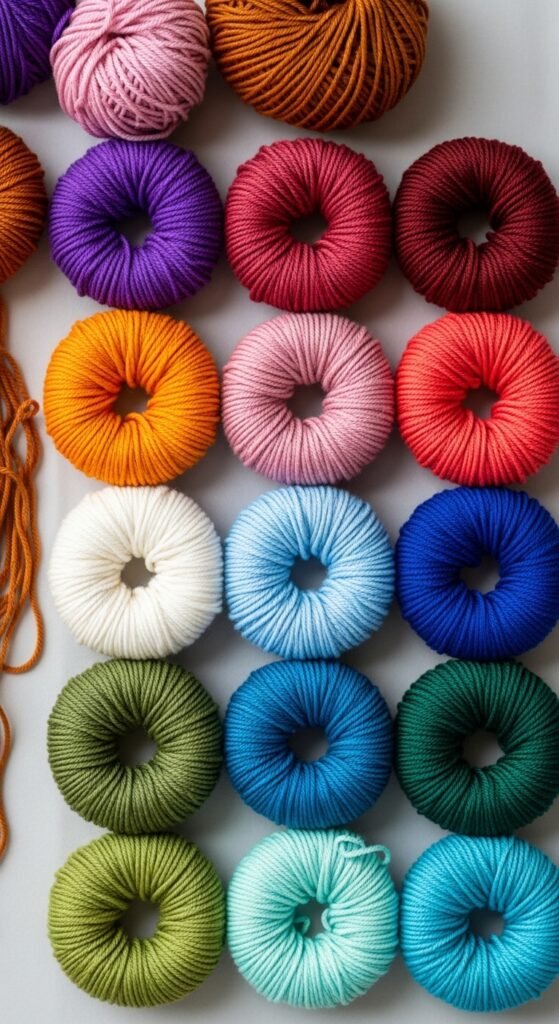
This project is about fine detail. You might be working with crochet thread and a tiny hook. It bridges the gap between fiber art and jewelry making. You will learn patience and dexterity. Adding beads requires you to string them onto the yarn before you start crocheting, a technique known as “beaded crochet.”
Pro Tip: secure the ends with jewelry glue in addition to knotting them to ensure the bracelet never comes undone.
Crochet Summer Hats
A bucket hat or a sun hat is a stylish summer staple. Crochet bucket hats have seen a massive resurgence in fashion. They are fun, retro, and practical. Using cotton or raffia yarn gives them the breathability needed for hot weather.
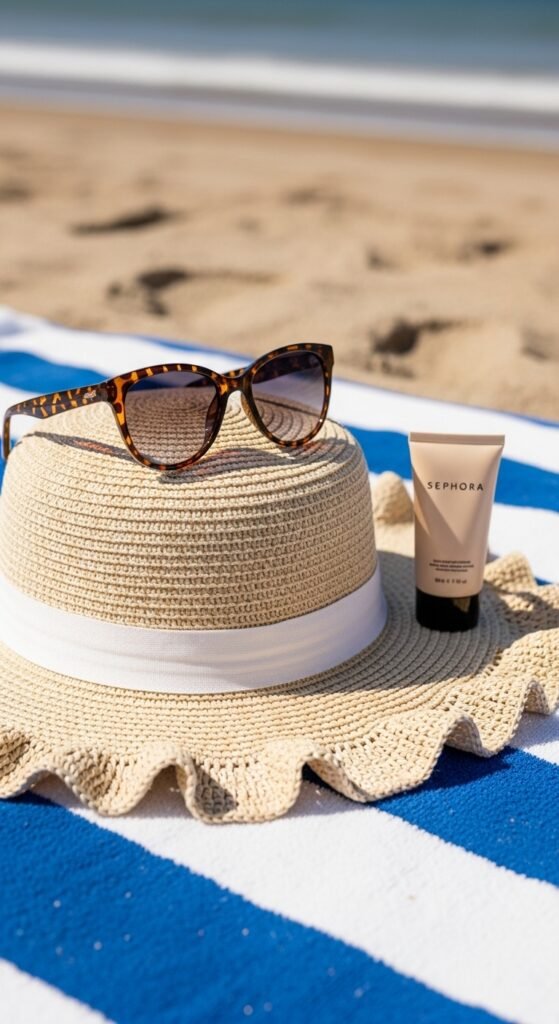
Construction-wise, a hat is just a bowl. You start with a flat circle for the crown, stop increasing to build the sides, and then increase again to create the brim. This project creates a 3D object that must fit a human body part, so checking gauge is critical. It is the perfect introduction to garment fitting.
Pro Tip: For a floppy brim, increase stitches rapidly. For a stiff brim that stands up, use a smaller hook and consider crocheting over a piece of craft wire for structure.
Crochet Mini Baskets
Mini baskets are perfect for organizing desk drawers, holding jewelry, or serving as planters for tiny succulents. They are quick, cute, and highly functional. A set of three nesting baskets (small, medium, large) creates a beautiful visual display.
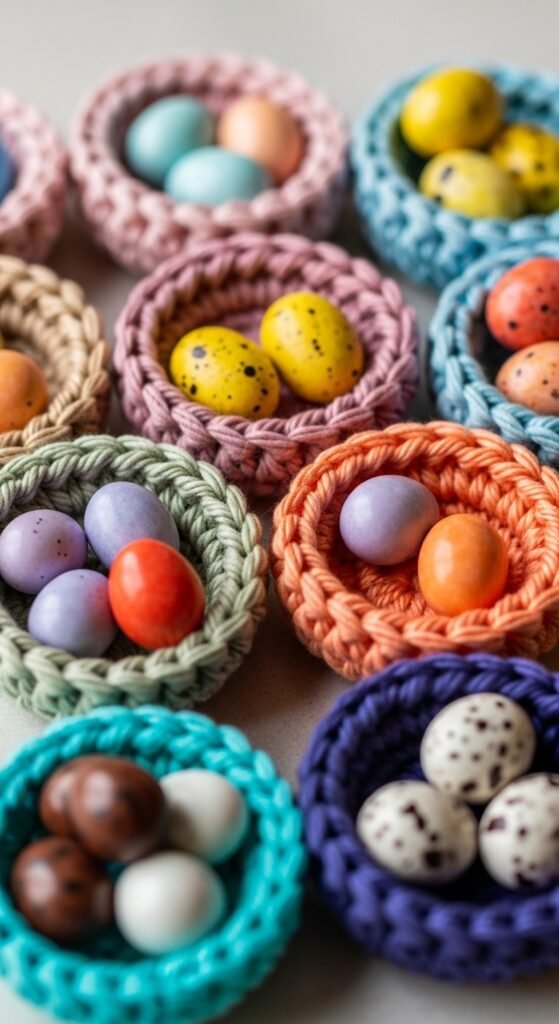
These are identical to the large baskets but on a smaller scale. They are excellent for testing out new stitch patterns. Because they are small, you can try a “star stitch” or “basketweave stitch” to see if you like the texture. If you don’t, you haven’t wasted much yarn.
Pro Tip: Fold the top edge of the basket down to create a cuff. This doubles the thickness of the rim and makes the basket much sturdier.
Crochet Toppers for Jars
Transform recycled glass jars into beautiful storage containers with crochet toppers. These are little “hats” for your jam jars or mason jars. You can use them to hold cotton balls, candy, or spices. Visually, they add a soft, cottage-style touch to hard glass surfaces.
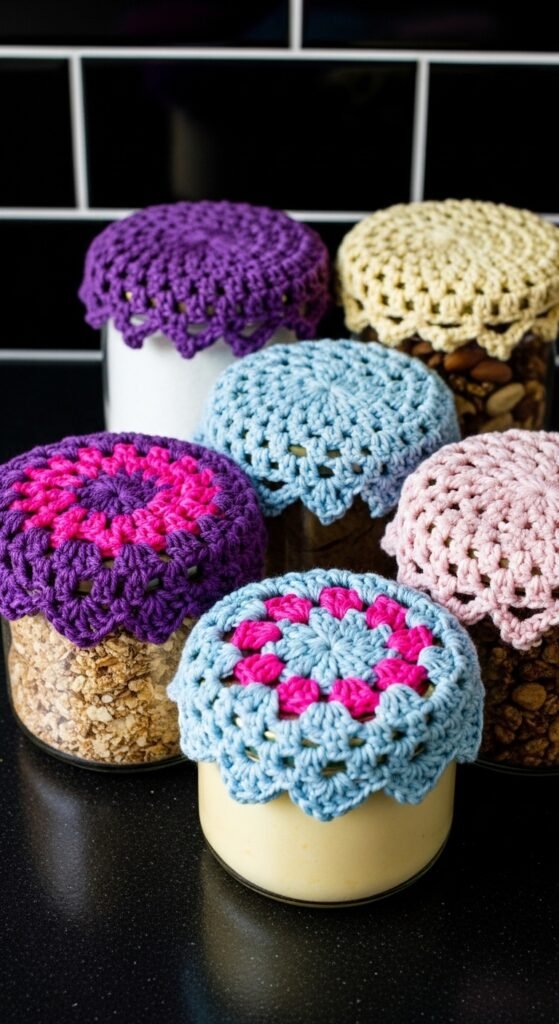
This project usually involves crocheting a circle that fits the lid, and then working a few rows down the side to grip the rim. You can add a ruffle or a lace edge for decoration. It’s a great way to upcycle items you would otherwise throw away, fitting perfectly with the sustainable living trend.
Pro Tip: Thread a piece of thin elastic through the final row of the topper to ensure it grips the jar lid tightly and doesn’t slip off.
Popular Asked Questions
What is the easiest thing to crochet for a beginner?
The absolute easiest item is a small, flat square, such as a dishcloth or a coaster. These projects allow you to practice the basic motion of holding the yarn and hook without worrying about shaping, increasing, or decreasing. You simply go back and forth in rows.
Why is my crochet project curling?
Curling usually happens for one of two reasons. First, your tension might be too tight; try relaxing your grip or using a larger hook. Second, you might have accidentally missed or added stitches at the end of a row, causing the fabric to pull in or flare out. Counting your stitches every row prevents this.
Is crochet easier than knitting?
Many beginners find crochet easier because there is only one “live” stitch on the hook at a time. In knitting, you have an entire row of live stitches on the needle, and if you drop one, the whole piece can unravel. Crochet is also easier to correct if you make a mistake—you just pull the yarn to undo the last few stitches.
What supplies do I need to start crocheting?
You only need four basic things:
- Yarn: A medium weight (worsted) acrylic or cotton yarn is best for learning.
- Hook: A size H-8 (5.0mm) hook is the standard starter size.
- Scissors: Any sharp pair will do.
- Tapestry Needle: A large-eye needle to weave in the loose yarn ends when you finish.
Conclusion
Crochet is more than just a hobby; it is a way to slow down, create with intention, and fill your home with unique, handmade items. The 27 ideas listed here are designed to give you a quick win. You do not need to be an expert to make something beautiful. Start with a simple dishcloth or a chunky scarf, and let your confidence grow with every stitch.
Which of these projects will you try first? Let us know in the comments below!
Follow us on Pinterest for more crochet ideas for beginners inspiration.