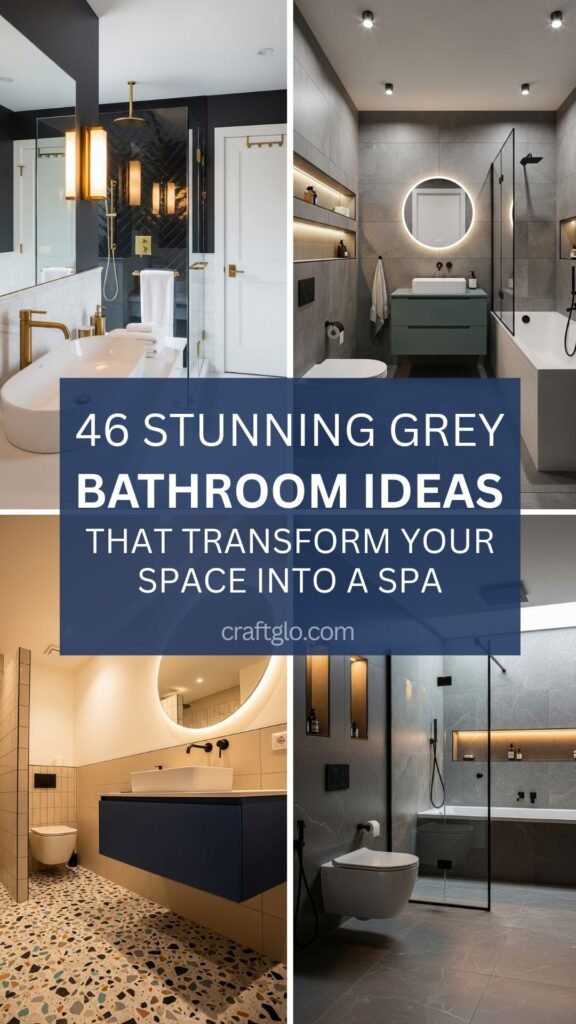
Grey remains the undisputed king of bathroom design. It offers a perfect balance between the starkness of white and the intensity of black. Many homeowners fear grey will feel cold or industrial, but the secret lies in the undertone and texture. This guide explores how to style modern grey bathroom designs that feel warm, inviting, and expensive.
We move beyond basic paint. You will see how slate textures, warm wood accents, and strategic lighting change everything. Whether you have a tiny powder room or a sprawling master bath, these ideas solve the problem of “boring” neutral spaces. We focus on budget-friendly styling tricks and high-end renovation inspiration.
Key Takeaways
- Texture is crucial. Mix smooth tiles with rough stone or wood to prevent a flat look.
- Lighting changes color. Cool LEDs make grey look blue, while warm bulbs bring out beige undertones.
- Metals matter. Gold and brass warm up the space, while chrome and matte black keep it cool and modern.
- Biophilic touches. Adding greenery is the fastest way to make a grey bathroom feel alive.
Table of Contents
- a Chic Oasis: Embracing Minimalism with a Splash Of Gold
- Sophisticated Serenity: Minimalist Meets Modern In Grey
- Sleek Serenity: Harmonizing Textured Tiles and Soft Curves In Modern Bath Spaces
- a Relaxing Retreat: the Urban Sanctuary In Subtle Grey Hues
- Sleek Serenity: Embracing Minimalist Elegance In a Grey Bathroom Oasis
- Embracing Angles: a Contemporary Grey Retreat
- a Harmonious Blend Of Chic Minimalism and Subtle Serenity
- Reviving Minimalism: a Chic Retreat In Soft Grey Herringbone
- Elegant Minimalism Meets Bold Accents
- Elevated Serenity: the Art Of Minimalist Grey Bathing
- a Symphony Of Texture: Embracing Minimalist Elegance In Grey
- Bold Harmony: Embracing Earthy Tones In a Modern Sanctuary
- Golden Elegance Meets Checkerboard Charm
- Elevate Your Routine: a Chic Sanctuary Of Subtle Elegance
- Sleek Serenity: the Allure Of Minimalistic Monochrome
- Serenity In Stone: Embrace Minimalist Elegance In Your Grey Oasis
- Serene Sanctuary: the Modern Grey Oasis
- Urban Sanctuary: Where Concrete Meets Serenity
- Modern Oasis: Embracing the Serenity Of Soft Grey Elegance
- a Harmonious Haven: Embrace the Serenity Of Minimalist Grey Elegance
- Serenity In Shades: a Minimalist Escape with Modern Elegance
- Sleek Serenity: Where Urban Minimalism Meets Luxurious Comfort
- Sleek Sanctuary: the Monochrome Marvel Of Minimalist Elegance
- Sanctuary Of Shadows: Embracing Minimalism with Striking Black Accents
- Serene Oasis: Where Minimalism Meets Organic Touches
- Geometric Harmony: a Modern Retreat In Grayscale
- Sleek Serenity: a Monochrome Oasis with Illuminated Elegance
- Nature’s Elegance Meets Modern Chic In a Serene Grey Sanctuary
- Midnight Oasis: Embracing Urban Elegance In Bathroom Design
- Translucent Elegance: a Modern Retreat In Soft Greys
- Sleek Serenity: a Modern Retreat In Monochrome
- Emerald Elegance: a Touch Of Glam In a Gritty Grey Oasis
- Elevated Serenity: the Modern Monochrome Bathroom Oasis
- Reflections Of Serenity: the Modern Minimalist Grey Oasis
- Seafoam Elegance Meets Terrazzo Charm In a Chic Grey Retreat
- Golden Touch In a Gentle Grey Oasis
- Organic Serenity: the Art Of Minimalist Grey Bathroom Design
- Sleek Serenity: Where Minimalism Meets Modern Elegance
- Sleek Sanctuary: the Art Of Minimalist Grey Elegance
- Sculpted Serenity: the Modern Minimalist Grey Sanctuary
- Sleek Serenity: a Harmonized Haven Of Grey
- Urban Sanctuary: Merging Minimalism with Luxe Marble Accents
- Monochrome Serenity: the Art Of Zen In Grey Bathroom Design
- a Harmonious Blend Of Modern Elegance and Nature
- Golden Curves and Herringbone Dreams: a Shower Oasis
- Monochromatic Elegance: the Art Of Minimalist Grey Sanctuary
- Popular Asked Questions
1. a Chic Oasis: Embracing Minimalism with a Splash Of Gold
Grey and gold is a combination that immediately signals luxury. This design uses a soft, matte grey wall finish as a canvas. The visual interest comes entirely from the metallic hardware. Brushed gold faucets, cabinet handles, and light fixtures pop against the neutral background. This contrast prevents the room from feeling washed out or overly utilitarian.
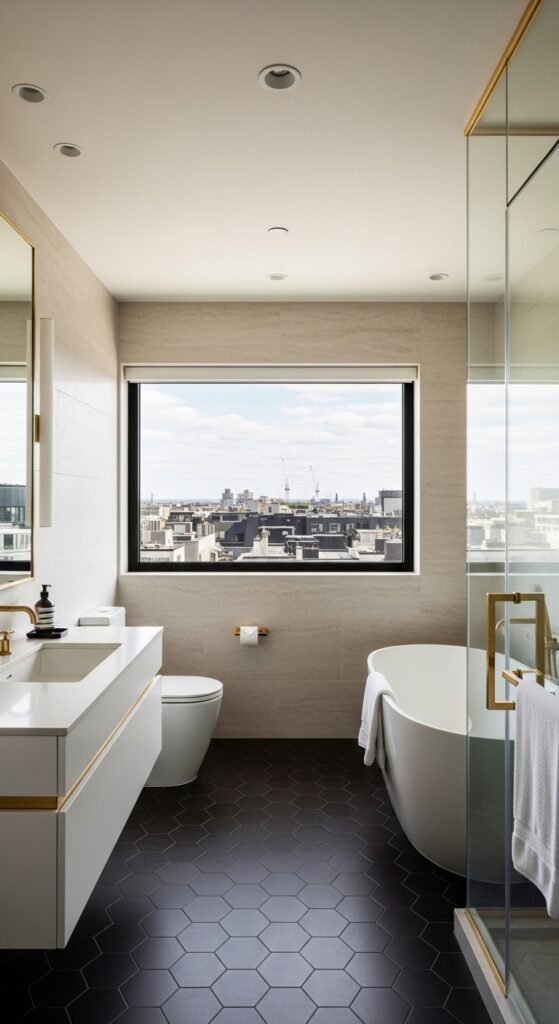
Lighting placement is critical here. Sconces with gold backing reflect warm light onto the grey surfaces, which changes the perceived temperature of the room. You do not need to renovate the whole space to achieve this. Simply swapping out chrome hardware for brass or gold can instantly update a tired grey bathroom. Keep the vanity simple and white or light grey to maintain the airy feel.
Pro Tip: Use a microfiber cloth to clean brushed gold fixtures to avoid water spots without scratching the finish.
2. Sophisticated Serenity: Minimalist Meets Modern In Grey
True sophistication often relies on restraint. This space uses large-format grey tiles that extend from the floor to the ceiling. By reducing grout lines, the room feels expansive and seamless. The tone here is a mid-range grey, similar to wet cement, which grounds the space without making it feel like a cave.
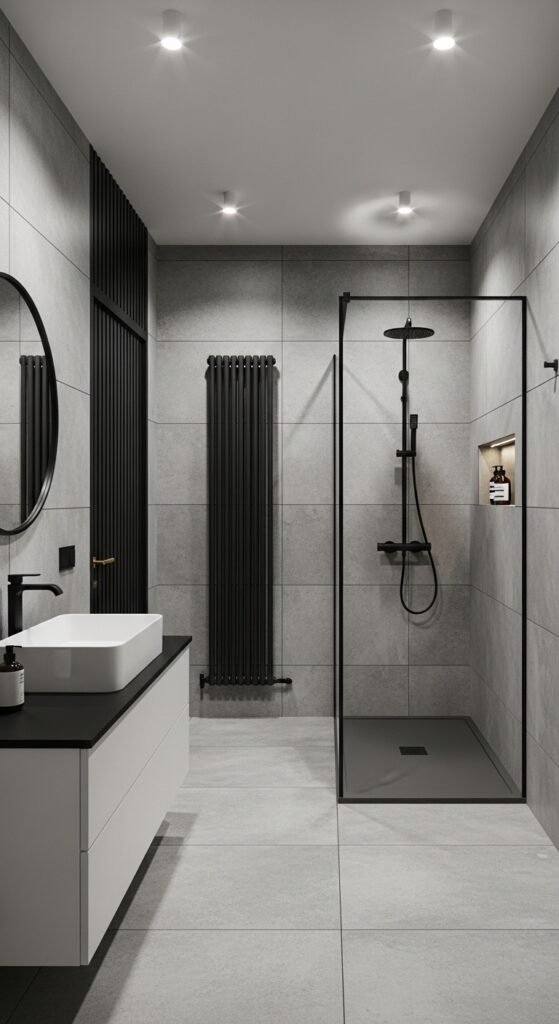
The furniture stays floating and minimal. A wall-mounted vanity keeps the floor visible, which is a classic trick to make small bathrooms appear larger. The lack of clutter allows the eye to rest. Texture plays a subtle role here; the tiles might have a slight stone grain, but they are not busy. This is the perfect style for those who want a spa-like atmosphere at home.
Pro Tip: Choose a “rectified” tile for this look. These tiles have precise edges that allow for extremely thin grout lines.
3. Sleek Serenity: Harmonizing Textured Tiles and Soft Curves In Modern Bath Space
Hard lines can make a grey bathroom feel clinical. This design counters that by introducing curves. Round mirrors, oval soaking tubs, and curved faucet necks break up the boxy nature of standard bathrooms. The grey element here comes from textured wall tiles that mimic natural stone or slate.
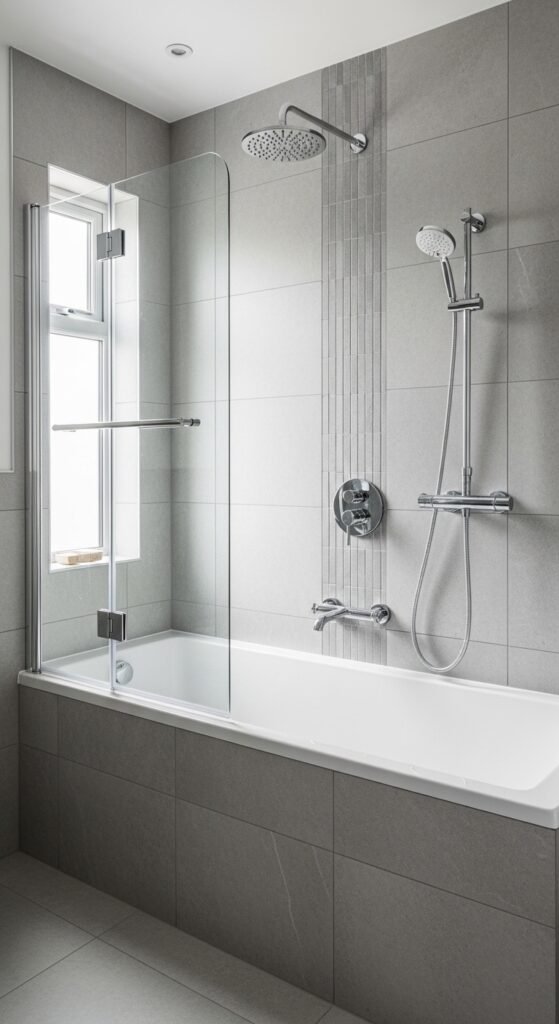
The juxtaposition of rough textures against smooth, curved porcelain creates a tactile experience. You want to touch the walls. The lighting should be soft and diffused, perhaps from a backlit round mirror, to enhance the curves. This approach softens the industrial edge of grey, making it family-friendly and relaxing rather than stark.
Pro Tip: If you can’t replace a square tub, add softness with a round rug and circular wall art.
4. a Relaxing Retreat: the Urban Sanctuary In Subtle Grey Hues
City living often means smaller spaces, but that does not mean sacrificing style. This urban sanctuary uses pale, misty grey tones to maximize light. The walls are likely painted in a satin finish to reflect natural light coming from windows or skylights. The design relies on efficiency and clean vertical lines.
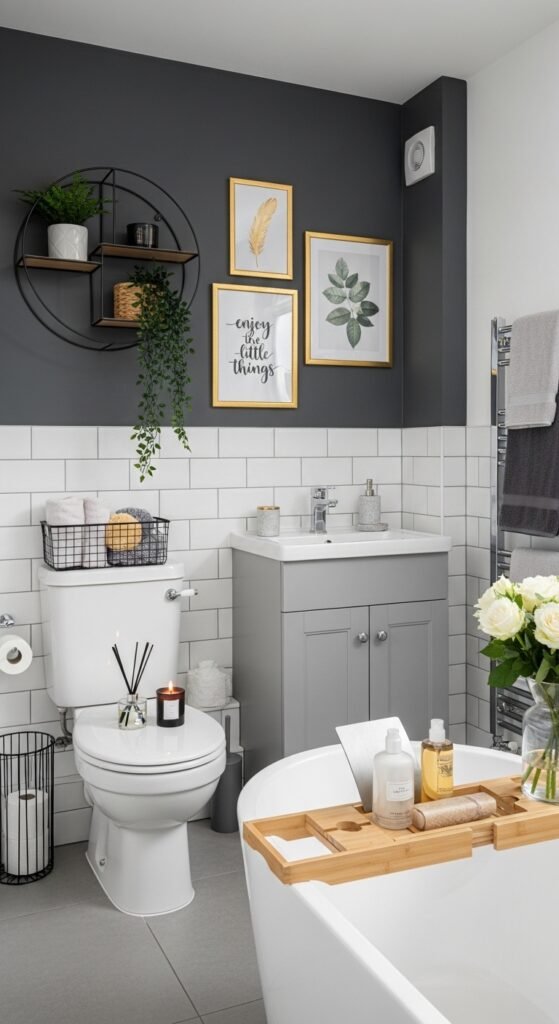
Storage is hidden behind sleek grey cabinetry that blends into the walls. This “invisible” storage reduces visual noise. The flooring might be a slightly darker shade to anchor the room. The overall vibe is quiet and functional. It is a retreat from the noise of the city outside. Accessories are kept to a minimum—perhaps a single glass vase or a stack of white towels.
Pro Tip: Use a glass shower partition instead of a curtain to keep the visual line unbroken in small urban baths.
5. Sleek Serenity: Embracing Minimalist Elegance In a Grey Bathroom Oasis
This iteration of sleek serenity focuses on the vanity area. A long, grey quartz countertop creates a horizontal line that draws the eye across the room. The grey here is uniform and solid, providing a sense of stability. The cabinetry below matches the countertop for a monochromatic block effect.
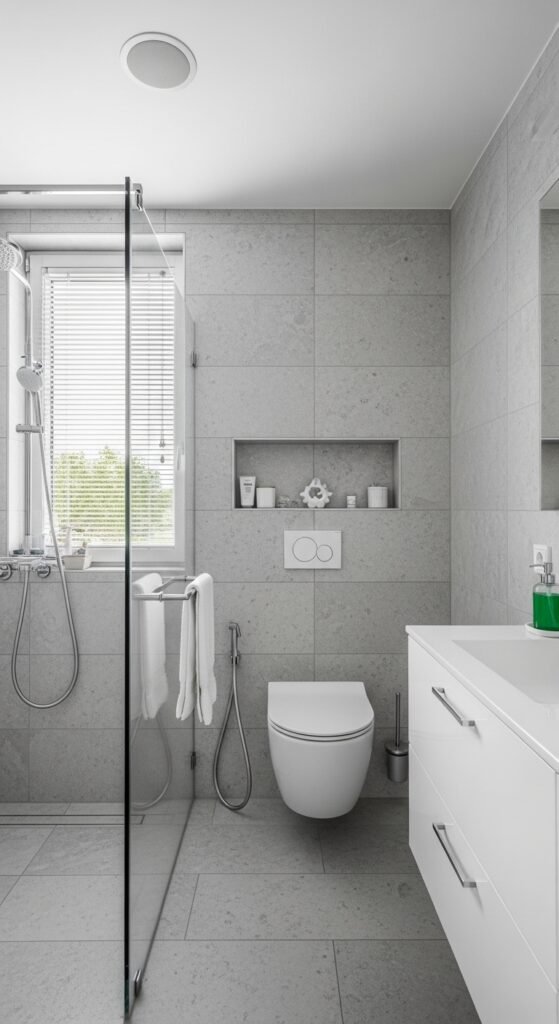
To prevent this block from feeling too heavy, under-cabinet lighting is used. This creates a floating effect and adds a layer of ambient light that is perfect for nighttime use. The mirror above is frameless, further emphasizing the minimalist aesthetic. This look works exceptionally well in master bathrooms where you have the width to accommodate a double vanity.
Pro Tip: Install a dimmer switch for the under-cabinet lighting to use it as a nightlight.
Comparison: Matte vs. Glossy Grey Finishes
| Feature | Matte Finish | Glossy Finish |
|---|---|---|
| Maintenance | Hides fingerprints and water spots well. | Shows smudges and water marks easily. |
| Light | Absorbs light, creating a cozy mood. | Reflects light, making spaces feel bigger. |
| Vibe | Modern, natural, understated. | Glamorous, high-energy, polished. |
| Best For | Flooring and high-touch cabinets. | Wall tiles and shower enclosures. |
6. Embracing Angles: a Contemporary Grey Retreat
Geometric shapes take center stage here. Hexagonal floor tiles or chevron wall patterns add energy to the grey palette. The color itself is kept consistent, but the pattern creates movement. This is a great way to add personality without introducing a bold color that you might tire of later.
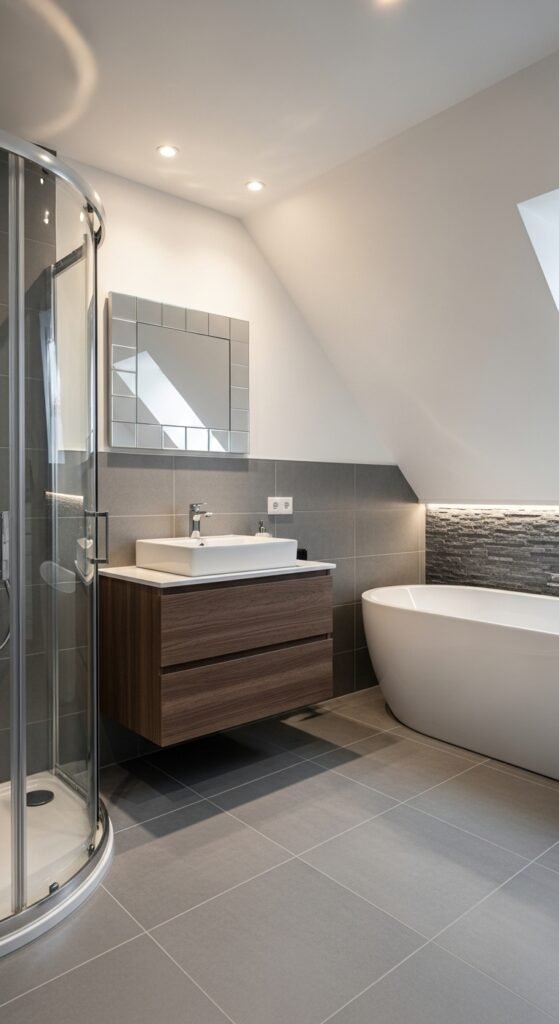
The angles can be repeated in the fixtures—think square sinks and angular faucets. The sharp lines feel decidedly modern and masculine. To keep it from feeling too chaotic, keep the grout color close to the tile color. A high-contrast grout would make the pattern too busy. This design proves that grey is anything but boring when applied with geometric creativity.
Pro Tip: Use a “layout visualizer” tool online before installing patterned tiles to ensure the cuts look right at the edges of the room.
7. a Harmonious Blend Of Chic Minimalism and Subtle Serenity
This style blends the warmth of beige with the cool of grey, often called “greige.” It is the ultimate neutral. The walls might be a very pale warm grey, paired with natural wood elements like a teak stool or an oak vanity. The wood tones cut through the grey and add organic warmth.
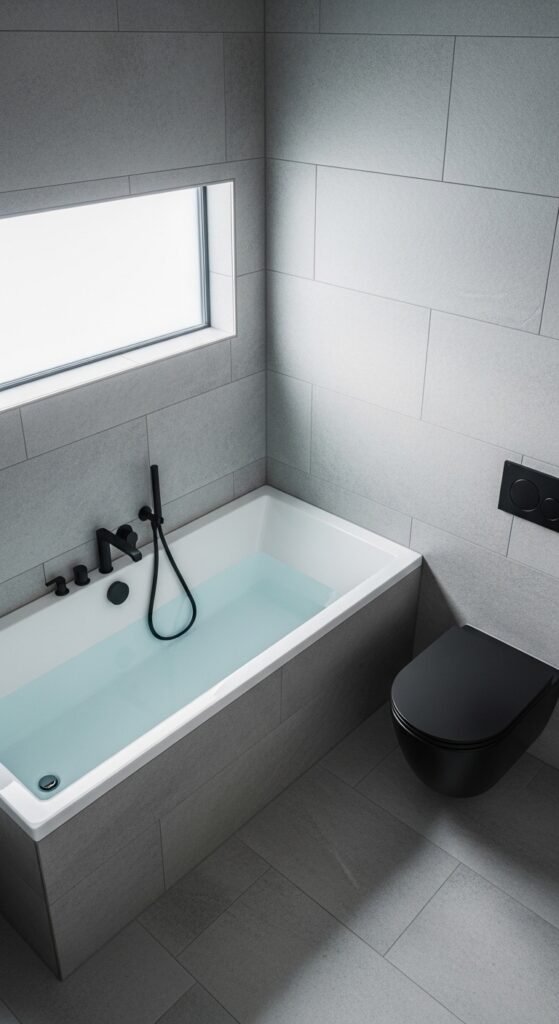
The minimalism here is about selecting only essential items that are beautiful. A freestanding tub becomes a sculpture. A ladder towel rack adds function without bulk. The lighting is warm (2700K-3000K) to enhance the wood tones. This harmony between cool paint and warm wood creates a balanced environment that feels natural and grounded.
Save this idea to your Pinterest.
8. Reviving Minimalism: a Chic Retreat In Soft Grey Herringbone
Herringbone is a classic pattern that elevates any material. Using grey subway tiles in a herringbone layout turns a budget material into a design statement. This pattern works beautifully as a feature wall behind the vanity or inside the shower enclosure. The zigzag creates a sense of height and width simultaneously.
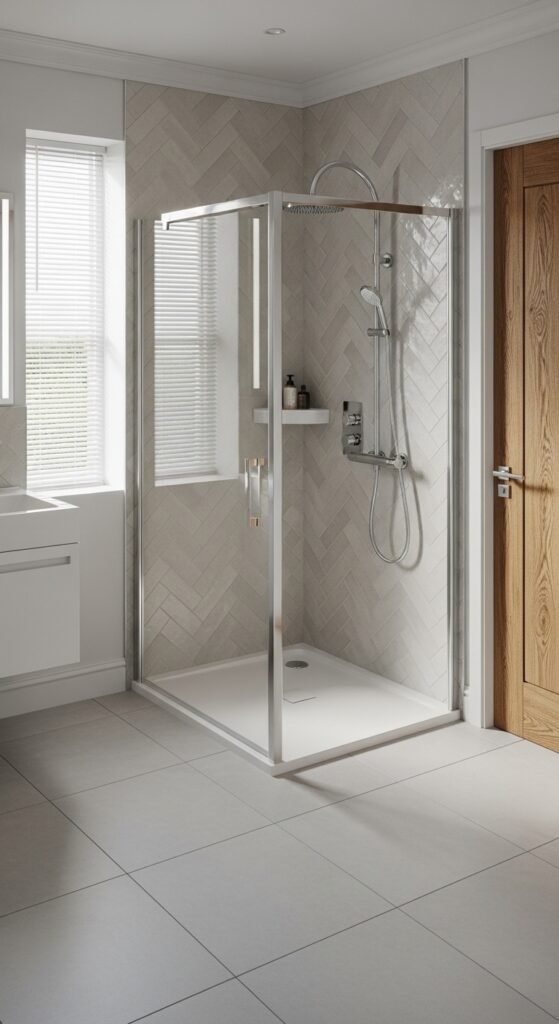
The rest of the room remains simple to let the pattern shine. Plain floor tiles and simple white fixtures ensure the herringbone remains the focal point. Soft grey grout emphasizes the pattern subtly. It is a nod to traditional parquet flooring but reinterpreted for a modern, wet environment.
Pro Tip: Herringbone installation requires more tile cuts and waste. Buy 15-20% extra tile rather than the standard 10%.
9. Elegant Minimalism Meets Bold Accents
Sometimes a grey bathroom needs a punch of drama. This design uses a charcoal or near-black grey for a feature wall or the floor. Against this dark backdrop, bold accents stand out. This could be a bright white freestanding tub, a piece of colorful abstract art, or a vibrant rug.
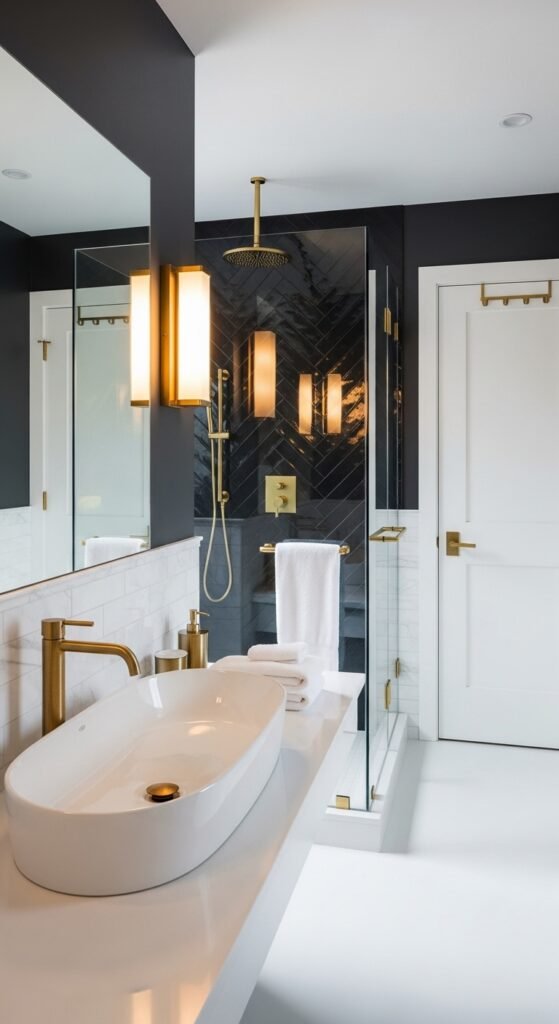
The high contrast is visually stimulating. It moves away from the “sleepy” spa vibe toward something more architectural and bold. Lighting is key here; dark walls absorb light, so you need strong overhead fixtures and task lighting at the mirror. This look is confident and perfect for powder rooms where you want to impress guests.
Pro Tip: If painting walls dark grey, use a paint with a slight sheen (eggshell or satin) to bounce a little light.
10. Elevated Serenity: the Art Of Minimalist Grey Bathing
The focus here is the bathing experience itself. The design centers around a deep soaking tub or a spacious walk-in shower. The grey tones are chosen to mimic natural bodies of water—slate blues and river rock greys. The materials are tactile; think pebble shower floors or honed limestone tiles.
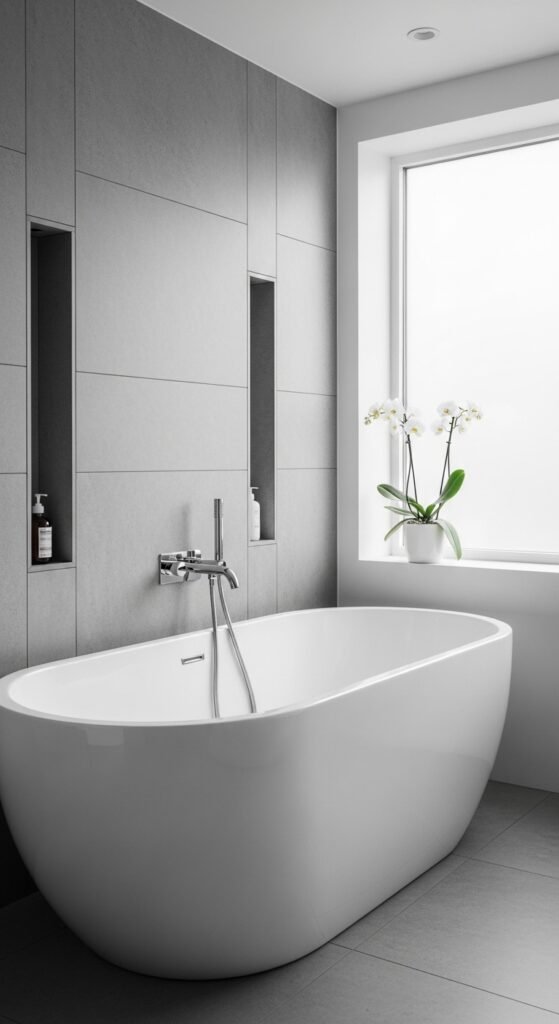
There is zero clutter. Niches are built into the walls to hold soap and shampoo, keeping ledges clear. The plumbing fixtures are likely wall-mounted to keep surfaces clean. This is minimalism with a purpose: to remove distractions so you can focus on relaxation. It is a “wet room” concept where the utility of washing becomes a ritual.
Pro Tip: Install a rain shower head to complete the sensory water experience.
11. a Symphony Of Texture: Embracing Minimalist Elegance In Grey
Monochrome designs die without texture. This space is a masterclass in layering different grey materials. You might see a concrete vanity top, a linen shower curtain, a woven grey rug, and glossy wall tiles. All are grey, but all reflect light differently.
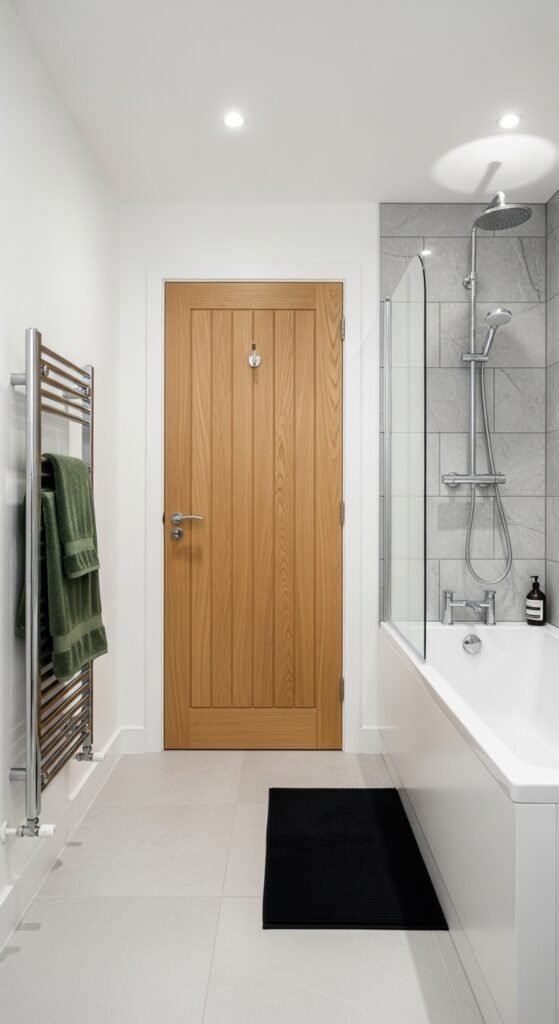
This layering creates depth. The eye travels from the rough concrete to the soft fabric. It makes the room feel cozy and curated. This style is very forgiving because you do not need to match shades perfectly. In fact, slight variations in the grey tones add to the organic, collected feel.
Pro Tip: Add a wicker or rattan basket for laundry to introduce a rough, natural texture that contrasts with smooth tiles.
12. Bold Harmony: Embracing Earthy Tones In a Modern Sanctuary
Grey acts as the perfect backdrop for earthy colors like terracotta, olive green, or rusty orange. In this design, a grey foundation (floors and walls) supports accessories or a vanity in these rich earth tones. It grounds the color, preventing it from overwhelming the space.
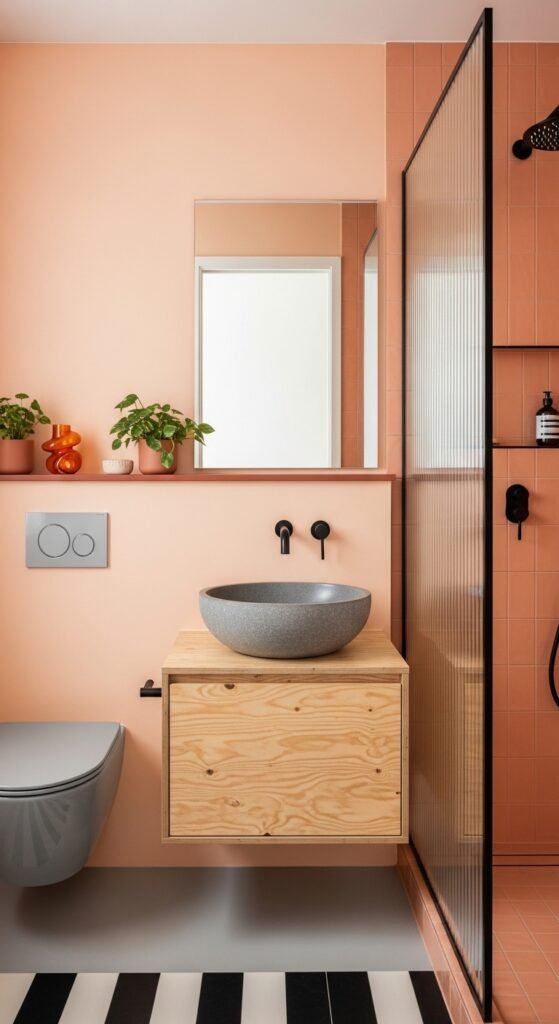
For example, a charcoal grey floor looks stunning with a rust-colored vanity cabinet. Or, pale grey walls can support olive green towels and plant pots. This connects the bathroom to the outdoors. It feels grounded and solid. The grey ensures the modern edge remains, while the earth tones provide the comfort.
Pro Tip: Swap out towels and bath mats seasonally. Earth tones in autumn, brighter whites in summer.
13. Golden Elegance Meets Checkerboard Charm
Checkerboard floors are having a massive resurgence. A grey and white marble checkerboard floor is timeless yet trendy. It gives the room a vintage European feel. To elevate this, pair it with gold or brass fixtures. The gold warms up the cool marble stone.
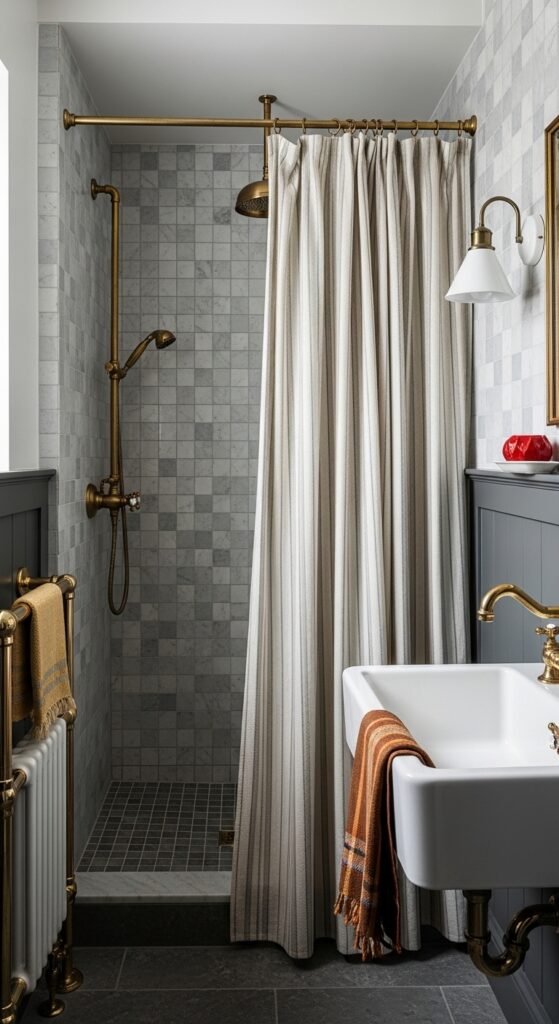
Keep the walls simple—perhaps a wainscoting painted in a soft dove grey. The busy floor pattern acts as the “rug” for the room. This style works particularly well in smaller bathrooms or guest baths where you can afford a slightly more expensive stone tile for the smaller square footage.
Pro Tip: Lay the checkerboard pattern on a diagonal (diamond shape) to make a narrow room look wider.
14. Elevate Your Routine: a Chic Sanctuary Of Subtle Elegance
Functionality meets beauty here. This design prioritizes the “getting ready” routine. It features a large, well-lit mirror, ample counter space, and organized storage. The grey palette is kept very pale and airy to promote wakefulness in the morning.
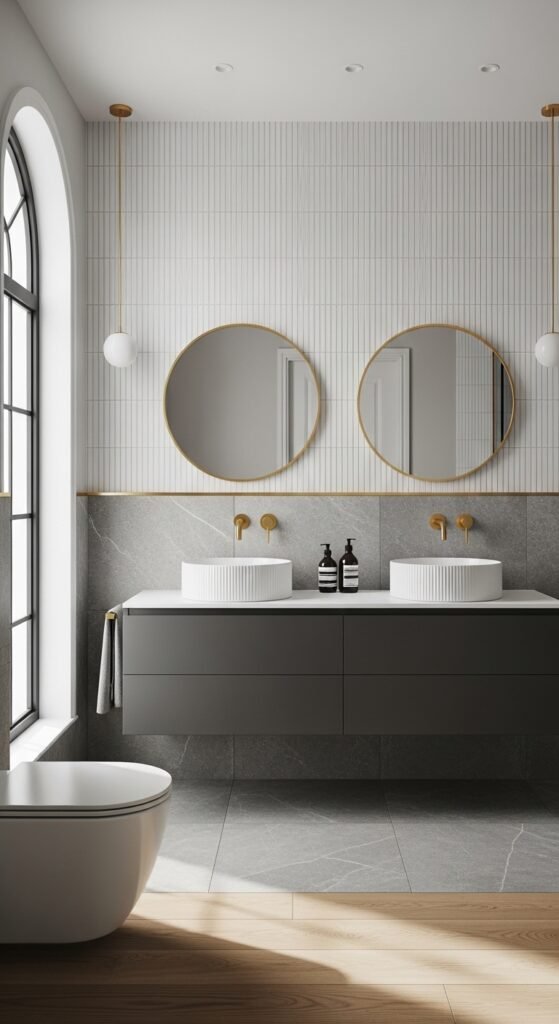
The materials are durable and easy to clean, like quartz and porcelain. The elegance comes from the details: a vase of fresh flowers, a beautiful tray for perfumes, or a high-quality soap dispenser. The background fades away to let your daily rituals take center stage. It is practical luxury at its finest.
Pro Tip: Use acrylic organizers inside drawers to keep makeup and grooming tools sorted and visible.
15. Sleek Serenity: the Allure Of Minimalistic Monochrome
This is for the purists. The entire room is dipped in a single shade of grey. To make this work, the architecture must be interesting. Perhaps there is a vaulted ceiling, a skylight, or an interesting window shape. The single color highlights the structural bones of the room.
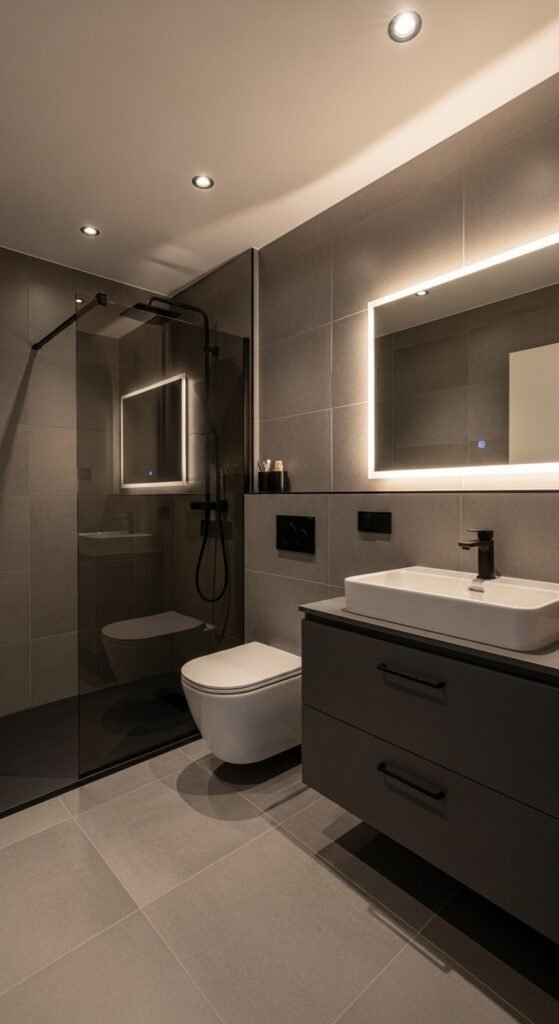
It is a bold choice that feels very high-fashion. To break it up slightly, rely on the finish of the materials. A matte wall paint next to a glossy tile of the exact same color creates a subtle visual vibration. It is calm, quiet, and incredibly chic.
16. Serenity In Stone: Embrace Minimalist Elegance In Your Grey Oasis
Natural stone is the star here. Large slabs of grey marble, travertine, or limestone cover the walls. The veining in the stone provides natural art. No two tiles are alike. This organic pattern is far more interesting than a painted wall.
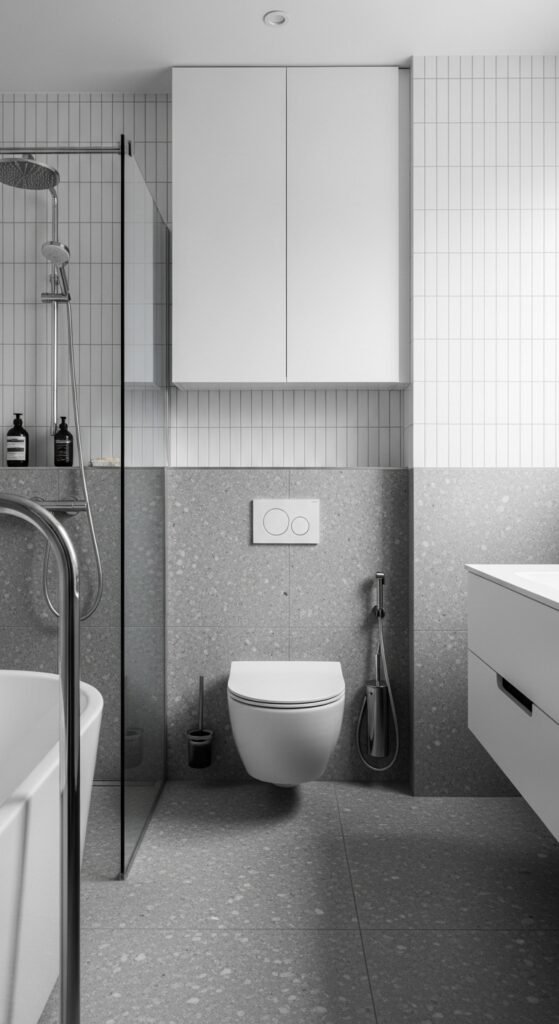
Because stone can be heavy, keep the fixtures light and floating. A glass shower enclosure is mandatory to not hide the beautiful stone work. The luxury factor here is high. It feels like a boutique hotel. The coolness of the stone is refreshing, perfect for a hot shower at the end of the day.
Pro Tip: Natural stone requires sealing every year to prevent staining from soap and oils.
17. Serene Sanctuary: the Modern Grey Oasis
This design incorporates technology for a modern oasis. Think smart mirrors with built-in LED lighting and Bluetooth speakers, digital shower controls, and heated grey towel racks. The aesthetic is futuristic and clean. The grey tones are cool—steely and metallic.
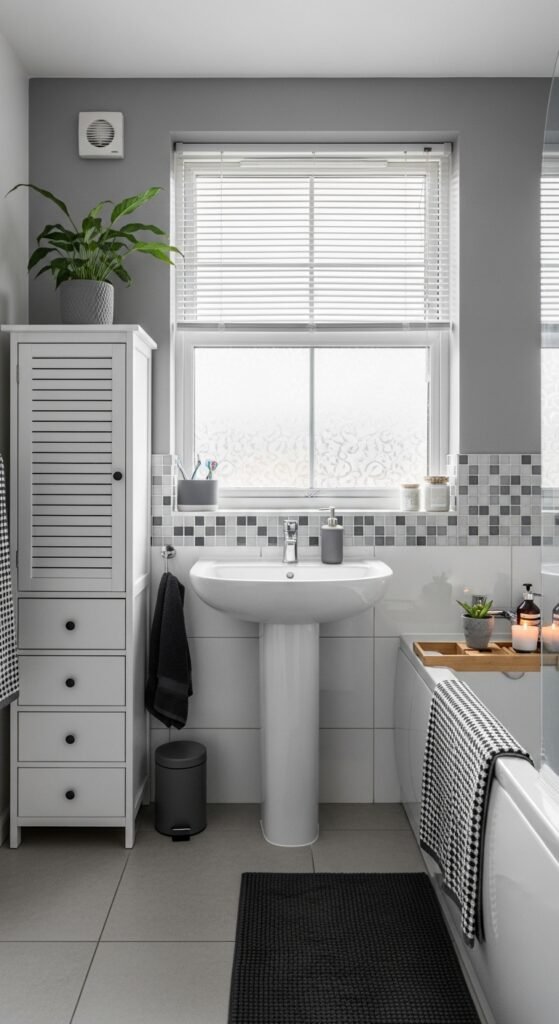
The lines are sharp and precise. There is no clutter; everything has a place. The focus is on efficiency and comfort through innovation. The grey color palette complements the tech gadgets perfectly, creating a cohesive, integrated look.
Pro Tip: If installing a heated floor, a programmable thermostat can save energy by only heating the floor during your typical shower times.
18. Urban Sanctuary: Where Concrete Meets Serenity
Located in the heart of industrial design, this style celebrates concrete. Whether it is real poured concrete walls or “concrete-look” large format tiles, the aesthetic is raw and unfinished. It pairs beautifully with exposed plumbing pipes and matte black fixtures.
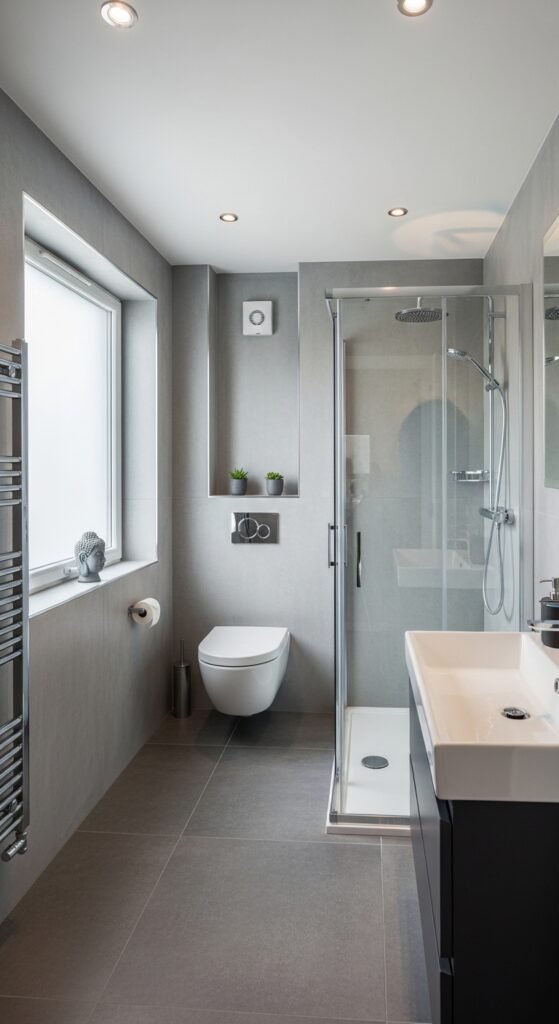
To keep it from feeling like a garage, add soft touches. A fluffy white rug, plush towels, and warm timber shelving soften the harshness. The grey of concrete has a unique depth that paint cannot replicate. It feels solid and permanent, a true sanctuary from the flimsy outside world.
Pro Tip: Concrete is porous. Ensure it is properly waxed or sealed to prevent water absorption and dark spots.
19. Modern Oasis: Embracing the Serenity Of Soft Grey Elegance
Soft grey, bordering on pastel, creates a feminine and airy atmosphere. This is often paired with white painted woodwork and trim. It is a traditional look updated for today. The grey is just enough to distinguish the walls from the white ceiling, adding height to the room.
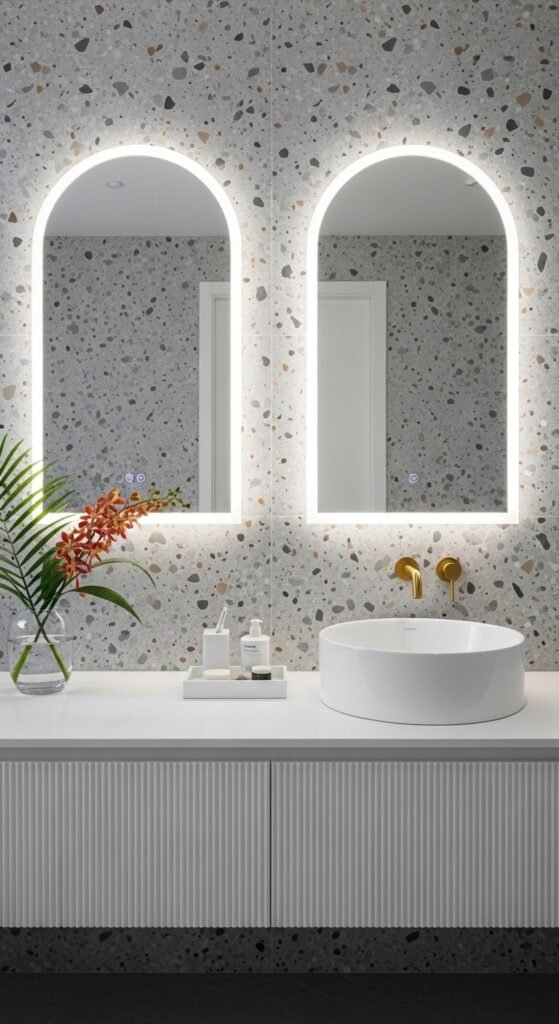
This style suits vintage-style fixtures, like a clawfoot tub painted grey or a pedestal sink. It is romantic and soft. Linen curtains on the window and a crystal chandelier would not look out of place here. It is the gentler side of the grey spectrum.
Pro Tip: Use a “warm grey” paint color that has a drop of red or yellow pigment to avoid a blue cast.
20. a Harmonious Haven: Embrace the Serenity Of Minimalist Grey Elegance
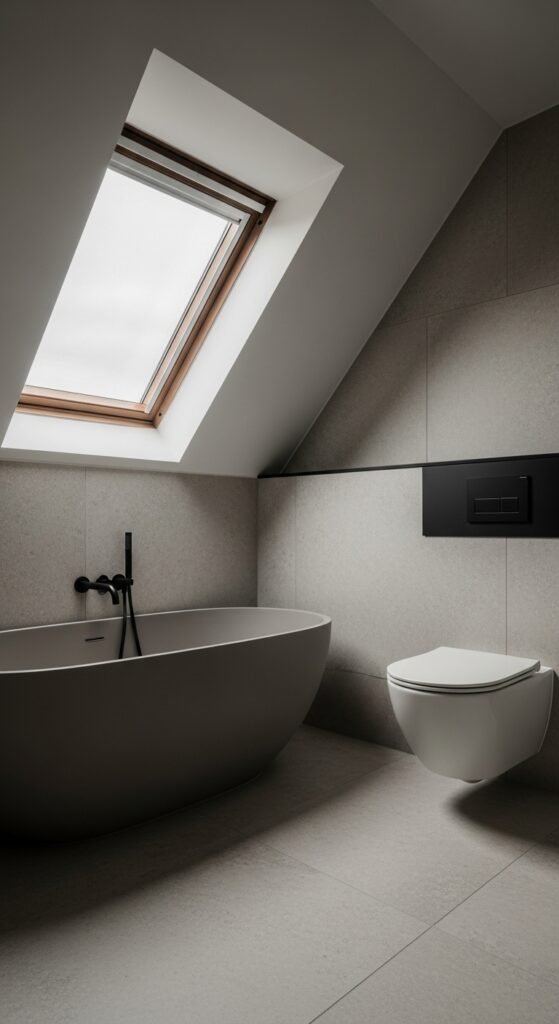
Balance is the goal here. The room is symmetrical. Double vanities, matching mirrors, and sconces on either side create a sense of order. The grey is a neutral medium tone that doesn’t distract.
This symmetry is pleasing to the human eye and creates a feeling of calm. The minimalism ensures that nothing breaks the symmetry. If you have a towel hook on the left, you have one on the right. It is a formal approach to bathroom design that feels very organized and upscale.
Pro Tip: When hanging mirrors, ensure the center of the mirror is at eye level, roughly 60-65 inches from the floor.
Comparison: Warm Grey vs. Cool Grey
| Feature | Warm Grey (Greige) | Cool Grey (Blue/Silver) |
|---|---|---|
| Undertones | Yellow, Red, Brown. | Blue, Green, Purple. |
| Feeling | Cozy, traditional, inviting. | Crisp, modern, airy. |
| Best Lighting | Soft White (2700K). | Daylight (5000K). |
| Pairs With | Wood, Cream, Brass. | Marble, Chrome, Black. |
21. Serenity In Shades: a Minimalist Escape with Modern Elegance
Ombré or gradient effects can be stunning in a bathroom. This design might use tiles that transition from dark grey at the bottom of the wall to white at the top. This draws the eye upward and makes the ceiling feel higher.
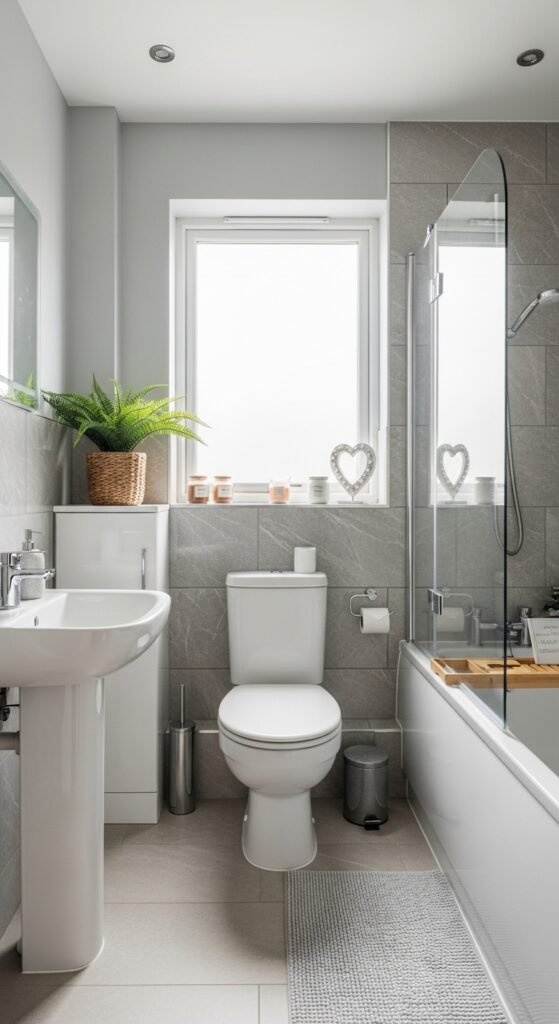
Alternatively, you can achieve this with paint or wallpaper. It adds an artistic touch that is subtle but effective. The furniture should be simple to let the wall treatment be the hero. It is a playful way to use grey without it being a solid block of color.
Pro Tip: Use darker grout on the lower, darker tiles and lighter grout on the upper tiles for a seamless fade.
22. Sleek Serenity: Where Urban Minimalism Meets Luxurious Comfort
This style merges the hard lines of urban design with the soft comfort of luxury. Think a concrete wall paired with a velvet vanity stool. Or industrial lighting fixtures paired with a high-pile rug. The grey connects these opposing elements.
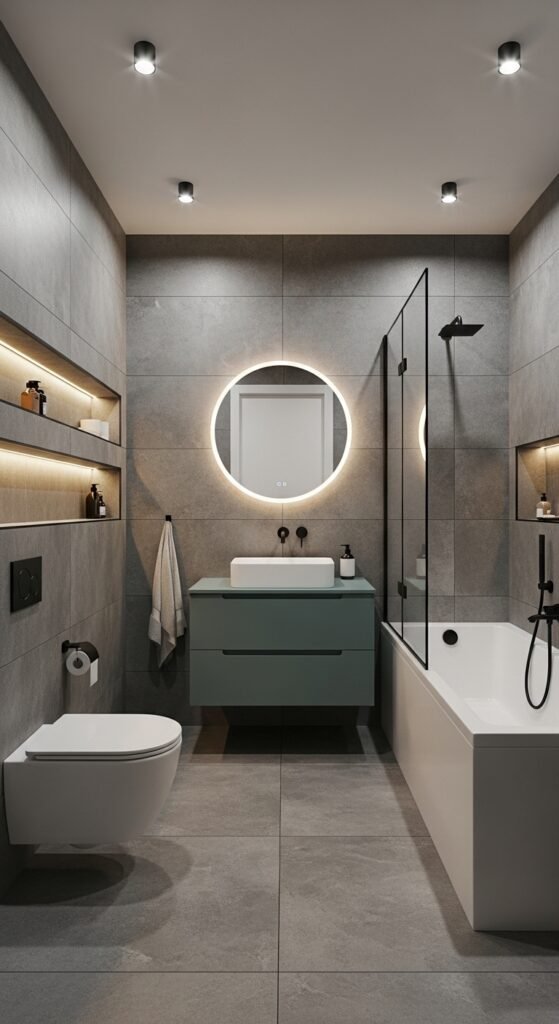
The luxury comes from the touch points—the handles, the seat, the towels. The urban element comes from the shell of the room. It is a sophisticated mix that suggests the owner appreciates both grit and glamour.
Pro Tip: Velvet in a bathroom is risky due to moisture. Choose “performance velvet” or outdoor fabrics that mimic the texture but repel water.
23. Sleek Sanctuary: The Monochrome Marvel Of Minimalist Elegance
Creating a sleek sanctuary often begins with understanding the power of tone-on-tone layering. In this design, the visual weight is distributed evenly by using a mid-tone grey for both the floor and the wall tiles. This technique blurs the boundaries of the room, effectively tricking the eye into perceiving the space as larger than it actually is. The smooth, matte finish of the tiles absorbs light rather than reflecting it harshly, which contributes to a soft and diffused atmosphere that is essential for relaxation. The absence of jarring patterns allows the mind to rest, making this an ideal setup for a master ensuite where tranquility is the primary goal.
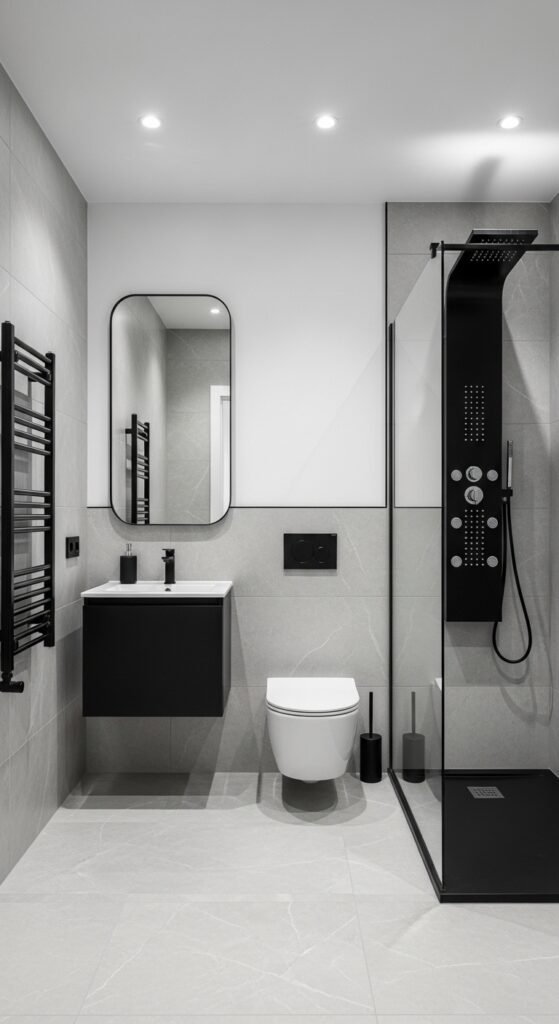
Minimalism here does not mean emptiness; it means intentionality. The floating vanity is a crucial element in this layout. By keeping the floor visible underneath the cabinetry, you maintain that sense of spaciousness. The sharp lines of the vanity contrast beautifully with the softness of the grey palette. To achieve this look, focus on “invisible” storage solutions like push-to-open drawers or integrated handles that do not break the visual continuity.
Pro Tip: Use a large, frameless mirror that spans the width of the vanity to double the visual impact of your lighting and make the grey tones feel airy rather than oppressive.
Save this idea to your Pinterest.
24. Sanctuary Of Shadows: Embracing Minimalism with Striking Black Accents
There is a common misconception that grey bathrooms must be light and bright to feel welcoming. However, leaning into the darker side of the spectrum can create a moody and sophisticated “Sanctuary of Shadows.” This design utilizes charcoal and slate grey tones to create a cocoon-like effect. The drama here comes from the high contrast introduced by striking black accents. Matte black faucets, shower frames, and towel rails act as punctuation marks in the design. They provide definition and prevent the dark grey walls from feeling like a shapeless void.
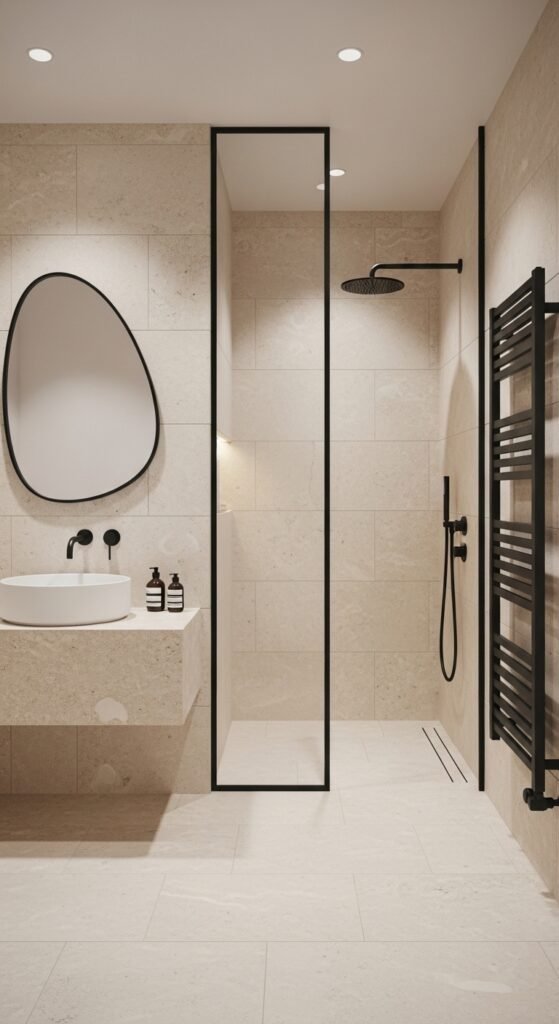
The lighting design in a darker bathroom is critical. Instead of relying on a single overhead light which can cast unflattering shadows, this style benefits from ambient backlighting. LED strips tucked behind a mirror or within a shower niche can create a warm glow that offsets the coolness of the charcoal tiles. This interplay of shadow and light highlights the texture of the materials, whether it is a slate tile or a concrete-effect wall finish. It turns the bathroom into a private retreat that feels completely separated from the outside world.
Pro Tip: When using dark grey and black, ensure you choose a “warm” LED light bulb (around 3000K) to keep the space feeling cozy rather than like a cave.
25. Serene Oasis: Where Minimalism Meets Organic Touches
The “Serene Oasis” style addresses the biggest fear homeowners have about grey: that it will feel cold. The solution lies in the introduction of organic touches. This design starts with a neutral, pale grey base—think dove grey or a soft greige—which serves as a blank canvas. The magic happens with the layering of natural materials. A light oak vanity, a bamboo bath mat, or woven seagrass baskets introduce warmth and texture that instantly softens the clinical nature of the grey tiles.
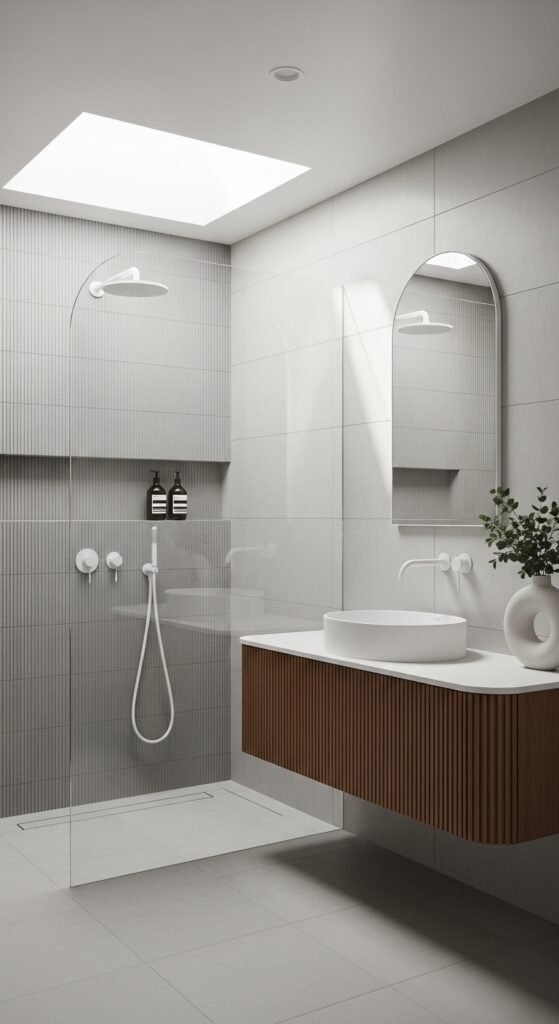
Biophilic design principles are at play here. The connection to nature is not just aesthetic but psychological, promoting a sense of well-being. The grey tiles often feature a stone-like texture, mimicking natural river rocks or limestone. This tactile element invites touch and breaks up the visual monotony. Greenery is the final, non-negotiable accessory in this look. The vibrant green of a pothos plant or a fiddle leaf fig pops incredibly well against a grey background, breathing life into the space.
Pro Tip: Choose moisture-loving plants like ferns or peace lilies that thrive in the humid environment of a bathroom to keep maintenance low.
26. Geometric Harmony: a Modern Retreat In Grayscale
Geometric Harmony is for those who love order, structure, and a touch of modern art in their daily lives. This style moves away from solid blocks of color and embraces pattern through tiling. Hexagonal tiles, herringbone patterns, or chevron layouts in varying shades of grey create a dynamic floor or feature wall. The key is to keep the rest of the room relatively simple so the pattern does not become overwhelming. If the floor is a busy geometric mosaic, the walls should remain a solid, calming grey or white.
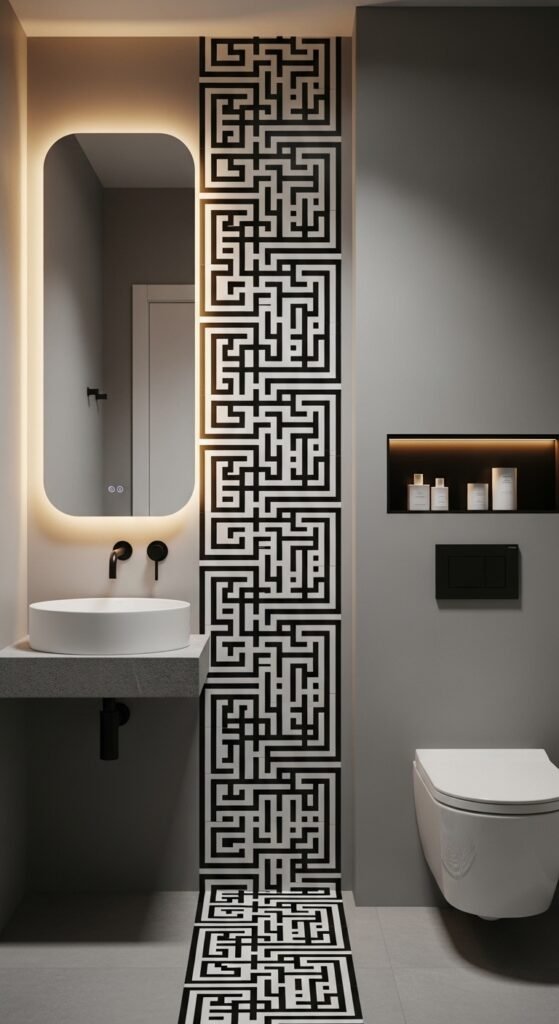
The visual interest here is derived from the repetition of shapes. It creates a rhythm in the room that guides the eye. For example, a hexagonal tile floor can lead the eye toward a freestanding tub or a beautiful glass shower enclosure. This style works exceptionally well in smaller bathrooms or powder rooms where you can afford to be bold with expensive tile because the square footage is limited. The grayscale palette keeps the busy patterns from looking chaotic, maintaining a sense of sophisticated harmony.
Pro Tip: Use a grout color that matches the tile for a subtle texture, or a contrasting white grout to make the geometric pattern pop boldly.
27. Sleek Serenity: a Monochrome Oasis with Illuminated Elegance
Lighting is often an afterthought in bathroom design, but in the “Sleek Serenity” concept, it is the main event. This design uses grey as a medium to manipulate light. High-gloss grey tiles or large-format polished porcelain are used to reflect light, creating a shimmering, water-like effect. This is particularly effective in windowless bathrooms where maximizing artificial light is necessary. The grey surfaces act as a mirror, bouncing light into dark corners and making the room feel bright and clean.
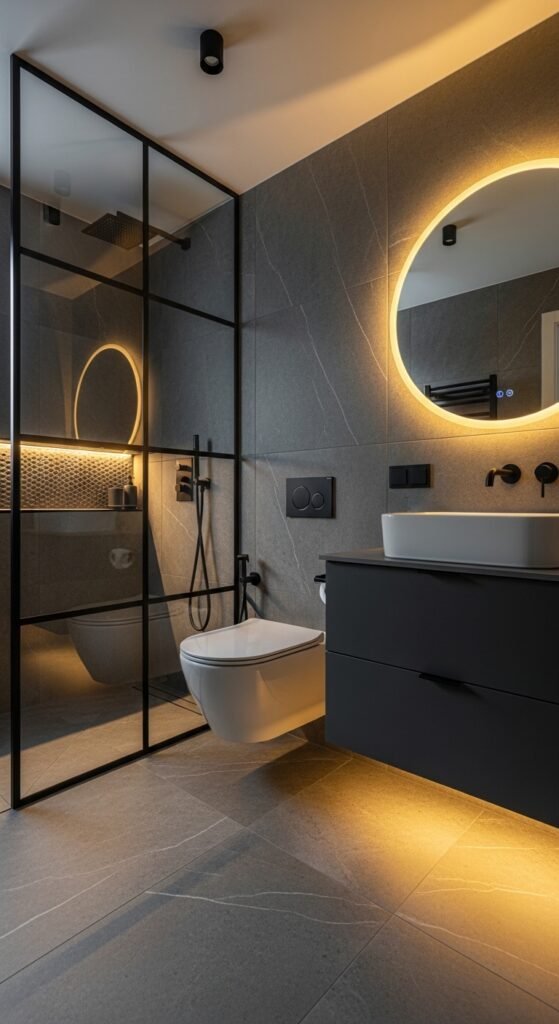
The “Illuminated Elegance” comes from integrated lighting features. We are talking about backlit mirrors, under-vanity lighting that makes the cabinet appear to float, and recessed lighting in shower niches. These hidden light sources wash the grey walls with a soft glow, highlighting the sleekness of the surfaces. It creates a futuristic, high-end hotel vibe that is incredibly impressive. The monochrome palette ensures that the lighting remains the star, with no clashing colors to distract the eye.
Pro Tip: Install a dimmer switch for your main lights. Being able to lower the brightness transforms the room from a practical workspace for makeup into a relaxing spa for a bath.
Save this idea to your Pinterest.
Comparison: Cool Grey vs. Warm Grey
| Feature | Cool Grey (Blue/Green Undertones) | Warm Grey (Brown/Yellow Undertones) | | :— | :— | :— | | Vibe | Crisp, Clean, Modern, Airy | Cozy, Earthy, inviting, Soft | | Best Lighting | Bright White (4000K) | Soft White (2700K – 3000K) | | Best Accents | Chrome, Silver, Black, White | Brass, Gold, Wood, Copper | | Ideal Room | South-facing (lots of natural light) | North-facing (needs warming up) | | Feeling | “Ice and Sky” | “Stone and Sand” |
28. Nature’s Elegance Meets Modern Chic In a Serene Grey Sanctuary
This design philosophy bridges the gap between the raw beauty of the outdoors and the refined lines of modern architecture. The “Nature’s Elegance” look utilizes large-format tiles that mimic natural stone, such as travertine or slate, but in updated grey tones. These materials have inherent variation in pattern and color, which means no two tiles look exactly alike. This natural irregularity adds character and depth that a simple painted wall cannot achieve.
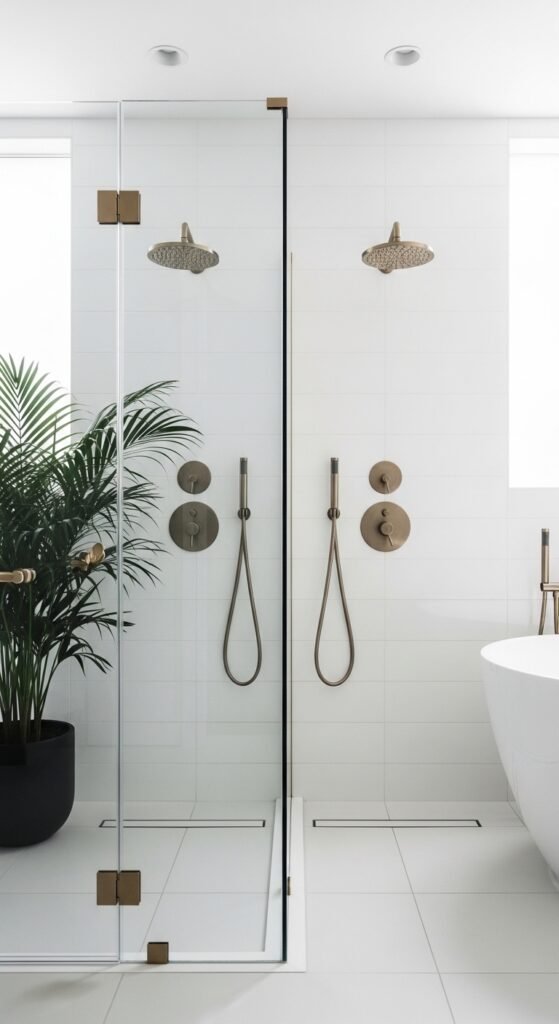
The “Modern Chic” aspect is introduced through the fixtures and layout. A frameless glass shower enclosure allows the beautiful stone work to be seen without obstruction. Minimalist chrome or brushed nickel hardware complements the cool tones of the stone without competing for attention. The juxtaposition of the rough, organic stone texture against the smooth, sleek glass and metal creates a tactile balance that is visually satisfying. It feels grounded and substantial, like a luxury spa carved out of a rock face.
Pro Tip: If using real stone requires too much maintenance, opt for high-quality porcelain tiles with a “rectified” edge, allowing for tiny grout lines that mimic the look of slab stone.
29. Midnight Oasis: Embracing Urban Elegance In Bathroom Design
“Midnight Oasis” is the epitome of city living—sleek, somewhat masculine, and undeniably cool. This style embraces the darker, industrial side of grey. We are looking at concrete finishes, exposed piping, or “gunmetal” grey fixtures. It reflects the urban landscape outside, bringing the grit and glamour of the city skyline indoors. The walls might feature a micro-cement finish, which offers a seamless, joint-free look that is very popular in high-end lofts.
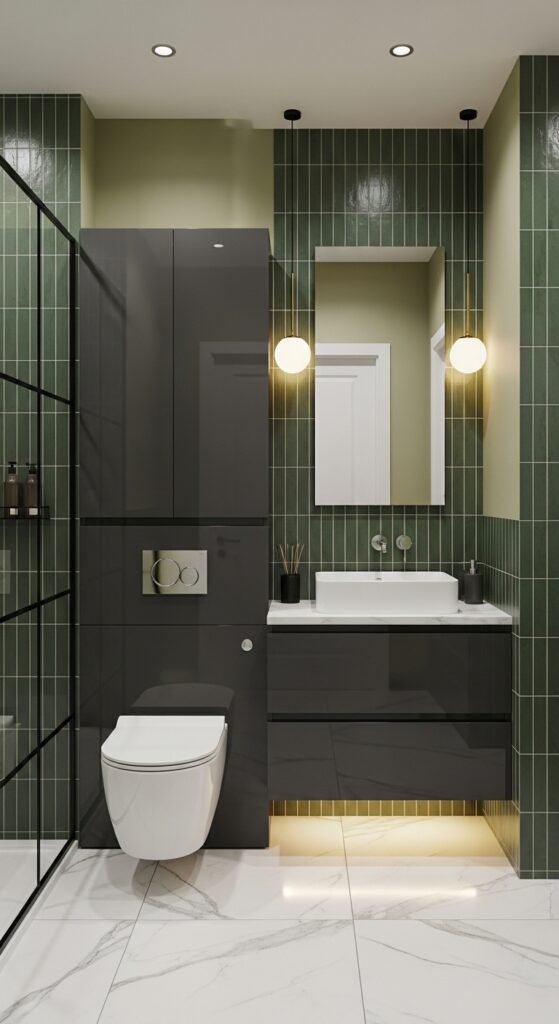
To prevent the space from feeling too harsh or industrial, “Urban Elegance” introduces touches of luxury. This could be a plush, high-pile rug, thick charcoal towels, or a statement piece of abstract art. The lighting is often dramatic, utilizing pendant lights with an industrial edge—think Edison bulbs or metal cages. This style is perfect for those who want their home to feel like a boutique hotel in downtown Manhattan. It is bold, unapologetic, and incredibly stylish.
Pro Tip: Soften the industrial edge by rolling your towels and displaying them on an open shelf; the fabric texture contrasts beautifully with concrete walls.
30. Translucent Elegance: a Modern Retreat In Soft Greys
“Translucent Elegance” focuses on the interplay of light and transparency to create an ethereal atmosphere. This design leans heavily on pale, misty greys that border on white. The goal is to create a space that feels weightless. Glass plays a huge role here—not just for the shower, but perhaps glass shelving, glass pendant lights, or even a translucent resin basin. These elements allow light to pass through them, ensuring that nothing blocks the visual flow of the room.
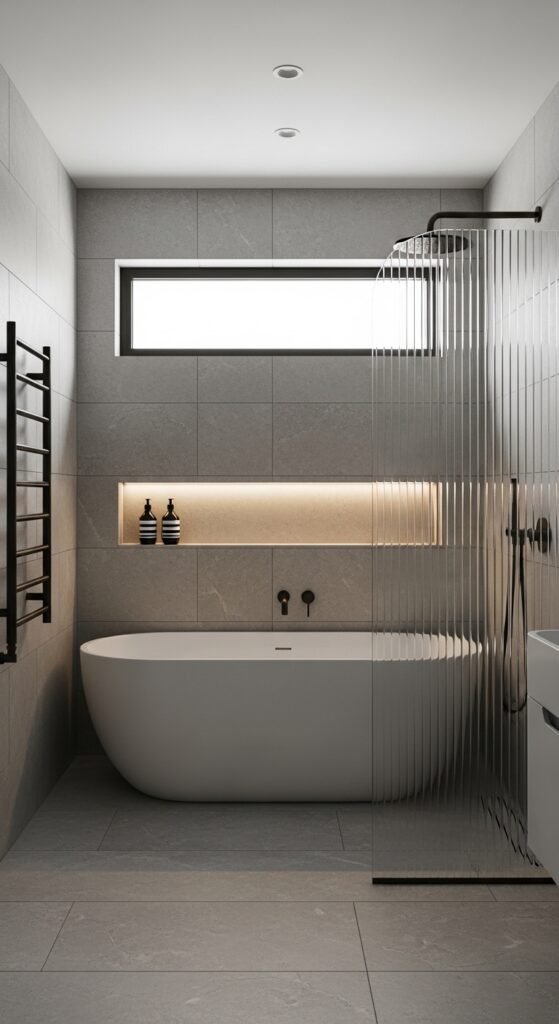
The soft grey palette acts as a gentle haze, blurring the hard edges of the room. It is a very feminine, romantic take on the grey trend. You might see tiles with a subtle pearlescent finish that catches the light, or frosted glass dividers that offer privacy without sacrificing brightness. This style is particularly effective in small bathrooms where you want to avoid solid, heavy blocks of furniture that can make the room feel cramped.
Pro Tip: Use a large mirror with a beveled edge. The bevel acts like a prism, refracting light and adding a tiny detail of “jewel-like” elegance to the soft grey scheme.
31. Sleek Serenity: a Modern Retreat In Monochrome
Monochrome does not have to mean boring. In this “Sleek Serenity” concept, the design relies on a strict palette of greys, from the palest silver to the deepest anthracite, to create visual interest. By removing other colors, you force the eye to notice form and texture. A curved freestanding bathtub becomes a sculptural masterpiece against a dark grey wall. A sharp, rectangular vanity stands out for its clean lines.
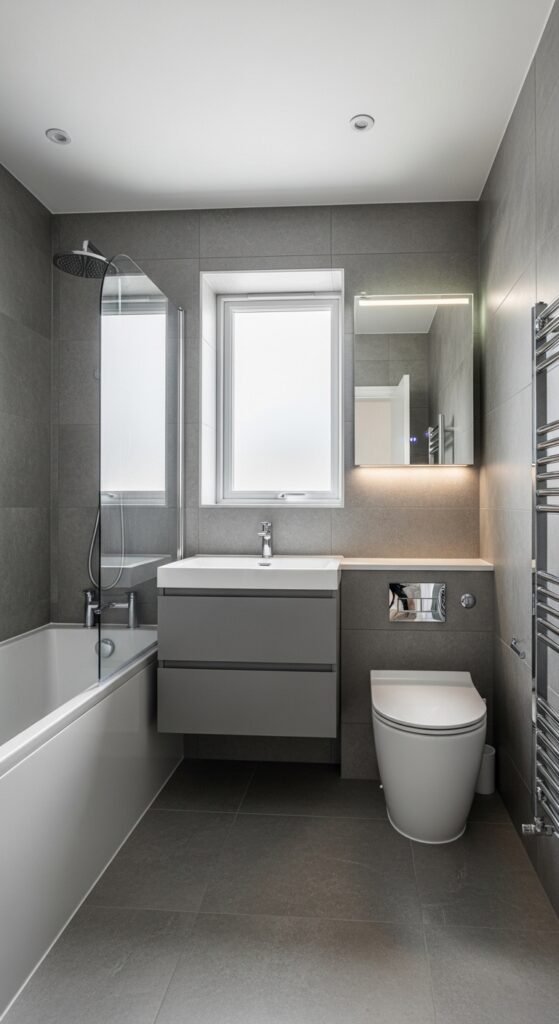
This approach requires discipline. Every item brought into the room must fit the monochrome criteria. Toothbrush holders, soap dispensers, and even the wastebasket need to be curated. The result is a space that feels incredibly orderly and calm. It quiets the mind because there is no “visual noise” from clashing colors. It is the architectural equivalent of a deep breath.
Pro Tip: To keep a monochrome room from looking flat, mix finishes. Pair a matte wall with a glossy vanity and a satin floor. The difference in light reflection creates depth.
32. Emerald Elegance: a Touch Of Glam In a Gritty Grey Oasis
Sometimes, a grey room just needs a single jewel to make it shine. “Emerald Elegance” takes a gritty, textured grey base—perhaps concrete or matte stone tiles—and elevates it with rich, deep green accents. Emerald green is a color associated with luxury, nature, and vitality. When paired with grey, it creates a sophisticated, moody vibe that is very on-trend for 2026.
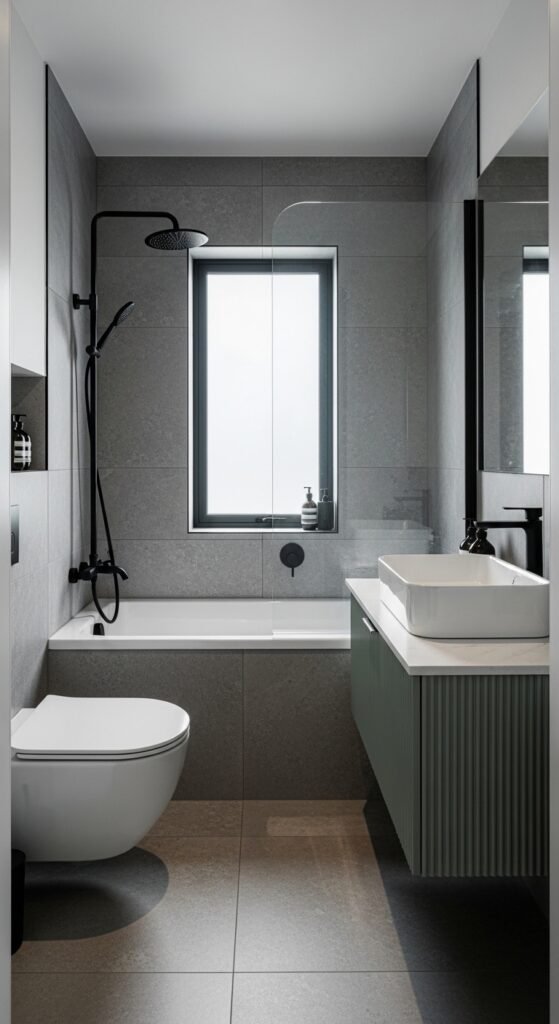
You can introduce this color through a painted vanity unit, emerald green subway tiles in the shower niche, or even just luxurious velvet styling touches if you are renting. The contrast between the industrial, “gritty” grey and the opulent, smooth green is striking. Gold or brass hardware is the perfect third element here; it warms up the grey and complements the regal nature of the emerald green perfectly.
Pro Tip: If you commit to an emerald vanity, keep the countertop white or light grey marble to ensure the green color remains the focal point and doesn’t darken the room too much.
Save this idea to your Pinterest.
Get The Look: The Essentials
Want to recreate these spa-like grey bathrooms? Here is your shopping checklist:
- The Hardware: Brushed Brass or Matte Black faucets.
- The Textiles: Charcoal waffle-weave towels or fluffy white Egyptian cotton.
- The Greenery: A Boston Fern or a Snake Plant in a woven basket.
- The Storage: Clear glass jars for cotton buds/pads to keep the counter clutter-free.
- The Scent: Eucalyptus or Sandalwood diffusers to match the visual calm.
33. Elevated Serenity: the Modern Monochrome Bathroom Oasis
“Elevated Serenity” takes the concept of a standard bathroom and pushes it towards a living-room aesthetic. This trend involves bringing non-traditional elements into the bathroom space. Think of a grey upholstered ottoman for seating, a vintage rug instead of a bath mat, or artwork that you would typically find in a hallway. The grey backdrop serves as a gallery wall, allowing these unique pieces to stand out.
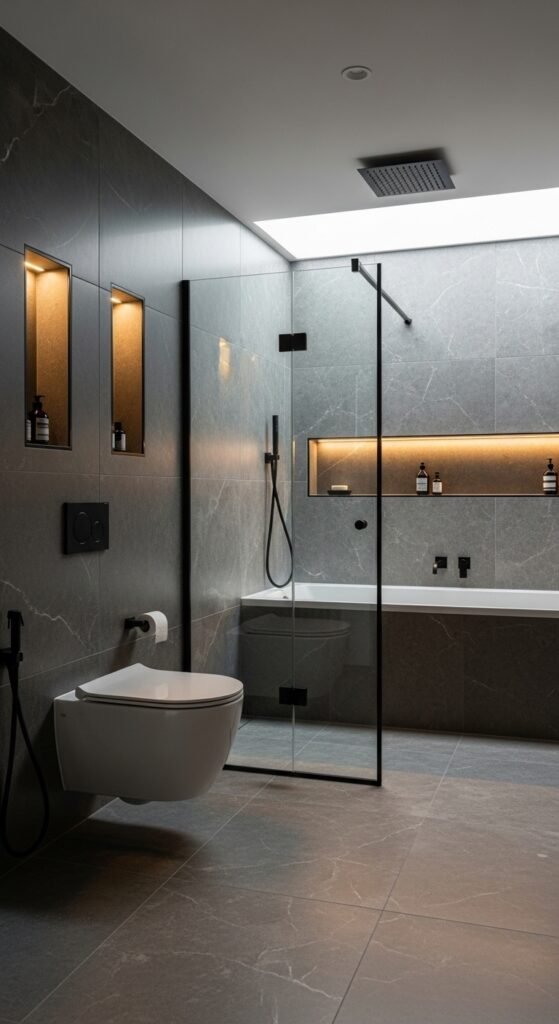
The “Modern Monochrome” base ensures that despite the eclectic additions, the room remains cohesive. It feels curated and expensive. This is a great way to inject personality into a rental where you cannot change the grey tiles. By layering “elevated” decor items, you draw the eye away from the fixtures and towards the design narrative you have created.
Pro Tip: Hang art properly! Even in a bathroom, art should be at eye level. Ensure it is framed in moisture-resistant materials or is a print that won’t be damaged by humidity.
34. Reflections Of Serenity: the Modern Minimalist Grey Oasis
Mirrors are the secret weapon of the interior designer, and “Reflections of Serenity” uses them to maximum effect. In a grey bathroom, mirrors do two things: they double the light and they break up the solid walls. This design often features wall-to-wall mirroring or multiple mirrors arranged artistically. The reflection of grey tiles creates an infinite loop of cool, calming tones.
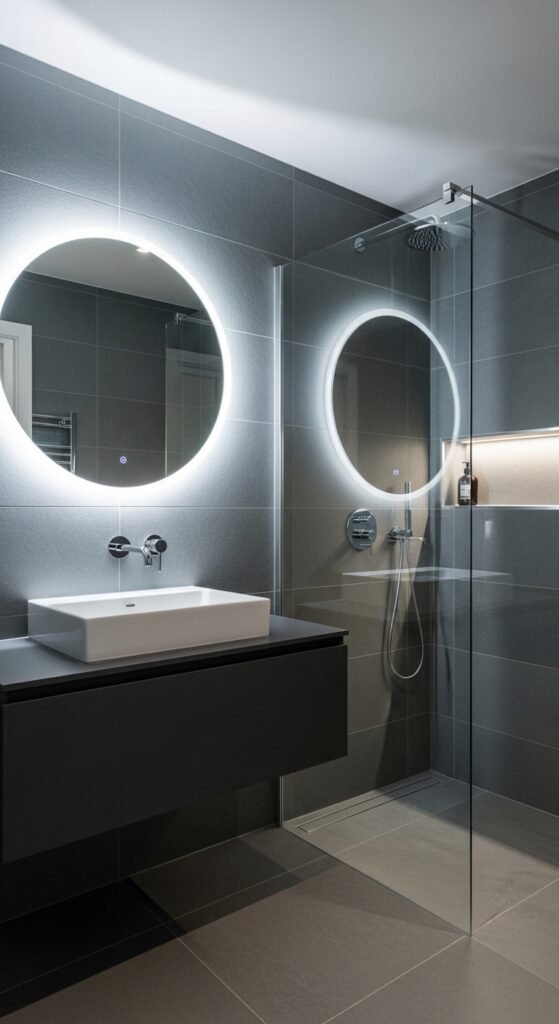
Minimalism is key here because you don’t want to double the clutter. The surfaces must remain clear. The grey tones used are often mid-range—neither too dark nor too light—to create a comfortable, neutral reflection. This style is fantastic for windowless bathrooms, as the mirrors can reflect artificial light sources to mimic the brightness of a window.
Pro Tip: Place a mirror opposite the bathroom door. It opens up the space immediately upon entering, making a small grey bathroom feel like a grand hall.
35. Seafoam Elegance Meets Terrazzo Charm In a Chic Grey Retreat
Terrazzo has made a massive comeback, and it is the perfect partner for a grey color scheme. This “Terrazzo Charm” style uses a grey-based terrazzo that features flecks of white, black, and—crucially—seafoam green. This introduces a subtle, playful color without painting the walls. The seafoam green picks up on the cool undertones of the grey, creating a coastal, breezy vibe that is very relaxing.
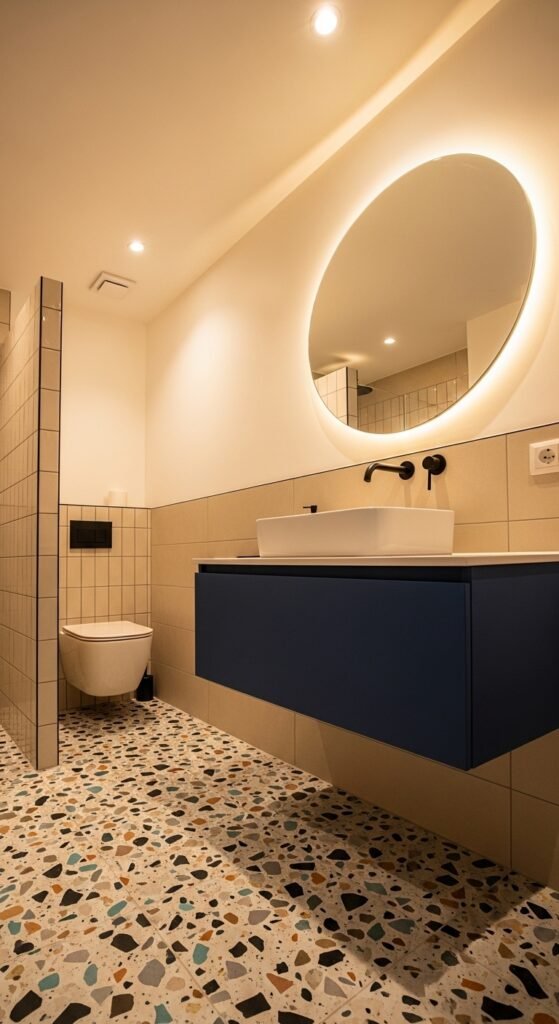
The “Chic Grey Retreat” is built around this feature material. You might use terrazzo for the floor and run it up one wall as a backsplash. The rest of the room remains a simple, solid grey or white to let the terrazzo pattern breathe. It is a fun, youthful take on the grey trend that feels retro yet thoroughly modern.
Pro Tip: Pull colors from the terrazzo flecks for your accessories. If there is a fleck of rust or mustard, use that color for your soap dish or towels for a cohesive look.
36. Golden Touch In a Gentle Grey Oasis
There is no combination more timelessly elegant than grey and gold. The “Golden Touch” design uses a soft, warm grey palette—think cashmere or putty tones—and accents it with brushed gold fixtures. The warmth of the gold cuts through the coolness of the grey, creating a balanced temperature in the room. This look screams luxury and is often found in high-end hotels.
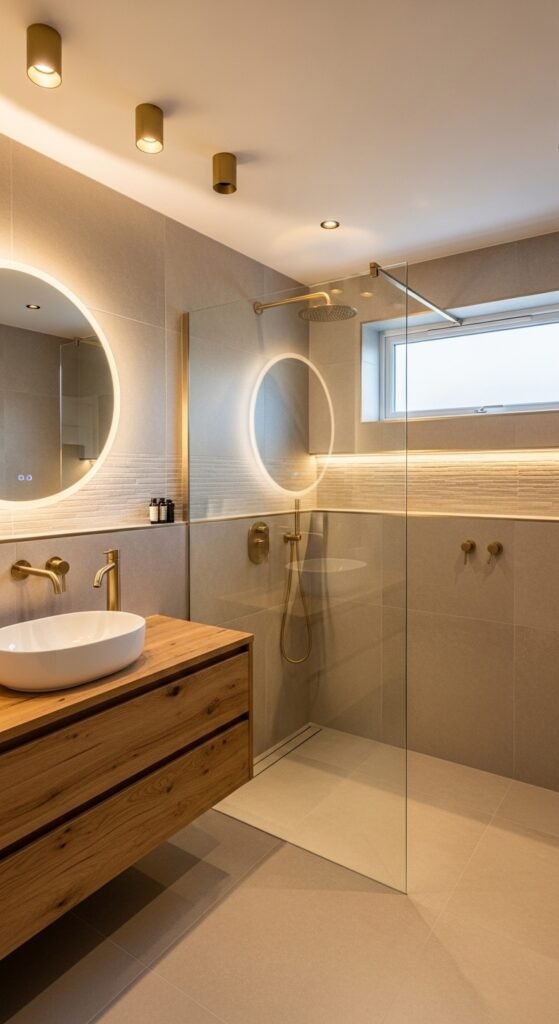
The “Gentle Grey” base is important; if the grey is too dark, the contrast with gold can look harsh or gaudy. A softer background allows the gold to shimmer delicately. This style works beautifully with marble-effect tiles that have warm gold or brown veining, tying the hardware into the architecture of the room.
Pro Tip: Match your metals! Ensure your faucet, shower head, cabinet pulls, and light fixtures are the same shade of gold. Mixing brass and copper can look messy in this specific style.
37. Organic Serenity: the Art Of Minimalist Grey Bathroom Design
“Organic Serenity” is about celebrating the imperfections of natural materials. Instead of glossy, perfect tiles, this style uses materials like Tadelakt (Moroccan waterproof plaster), limewash paint, or raw concrete. These finishes have a cloudy, uneven texture that feels hand-touched and authentic. The grey color here is not a flat pigment; it has depth and movement.
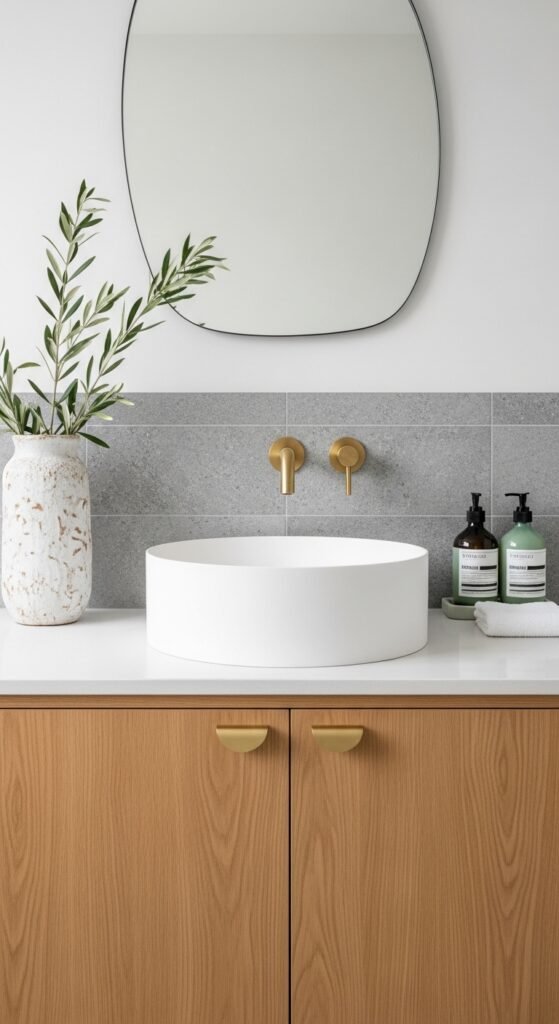
The minimalist approach ensures that the texture is the hero. Furniture is simple, often made of reclaimed wood to add to the organic feel. The lines are curved rather than sharp—think oval basins and round mirrors. It creates a soft, flowing environment that feels very human and comforting, rather than machine-made.
Pro Tip: Limewash paint is breathable and naturally mold-resistant, making it an excellent and stylish choice for bathroom walls that aren’t in the direct splash zone.
38. Sleek Serenity: Where Minimalism Meets Modern Elegance
This iteration of “Sleek Serenity” focuses on the intersection of technology and design. Modern elegance in 2026 involves smart bathroom features integrated seamlessly into a grey aesthetic. We are seeing digital shower controls with sleek black interfaces that disappear into dark grey tiles, and smart mirrors that display the time and weather.
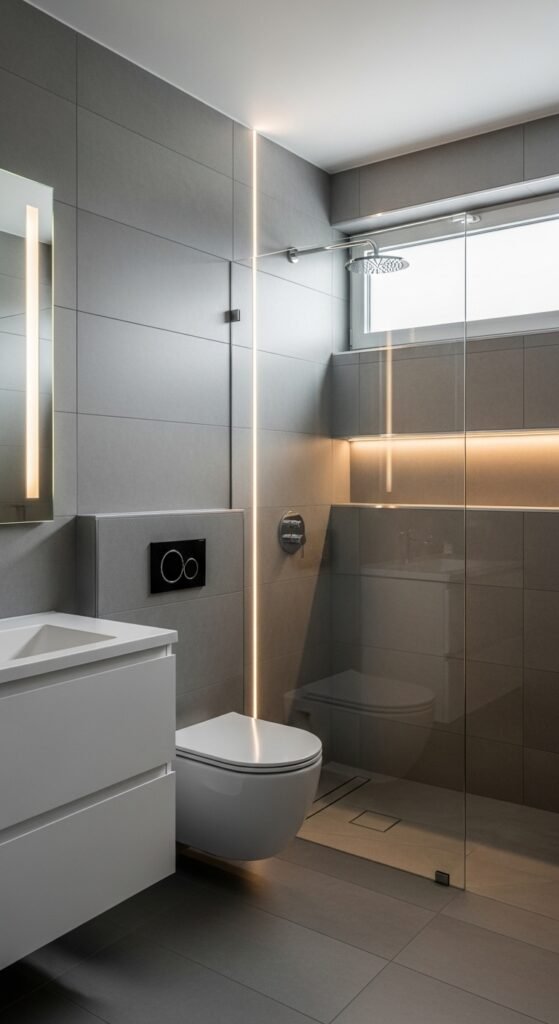
The design is ultra-clean. Wall-hung toilets and vanities keep the floor clear, which is a hallmark of modern minimalism. The grey palette is often cool and crisp, reinforcing the high-tech, precise feel of the space. It is a bathroom designed for efficiency and ease of use, perfect for the busy professional.
Pro Tip: If you are installing a smart shower, ensure the control panel is located at the entrance of the shower so you can turn the water on without getting wet.
39. Sleek Sanctuary: the Art Of Minimalist Grey Elegance
“Minimalist Grey Elegance” is all about the details. When there is nowhere for the eye to hide, the quality of the finish becomes paramount. This style focuses on precision tiling, perfect grout lines, and high-quality materials. A large slab of grey marble or quartz might be used as a statement backsplash, eliminating grout lines entirely for a seamless look.
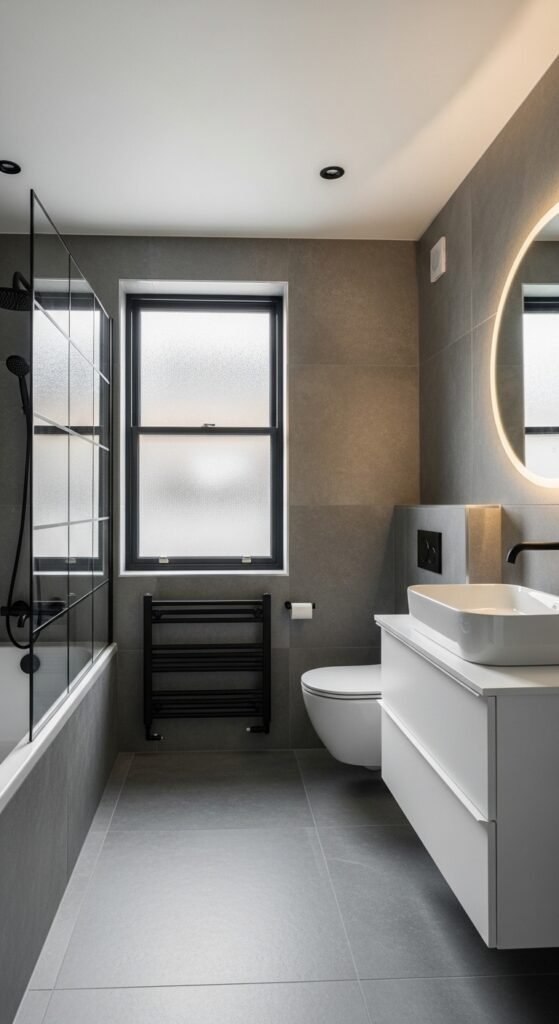
The elegance comes from the restraint. Instead of a shelf full of products, there is a single niche. Instead of a bulky radiator, there is underfloor heating. The grey tones are uniform and soothing, creating a canvas of calm. This style proves that simplicity is the ultimate sophistication.
Pro Tip: Invest in “rectified” tiles. These are cut to exact dimensions after firing, allowing for extremely thin grout lines (1-2mm), which enhances the seamless, elegant look.
40. Sculpted Serenity: the Modern Minimalist Grey Sanctuary
“Sculpted Serenity” introduces architectural interest into the bathroom. This could be in the form of a structural column clad in grey stone, a built-in bench in the shower, or a custom-molded concrete vanity sink. The grey material is treated as a solid mass that has been carved out to create the space.
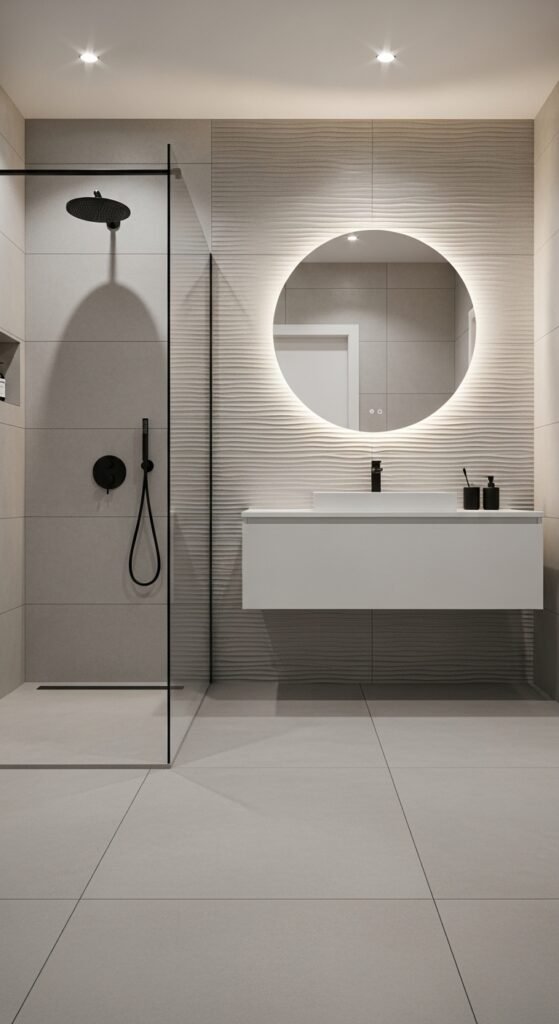
This style feels very permanent and grounded. It is not about sticking tiles on a wall; it is about building a space. The play of light on these sculpted forms creates natural shadows that add interest without the need for extra decoration. It is a bold, artistic approach to bathroom design.
Pro Tip: If you can’t structurally alter your bathroom, achieve the “sculpted” look with a vessel sink made of stone or concrete that sits on top of your vanity like a piece of art.
41. Sleek Serenity: a Harmonized Haven Of Grey
A “Harmonized Haven” relies on the 60-30-10 rule of color, but applies it using only shades of grey. 60% of the room is a mid-tone grey (walls/floor), 30% is a lighter grey (ceiling/sanitary ware), and 10% is a dark charcoal accent (window frames/towels). This creates a balanced, harmonious look that feels “right” to the human eye.
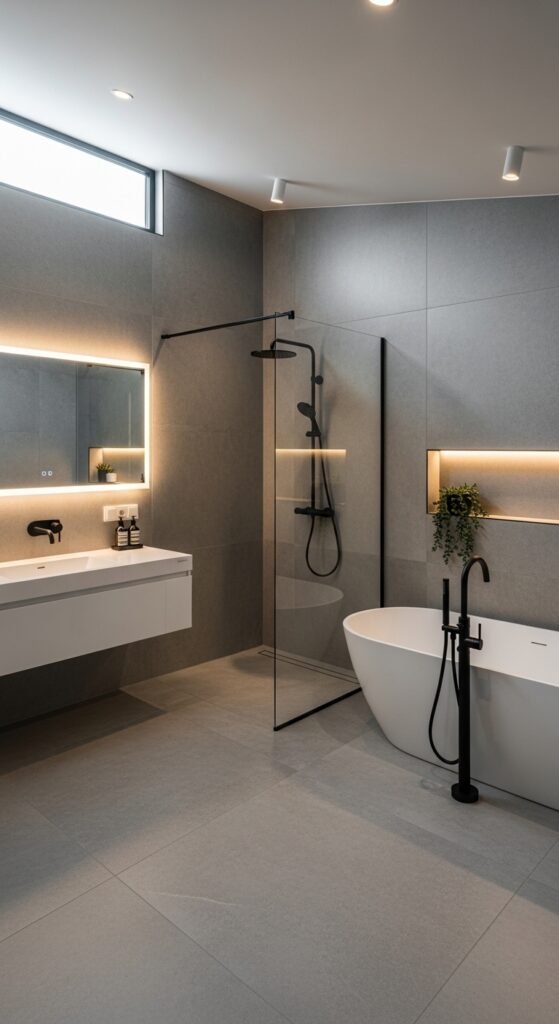
This design is incredibly safe and timeless. It won’t date quickly because it doesn’t rely on a specific trendy pattern or color. It is the bathroom equivalent of a tailored grey suit—always appropriate, always stylish.
Pro Tip: Use texture to differentiate the layers. If your 60% is matte paint, make your 30% a glossy tile to keep the layers distinct.
42. Urban Sanctuary: Merging Minimalism with Luxe Marble Accents
“Urban Sanctuary” meets luxury in this marble-heavy design. Grey marble, such as Carrara or Statuario with heavy grey veining, is the star. It is used on floors and walls to create a wrap-around effect that feels incredibly expensive. The “Minimalism” comes in to balance the busy pattern of the marble. Simple glass screens and floating white vanities ensure the marble remains the focal point.
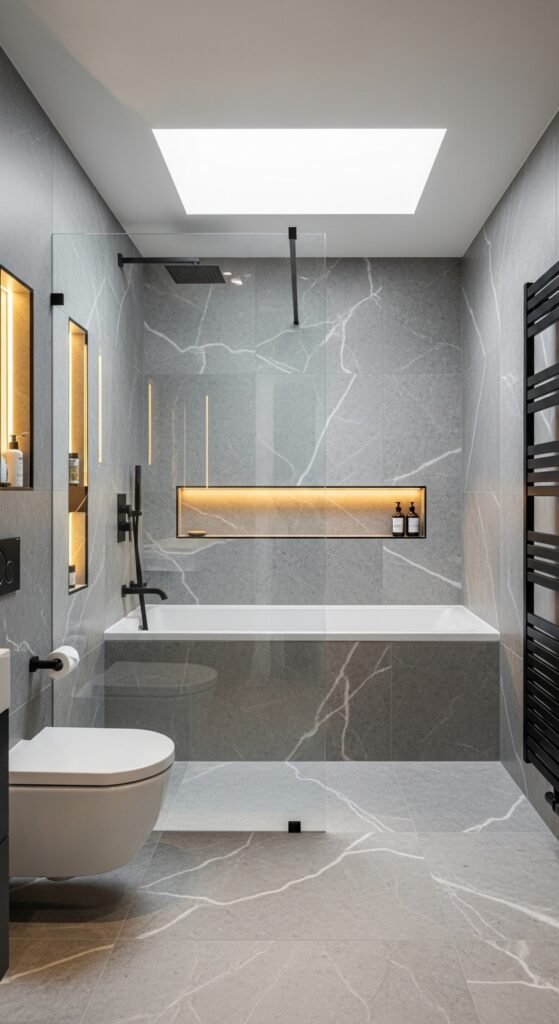
This style merges the hardness of city living with the opulence of a five-star spa. It is cool to the touch and visually stunning. The natural swirls in the marble introduce movement, making the static grey palette feel dynamic and alive.
Pro Tip: Marble is porous. Ensure you seal your natural stone tiles every 6-12 months to prevent staining from toiletries or water.
Comparison: Matte vs. Glossy Tiles
| Feature | Matte Finish | Glossy Finish | | :— | :— | :— | | Look | Natural, Rustic, Modern, Understated | Polished, Glamorous, Bright, Classic | | Feel | Textured, “Dry”, Warm | Smooth, Slick, Cool | | Maintenance | Hides water spots/smudges well | Shows water spots easily; needs wiping | | Safety | Better slip resistance (good for floors) | Can be slippery when wet (better for walls) | | Lighting | Absorbs light; no glare | Reflects light; brightens dark rooms |
43. Monochrome Serenity: the Art Of Zen In Grey Bathroom Design
Zen design is about flow and simplicity. “Monochrome Serenity” adopts the Japanese aesthetic of Wabi-Sabi within a grey palette. We see low-profile furniture, slat wood details (stained grey or natural), and plenty of open space. The grey used is often a warm, earthy tone that feels like clay or river stones.
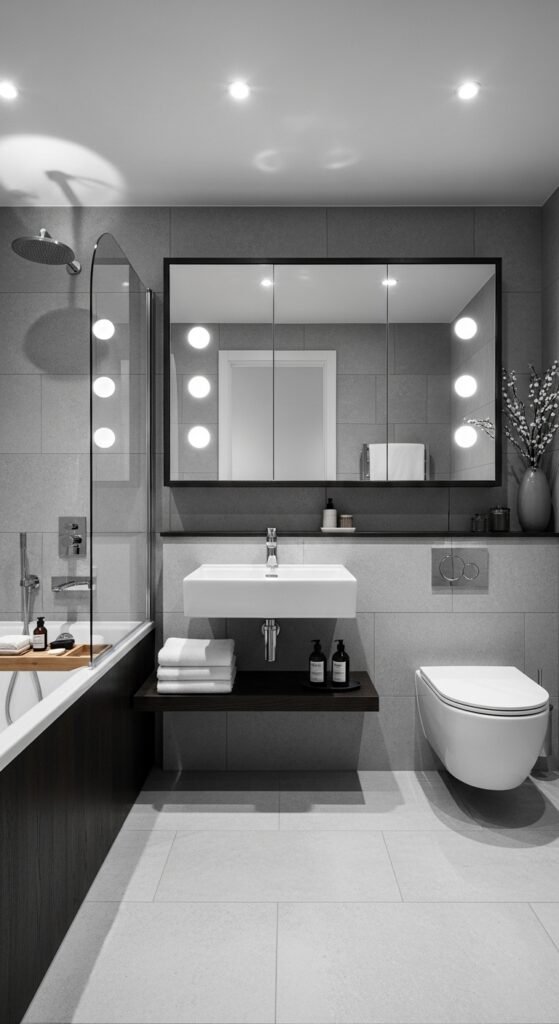
The “Art of Zen” involves decluttering. Everything has a place. The bathtub might be a deep soaking tub, and the shower might feature a wooden stool and a bucket. It is a space designed for rituals of cleansing, not just a quick wash. The atmosphere is quiet, contemplative, and deeply restorative.
Pro Tip: Incorporate pebble flooring in the shower. The texture underfoot massages your feet and enhances the Zen, spa-like experience.
44. A Harmonious Blend Of Modern Elegance and Nature
This design is a masterclass in hybrid styling. It takes the “Modern Elegance” of clean lines and grey surfaces and disrupts it with raw nature. Imagine a sleek, dark grey shower wall that features a vertical garden or a large window looking out onto a private fernery.
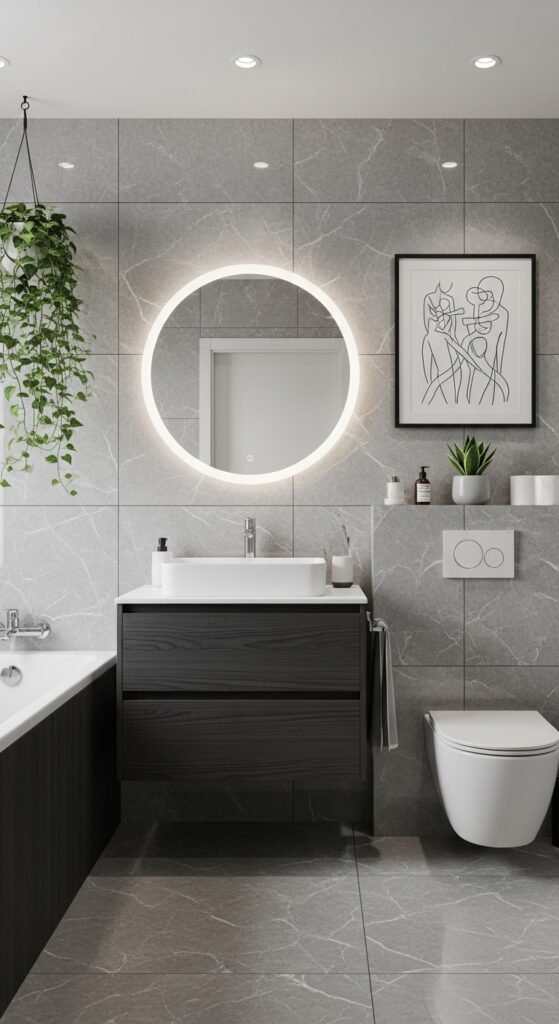
If structural changes aren’t possible, the “Nature” element comes from materials. A live-edge wood countertop for the vanity brings a wild, organic shape into the rigorous, straight lines of the grey bathroom. It is a harmonious blend because the cool grey highlights the warmth of the wood and the vibrancy of the green leaves.
Pro Tip: If you have no window, use high-quality fake plants on high shelves where the lack of detail won’t be noticed, adding that necessary green pop.
45. Golden Curves and Herringbone Dreams: a Shower Oasis
This specific look focuses on the shower area as the jewel of the bathroom. “Herringbone Dreams” refers to the tiling pattern—rectangular grey tiles laid in a V-shape. This pattern points the eye upwards, making the ceiling feel higher. It adds a sophisticated, tailored look to the walls.
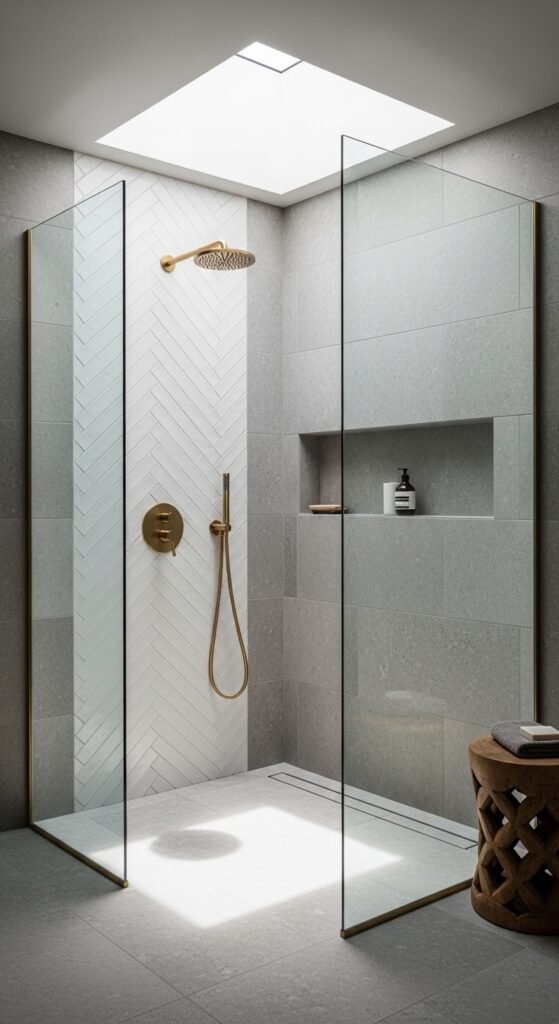
“Golden Curves” refers to the fixtures. A curved, brushed gold shower head, rounded control valves, and perhaps an arched shower screen or mirror soften the angular nature of the herringbone pattern. The combination of the geometric tile and the organic curves of the gold hardware is visually stunning and feels incredibly current for 2026.
Pro Tip: Herringbone tiling requires more cuts and more tile than a standard layout. Order 15-20% extra tile to account for wastage during installation.
46. Monochromatic Elegance: the Art Of Minimalist Grey Sanctuary
Our final idea brings it all together. “Monochromatic Elegance” is the culmination of texture, light, and form. It uses a palette of “greige” (grey-beige) to bridge the gap between cool and warm. This shade is incredibly versatile and welcoming. The sanctuary feel is achieved through softness—soft closing drawers, soft towels, soft lighting, and soft curves in the ceramics.
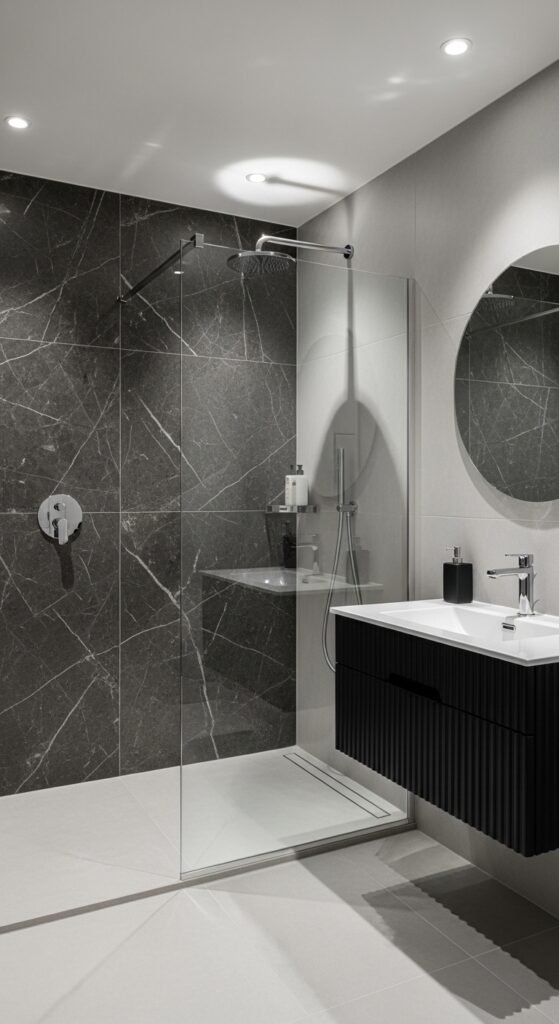
It is a minimalist sanctuary that doesn’t feel empty. It feels full of peace. By stripping away bold colors and busy patterns, you are left with a space that allows you to breathe, think, and relax. It is the ultimate goal of modern bathroom design.
Pro Tip: Use a “limewash” style tile or paint effect. It gives a velvety, suede-like appearance to the walls that makes the room feel physically softer and quieter.
Save this idea to your Pinterest.
Popular Asked Questions
What colors go with grey in a bathroom?
Grey is the ultimate neutral, so it pairs with almost everything. For a fresh, airy look, pair it with crisp white or soft blue. For a moody, dramatic vibe, use black or emerald green. To warm it up, add wood tones, brass, or blush pink.
Is grey bathroom style outdated in 2026?
Not at all. However, the type of grey has changed. The “cold, flat, blue-grey” of the early 2010s is out. In 2026, trends favor warm greys (greige), textured greys (like stone, concrete, and terrazzo), and layering different shades to create depth.
How do you warm up a grey bathroom?
If your grey bathroom feels too cold, you can warm it up instantly by adding natural wood accents (a stool, shelves, or bath mat). Swapping chrome hardware for brushed gold or brass also adds warmth. Finally, add texture with fluffy towels, a rug, and plants.
Follow us on Pinterest for more Grey Bathroom Ideas