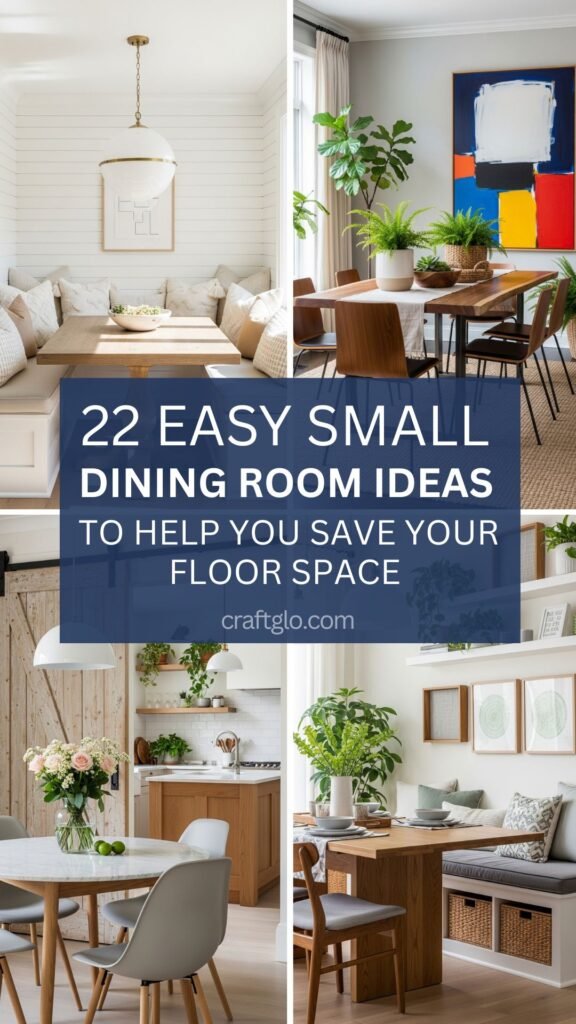
You are likely staring at a cramped corner or a narrow hallway, wondering how to fit a dining table without sacrificing your sanity. You are not alone. The trend of “micro-dining” has skyrocketed in 2026 as urban living spaces shrink and open-concept layouts demand more versatility. This isn’t about just squeezing in a chair; it is about reclaiming your square footage.
We have curated a list of design-forward, practical solutions that transform tiny areas into functional dining destinations. Whether you are working with a studio apartment or a small breakfast nook, these ideas prioritize flow, storage, and visual expansion. By the end of this guide, you will have a concrete plan to seat four to six people comfortably in a space you thought could only fit two.
Key Takeaways
- Verticality is King: extensive use of wall-mounted storage and floating furniture clears precious floor space.
- Shape Matters: Round and oval tables vastly improve traffic flow compared to rectangular options in tight quarters.
- Multi-Functionality: Every piece of furniture must serve at least two purposes, such as storage benches or fold-down desks.
- Visual Trickery: Mirrors, transparent materials, and strategic lighting can double the perceived size of a room.
- Defined Zones: Rugs and lighting fixtures are essential for psychologically separating the dining area from the living room.
Table of Contents
- Use Foldable Dining Furniture
- Install Wall-Mounted Shelving
- Opt for a Round Dining Table
- Create a Built-in Dining Nook
- Hang Mirrors to Expand Space
- Choose Transparent Furniture
- Add Multipurpose Storage Benches
- Install Space-saving Drop-leaf Tables
- Use Light, Neutral Color Palettes
- Maximize Vertical Space with Tall Cabinets
- Utilize Under-table Storage Solutions
- Choose Armless Chairs for More Space
- Hang Statement Lighting Fixtures
- Use Dual-purpose Buffets or Sideboards
- Choose Extendable Dining Tables
- Integrate Corner Wall Units
- Layer with Low-profile Rugs
- Install Sliding Barn Doors
- Incorporate Slim-profile Storage Towers
- Create Illusions with Statement Art
- Mount Floating Buffets or Servers
- Embrace Minimalist Design Principles
- Popular Asked Questions
- Conclusion
Use Foldable Dining Furniture
When dealing with a truly small apartment dining area, flexibility is your best friend. Foldable dining furniture has evolved far beyond the flimsy card tables of the past. Modern designs feature sleek materials like bamboo, acrylic, and powder-coated steel that look intentional rather than temporary. The core benefit here is the ability to reclaim floor space completely when the dining area is not in use. This is particularly effective in studio apartments where the living room, bedroom, and dining room often share the same footprint.
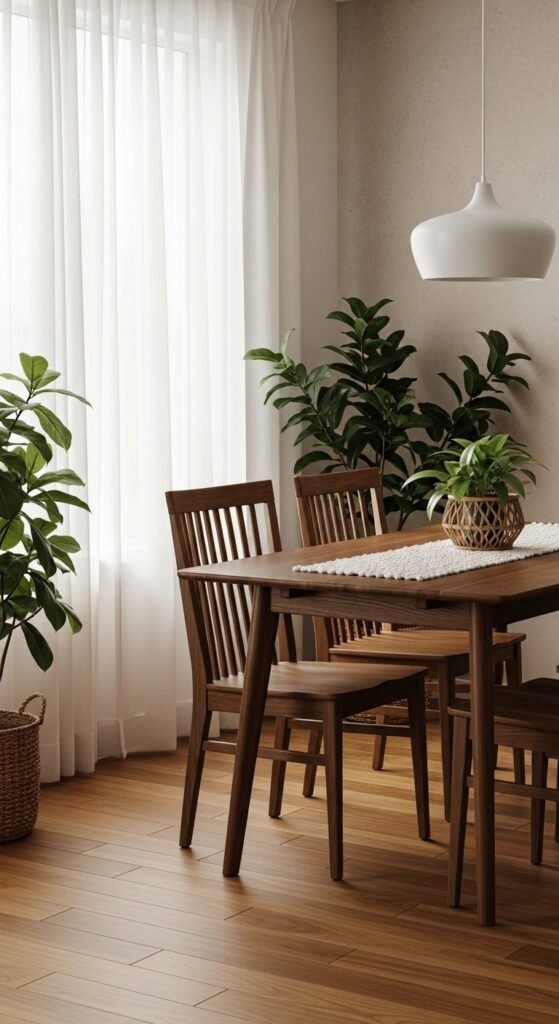
To implement this successfully, look for “butterfly” folding mechanisms or wall-mounted systems that collapse flat. Visually, these pieces should match your wall color to blend in when folded away. Design-wise, this embraces the concept of “kinetic architecture,” where your home adapts to your immediate needs. You can store these chairs on wall hooks as a form of industrial decor or tuck them behind a sofa.
Pro Tip: Invest in high-quality hinges and locking mechanisms. Cheap folding furniture can wobble, which ruins the dining experience. A sturdy lock ensures your dinner guests feel secure.
Install Wall-Mounted Shelving
Floor space is premium real estate in small dining room decor. By installing wall-mounted shelving, you draw the eye upward and utilize the vertical plane for storage and display. This technique prevents the room from feeling bottom-heavy or cluttered with bulky cabinets. Open shelving creates an airy, breathable look that closed cabinetry often blocks. It allows light to filter through and bounce off objects, enhancing the sense of spaciousness.
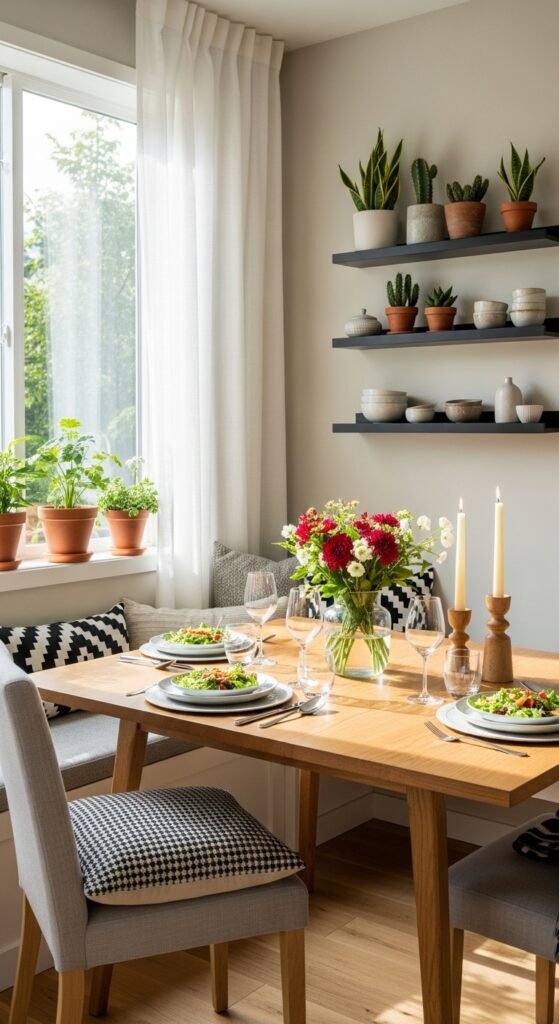
For the best aesthetic, arrange your shelves in a staggered pattern rather than straight rows. Mix functional items like plates and glasses with decorative elements like plants or art. This balances utility with beauty. Use brackets that match your hardware finish (brass, matte black, or brushed nickel) to create a cohesive look. This approach solves the storage problem without encroaching on the walkable area around your table.
Pro Tip: Keep the color of the shelves the same as the wall paint. This “camouflaging” effect makes the room feel wider because the shelves disappear into the architecture.
Opt for a Round Dining Table
The sharp corners of a rectangular table can be a physical hazard and a visual block in a tight room. Small dining room table ideas often center around the round table for good reason. The curvature allows for better traffic flow, letting you navigate around the dining set without bumping your hips. Furthermore, round tables create a more intimate social setting, as everyone faces the center equally. This eliminates the “head of the table” hierarchy and fits perfectly into square rooms or awkward nooks.
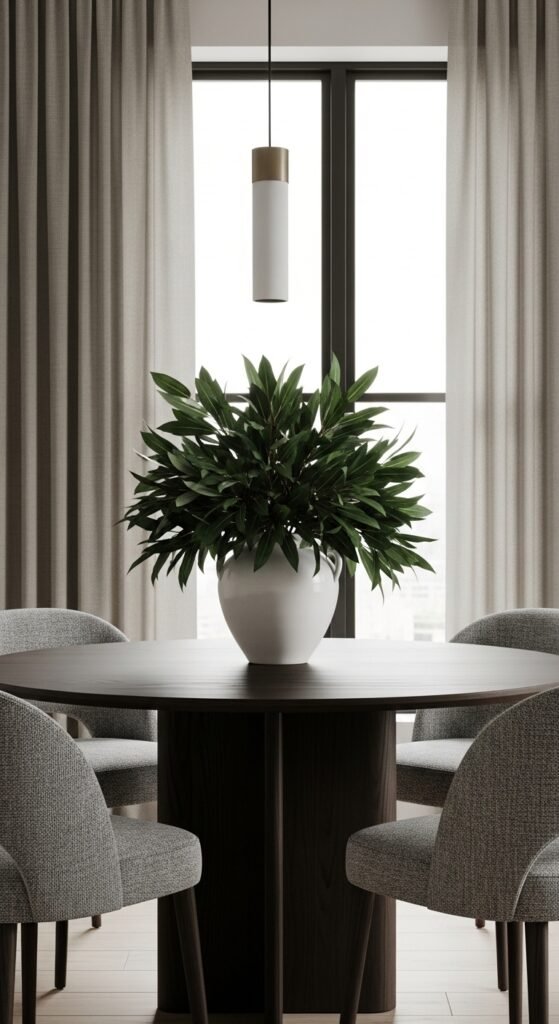
From a design perspective, a pedestal base is superior to four legs. It removes visual clutter at ground level and provides more legroom for guests. You can easily squeeze in an extra chair for a last-minute guest without anyone straddling a table leg. Choose a material like marble or light wood to keep the visual weight low.
Pro Tip: Ensure a minimum of 24 inches of clearance behind each chair to allow guests to slide out comfortably without hitting a wall or furniture.
Create a Built-in Dining Nook
Transforming an unused corner into a banquette is one of the most efficient dining nook ideas. Built-in seating pushes the furniture right up against the wall, saving the 2-3 feet of clearance you would typically need behind a standard dining chair. This setup is incredibly cozy and mimics the favored booth seating at restaurants. It creates a defined “zone” within an open plan, signaling clearly that this area is for eating.
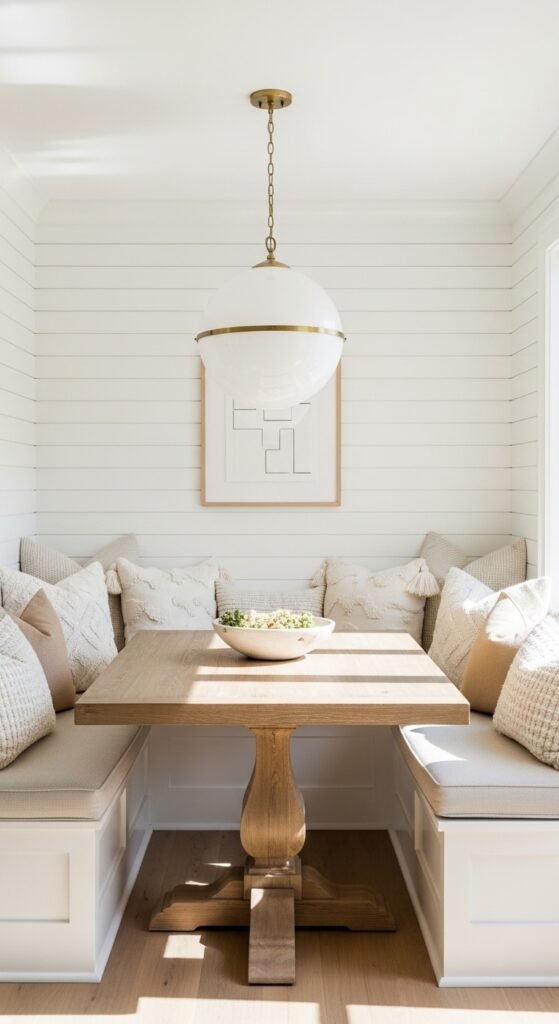
To style this, use custom upholstery that is durable and easy to clean, such as performance velvet or faux leather. You can incorporate storage underneath the bench seats (lift-top or drawers) to hide table linens or kitchen gadgets. Visually, a banquette anchors the room and allows you to use a slightly larger table than you could with a floating set.
Pro Tip: Use a single pedestal table with your nook. Tables with four legs make it difficult for people to slide in and out of the bench seating.
Hang Mirrors to Expand Space
Mirrors are the oldest trick in the interior design book, and they are essential for modern small dining room layouts. A large, strategically placed mirror reflects natural light and mimics the appearance of an extra window. This instantly doubles the visual depth of the room, tricking the brain into perceiving the space as twice as large. It breaks up solid walls that might otherwise feel closing in.
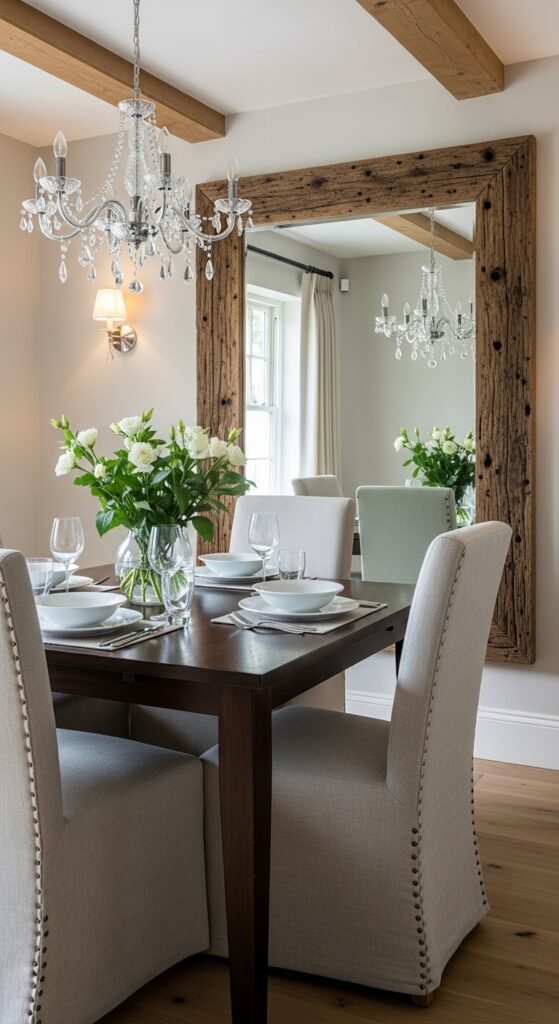
For maximum impact, place an oversized mirror on the wall perpendicular to your window. This angle catches the most light. You can opt for a single massive floor mirror leaning against the wall for a relaxed, bohemian vibe, or a grid of smaller mirrors for a structured, industrial look. Avoid placing mirrors where they will reflect clutter or a blank wall; aim to reflect a view or a piece of art.
Pro Tip: If you cannot hang a heavy mirror, try mirror tiles or a high-gloss paint finish on one wall to achieve a similar reflective, space-expanding effect.
Comparison Table: Round vs. Rectangular Tables for Small Spaces
| Feature | Round Dining Tables | Rectangular Dining Tables |
|---|---|---|
| Traffic Flow | Excellent. No sharp corners to navigate around. | Poor. Corners can block pathways in tight rooms. |
| Seating Capacity | Flexible. Easier to squeeze in an extra chair. | Fixed. Limited by leg placement and table length. |
| Visual Weight | Lighter. Curves soften the room’s look. | Heavier. Can dominate a small room visually. |
| Best For | Square rooms, open concept nooks. | Narrow, long rooms (galley style). |
| Social Vibe | Intimate. Everyone faces everyone. | Formal. Distinct “head of table” dynamic. |
Choose Transparent Furniture
“Ghost” chairs and glass-top tables are secret weapons for dining room ideas for small spaces. Because light passes directly through them, they take up zero “visual weight.” Your eye travels straight through the furniture to the floor and walls behind, making the room appear emptier and larger than it actually is. This is crucial in tiny apartments where you want the functionality of a dining set without the heavy look of wood or upholstery.
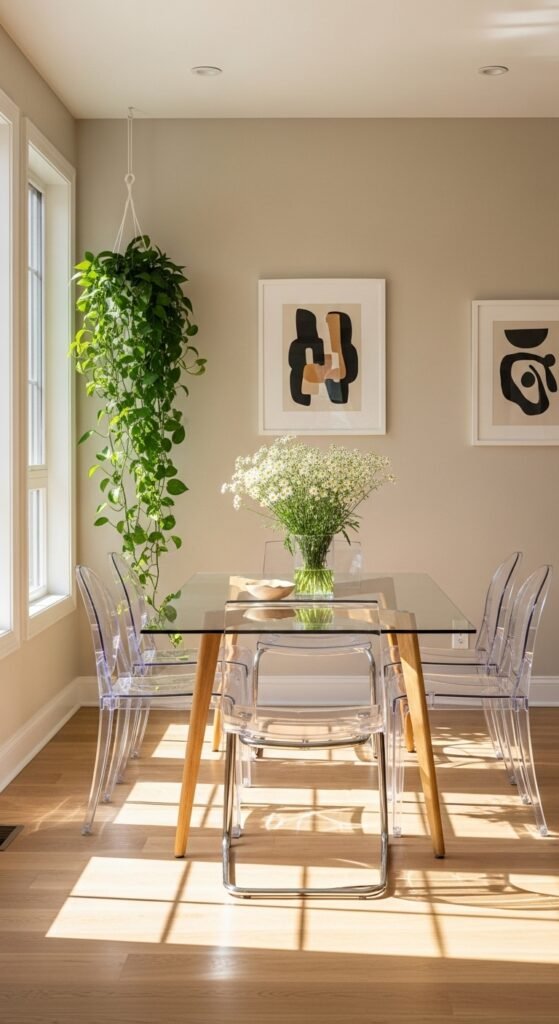
Acrylic chairs (often called Ghost chairs) add a modern, chic touch that works with almost any decor style, from farmhouse to ultra-modern. A glass table top on a wooden or metal base provides the stability you need while maintaining that airy quality. This technique is all about reducing visual noise.
Pro Tip: If you use acrylic chairs, add a sheepskin throw or a small seat cushion. This adds texture and comfort without compromising the transparency effect.
Add Multipurpose Storage Benches
In a multifunctional dining room, every inch counts. A storage bench serves as seating while concealing a massive amount of internal volume. This is the perfect place to store bulky kitchen items like slow cookers, holiday platters, or extra linens that don’t fit in your main cabinets. Unlike standard chairs, a bench creates a clean, low profile that doesn’t obstruct the view across the room.
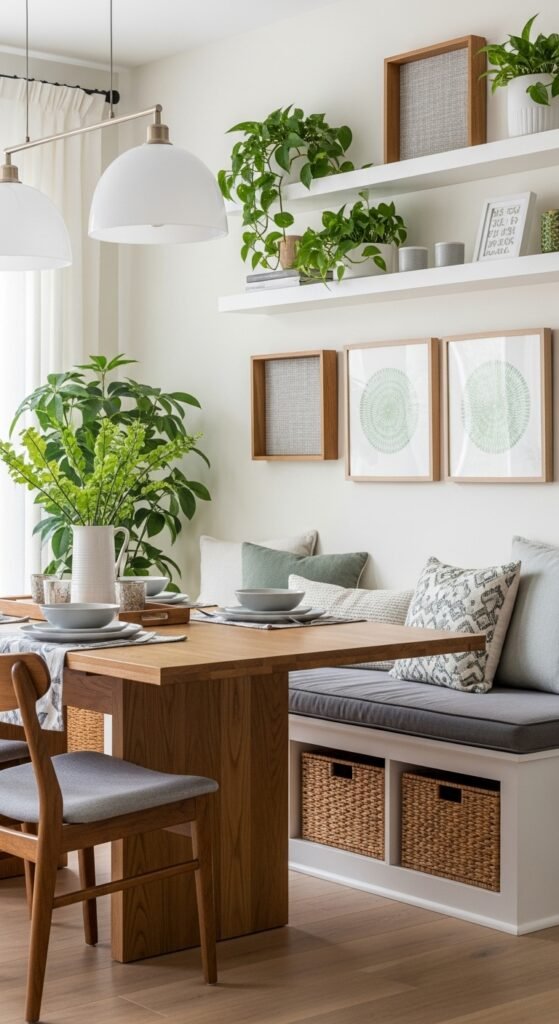
You can buy ready-made storage benches or DIY one using sturdy cabinetry units. The key is to ensure the height is appropriate for dining (usually 18-19 inches high). Top it with a custom cushion for comfort. Visually, a bench on one side of the table and chairs on the other creates an interesting asymmetry that feels casual and curated.
Pro Tip: Choose a bench with drawers rather than a lift-top if you plan to use the table frequently. It is annoying to move the table and cushions every time you need to access the storage.
Install Space-saving Drop-leaf Tables
The drop-leaf table is a classic small space hack that has stood the test of time. These tables feature hinged sections (leaves) that can be folded down when not in use. A table that seats four can transform into a slim console table that seats zero or two in seconds. This allows you to push the table against a wall during the day to open up floor space for yoga, working from home, or general traffic.
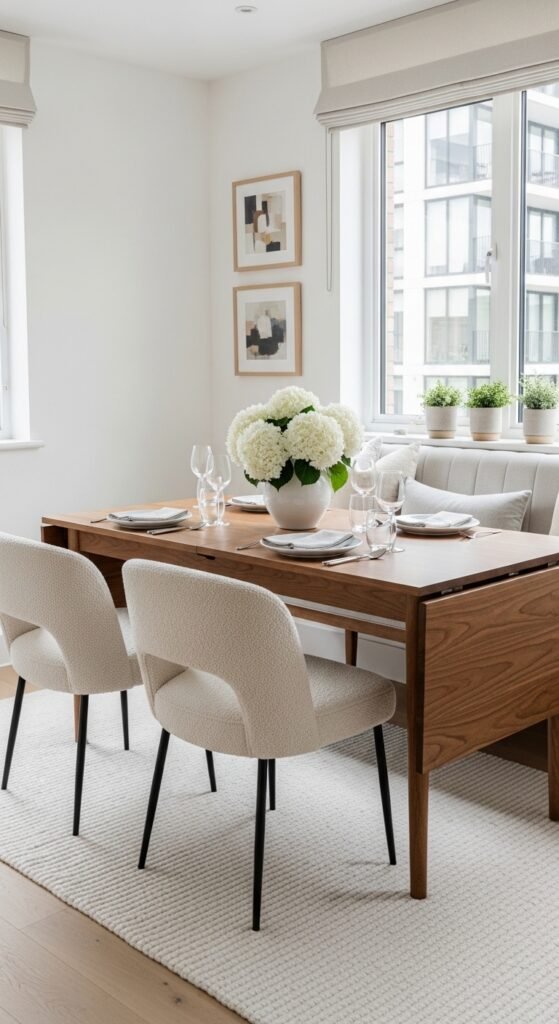
Modern drop-leaf tables come in mid-century modern, rustic, and industrial styles. When styling, keep the center of the table (the fixed part) clear or decorated with a simple vase, so you don’t have to clear the entire surface to fold down the leaves. This adaptability is perfect for irregular schedules and varying guest lists.
Pro Tip: Look for “gate-leg” tables for the most stability. These have legs that swing out to support the leaf, which is much sturdier than a simple bracket support.
Use Light, Neutral Color Palettes
Color theory plays a massive role in small dining room decor. Light, neutral colors like white, cream, soft gray, and beige reflect light, making walls recede and the room feel expansive. Dark colors absorb light and define boundaries, which can make a small room feel like a cave (though a cozy one). For the maximum feeling of space, paint your walls, trim, and ceiling the same light color. This blurs the edges of the room, making it harder for the eye to define the limits of the space.
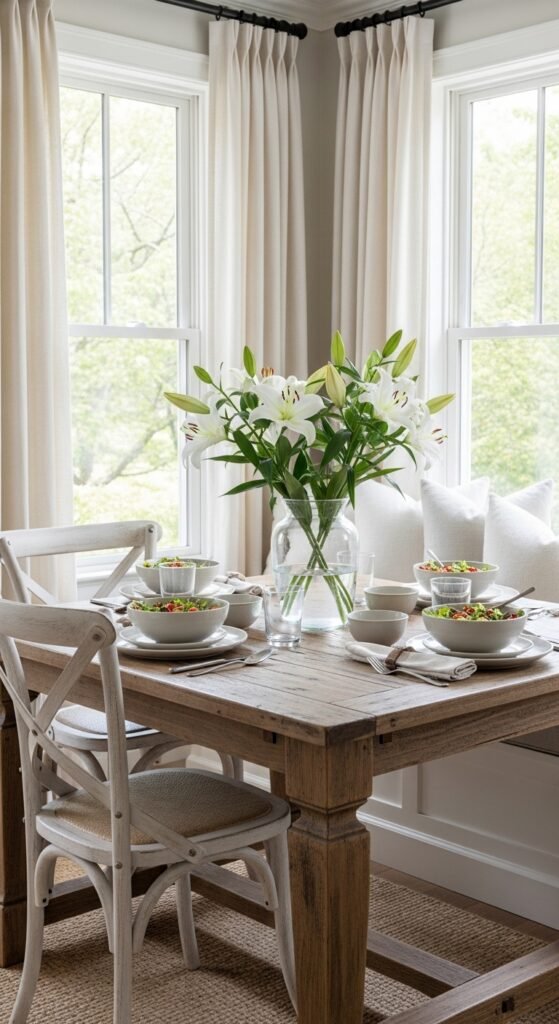
You can prevent the room from feeling sterile by layering different textures within that monochromatic palette. Think linen curtains, a wool rug, and a bleached wood table. These add depth and interest without the visual chaos of high-contrast colors.
Pro Tip: If you love color, use it in your accessories—placemats, art, or a centerpiece—rather than on the walls. These pops of color are easier to change and don’t shrink the room visually.
Maximize Vertical Space with Tall Cabinets
When you cannot spread out, go up. Tall, narrow cabinets or “chimney” cupboards are excellent budget small dining room makeovers that add storage without eating up floor space. By drawing the eye upward to the ceiling, these pieces emphasize the height of the room rather than its small footprint. A cabinet that is only 12 inches deep but 7 feet tall can hold an immense amount of dishware.
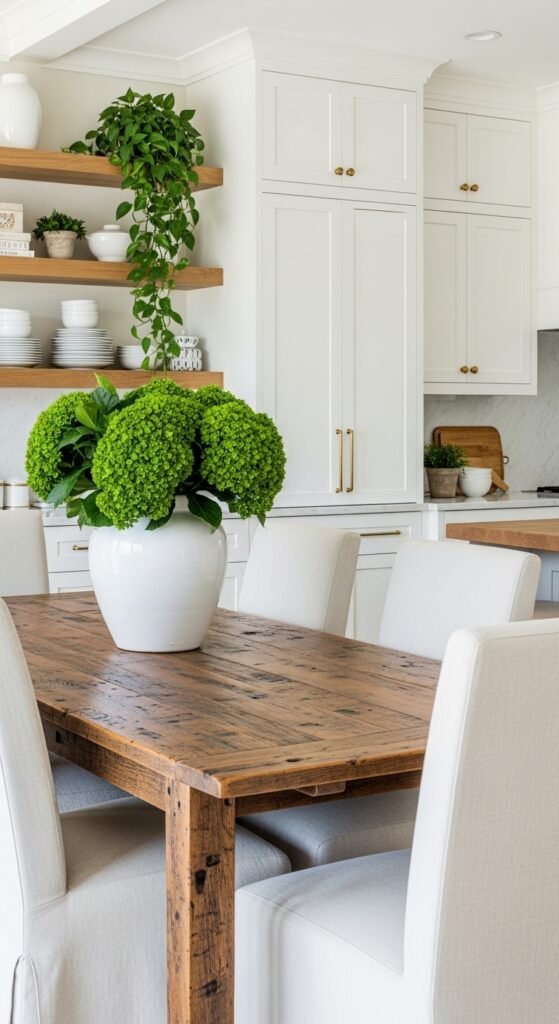
Position these cabinets in corners or flanking a doorway to create a built-in look. Glass-fronted upper sections keep the look light, while solid doors on the bottom can hide clutter. This utilizes the “dead space” near the ceiling that is often ignored in interior design.
Pro Tip: secure these tall cabinets to the wall. In a tight space, they are more likely to be bumped, and safety is paramount.
Utilize Under-table Storage Solutions
Often overlooked, the space directly beneath your dining table is a prime spot for storage in a tiny dining room solution. While you need legroom, the center of a larger table or the perimeter of a high-top table can accommodate baskets or rolling bins. This is especially effective if you use a tablecloth that conceals the area beneath.
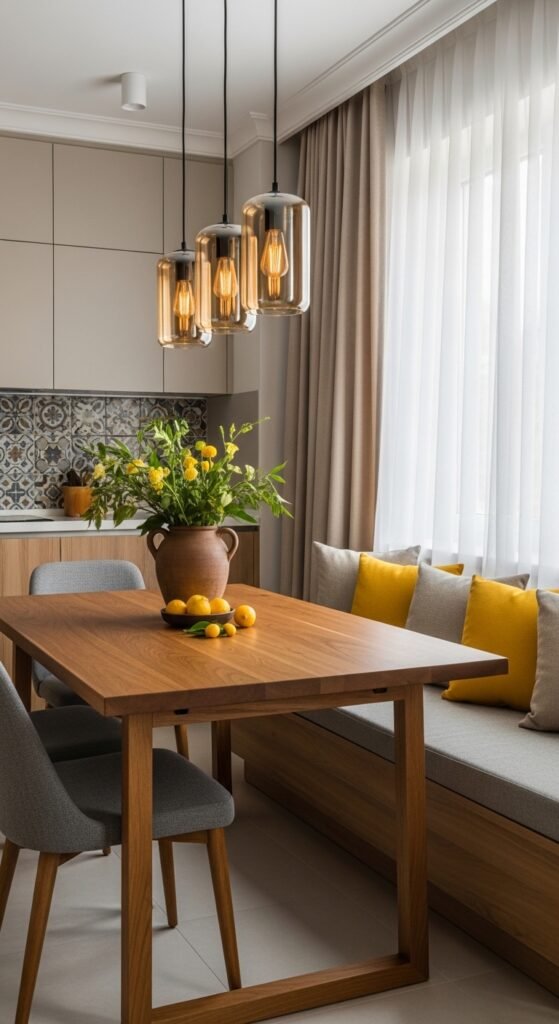
For a more structural approach, choose a dining table that includes a built-in shelving base. These “storage tables” often feature a central cabinet or open shelves between the legs. You can store napkins, salt and pepper shakers, or board games right where you use them. This eliminates the need for a separate sideboard or buffet.
Pro Tip: Use uniform baskets (wicker or wire) to keep this storage looking intentional and organized, rather than like a pile of clutter under the table.
Choose Armless Chairs for More Space
In the world of small dining room layout, inches matter. Chairs with arms typically require an extra 4 to 6 inches of width per seat and often cannot be tucked fully under the table apron. Armless chairs, or “slipper chairs,” have a slimmer profile and can be pushed all the way in when not in use, freeing up the surrounding walkway.
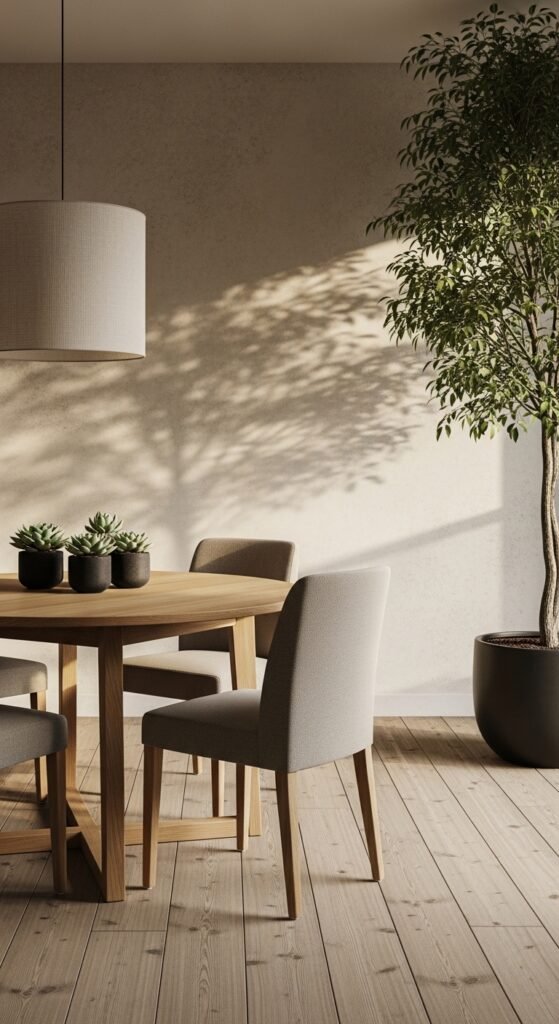
Visually, armless chairs create less of a barrier. A row of chair backs is much less imposing than a row of solid armchairs. You can choose styles with curved backs for comfort or upholstered seats for long dinners. This simple swap can allow you to fit six chairs where you previously could only fit four.
Pro Tip: If you want the comfort of armchairs, reserve them for the two “captain’s chair” positions at the heads of the table, and use armless chairs on the sides.
Hang Statement Lighting Fixtures
A bold lighting fixture acts as a focal point that distracts from the small size of the room. By hanging a large pendant or chandelier low over the table, you create a dedicated “volume” of space that defines the dining area. This is a key principle in modern small dining room design: direct the eye to the center of the room, away from the close walls.
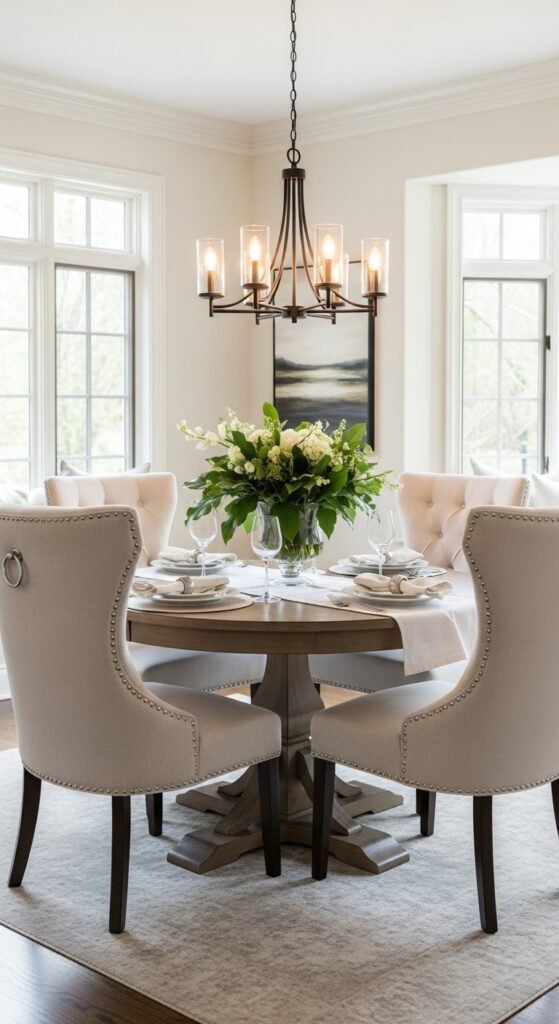
Ensure the scale is correct; a fixture that is too small will look dinky, while one that is too wide might feel oppressive. A good rule of thumb is a fixture that is one-third to one-half the width of your table. Transparent glass or open-cage fixtures are great because they offer size without visual density.
Pro Tip: Put your dining light on a dimmer switch. Being able to control the ambiance allows the space to transition from a bright workspace during the day to a moody, intimate restaurant vibe at night.
Use Dual-purpose Buffets or Sideboards
A buffet in a small dining room must work double shifts. It is not just for holding extra plates; it can be a home bar, a coffee station, or even a media console if your dining and living areas are combined. Look for multifunctional dining room furniture that offers a mix of drawers and shelves. A slim-profile sideboard (less than 15 inches deep) can provide a serving surface without blocking traffic.
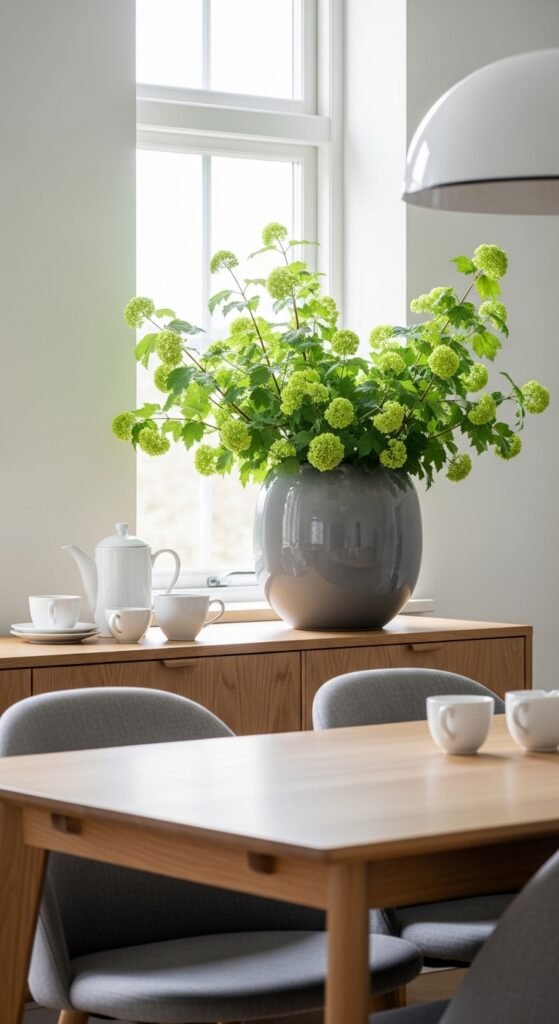
Style the top with a lamp and a mirror to create a vignette that adds depth. Inside, use organizers to maximize capacity. If you don’t have room for a standalone piece, consider a rolling cart that can be moved into the kitchen or living room when you need the floor space for a party.
Pro Tip: Choose a buffet with legs rather than one that sits flush on the floor. Seeing the floor continue underneath the furniture makes the room feel larger.
Choose Extendable Dining Tables
The extendable table is the hero of seasonal hosting. Most of the year, you might only need a table for two or four. But for holidays, you need to seat eight. An extendable table with a self-storing leaf gives you the best of both worlds. Unlike drop-leaf tables, these usually maintain a rectangular or oval shape and expand linearly.
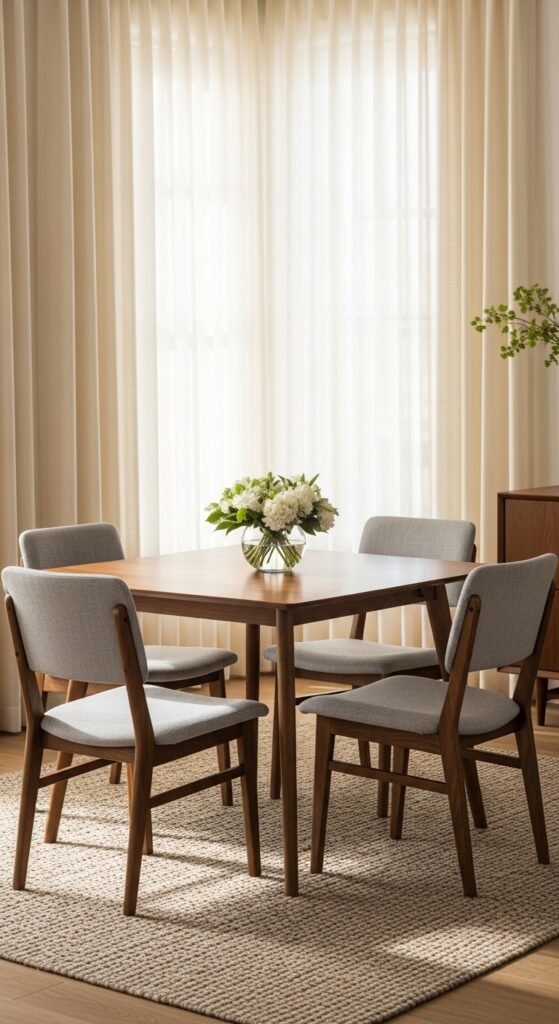
Modern engineering has made these tables seamless, with leaves that pop up from the center or slide out from the ends. This prevents you from having to store heavy table leaves in a closet. When compacted, the table fits your daily life perfectly; when expanded, it fills the room for a special occasion.
Pro Tip: Measure your room with the table fully extended before you buy. You need to ensure guests can still get in and out of their seats when the table is at its maximum size.
Get The Look: Small Dining Essentials
- The Anchor: A 4-foot round pedestal table in white marble or light oak.
- The Seating: 4 armless “Ghost” chairs or velvet slipper chairs.
- The Light: A woven rattan pendant or a geometric brass chandelier.
- The Storage: A floating wall shelf mounted at 30 inches high to act as a buffet.
- The Decor: A large round mirror and a low-profile jute rug.
Integrate Corner Wall Units
Corners are often “dead zones” in a room. A corner wall unit or a corner hutch utilizes this wasted triangle of space. This is a brilliant small space hack for storage. Corner units are deep enough to hold large serving bowls but tuck away neatly without protruding into the main footprint of the room.
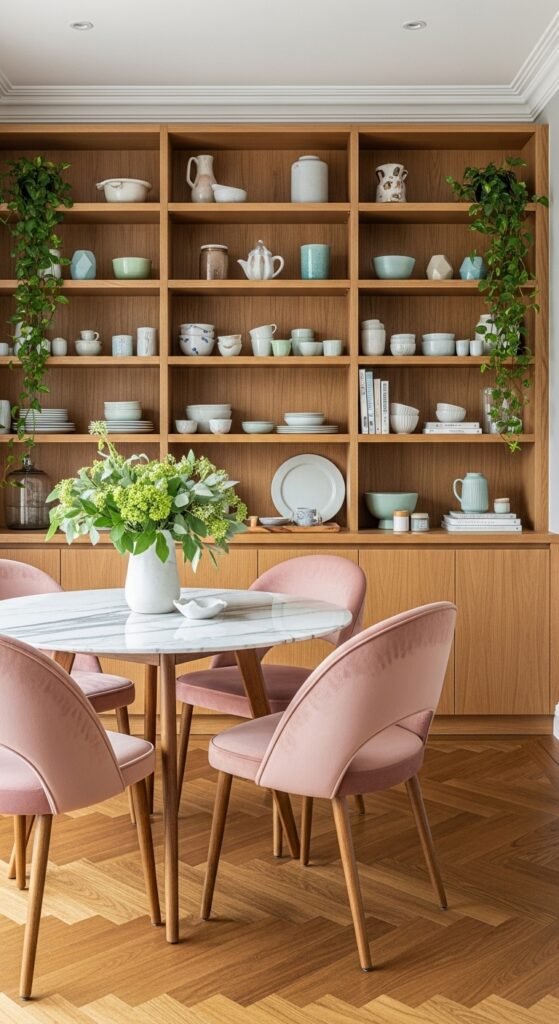
You can find antique corner cabinets for a farmhouse look or sleek, floating corner shelves for a modern aesthetic. This draws the eye into the corner, effectively stretching the visual diagonal of the room, which makes the space feel bigger.
Pro Tip: Light the inside of a glass-fronted corner cabinet. This creates a glowing pillar of light in the corner, banishing shadows and expanding the room.
Layer with Low-profile Rugs
Rugs define a space, but in a small room, a thick, high-pile rug can feel heavy and trip up chair legs. A low-profile, flat-weave rug is the better choice. It grounds the dining table and visually separates the dining zone from the kitchen or living area. The texture adds warmth without bulk.
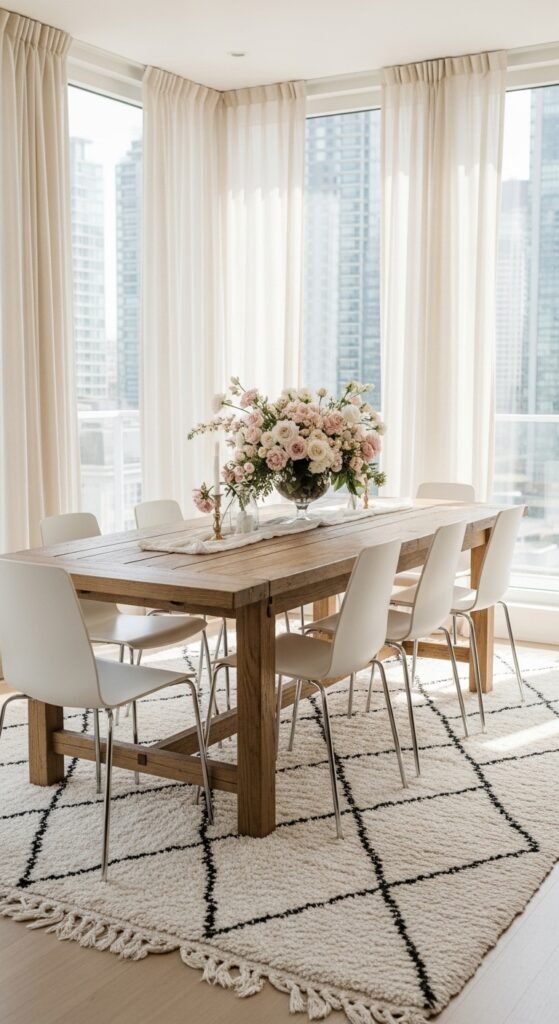
Size is critical here. A rug that is too small makes the room look cheaper and smaller. The rug should extend at least 24 inches beyond the table on all sides so that chairs remain on the rug even when pulled out. Horizontal stripes on a rug can also widen a narrow room visually.
Pro Tip: Use an outdoor rug indoors. They are incredibly durable, flat-woven, and easy to clean—perfect for a high-traffic dining area where spills happen.
Install Sliding Barn Doors
Traditional swinging doors require a “swing radius” of about 9 square feet—space you cannot use for furniture. Replacing a swinging door with a sliding barn door or a pocket door instantly reclaims that space. This is a massive win for small dining room layouts that connect to kitchens or pantries.
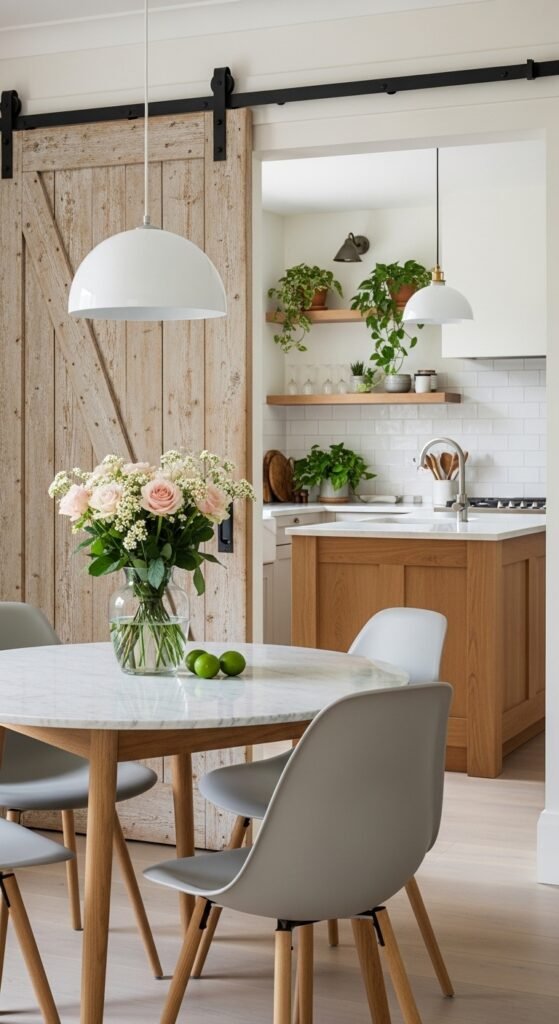
Barn doors also add a significant architectural element and texture to the wall. You can choose a rustic wood finish for warmth or a sleek glass and metal door for a modern industrial look. This change allows you to place a table or buffet closer to the doorway than you ever could before.
Pro Tip: Ensure you have enough empty wall space on one side of the opening for the door to slide over.
Incorporate Slim-profile Storage Towers
Similar to tall cabinets, slim-profile storage towers are open metal or wood racks that stand vertically. These are often used in bathrooms but work perfectly in tiny dining room solutions. They are lightweight and can be moved easily. Use them to display your nicest glassware, a collection of wines, or cookbooks.
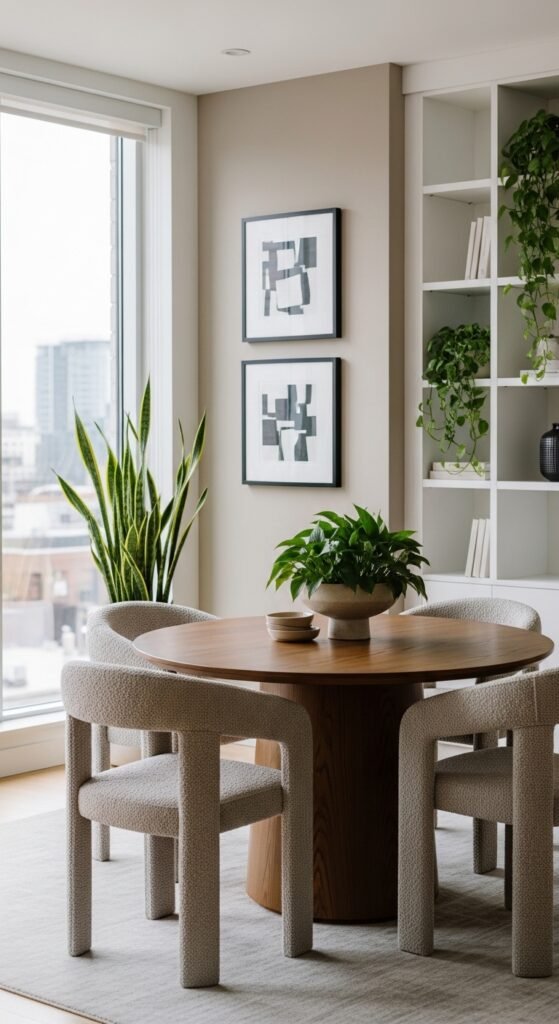
Because they are often open-sided, they don’t block the view of the wall behind them. This “see-through” quality keeps the room feeling open. They act as a vertical gallery for your dining accessories.
Pro Tip: Don’t overstuff them. Leave some negative space on the shelves to maintain the airy aesthetic.
Comparison Table: Storage Solutions
| Solution | Space Used | Visual Impact | Best For |
|---|---|---|---|
| Buffet/Sideboard | Floor space | High (Solid furniture) | Storing heavy items, serving food. |
| Floating Shelves | Wall space | Low (Open & airy) | Displaying decor, glasses, plants. |
| Tall Cabinets | Vertical corner | Medium | Maximizing volume in small footprint. |
| Storage Bench | Seating footprint | Low (Hidden) | Storing linens, seasonal items. |
Create Illusions with Statement Art
A single, massive piece of art can do wonders for a small room. It acts as a “window” into another world. Landscape photography or abstract art with depth draws the eye in and pushes the wall back visually. This is a key minimalist dining room strategy: one big piece is better than a cluttered gallery wall in a tiny space.
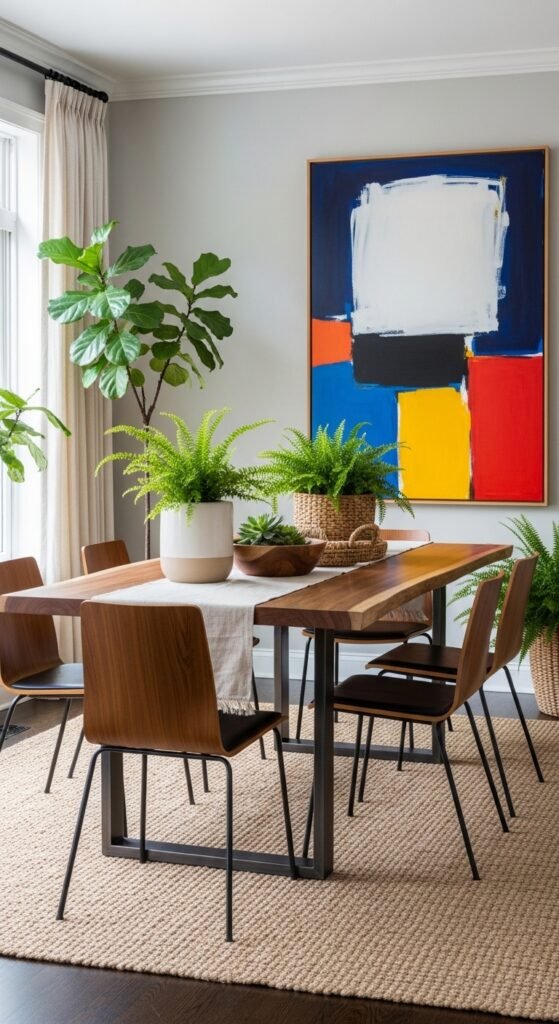
Position the art so it is the first thing you see when entering the room. This sets the tone and distracts from the tight dimensions. Avoid dark, heavy frames; go frameless or use a thin “floater” frame to keep the look clean.
Pro Tip: If you have low ceilings, hang the art slightly higher than standard to draw the eye up.
Mount Floating Buffets or Servers
A floating buffet is a cabinet mounted directly to the wall with no legs. This reveals the entire floor underneath, which is a powerful psychological cue for spaciousness. If you can see the floor extend to the wall, your brain registers the room as larger.
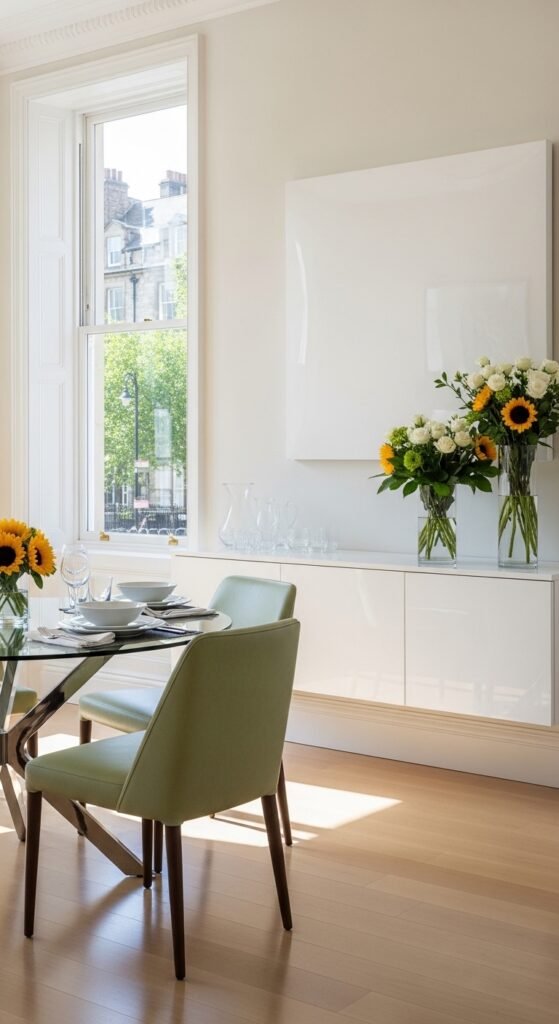
This is also a great DIY dining table accessory project. You can use upper kitchen cabinets (which are shallower than base cabinets) and mount them at buffet height (30-34 inches). Add a wood countertop, and you have a custom, sleek server that provides storage without the bulk.
Pro Tip: Install LED strip lighting underneath the floating cabinet. This “toe kick” lighting adds a modern glow and further emphasizes the floating effect.
Embrace Minimalist Design Principles
Ultimately, the best way to handle a small dining room is to embrace minimalism. This doesn’t mean living in an empty white box; it means being intentional. Keep surfaces clear. Choose furniture with clean lines and simple silhouettes. Remove anything that doesn’t serve a function or bring you joy.
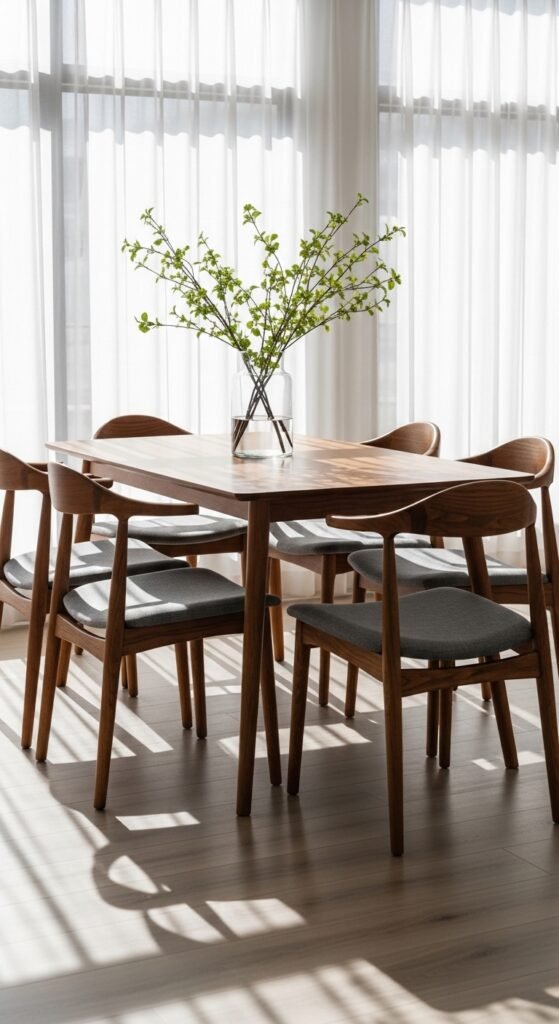
In a minimalist dining room, negative space (empty space) is treated as an active design element. It allows the room to breathe. By reducing visual noise—clutter, busy patterns, excessive decor—you create a calm, serene dining experience regardless of the square footage.
Pro Tip: Adopt the “one in, one out” rule. If you buy a new piece of decor or a new set of placemats, donate the old ones to prevent accumulation.
Popular Asked Questions
How do I make my small dining room look bigger?
To make a small dining room look bigger, focus on light and reflection. Use light paint colors (whites, creams, pale grays) to reflect natural light. Hang a large mirror opposite a window to double the visual depth. Choose furniture with exposed legs or transparent materials (glass, acrylic) to reduce visual weight, and keep the floor visible as much as possible.
What is the best table shape for a small dining room?
A round table is generally the best shape for a small dining room. It has no sharp corners to block traffic flow, and its curved edges soften the room. Round tables also usually have a pedestal base, which offers more legroom and flexibility for adding extra chairs compared to a table with four legs.
How can I fit a dining area in a small living room?
You can carve out a dining area in a small living room by using a “floating” layout. Place a small round table behind your sofa, or tuck a banquette into an unused corner. Alternatively, use a drop-leaf console table against a wall that can be expanded when you need to eat. Rugs and pendant lights help visually define the dining zone separate from the living zone.
What are the trending small dining room colors for 2026?
The trends for 2026 lean towards “warm minimalism.” Think soft beiges, warm whites, and earthy terracottas that make the space feel cozy rather than sterile. However, bold, monochromatic dark rooms (like deep forest green or charcoal) are also trending for creating intimate, “jewel-box” dining experiences in small nooks.
How do I maximize storage in a small dining room?
Maximize storage by using vertical space and dual-purpose furniture. Install floor-to-ceiling shelving or tall, narrow cabinets. Use a dining bench with a lift-top seat for hidden storage. Floating buffets and wall-mounted racks can hold glassware and plates without taking up floor space.
Conclusion
Designing a small dining room is not about compromise; it is about creativity. By selecting the right furniture scale, utilizing vertical storage, and employing visual tricks like mirrors and lighting, you can create a space that feels grand and welcoming. The era of the formal, unused dining hall is over. The 2026 trend is all about intimate, functional, and stylish spaces that adapt to your life.
Which of these space-saving ideas will you try first in your home?
Follow us on Pinterest for more small dining room ideas inspiration.