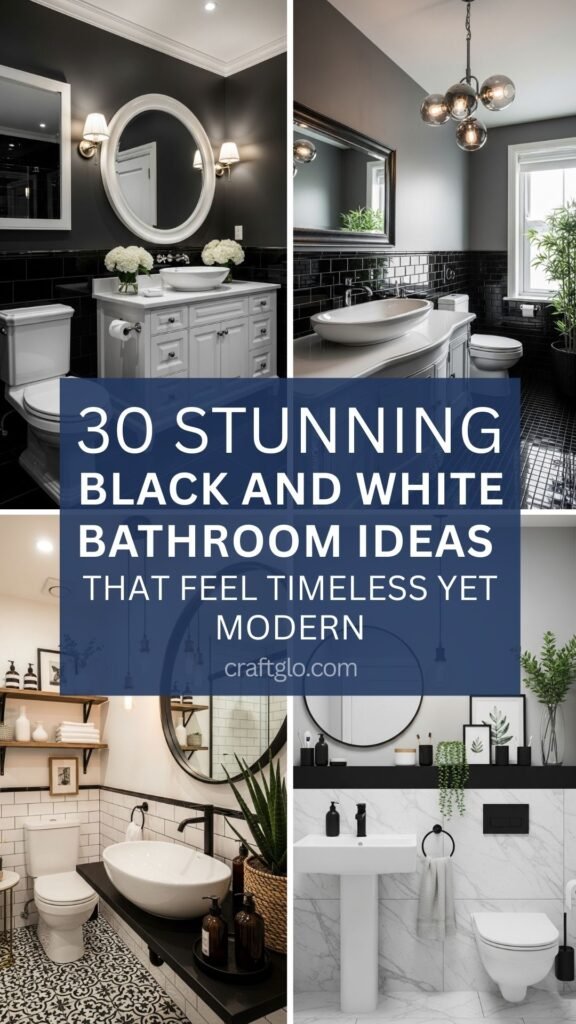
Black and white bathrooms are having a major resurgence in 2026. While some trends fade, this high-contrast combination remains a staple because it is versatile, dramatic, and incredibly easy to update. Whether you are working with a tiny powder room or a sprawling master suite, a monochrome palette serves as the perfect canvas for your personal style.
If you are worried that a black and white color scheme might feel cold or sterile, you are not alone. The secret to making this look work today is texture. By layering matte finishes, natural stone, and warm metals, you can create a space that feels cozy rather than clinical. This guide will show you exactly how to balance light and dark to create a bathroom that feels expensive and inviting.
Key Takeaways
- Texture is critical. To avoid a “flat” look, mix materials like matte black metal, glossy subway tile, and fluffy cotton textiles.
- Wood adds warmth. Incorporating natural wood tones prevents the room from feeling too sterile or clinical.
- Lighting changes everything. In a room with dark walls or fixtures, layered lighting is essential to keep the space functional and open.
- Pattern plays a huge role. From checkerboard floors to geometric wallpaper, patterns hide dust and add visual interest to monochrome spaces.
Table of Contents
- Classic Checkerboard Floors
- Matte Black Fixtures
- Industrial Crittall Shower Doors
- Black Beadboard Wainscoting
- Luxury Marble Veining
- Floating Black Vanity
- Subway Tile with Dark Grout
- Statement Wallpaper
- Warm Wood Accents
- Hexagon Floor Tiles
- Brass and Gold Hardware
- The Black Ceiling
- Minimalist Wet Room
- Vintage Clawfoot Tub
- Geometric Art Deco
- Vertical Shiplap
- Monochrome Gallery Wall
- High-Gloss Black Paint
- Terrazzo Stone
- Arched Mirrors
- Black Framed Niche
- Herringbone Wall Pattern
- Penny Tile Rugs
- Gothic Revival
- Popular Asked Questions
- Conclusion
Classic Checkerboard Floors
The checkerboard floor is perhaps the most iconic element of black and white design. It instantly gives a bathroom a sense of history and Parisian elegance. While traditional checkerboard uses 12×12 inch marble tiles, modern interpretations are playing with scale. You can use oversized 24-inch tiles to make a small bathroom feel larger, or tiny mosaic squares for a retro vibe.
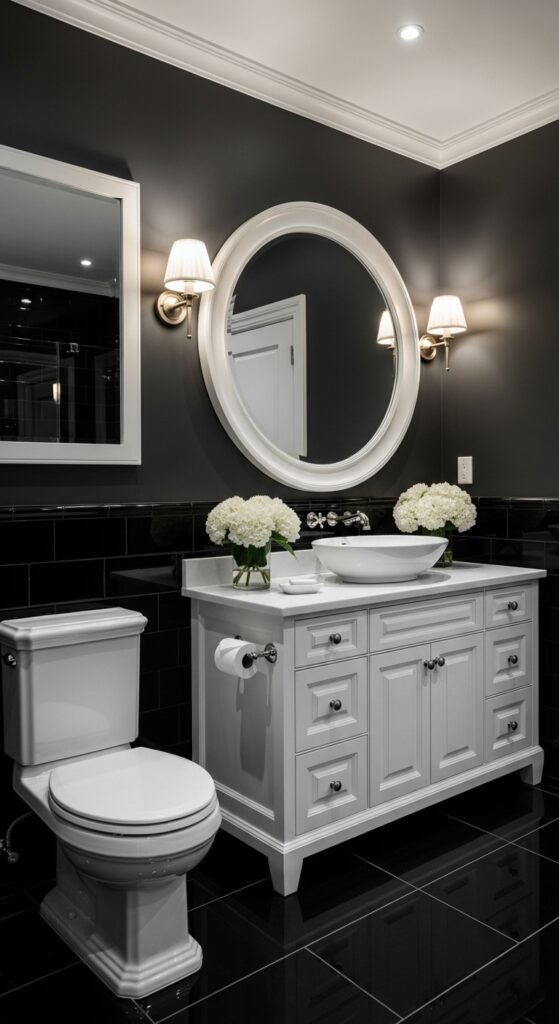
This look works because it grounds the room. When you have a busy floor pattern, you should keep the walls relatively simple. A classic white subway tile or a soft grey wash on the walls allows the floor to be the star. If you want a softer look, choose a marble with grey veining rather than a solid stark black tile. This reduces the visual “vibration” that high-contrast patterns can sometimes cause.
Pro Tip: Install the tiles on a diagonal (diamond pattern) rather than straight. This draws the eye to the corners of the room and visually expands the floor space.
Matte Black Fixtures
Chrome and brushed nickel have been the standard for decades, but matte black fixtures have solidified their place as a modern classic. They provide a sleek, contemporary silhouette that pops against white sinks and tubs. The matte finish is particularly effective because it does not reflect light, which creates a “velvet” visual texture that feels luxurious to the touch.
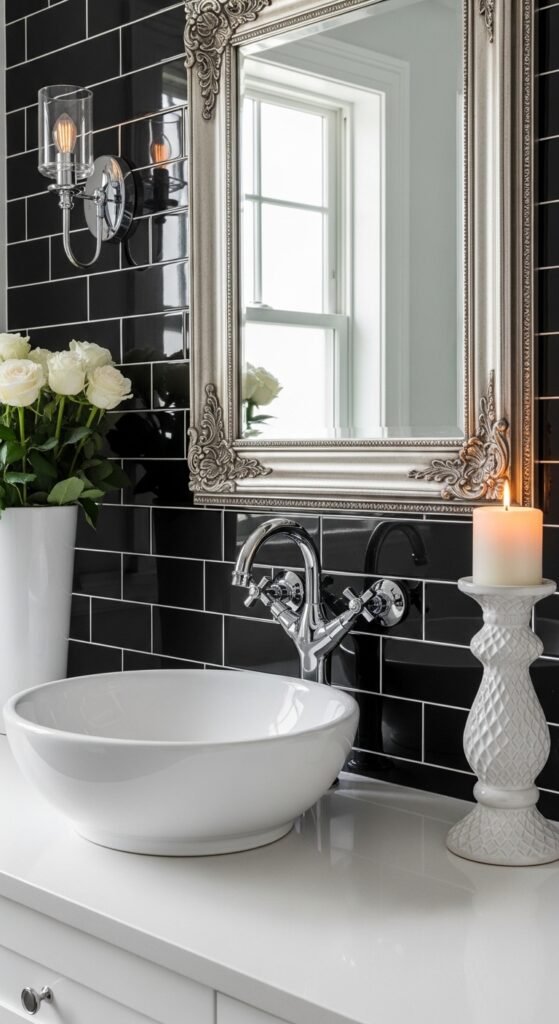
However, matte black requires specific care. Unlike chrome, you cannot use abrasive cleaners or wax-based polishes on it, as these can ruin the matte coating and make it shiny or patchy. The design impact is worth the maintenance, though. A matte black faucet acts like a piece of sculpture on your vanity. It serves as a visual anchor that draws the eye immediately.
Pro Tip: To avoid water spots, wipe your matte black fixtures down with a dry microfiber cloth after every use. It takes five seconds and keeps them looking brand new.
Industrial Crittall Shower Doors
Glass shower enclosures framed in black metal, often called Crittall style or grid shower doors, are a massive trend. They bring an architectural, industrial edge to the bathroom. The grid pattern mimics the look of old factory windows, which adds character to a plain white tiled shower. This is a perfect solution for small bathrooms where a solid wall would block light.
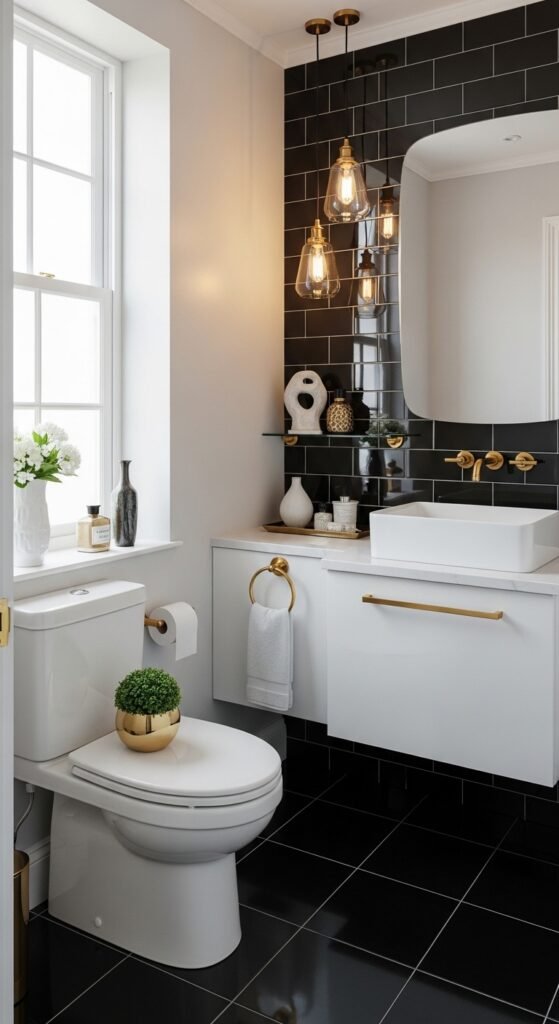
The transparency of the glass keeps the room feeling open, while the black grid lines provide definition. This style bridges the gap between modern minimalism and vintage industrial. It pairs exceptionally well with concrete floors or simple white subway tiles. The strong vertical and horizontal lines of the frame add a sense of structure and order to the space.
Save this idea to your Pinterest.
Black Beadboard Wainscoting
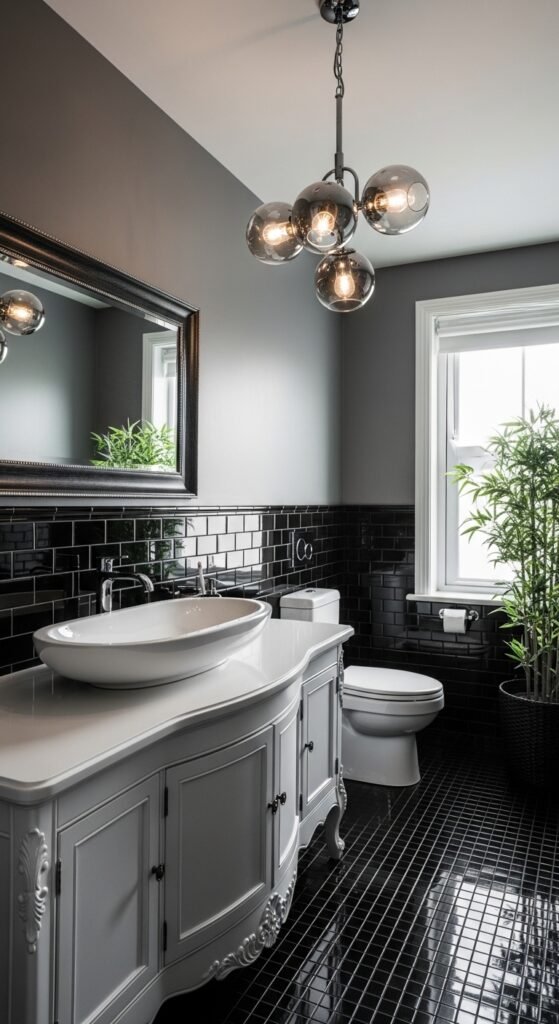
If painting an entire room black feels too intimidating, try black beadboard wainscoting on the lower half of the wall. This technique grounds the space and protects the walls from splashes, while leaving the upper half bright and airy. It is a fantastic way to add architectural interest to a boxy, plain bathroom without spending a fortune.
Paint the beadboard in a satin or semi-gloss finish. This makes it easy to wipe clean and reflects a small amount of light, which highlights the vertical grooves of the wood. You can pair this with a crisp white paint above, or even a bold wallpaper. The contrast between the dark, structured wood below and the lighter wall above raises the visual height of the ceiling.
Pro Tip: Top your black beadboard with a small ledge shelf. It provides a perfect spot for leaning art prints or small plants.
Comparison: Matte vs. Glossy Black Finishes
| Feature | Matte Black Finish | Glossy Black Finish |
|---|---|---|
| Visual Effect | Modern, soft, velvety, absorbs light. | Glamorous, classic, reflects light. |
| Maintenance | Shows dust and makeup powder easily. | Shows fingerprints and water spots easily. |
| Best For | Faucets, hardware, accent walls. | Tiles, bathtubs, painted trims. |
| Vibe | Industrial, Minimalist, Scandi. | Art Deco, Traditional, Luxury. |
| Durability | Finish can chip if low quality. | Generally more resistant to scratching. |
Luxury Marble Veining
Nothing says luxury quite like large-scale marble. For a black and white bathroom, look for stones with dramatic, high-contrast veining. A white Calacatta marble with thick, dark grey or black veins creates a natural art piece on your wall or floor. Alternatively, a black Marquina marble with striking white lightning-bolt veins creates a moody, sophisticated atmosphere.
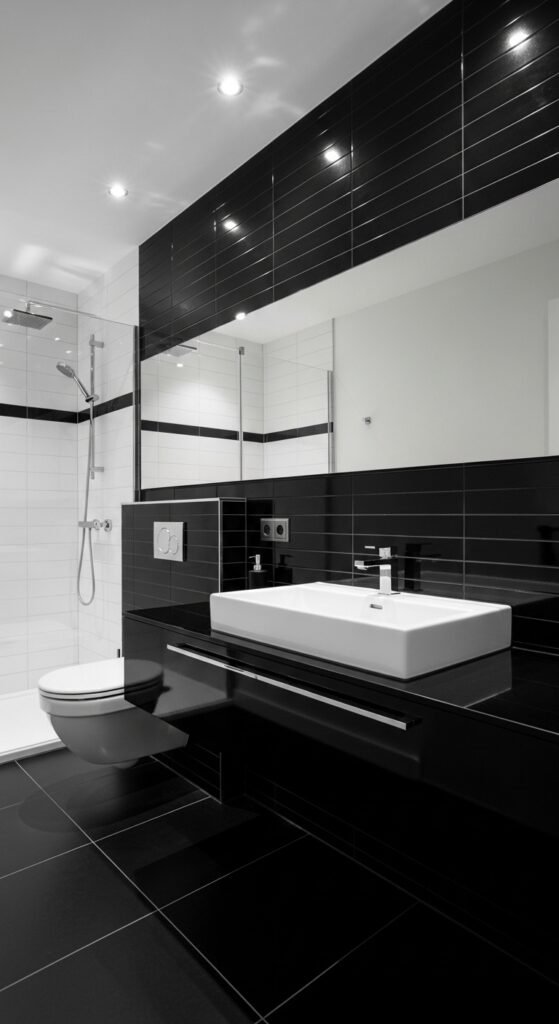
Using large slabs instead of small tiles reduces grout lines, which makes the space feel seamless and larger. If real marble is out of your budget, high-quality porcelain tile that mimics the look of stone is a durable and cost-effective alternative. The organic patterns of the stone break up the rigidity of a strict black and white color palette.
Pro Tip: If you use marble in the shower, ensure it is properly sealed. Real stone is porous and can absorb hair dye or shampoo chemicals if left unprotected.
Floating Black Vanity
A floating vanity is a modern design choice that makes a bathroom feel bigger. By mounting the cabinet to the wall and leaving the floor space underneath visible, you trick the eye into seeing more square footage. A sleek, black floating vanity adds a heavy dose of drama without cluttering the floor.
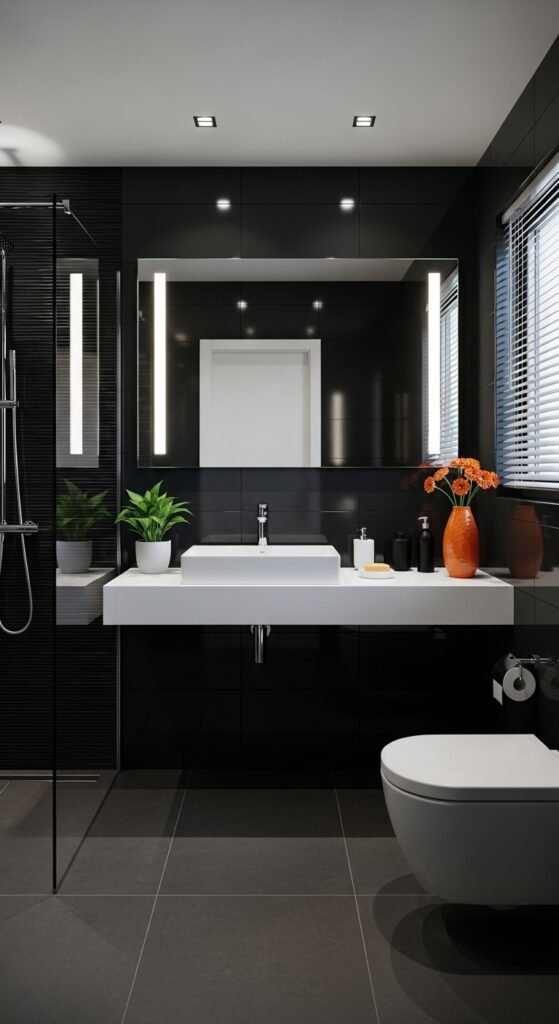
To keep this look from feeling too heavy, choose a vanity with clean lines and minimal hardware. A matte black finish works well here, or a black stained wood that shows a hint of grain. Pair it with a crisp white countertop—quartz is a great option for durability—to create that essential separation between the dark cabinet and the rest of the room.
Save this idea to your Pinterest.
Subway Tile with Dark Grout
White subway tile is a bathroom staple for a reason: it is cheap, durable, and timeless. However, it can look a bit generic. The easiest way to elevate standard white subway tile is to use black or dark grey grout. This highlights the geometric pattern of the brick layout and adds an instant graphic punch to the walls.
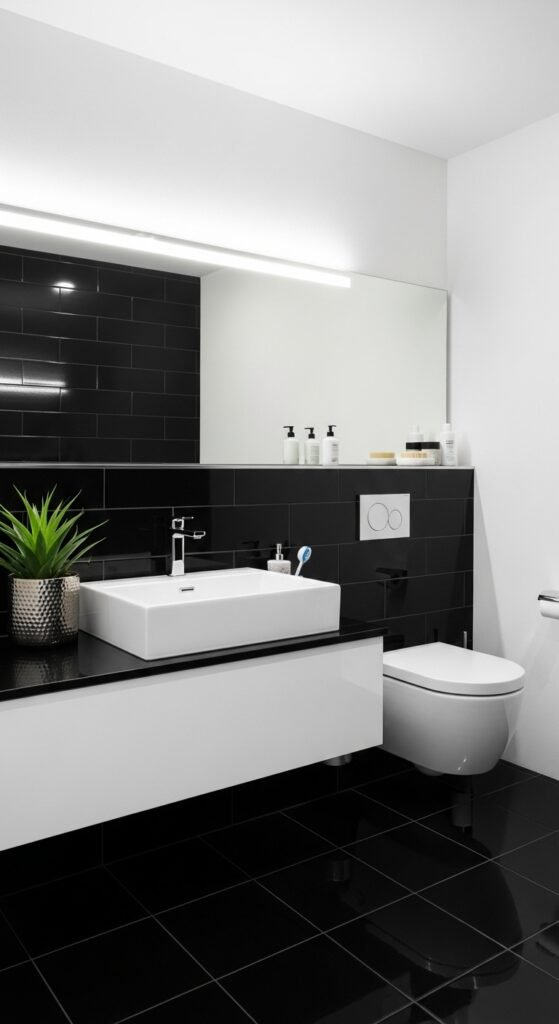
This look is also incredibly practical. White grout discolors quickly in a shower, turning yellow or pink with soap scum. Dark grout hides stains and requires much less scrubbing to keep looking fresh. It gives the bathroom a slightly vintage, “public bathhouse” vibe that is very trendy in restoration hardware-style interiors.
Pro Tip: Ensure your tiler seals the dark grout properly to prevent it from fading or bleeding onto the white tiles during installation.
Statement Wallpaper
Powder rooms and bathrooms are the best places to experiment with bold wallpaper. In a black and white scheme, a toile, floral, or geometric wallpaper can add immense personality. Because you are only using two colors, you can get away with a very busy pattern without it overwhelming the eye.
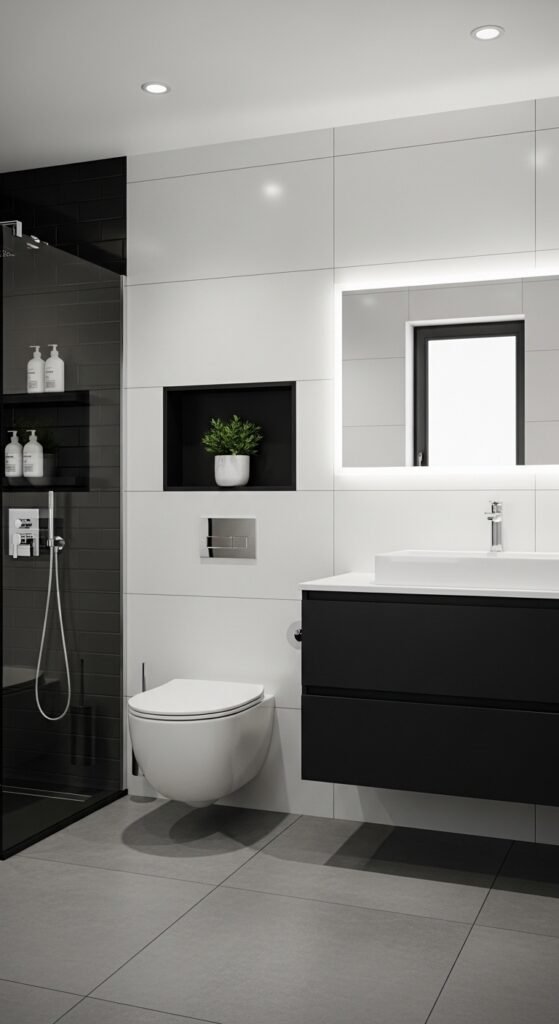
Try a wallpaper with a black background and white line drawings for a moody, artistic look. Or, go for a white background with black abstract shapes for something brighter. Wallpaper adds a layer of softness that tile and metal cannot achieve. It makes the bathroom feel like a furnished room rather than just a utility space.
Pro Tip: Use “vinyl” or “scrubbable” wallpaper in bathrooms to withstand humidity. Avoid putting wallpaper directly in splash zones unless it is specifically rated for it.
Warm Wood Accents
A strictly black and white bathroom can sometimes feel a bit cold or “hospital-like.” The antidote is wood. Introducing natural wood tones—whether through a teak shower bench, oak floating shelves, or a walnut vanity—instantly warms up the space. The brown tones bridge the gap between the stark black and bright white.
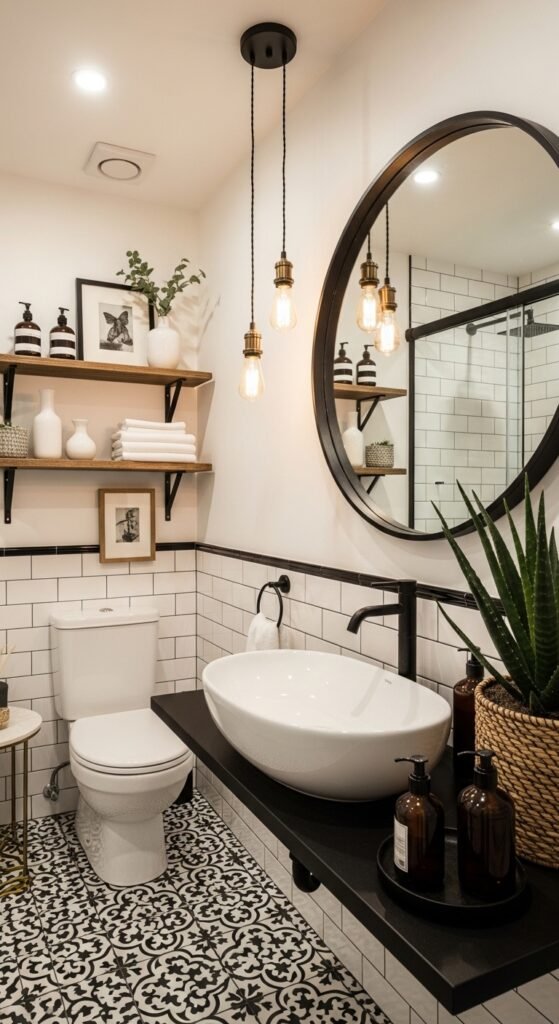
Light oak works well for a Scandinavian or Boho look, while dark walnut fits better with Mid-Century Modern or Industrial styles. You don’t need much; even a wooden mirror frame or a bamboo bath mat can be enough to reset the temperature of the room. This organic element brings life and nature into the monochrome environment.
Save this idea to your Pinterest.
Hexagon Floor Tiles
Hexagon tiles are a playful alternative to squares. Small black hexagon tiles with white grout create a “honeycomb” texture that is grippy and safe for wet floors. Alternatively, large white hexagon tiles can make a small floor feel expansive. The six-sided shape interlocks in a way that draws the eye across the room.
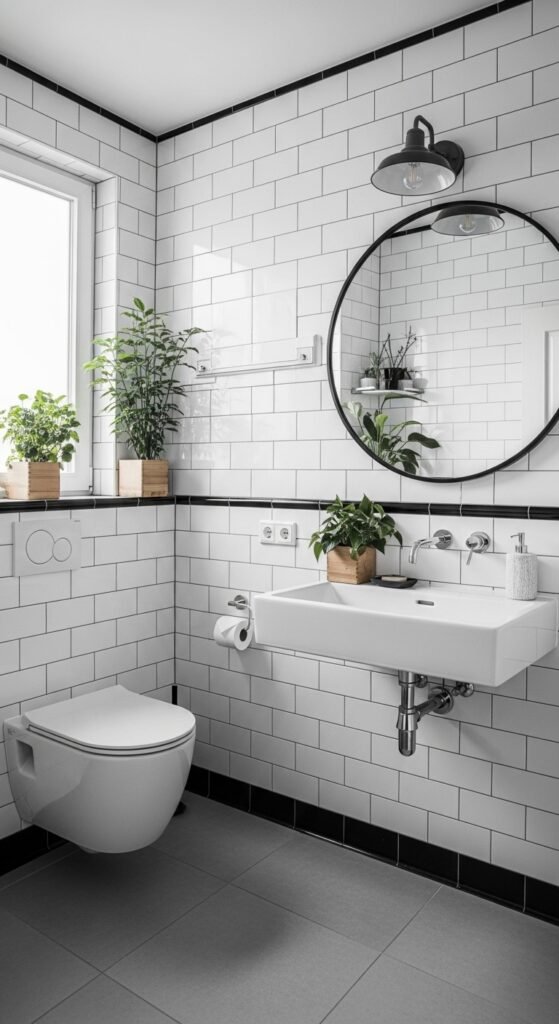
You can also get creative with transitions. Some designers are “fading” the tile into wood flooring or a different tile shape, leaving the edge of the hexagons jagged and organic. This breaks the traditional straight lines of a room and acts as a unique design feature. It is perfect for a modern, quirky bathroom renovation.
Pro Tip: Use a medium grey grout for black floor tiles. Pure black grout can sometimes look like a void, while grey defines the edges of each tile.
Brass and Gold Hardware
While chrome is the safe choice for black and white bathrooms, brass or gold hardware is the fashion-forward choice. The warm metallic tones pop incredibly well against black surfaces. A gold faucet on a black vanity is jewelry for your bathroom. It adds a touch of glamour and sophistication that silver metals simply cannot match.
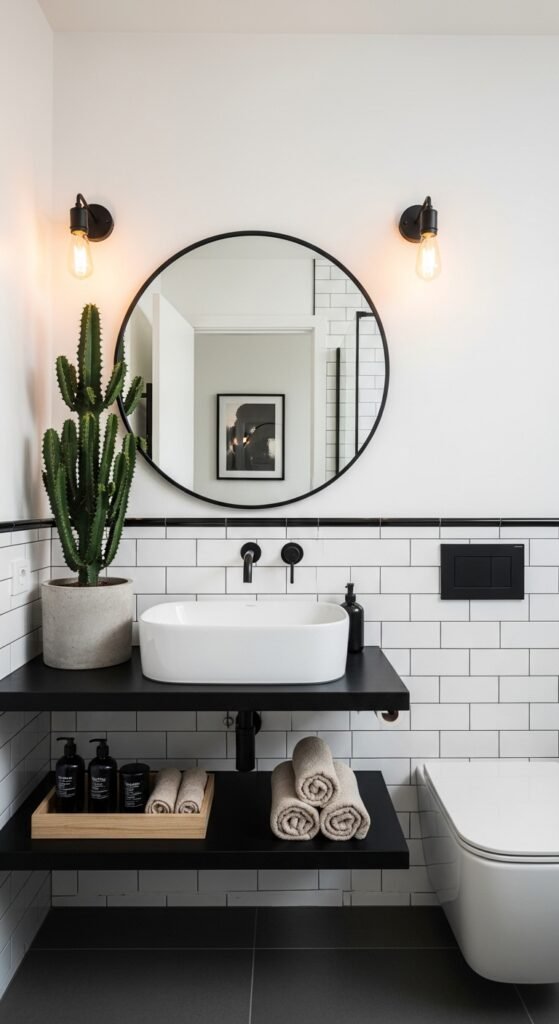
You don’t have to go overboard. A few key pieces—cabinet pulls, a faucet, and a light fixture—are enough to make a statement. Look for “brushed” or “satin” brass finishes rather than shiny polished brass. The brushed finish hides fingerprints better and looks more contemporary. It creates a “luxury hotel” aesthetic that is highly sought after.
Save this idea to your Pinterest.
The Black Ceiling
Most people default to white ceilings, but painting your ceiling black is a power move. In a small bathroom or powder room, a black ceiling can actually make the room feel taller by blurring the boundaries of where the wall ends and the ceiling begins. It creates a cozy, cocoon-like effect that is incredibly stylish.
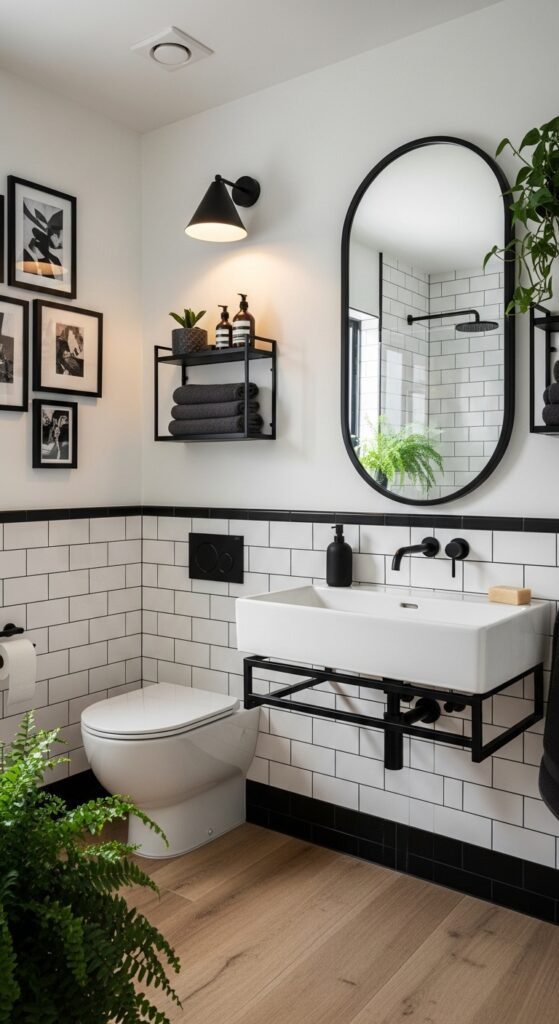
This works best in rooms with higher ceilings or plenty of natural light. If you have crown molding, paint it the same color as the walls (white) to create a crisp frame for the black ceiling. Pair this with a statement chandelier or pendant light. The dark background will make the light fixture sparkle and stand out more.
Pro Tip: Use a flat or matte paint for the ceiling. Glossy paint on a ceiling will reflect weird glares from your light bulbs and highlight any imperfections in the drywall.
Minimalist Wet Room
A wet room is a waterproofed bathroom where the shower is not enclosed by a tray or curb. The floor is flush and slopes gently to a drain. In a black and white theme, this looks ultra-modern and clean. You can run the same large-format tiles from the door all the way into the shower area, creating a seamless flow.
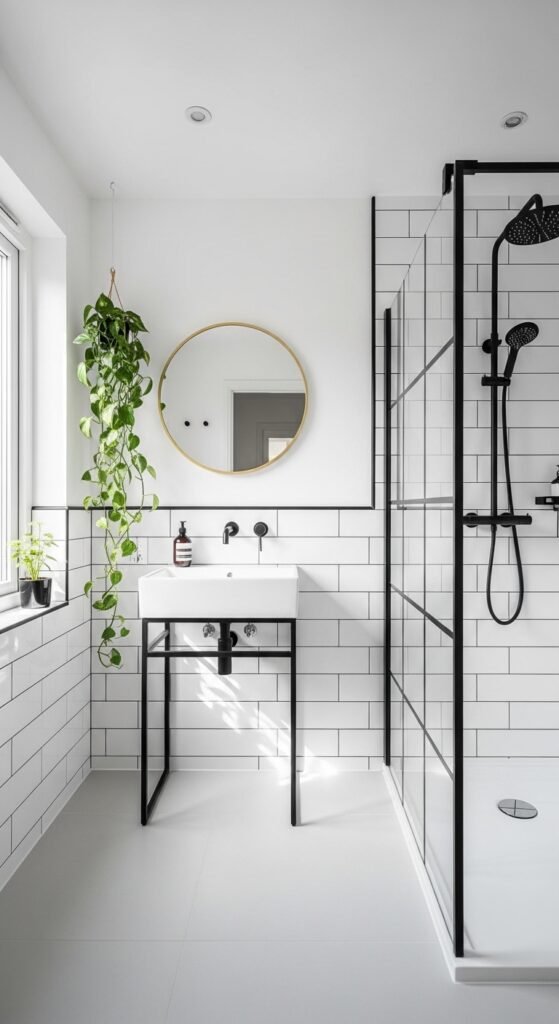
This design is highly functional for accessibility and cleaning. Without glass doors or shower curtains to scrub, maintenance is easier. Use a linear drain (a long, thin drain) for a sleek look. A monochrome wet room feels like a high-end spa. Keep the toiletries hidden in a niche to maintain the minimalist vibe.
Pro Tip: Ensure your waterproofing is done by a professional. A wet room requires tanking (sealing) the entire floor and walls, which is difficult to DIY.
Vintage Clawfoot Tub
For a touch of Victorian charm, nothing beats a clawfoot tub. Paint the exterior of the tub a matte black or charcoal, while keeping the inside porcelain white. This creates a stunning focal point in the room. The curves of the tub soften the hard lines of tile and cabinetry.
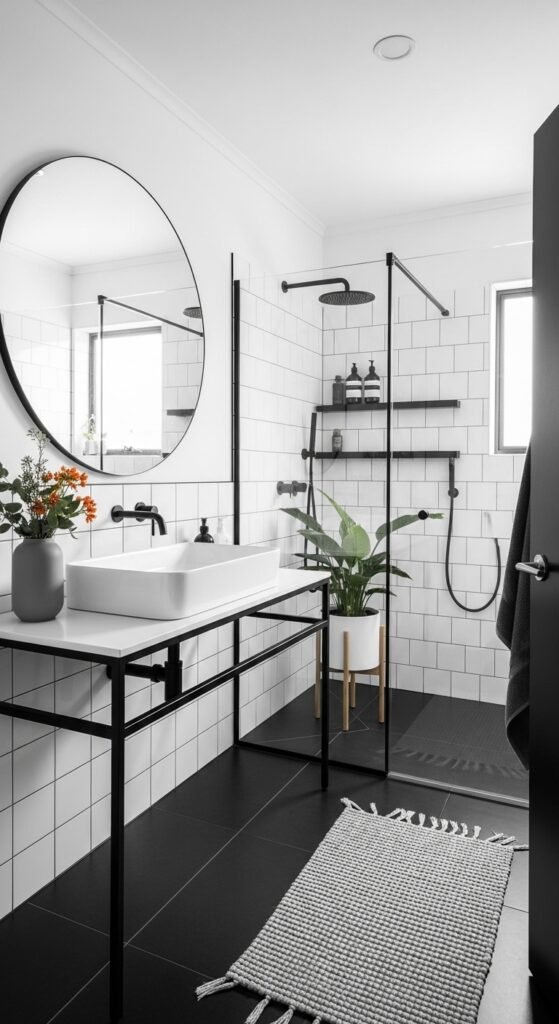
You can pair a black tub with chrome feet for a classic look, or brass feet for something warmer. If you don’t have space for a vintage cast iron tub, many modern acrylic versions mimic the shape but are lighter and easier to install. Place the tub against a wall of white subway tile to let the dark silhouette really pop.
Save this idea to your Pinterest.
Geometric Art Deco
Art Deco is defined by bold geometric shapes and high contrast, making it the perfect style for black and white bathrooms. Think “sunburst” patterns, stepped edges, and angular mirrors. You can introduce this style through floor tiles that feature bold geometric motifs or a vanity with carved details.

Lighting is key for Art Deco. Sconces with frosted glass and black metal or brass detailing fit perfectly. This style is glamorous and a bit dramatic. It is ideal for guest bathrooms where you want to impress visitors. It feels curated and intentional, rather than just a standard builder-grade bathroom.
Pro Tip: Look for mirrors with beveled edges or unique shapes (like octagons) to enhance the Art Deco vibe.
Vertical Shiplap
Shiplap isn’t just for farmhouses. When installed vertically, it feels modern and fresh. Painting vertical shiplap black creates a rich, textured wall that draws the eye upward. It is a great alternative to tile if you want to save money or add warmth, as wood is softer than ceramic.
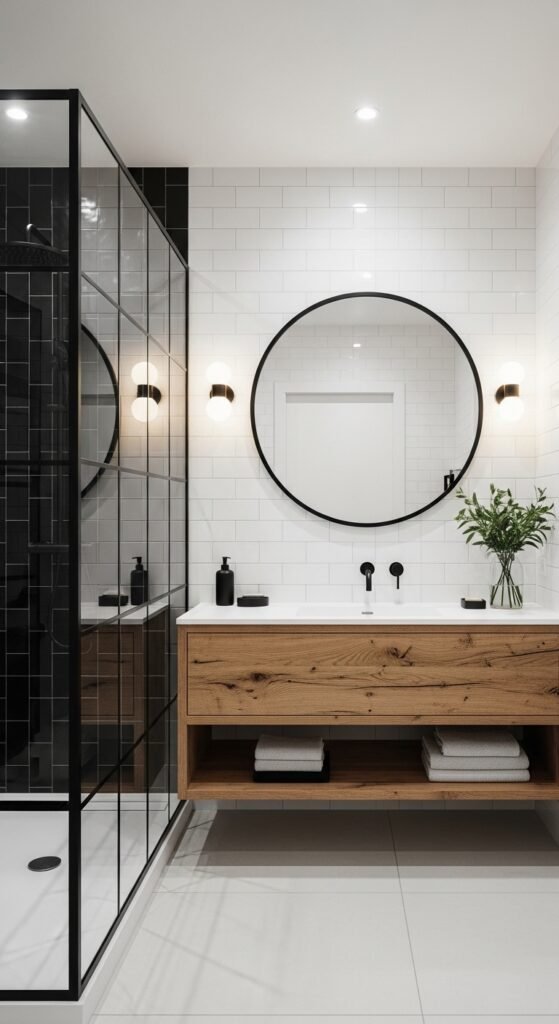
This looks amazing behind a vanity or a toilet. The vertical lines make the ceiling feel higher. Because it is wood, you need to use a high-quality paint that can withstand moisture. A satin finish is usually best. The subtle shadow lines between the boards add a texture that flat paint lacks.
Save this idea to your Pinterest.
Comparison: Tile Patterns for Monochrome Bathrooms
| Pattern | Visual Impact | Best For |
|---|---|---|
| Herringbone | High energy, directs the eye. | Shower walls, backsplashes. |
| Stacked (Grid) | Modern, clean, orderly. | Mid-century modern styles. |
| Brick (Offset) | Classic, traditional, safe. | Farmhouse or vintage styles. |
| Hexagon | Playful, organic, retro. | Floors, niche backgrounds. |
| Chevron | Sharp, dynamic, arrow-like. | Feature walls. |
Monochrome Gallery Wall
Who says art doesn’t belong in the bathroom? A gallery wall of black and white photography or prints can transform a boring wall into a conversation piece. Use matching black frames with white mats for a cohesive, museum-quality look. This is an easy, low-commitment way to add personality.
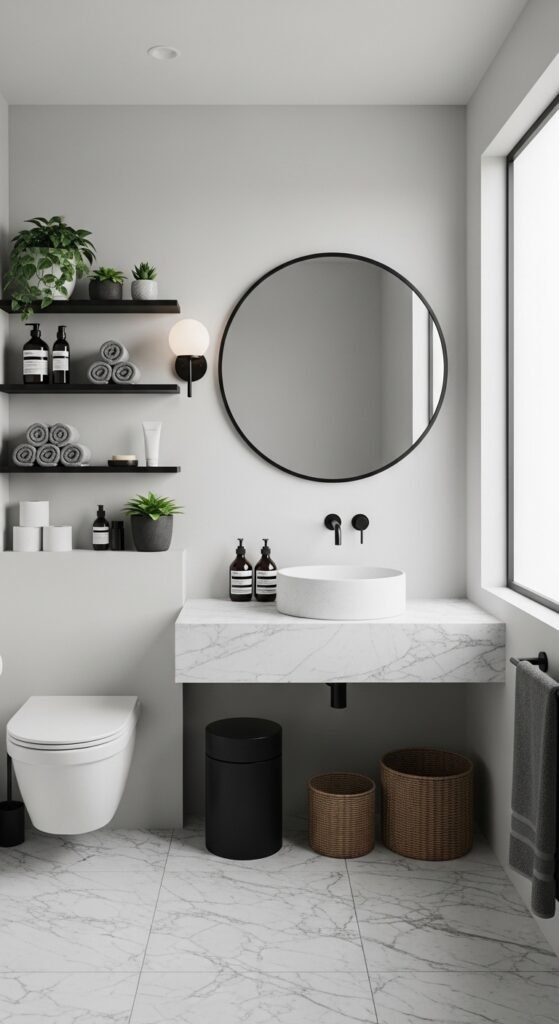
You can choose a theme—like vintage botanical prints, abstract sketches, or architectural photos. Glass-fronted frames protect the art from moisture, but it is still best to avoid placing valuable original art in a humid room. Stick to prints and replace them if they eventually show signs of wear.
Pro Tip: Use Command strips designed for bathrooms (moisture-resistant) to hang your frames so you don’t have to drill into tiles.
High-Gloss Black Paint
While matte is trendy, high-gloss black paint is pure drama. It reflects light like a mirror, making a dark room feel brighter and more expansive than you might expect. It creates a “lacquered” look that is associated with high-end British interiors and moody libraries.
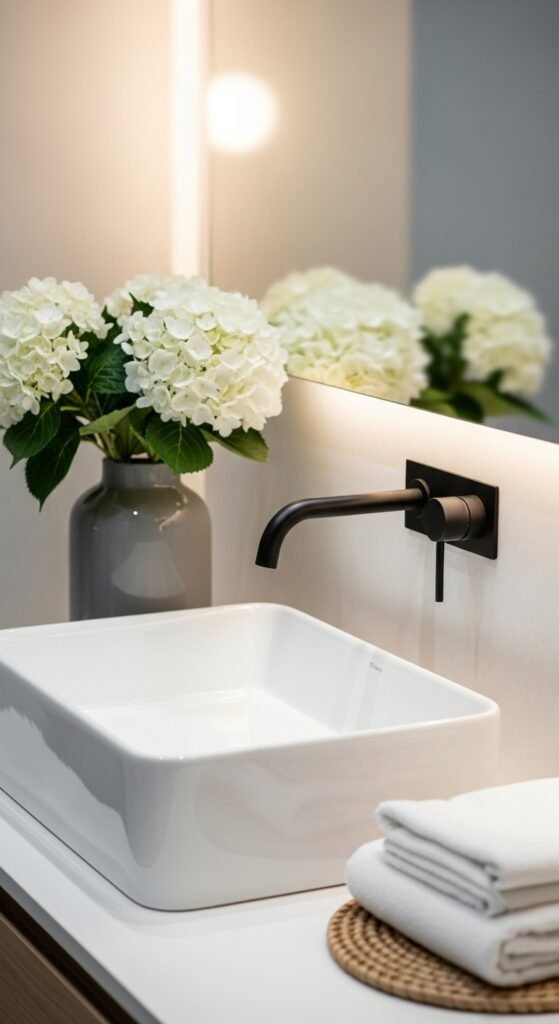
This finish is unforgiving of imperfections, so your walls need to be perfectly smooth before painting. It works beautifully on doors, trim, or vanity cabinets. The reflection adds a liquid-like quality to the surface. Pair it with crystal knobs or polished nickel hardware to enhance the shine.
Save this idea to your Pinterest.
Terrazzo Stone
Terrazzo is back in a big way. This composite material, made of chips of marble, quartz, granite, or glass poured into a cement binder, offers a speckled look that hides dirt amazingly well. A white terrazzo with black chips (or vice versa) adds a playful confetti-like pattern to the bathroom.
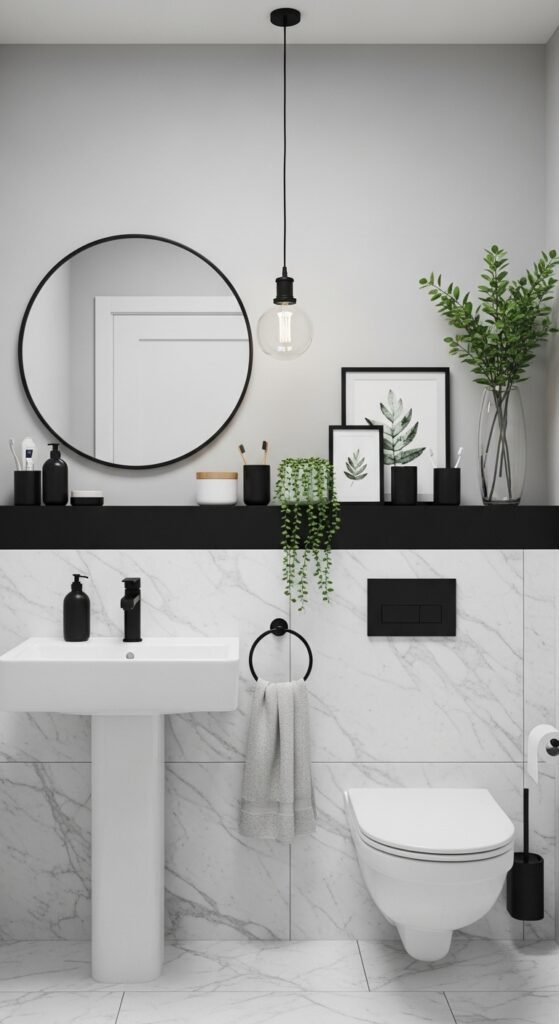
It is softer and more interesting than solid stone. You can use it for floors, countertops, or even splashbacks. The speckled pattern bridges the gap between different shades of black, grey, and white, allowing you to mix and match fixtures more easily. It feels retro yet thoroughly modern.
Pro Tip: Terrazzo is incredibly durable and hard-wearing, making it perfect for family bathrooms with high traffic.
Arched Mirrors
Rectangular mirrors are standard, but arches are graceful. An arched mirror with a thin black metal frame softens the angular lines of a tiled bathroom. The curve mimics the shape of the sink faucet or the bathtub, creating a harmonious flow.
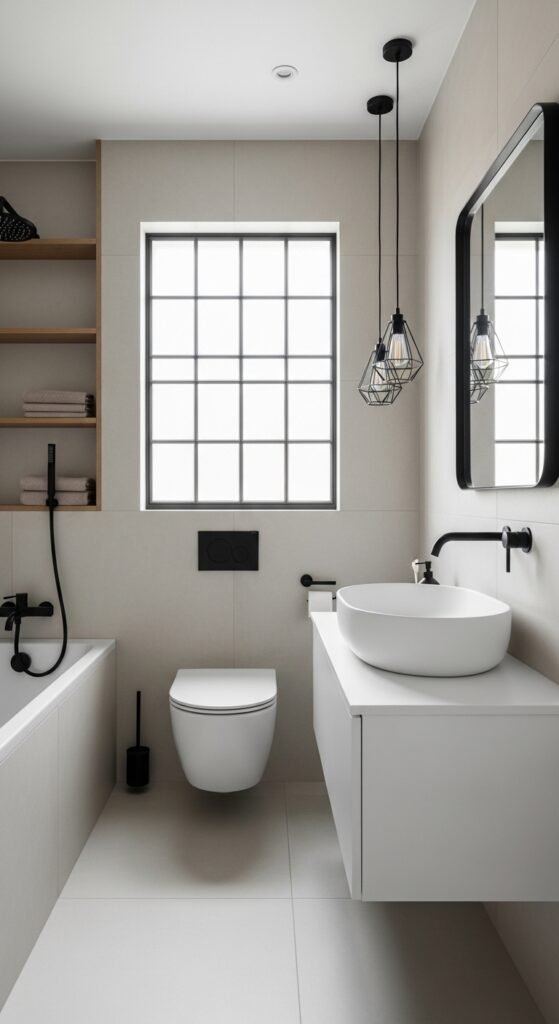
For a double vanity, use two tall arched mirrors side by side. This draws the eye up and emphasizes the vertical space. If you can find a backlit arched mirror, even better—it provides excellent lighting for makeup and adds a glowing halo effect against a dark wall.
Save this idea to your Pinterest.
Black Framed Niche
The shower niche is a practical necessity, but it can also be a design feature. Instead of blending it in, frame it. Use black tile trim or a black marble slab to outline the niche box. Inside, use a contrasting tile (like a black hexagon) to make it pop against a white shower wall.
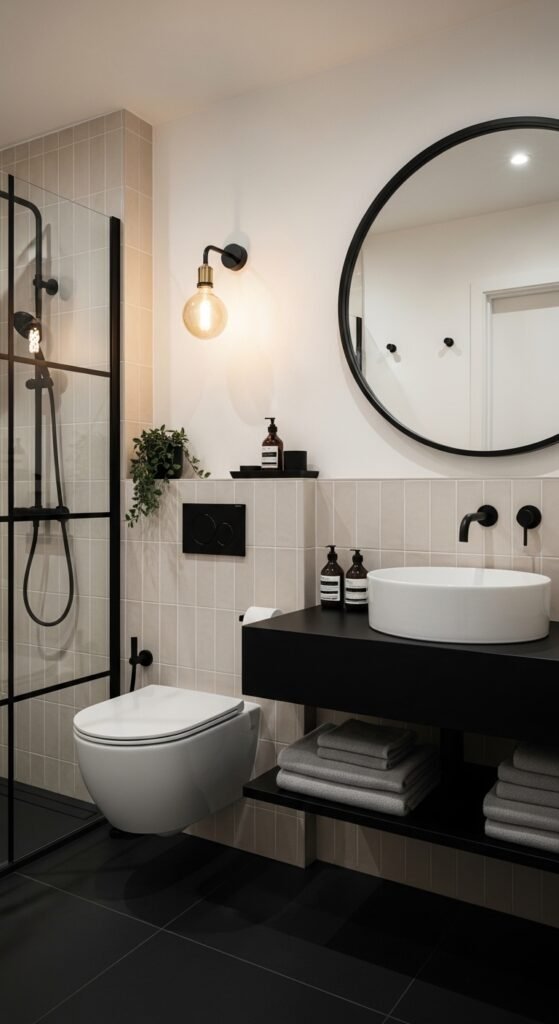
This turns your shampoo storage into a display case. It forces you to be a bit more curated with your bottles—decanting soap into matching pump bottles completes the look. It is a small detail that makes a bathroom feel custom-designed rather than builder-grade.
Pro Tip: Ensure the bottom shelf of the niche is slightly angled outwards so water drains out and doesn’t pool in the corners.
Herringbone Wall Pattern
Laying rectangular tiles in a herringbone (V-shape) pattern instantly elevates the look of the material. Even cheap white subway tiles look expensive when laid this way. It adds movement and energy to the walls.
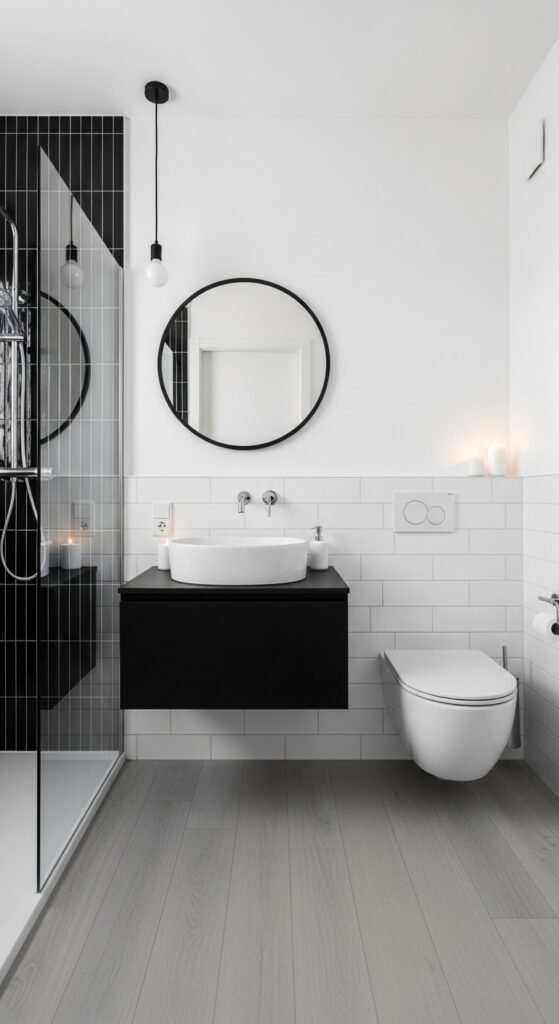
In a black and white bathroom, a herringbone pattern can be used as a feature wall behind the vanity or in the shower. The zig-zag lines are dynamic. If you use white tile with dark grout, the pattern becomes the main focal point of the room. It requires more skill to install and more waste material for cuts, but the visual payoff is huge.
Save this idea to your Pinterest.
Penny Tile Rugs
Penny tiles are small, round tiles usually sold on mesh sheets. A classic vintage design technique is to create a “rug” using these tiles. You use white penny tiles for the border and the main field, and then use black penny tiles to create a border stripe or a word (like “BATH”) in the center.
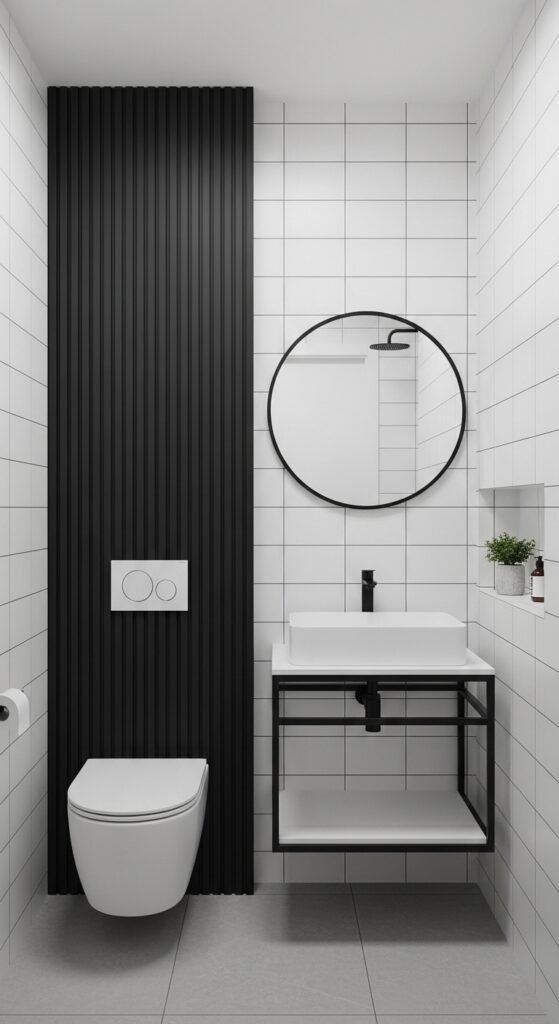
This is charming and timeless. It works exceptionally well in older homes or cottages. The high amount of grout lines makes the floor very slip-resistant. It is a labor of love to get the spacing perfect between sheets, but the result is a custom floor that you won’t see in anyone else’s house.
Pro Tip: Use a “charcoal” grout rather than black or white. White shows dirt, and black can stain the unglazed edges of white penny tiles.
Gothic Revival
For those who love a moody aesthetic, Gothic Revival offers a dramatic twist. Think pointed arches, intricate damask patterns, and ornate details. You can achieve this with a black vanity that features carved legs, or a mirror with an ornate black baroque frame.
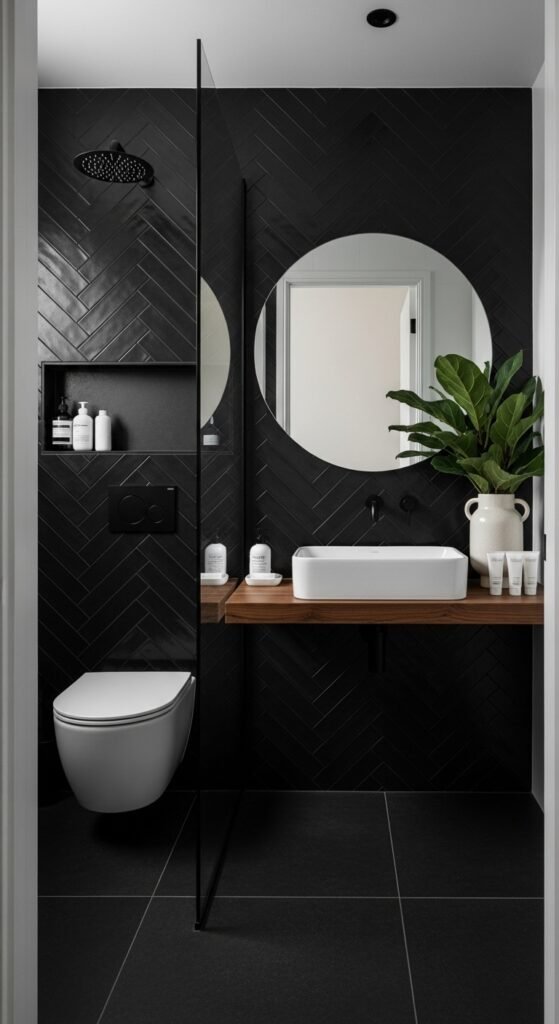
This style leans into the “dark side” of the palette. Don’t be afraid of dark walls and dim, moody lighting. Use candles and antique silver accessories to enhance the atmosphere. It is a romantic, mysterious look that turns a bathroom into a sanctuary.
Save this idea to your Pinterest.
Popular Asked Questions
Is black and white bathroom style going out of date in 2026?
No, it is not going out of date, but it is evolving. The stark, clinical “hospital” look is being replaced by a warmer version. In 2026, the trend is to mix black and white with natural wood, warm metals like brass, and textured tiles to make it feel cozy and timeless rather than cold.
How do you keep black bathroom fixtures clean?
Black fixtures, especially matte ones, can show white limescale deposits and dust. The best way to clean them is to wipe them gently with a dry microfiber cloth daily. Do not use harsh chemical cleaners or abrasive sponges, as these can strip the finish. For hard water stains, a 50/50 mix of white vinegar and water usually works well (check manufacturer instructions first).
Does a black bathroom make the room look smaller?
Not necessarily. While dark colors can absorb light, they also blur corners and edges, which can create an illusion of infinite space. The trick is lighting. If you have good artificial lighting and mirrors to reflect it, a black bathroom can feel cozy and expansive rather than cramped.
What accent color goes best with black and white?
Green is the best natural accent color—plants look incredible in monochrome spaces. For hard finishes, wood tones (oak, walnut) and warm metals (brass, gold, copper) are the best choices to add warmth. If you want a pop of bold color, mustard yellow or deep emerald green towels look stunning.
Conclusion
Designing a black and white bathroom is about finding the balance between drama and livability. Whether you choose the sharp lines of a modern grid shower or the soft curves of a vintage clawfoot tub, this color palette offers a foundation that is impossible to mess up.
The beauty of this style is its flexibility. You can change the entire feel of the room just by swapping out towels or adding a wooden stool. It is a design investment that will look just as good ten years from now as it does today.
Ready to start your renovation? Follow us on Pinterest for more black and white bathroom ideas inspiration.