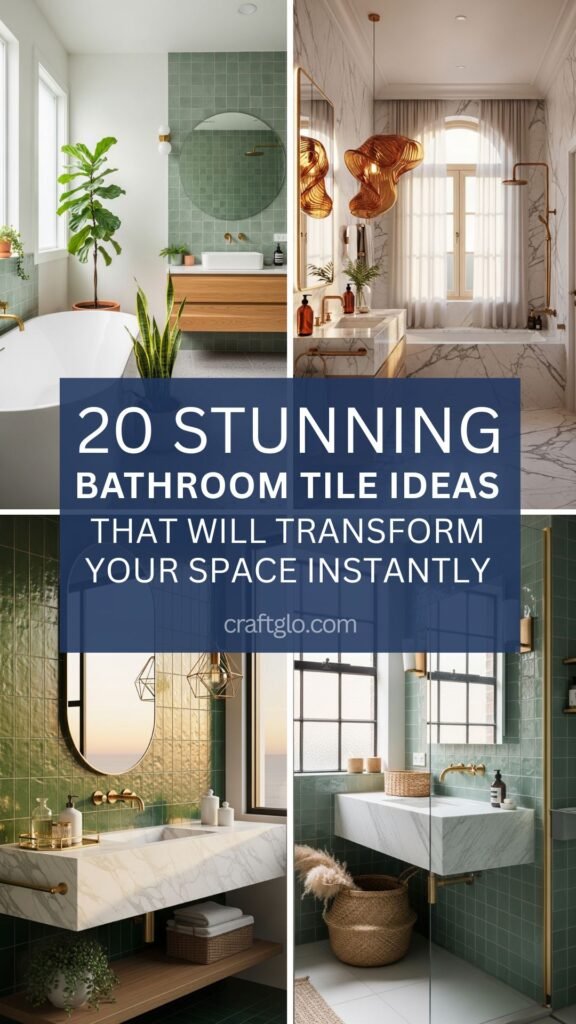
You are tired of your outdated bathroom. You scroll through endless feeds of perfect spa-like sanctuaries and wonder how to bridge the gap between your current reality and that high-end hotel aesthetic. The truth is that the secret to a luxury bathroom renovation isn’t always square footage. It is almost always the tile choice.
The right bathroom tile ideas can manipulate light to make a tiny powder room feel expansive or add texture that turns a cold space into a warm retreat. This guide cuts through the noise of fleeting fads. We are focusing on high-impact, timeless, and trending designs for 2026 that solve actual design problems. Whether you need to brighten a windowless room or create a slip-resistant wet room, these curated ideas provide the roadmap you need.
Check out our related guide on Small Bathroom Layouts to maximize your floor plan.
Key Takeaways
- Texture is King: 2026 is all about “tactile luxury.” Think handmade Zellige, honed travertine, and matte finishes rather than flat, high-gloss subway tiles.
- Green is the New Neutral: Sage and emerald greens are dominating because they bring nature indoors, creating an immediate calming effect.
- Mix Your Eras: The most viral bathrooms seamlessly blend vintage elements (like terracotta or brass) with modern geometric shapes.
- Verticality Matters: Stacking tiles vertically instead of horizontally visually lifts the ceiling, a crucial hack for small bathrooms.
Table of Contents
- Luminous Master Bath With Marble and Sage Zellige
- Travertine Master Bath With Brass Rainfall Shower
- Parisian Master Bath With Murano Glass Pendant
- Malibu Master Bath With White Marble Hexagons
- Copenhagen Small Full Bath With Sage Zellige
- Modern Master Bath With Geometric Cement Tiles
- Vintage Clawfoot Bath With Chevron Zellige
- Copenhagen Tiny Bath With Emerald Zellige
- Warehouse Tiny Bath With Sage Zellige and Subway Tile
- Mediterranean Master Bath With Travertine and Amber Glass
- Malibu Master Bath With Emerald Zellige and Gold Veining
- Tuscan Master Bath Remodel With Terracotta and Zellige
- Spa Master Bath With Limestone and Emerald Mosaic
- Tuscan Floor Detail With Terracotta and Painted Ceramic
- Copenhagen Small Bath With White Subway and Jute Accents
- Minimalist Modern Bath With Charcoal Herringbone
- Aesthetic Spa Bath With White Oak Open Shelving
- Scandinavian Small Bath With Sage Zellige Mosaic
- Milanese Tiny Luxury Bath With Emerald Zellige
- Santorini Bathroom With Emerald Zellige Geometric
- Popular Asked Questions
- Conclusion
Luminous Master Bath With Marble and Sage Zellige
This design perfectly illustrates the “Organic Modern” trend that is sweeping Pinterest right now. The magic here lies in the juxtaposition of textures. You have the sleek, cool surface of high-end marble countertops contrasting with the undulating, imperfect surface of sage Zellige wall tiles. This specific shade of green acts as a neutral, grounding the space without darkening it.
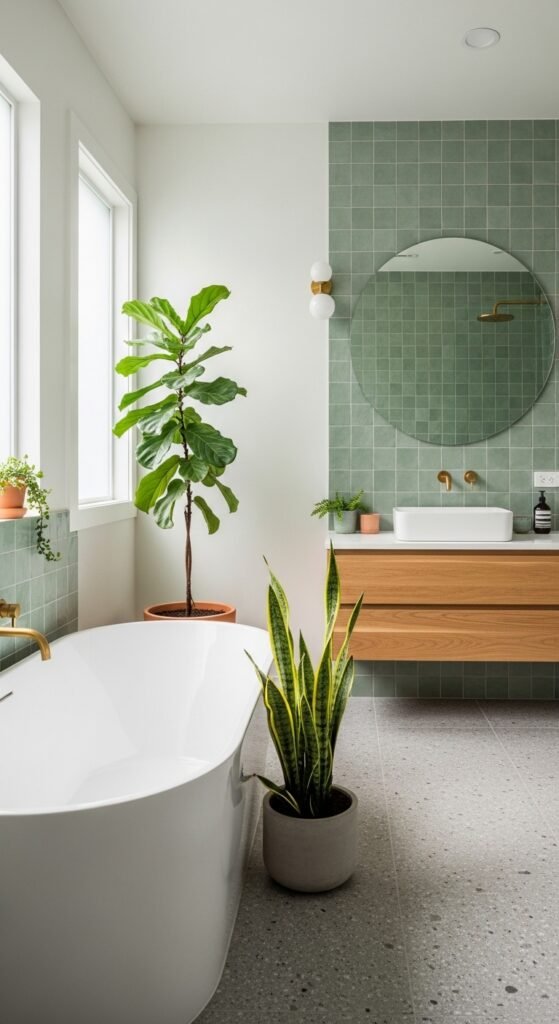
From a design theory perspective, the glossy finish of the Zellige tiles reflects natural light, which amplifies the brightness of the room. This is a critical strategy for bathrooms that might only have one small window. To implement this, do not grout the Zellige tiles flush. Leave them slightly irregular to highlight their handmade nature. Pair this combination with unlacquered brass fixtures, which will patina over time and add warmth to the cool marble tones.
Pro Tip: Use a “warm white” grout for the sage tiles rather than stark bright white. It softens the transition between tiles and makes the cleaning schedule much more forgiving.
Travertine Master Bath With Brass Rainfall Shower
Travertine is having a massive resurgence in 2026, moving away from the generic beige of the early 2000s to a more sophisticated, honed aesthetic. This bathroom uses large-format travertine slabs to create a seamless “quiet luxury” envelope. The stone’s natural porosity and earthy texture evoke a Roman spa, instantly lowering your heart rate when you enter.
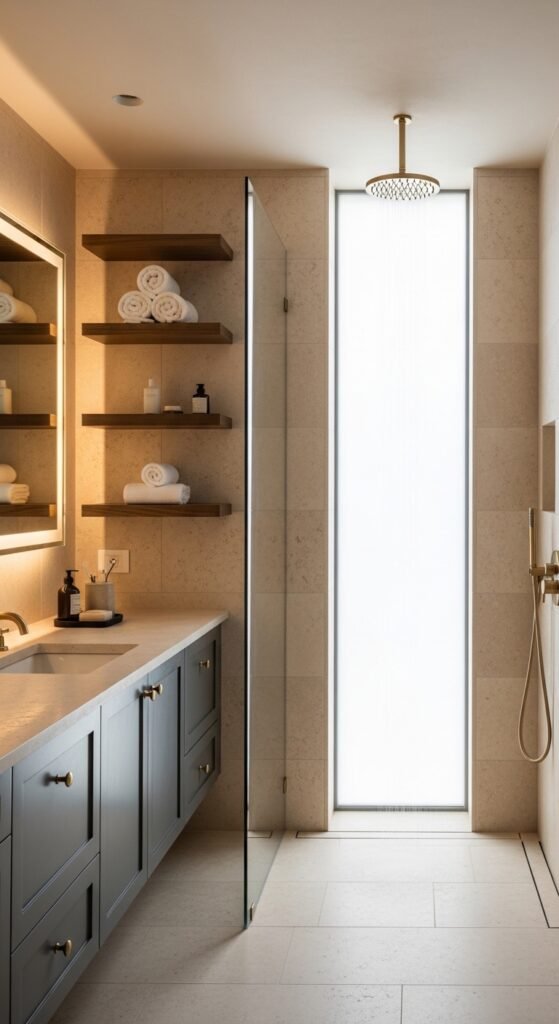
The visual weight of the stone is balanced by the delicate, jewelry-like quality of the brass rainfall showerhead. This is a masterclass in monochromatic design. By keeping the color palette strictly within warm neutrals, the eye is drawn to textures rather than colors. To achieve this look on a budget, look for porcelain tiles that mimic the “vein-cut” travertine look. They offer the same visual movement and warmth but are non-porous and require zero sealing, making them far more practical for a heavy-use wet room.
Pro Tip: If using real travertine, you must seal it annually. Water can penetrate the stone and cause discoloration over time if left unprotected.
Parisian Master Bath With Murano Glass Pendant
Nothing says elegance quite like a Parisian-inspired interior. This bathroom tile idea centers on classic white marble with dramatic grey veining, laid in a chevron or herringbone pattern on the floor to direct the eye toward the focal point: the bathtub. The walls are often kept simple with picture-frame molding or large-format white tiles to let the floor shine.
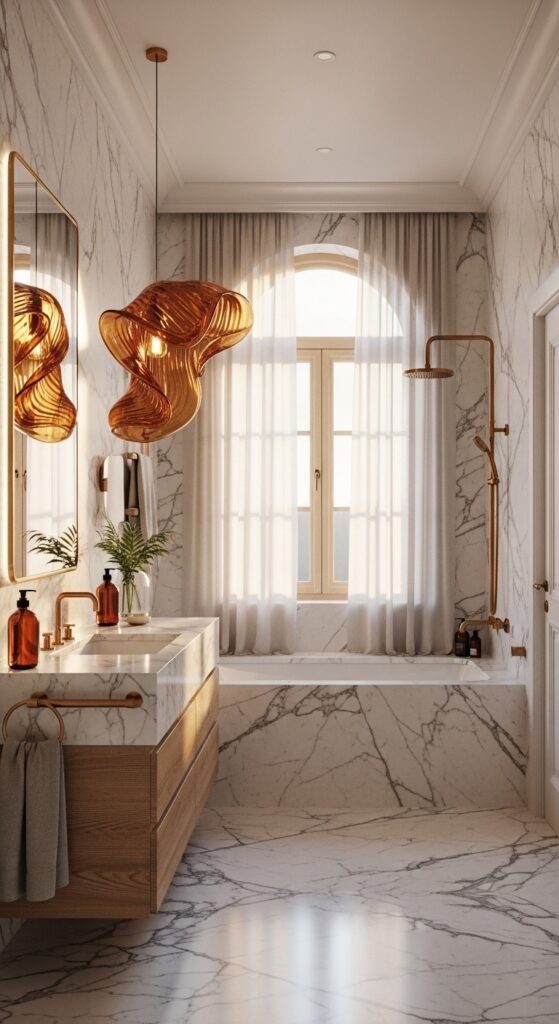
The standout element here is the lighting. A Murano glass pendant adds a layer of fragility and art that contrasts with the hard surfaces of the tile. Design-wise, this is about “zoning.” The intricate floor tile defines the bathing area, while simpler wall treatments prevent the space from feeling chaotic. If you are DIYing this, be aware that chevron patterns require significantly more cuts and waste (add 20% overage) compared to a standard straight lay, but the visual payoff is undeniable.
Pro Tip: Install a dimmer switch for your statement pendant light. It allows you to transform the room from a bright functional space to a moody sanctuary in seconds.
Malibu Master Bath With White Marble Hexagons
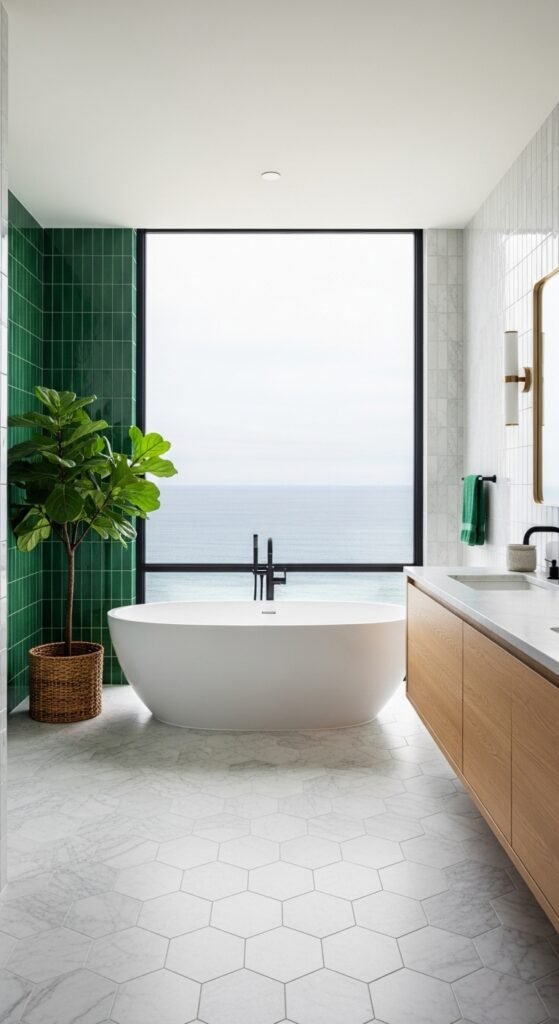
Hexagon tiles are a staple in bathroom design because they fit together like a puzzle, creating a honeycomb effect that is pleasing to the human eye. In this Malibu-inspired bath, small-scale white marble hexagons on the floor provide excellent slip resistance due to the high volume of grout lines. This makes it a perfect choice for walk-in showers or homes with children or elderly residents.
The “Malibu” vibe comes from the bright, airy atmosphere. The white marble reflects sunlight, mimicking the coastal glare, while light wood accents in the vanity bring in the sand element. This style relies on the concept of “white space.” By keeping the tiles white and the grout light grey, you create a canvas that allows you to change towels and decor seasonally without clashing. It is the ultimate flexible design choice for long-term homeowners.
Pro Tip: Use an epoxy grout for the floor. It is waterproof and stain-resistant, meaning those hundreds of white grout lines will actually stay white.
Copenhagen Small Full Bath With Sage Zellige
Scandinavian design is often misunderstood as just “white and wood,” but the modern Copenhagen aesthetic embraces color in a very specific, muted way. Here, sage Zellige tiles are used in a vertical stack bond pattern. This orientation draws the eye upward, visually stretching the height of the ceiling. It is one of the most effective optical illusions for small bathrooms.
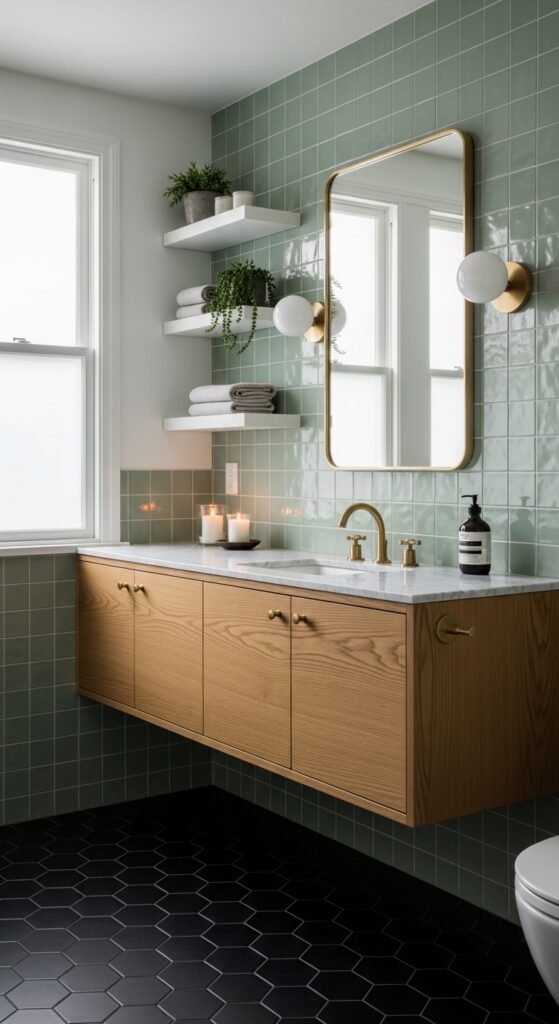
The sage green brings a biophilic element into the space, connecting the indoors with the outdoors. This is essential in Nordic design, where light and nature are prized. The variation in the tile color—ranging from pale mint to deep olive within the same box—adds depth that flat ceramic tile simply cannot achieve. Pair this with matte black fixtures for a contemporary edge or brushed nickel for a softer look.
Pro Tip: When tiling a small space, take the tile all the way to the ceiling. Stopping halfway cuts the room in half visually and makes it feel smaller.
Save this idea to your Pinterest.
COMPARISON: Zellige vs. Ceramic Subway Tile
| Feature | Handmade Zellige | Standard Ceramic Subway |
|---|---|---|
| Aesthetic | Organic, imperfect, high variation | Uniform, clean, consistent |
| Cost | High ($15 – $30+ per sq ft) | Low ($2 – $8 per sq ft) |
| Installation | Difficult (requires skill to manage uneven edges) | Easy (often has built-in spacers) |
| Vibe | Luxury, Spa, Old World | Classic, Modern, utilitarian |
| Maintenance | Medium (glaze can craze/crackle) | Low (very durable glaze) |
Modern Master Bath With Geometric Cement Tiles
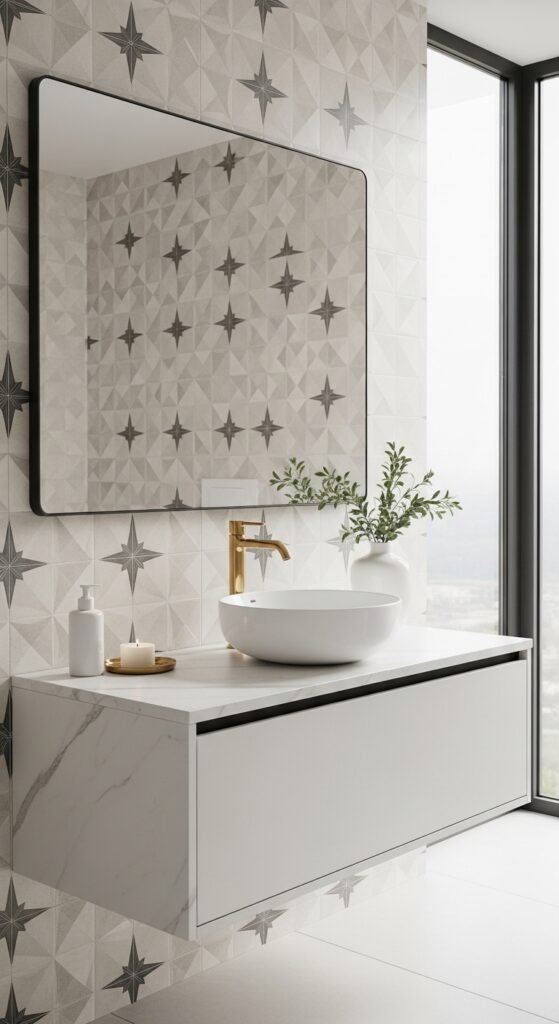
Cement tiles (encaustic tiles) bring a bold, graphic punch that can define the entire personality of a bathroom. In this modern master bath, a black-and-white geometric pattern on the floor acts as the “rug,” grounding the space. Because the floor is so visually busy, the wall tiles are kept minimal—often large-format white or concrete-look slabs.
This design works on the principle of balance. The heavy pattern on the floor hides dust and water spots exceptionally well, which is a practical benefit for busy households. However, cement tiles are porous. They need to be sealed immediately after installation and regularly thereafter. If you love the look but hate the maintenance, look for “cement-look” porcelain tiles. They use inkjet technology to replicate the pattern perfectly but are impervious to water and staining.
Pro Tip: Avoid using acidic cleaners (like vinegar) on real cement tiles, as the acid will eat away at the lime in the cement and dull the pattern.
Vintage Clawfoot Bath With Chevron Zellige
This is a romantic, nostalgia-driven aesthetic that combines the Victorian charm of a clawfoot tub with the artisanal texture of Zellige. The twist here is the layout: laying Zellige in a chevron pattern is incredibly labor-intensive but results in a surface that looks like a woven tapestry. The V-shape of the chevron points the eye toward the tub, making it the undeniable star of the show.
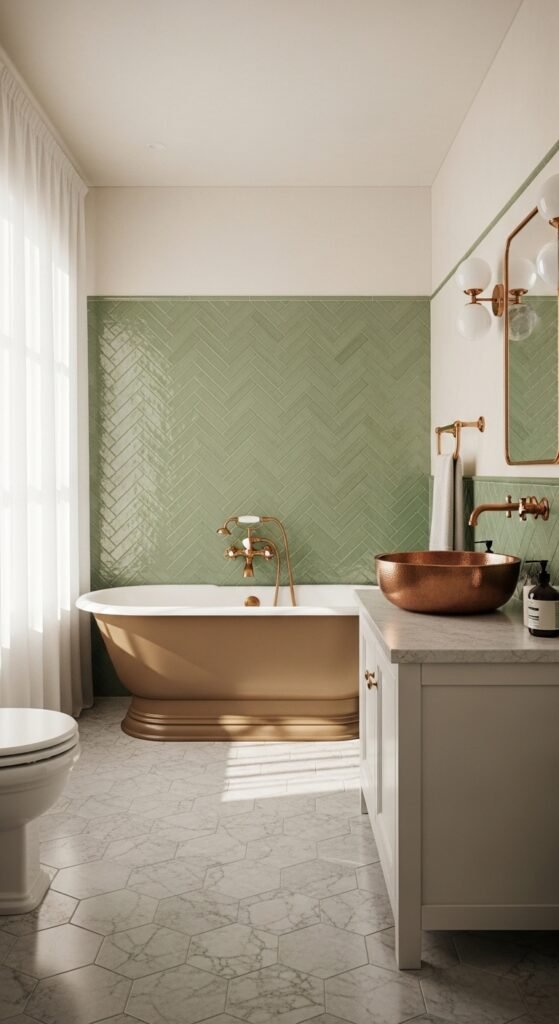
The texture of the Zellige contrasts beautifully with the smooth, curved porcelain of the clawfoot tub. This style often employs a “wainscoting” height for the tile, capping it with a ceramic chair rail, and then using a moody wallpaper above. It creates a cozy, enveloped feeling that is perfect for long soaks. The imperfections in the tile edges mean the chevron pattern won’t be razor-sharp, but that “wobbly” look is exactly what gives it character.
Pro Tip: If you are using a freestanding tub, ensure you tile underneath it fully before installation. It sounds obvious, but it is a common oversight that ruins the finish.
Copenhagen Tiny Bath With Emerald Zellige
Emerald green is a bold choice that pays off in tiny spaces. Many people fear dark colors in small rooms, thinking it will make them feel claustrophobic. In reality, deep, rich colors like emerald blur the corners of the room, creating a sense of infinite depth. This “jewel box” effect turns a cramped powder room into a high-design experience.
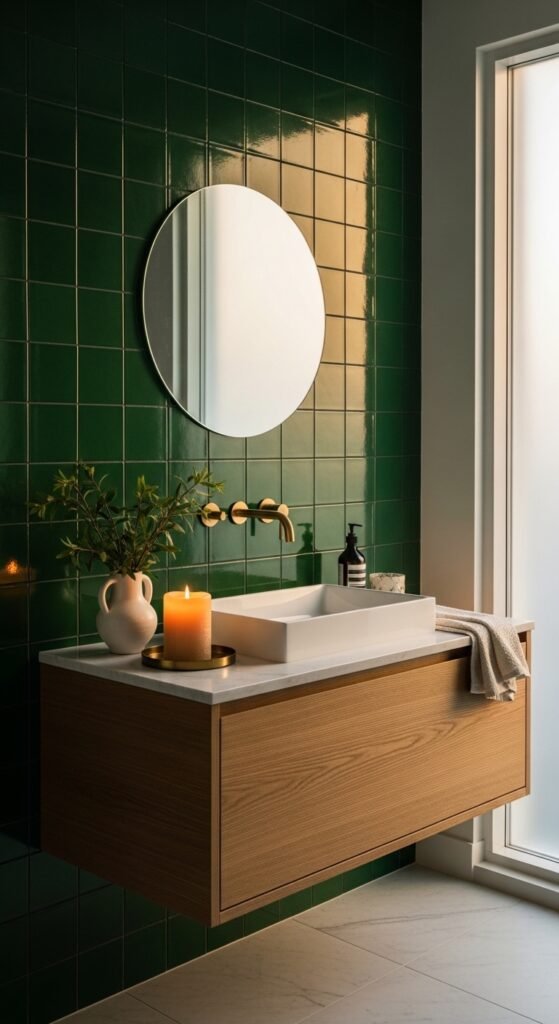
The glossy finish of the emerald Zellige is key here. It bounces light around the room, preventing the dark color from feeling flat. Pair this with a floating vanity to reveal more floor space, which tricks the brain into thinking the room is larger. Brass fixtures pop incredibly well against the deep green background, adding a touch of luxury to the moody palette.
Pro Tip: Use good lighting in a dark bathroom. Sconces on either side of the mirror are better than overhead lights, which can cast shadows on your face.
Warehouse Tiny Bath With Sage Zellige and Subway Tile
This style merges industrial “loft” elements with soft, organic textures. The “Warehouse” look typically involves exposed pipes, concrete floors, or black framed shower screens. To soften this harsh industrial edge, sage Zellige is used in the shower area, while crisp white subway tiles might line the rest of the walls.
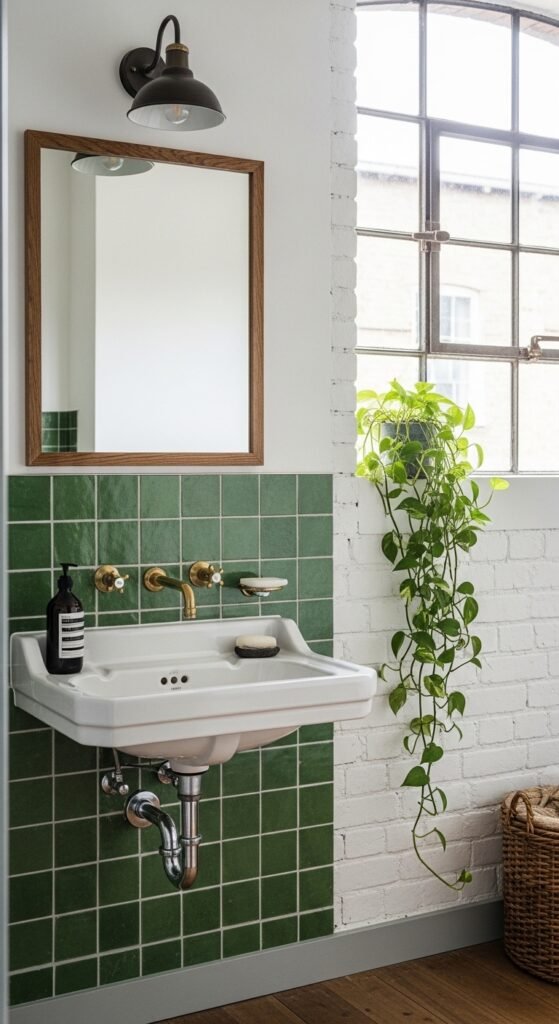
This hybrid approach saves money. You use the expensive Zellige as a feature wall (the “splurge”) and the affordable subway tile for the secondary walls (the “save”). The sage green bridges the gap between the cold industrial metals and the warm home environment. The key to making subway tile look “warehouse” chic is the grout: use a dark grey or charcoal grout to emphasize the grid pattern and match the black fixtures.
Pro Tip: When mixing two different tiles, ensure they have a similar thickness, or your tiler will have to build up the wall behind the thinner tile to make them flush.
Mediterranean Master Bath With Travertine and Amber Glass
We are seeing a massive shift towards “Warm Minimalism,” and this Mediterranean aesthetic is at the forefront. It combines the sandy, beige tones of travertine floors with the retro warmth of amber glass accents (like shower dividers or pendant lights). The amber glass casts a golden glow over the room, mimicking the “golden hour” sunlight of the Italian coast.
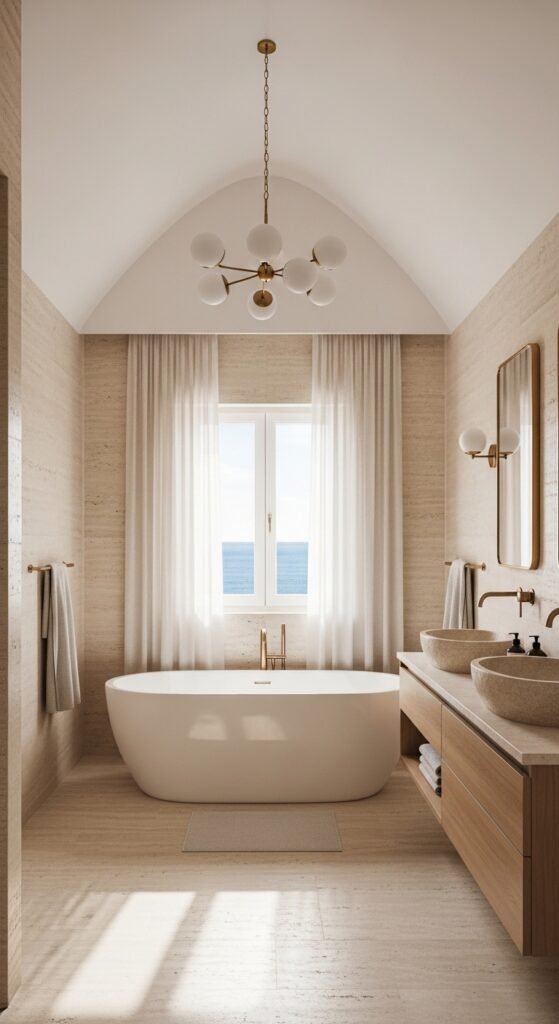
This design relies on tone-on-tone layering. You aren’t using high-contrast colors; instead, you are layering beige, cream, sand, and gold. This reduces visual noise and promotes relaxation. The travertine should be unfilled or honed for that authentic, earthy feel. Implementation involves using large format tiles to minimize grout lines, making the floor look like one continuous slab of stone.
Pro Tip: Amber glass shows water spots less than clear glass, but you should still use a squeegee after every shower to keep the “golden hour” vibe clear and bright.
GET THE LOOK: Mediterranean Spa
- Base: Honed Travertine or Sandstone-look Porcelain.
- Accent: Amber or Fluted Glass shower screen.
- Metal: Brushed Gold or Unlacquered Brass.
- Decor: Olive wood accessories and beige linen towels.
Malibu Master Bath With Emerald Zellige and Gold Veining
This is the “glam” version of the coastal look. While traditional Malibu style is white and bright, this variation introduces deep emerald green walls paired with marble that features heavy gold or warm veining (like Calacatta Gold). It is dramatic, expensive-looking, and incredibly photogenic.
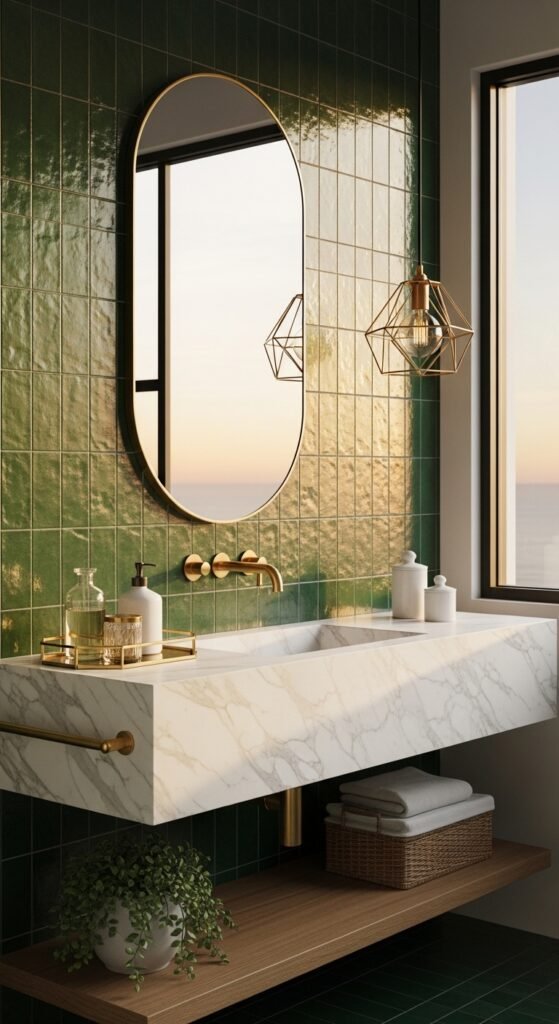
The emerald Zellige provides a saturated backdrop that makes the gold veining in the marble pop. This is a high-contrast design that feels energetic and luxurious. To keep it from feeling too dark, the floor is usually kept light—often the same marble used on the vanity or a simple white stone. This grounds the space while allowing the walls to be the focal point.
Pro Tip: If you can’t afford a full slab of Calacatta Gold marble, look for large-format porcelain tiles that mimic the pattern. The technology is so good now that it is hard to tell the difference.
Tuscan Master Bath Remodel With Terracotta and Zellige
Tuscan design is back, but without the heavy grapes-and-ivy motifs of the 90s. The modern Tuscan bath focuses on raw materials: authentic terracotta floor tiles paired with creamy, hand-glazed Zellige walls. The terracotta brings an intense, rusty warmth that feels incredibly grounding.
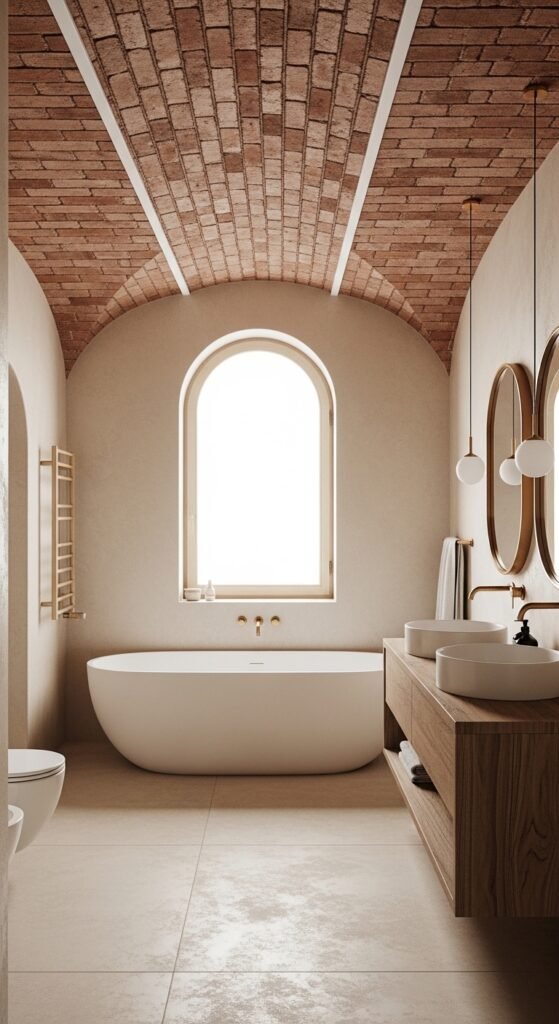
Terracotta tiles come in various shapes—hexagons, squares, or the classic “provencal” shape. They are naturally non-slip due to their texture but are very porous. The design principle here is “earth and sky”—the dark, earthy floor grounds you, while the lighter, creamy walls lift the space. This combination works beautifully with oil-rubbed bronze or matte black fixtures, which complement the rustic nature of the clay.
Pro Tip: Terracotta requires a specific sealing process. You often need to seal it before grouting to prevent the grout from staining the porous clay surface.
Spa Master Bath With Limestone and Emerald Mosaic
Limestone is the softer, more muted cousin of travertine. It typically has a subtle, consistent grain that screams “minimalist luxury.” In this spa-inspired bath, limestone floors and walls create a neutral envelope, while an emerald green mosaic is used as a feature—perhaps inside a shower niche or as a backsplash behind the vanity.
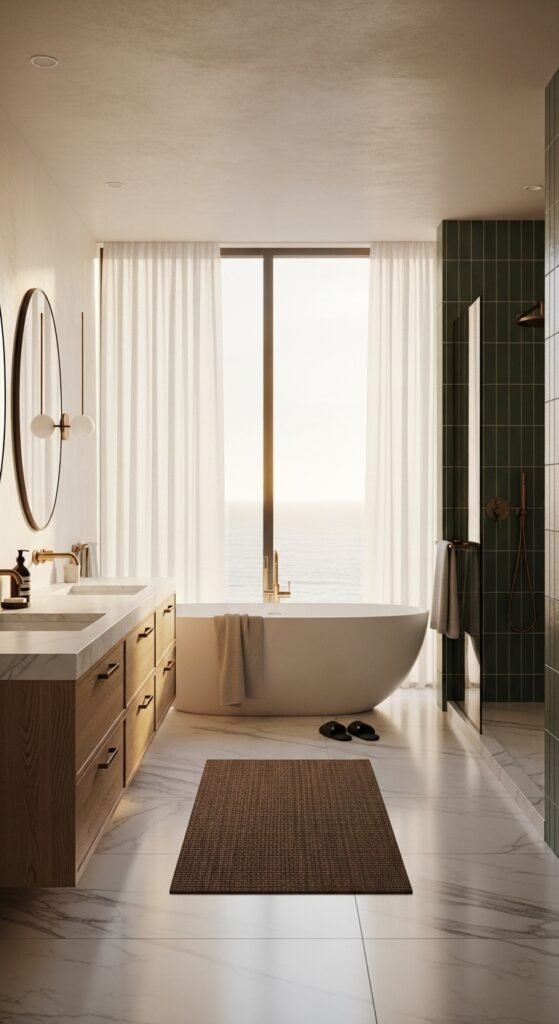
The mosaic tiles add a “jewel-like” detail that catches the light and breaks up the monotony of the stone. Mosaics are excellent for shower floors because the high density of grout lines provides grip. The limestone creates a soft, matte background that makes the glossy emerald mosaic sparkle. It is a balanced approach to adding color without committing to a fully green room.
Pro Tip: Limestone is sensitive to acids. Switch your bathroom cleaners to pH-neutral stone cleaners to avoid etching the surface over time.
Tuscan Floor Detail With Terracotta and Painted Ceramic
This idea zooms in on the floor as the art piece. It involves mixing plain terracotta tiles with hand-painted ceramic inserts (often called “tacos” in Spanish design). You might have a grid of terracotta squares with a small, blue-and-white painted tile at each intersection.
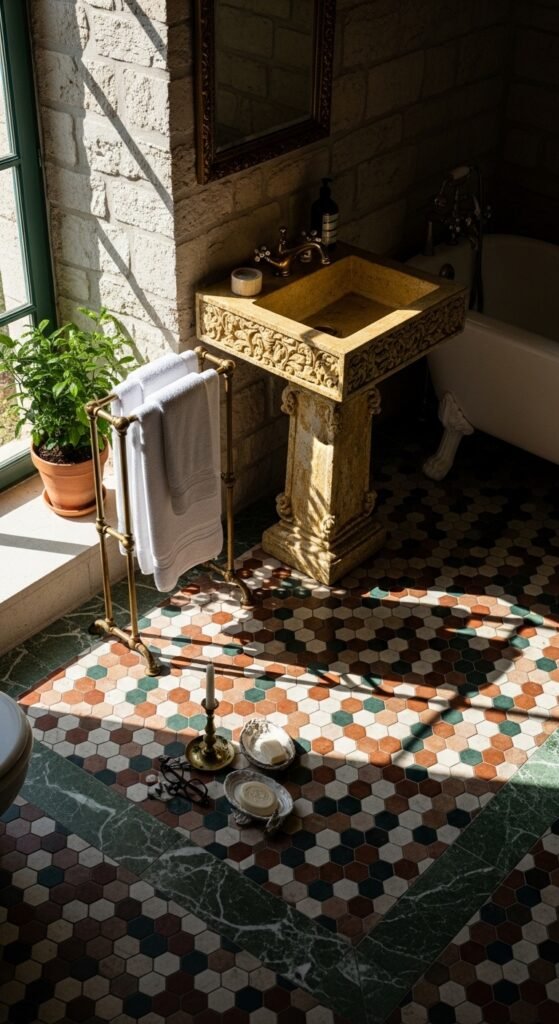
This creates a patterned floor that feels bespoke and historical. It adds visual interest without the overwhelming busyness of a fully patterned floor. The rest of the bathroom should be kept relatively simple—plaster walls or simple white tiles—to let the floor pattern stand out. This is a great way to inject personality and color (like cobalt blue or sunny yellow) into a rustic space.
Pro Tip: Lay out your pattern dry on the floor before installing. This ensures the painted inserts are spaced correctly and you don’t end up with awkward cuts at the doorway.
Copenhagen Small Bath With White Subway and Jute Accents
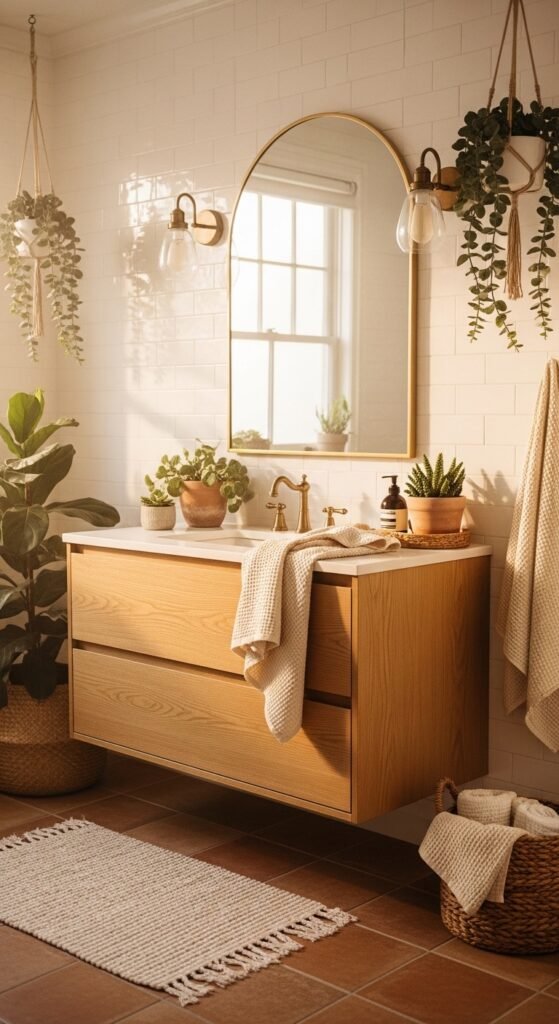
This is the ultimate budget-friendly, high-style option. White subway tile is the most affordable tile on the market, but it can look generic. The Copenhagen twist is in the styling and grout. Use a light grey grout to define the brick pattern, and pair the cold ceramic with warm, natural textures like jute rugs, woven baskets, and oak wood accessories.
The design theory here is “warming the white.” The texture of the jute and wood counteracts the sterility of the white tile. It creates a space that feels clean and hygienic (essential for a bathroom) but also cozy and welcoming. This look relies heavily on natural light and plants to bring life to the white canvas.
Pro Tip: To elevate standard subway tile, try a different layout. A “vertical stack” or “basketweave” pattern costs the same in materials but looks designer-grade.
Save this idea to your Pinterest.
COMPARISON: Marble vs. Porcelain Look-alike
| Feature | Real Marble | Porcelain Marble-Look |
|---|---|---|
| Durability | Low (prone to scratching, etching, staining) | High (scratch, stain, and impact resistant) |
| Maintenance | High (requires regular sealing, special cleaners) | Low (easy clean, no sealing needed) |
| Cost | High ($20 – $100+ per sq ft) | Low/Medium ($4 – $12 per sq ft) |
| Feel | Cold, smooth, luxurious | Can feel colder, printed texture |
| Value | Increases home resale value | Good value, but less prestige |
Minimalist Modern Bath With Charcoal Herringbone
For those who prefer a moody, masculine, or strictly modern aesthetic, charcoal grey tiles laid in a herringbone pattern are a top contender. The herringbone pattern adds energy and movement to the dark color, preventing it from looking like a concrete block.
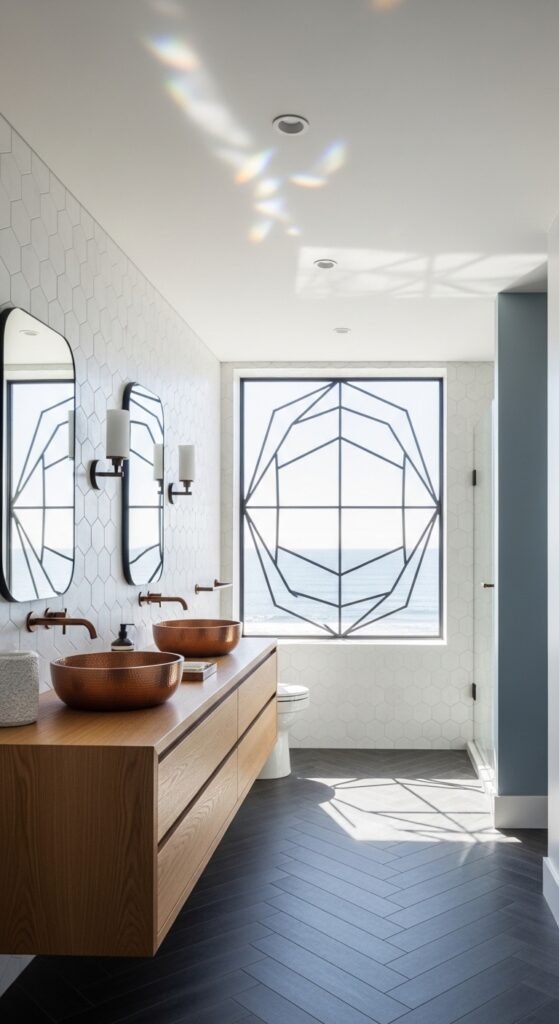
Charcoal is a practical choice for floors as it hides hair and dust better than white or black. Pair this with a floating white vanity and chrome fixtures for a high-contrast, sharp look. The key to minimalism is clean lines—ensure your tiler uses schluter strips (metal edging) for a crisp finish on raw tile edges rather than bulky bullnose tiles.
Pro Tip: Use a grout color that matches the tile (charcoal on charcoal) for a seamless, textural look, or a lighter grey to highlight the herringbone pattern.
Aesthetic Spa Bath With White Oak Open Shelving
This design is less about a specific tile pattern and more about the integration of tile and carpentry. Here, simple large-format tiles (often in a stone or concrete look) provide a quiet backdrop for custom white oak open shelving. The wood adds the necessary warmth to the “spa” environment.
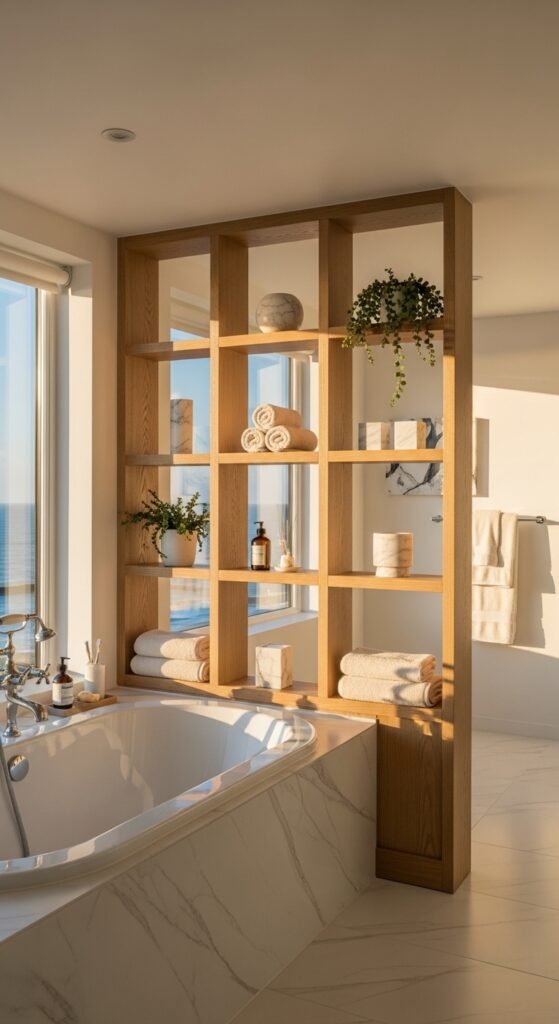
The open shelving forces a level of curation—you can only display beautiful towels, glass jars, and plants. Clutter must be hidden elsewhere. The tile usually runs floor-to-ceiling behind the shelves to protect the wall from moisture and create a cohesive backdrop. This look is very “Japandi” (Japanese meets Scandinavian), focusing on simplicity, natural materials, and functionality.
Pro Tip: Ensure the wood shelving is sealed with a marine-grade varnish if it is close to the shower or sink to prevent water damage and warping.
Scandinavian Small Bath With Sage Zellige Mosaic
Mosaics are sheets of small tiles attached to a mesh backing. In this variation, we use a sage Zellige mosaic—small squares or rectangles of that handmade, green goodness. Using a mosaic in a small bath adds “scale.” The tiny tiles make the room feel larger by comparison.
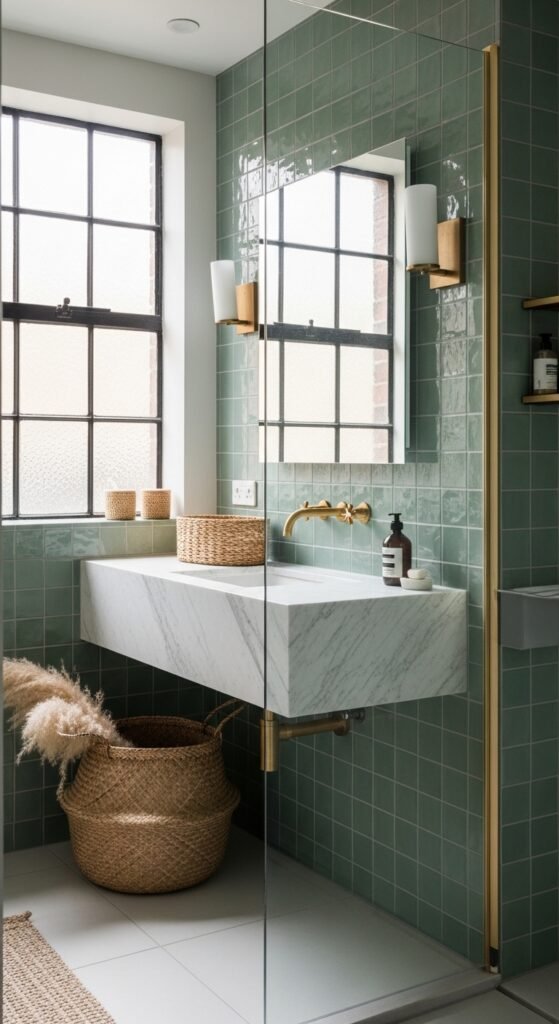
The shimmer of the Zellige mosaic creates a water-like effect, which is thematically perfect for a bathroom. Because mosaics have so much grout, they are incredibly grippy. This is a great option for a wet room where the floor tile continues seamlessly into the shower. Keep the fixtures minimal and modern to avoid the space looking “busy.”
Pro Tip: Mosaics are easier to install on shower floors that slope towards a drain because the sheets are flexible and can follow the curve of the floor.
Milanese Tiny Luxury Bath With Emerald Zellige
Milanese design is known for being bold, avant-garde, and luxurious. This tiny bath embraces that spirit with floor-to-ceiling emerald Zellige. It is an immersive color experience. The “luxury” comes from the details: gold trim, a marble sink, and perhaps a velvet vanity stool.
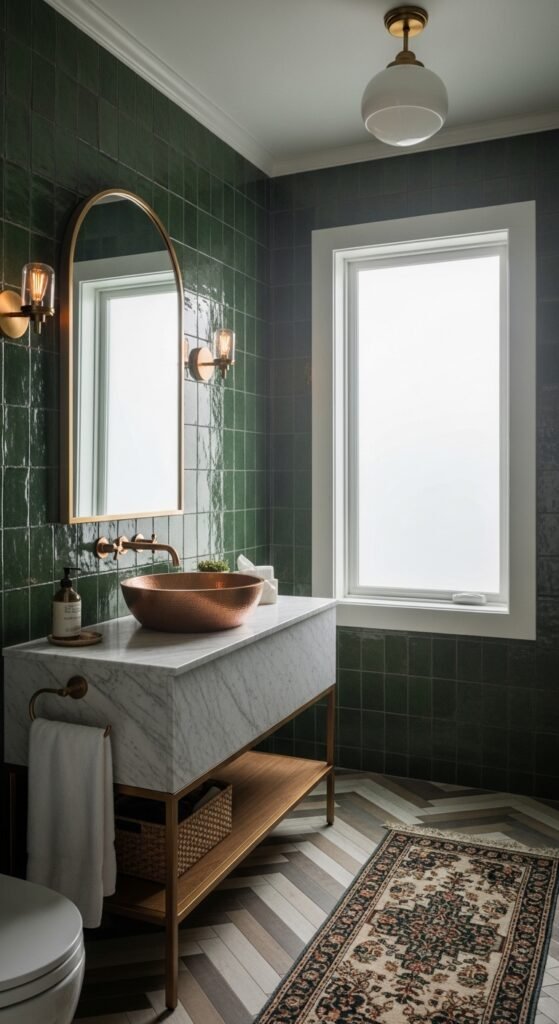
The concept here is “drenching.” By covering every vertical surface in the same rich tile, you erase the boundaries of the room. It feels like stepping into a gemstone. This is a power move for a powder room or a guest bath where you want to impress visitors.
Pro Tip: In a room this bold, lighting is everything. Use warm-temperature bulbs (2700K-3000K) to bring out the gold tones in the emerald green. Cool light will make it look clinical.
Santorini Bathroom With Emerald Zellige Geometric
Inspired by the Greek islands but with a modern twist. Instead of the classic blue and white, this look uses the emerald green of the Mediterranean Sea. The “geometric” aspect comes from the layout—perhaps a basketweave or a mix of vertical and horizontal stacking to create a pattern within the monochrome color.
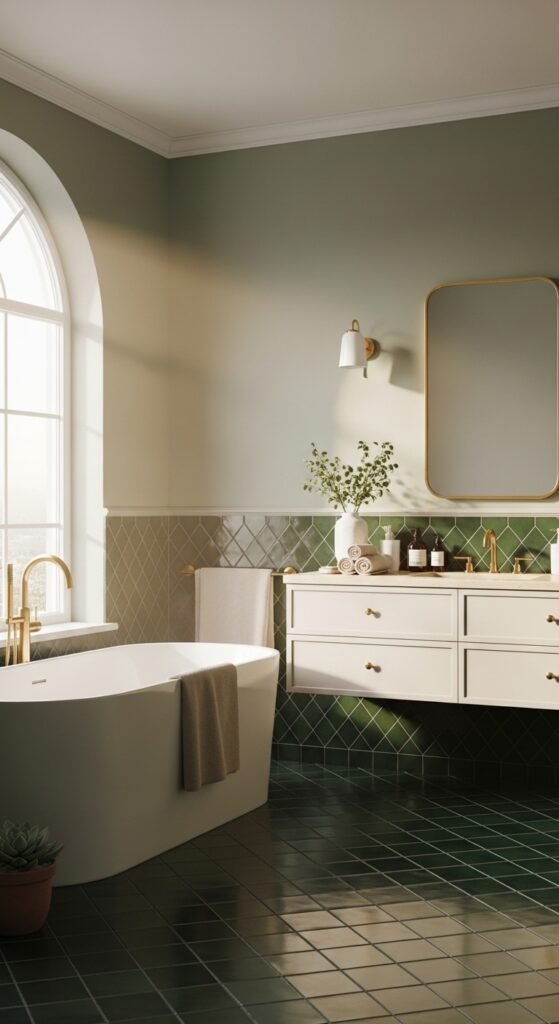
The white plaster walls typical of Santorini style are paired with this vibrant green tile in the wet areas. It feels fresh, breezy, and vacation-like. The geometric layout adds a layer of modern sophistication to the rustic plaster and handmade tile, bridging the gap between old-world charm and contemporary design.
Pro Tip: Curved edges and arches are a hallmark of this style. If you can, build an arched shower entry and tile the inside with the emerald Zellige for a stunning reveal.
Popular Asked Questions
What is the bathroom tile trend for 2026?
The biggest trend for 2026 is “tactile luxury.” This means moving away from flat, printed tiles and towards tiles with texture and depth, such as handmade Zellige, fluted tiles, and honed natural stones like travertine. Warm earth tones like terracotta, sage green, and warm beige are replacing the cool greys of the past decade.
Which tile is best for a small bathroom?
For a small bathroom, you want to trick the eye. Large-format tiles (like 12×24 inches or larger) minimize grout lines, making the floor look like one continuous surface, which expands the space. Alternatively, vertical stacked tiles on the walls draw the eye up, making the ceiling feel higher. Glossy tiles also help by reflecting light.
Is Zellige tile hard to clean?
Zellige tiles are glazed, so the surface itself is easy to wipe down and resistant to staining. However, because they are handmade and uneven, the surface is not perfectly flat. This can make wiping them slightly more involved than a flat subway tile. The main challenge is the grout—use a high-quality, stain-resistant grout to make maintenance easier.
Should floor and wall tiles match?
They do not have to match, but they should coordinate. A popular trend called “tile drenching” uses the same tile on floors and walls for a seamless, spa-like look. If you mix tiles, follow the “Rule of Three”: no more than three different tiles in one bathroom (e.g., one floor tile, one wall tile, and one accent mosaic) to avoid visual chaos.
What is the most timeless bathroom tile?
White marble (like Carrara or Calacatta) and white ceramic subway tiles are the most timeless options. They have been used for over a century and fit almost any design style. To ensure longevity, choose a standard shape (rectangle or hexagon) rather than a trendy geometric shape that might date the renovation.
Conclusion
Renovating your bathroom is one of the highest ROI projects you can undertake, but more importantly, it shapes how you start and end your day. Whether you are drawn to the moody depth of an emerald Zellige sanctuary or the bright, calming vibes of a travertine spa, the key is to choose materials that resonate with your personal need for rest.
The trends for 2026 invite you to be brave with texture and warm with color. Don’t be afraid to mix the old with the new.
Which of these bathroom tile ideas would you try in your own home? Let us know in the comments below.
Follow us on Pinterest for more bathroom tile ideas inspiration.