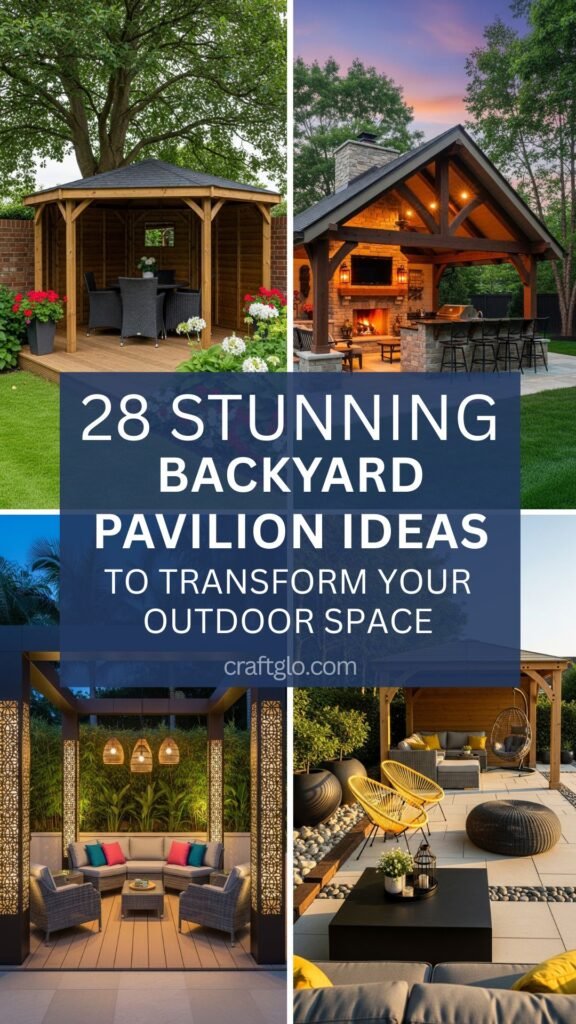
A backyard pavilion is more than just a roof over your head; it is the anchor of your outdoor living experience. Whether you want to escape the midday sun, host dinner parties regardless of the rain, or create a private sanctuary for yoga and reading, a pavilion offers the perfect architectural solution.
Unlike pergolas, which offer partial shade, pavilions provide full coverage, making them a true extension of your home’s square footage. From rustic timber frames to sleek modern steel structures, the design possibilities are endless.
In this guide, we explore the top trending backyard pavilion ideas for 2026. These designs solve common problems like lack of privacy, limited space, and budget constraints while maximizing style.
Key Takeaways
- Privacy is Priority: Modern pavilions are increasingly using slat walls, frosted glass, and curtains to block neighbors and create intimacy.
- Material Matters: Steel and aluminum offer low-maintenance longevity, while cedar and timber frames provide unmatched warmth and character.
- Multi-Functionality: The best designs incorporate lighting, heating, and media to ensure the space is usable day and night, year-round.
- Zoning: Use a pavilion to define specific zones in your yard, such as a dining area, a poolside lounge, or a fire pit gathering spot.
Table of Contents
- Pavilion With a Privacy Wall
- Small Steel Pavilion
- Frosted Glass Pavilion
- Contemporary Flat Top Pavilion
- Barn-Style Wooden Pavilion
- Traditional Bungalow Pavilion
- Backyard Pavilion With String Lights
- Cantilever Pavilion
- Pavilion With Cupola
- Modern Farmhouse Pavilion
- Industrial Beam Pavilion
- Poolside Cabana Pavilion
- Outdoor Kitchen Pavilion
- Stone Pillar Pavilion
- Fireplace Focal Point Pavilion
- Japandi Style Pavilion
- Living Roof Pavilion
- Boho Chic Pavilion With Curtains
- Attached Lean-To Pavilion
- Mediterranean Tiled Pavilion
- Gothic Revival Pavilion
- Mid-Century Modern Pavilion
- Rustic Log Pavilion
- L-Shaped Corner Pavilion
- Translucent Polycarbonate Pavilion
- Asian-Inspired Tea House
- Geometric Hexagonal Pavilion
- Coastal White Pavilion
- Popular Asked Questions
- Conclusion
Pavilion With a Privacy Wall
Privacy is often the biggest challenge in suburban backyards. A standard open pavilion looks great, but it leaves you exposed to neighbors on all sides. This design solves that issue by integrating a solid or semi-solid wall on one or two sides of the structure. The wall acts as a visual shield and a windbreak, making the space feel like a cozy outdoor room rather than an exposed stage.
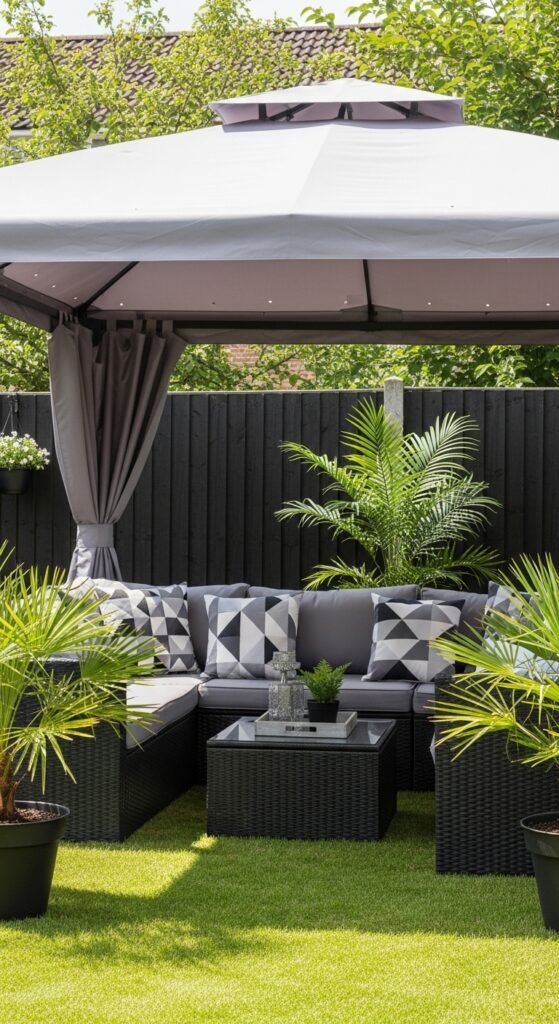
You can construct the privacy wall using horizontal wood slats to allow for airflow while blocking sightlines. Alternatively, a stone veneer wall can serve as a backdrop for a mounted TV or an outdoor fireplace. This design works exceptionally well when placed near a property line or a busy street.
Pro Tip: Install up-lighting at the base of the privacy wall to create a dramatic architectural feature at night.
Small Steel Pavilion
For homeowners with limited square footage or a preference for industrial aesthetics, a small steel pavilion is an ideal choice. Steel offers a strength-to-weight ratio that wood cannot match, allowing for thinner posts and wider spans without bulky supports. This results in a clean, minimalist silhouette that doesn’t visually clutter a small yard.
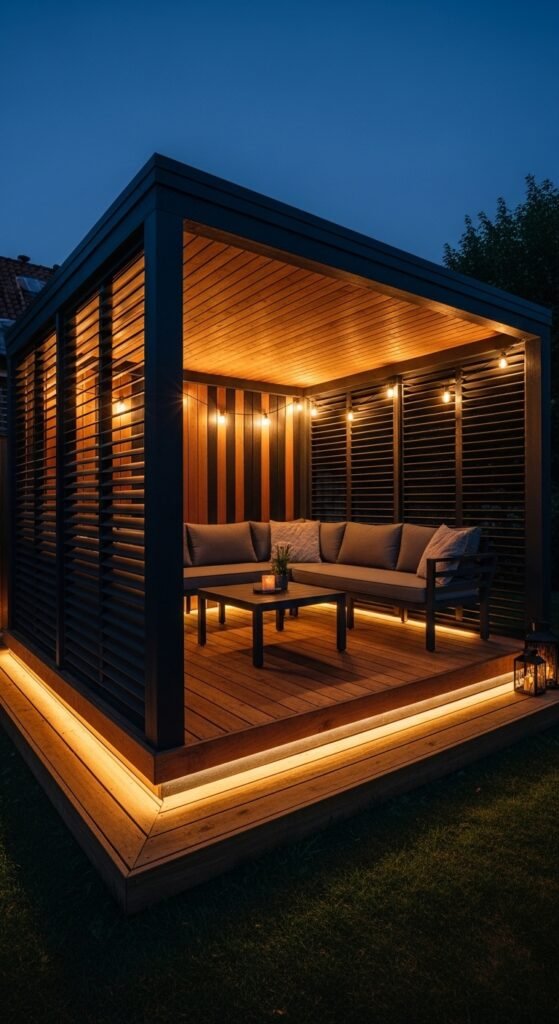
Steel structures are incredibly durable and resistant to rot, termites, and warping. A black powder-coated finish provides a striking contrast against green foliage and modern pavers. This type of pavilion is perfect for covering a small dining set or a couple of lounge chairs, creating an intimate destination in the garden.
Pro Tip: Use magnetic hooks on the steel beams to easily hang string lights or planters without drilling holes.
Frosted Glass Pavilion
A frosted glass pavilion brings a touch of high-end luxury and modernism to the backyard. Instead of a traditional opaque roof, this design uses tempered frosted glass panels. This allows soft, diffused natural light to filter through during the day, eliminating the “cave-like” feeling that some dark wooden pavilions can create.
The frosted finish provides protection from direct UV rays and reduces heat while keeping the space bright and airy. It pairs beautifully with aluminum framing for a sleek, futuristic look. This style is particularly effective near pools or in modern xeriscape gardens where clean lines are essential.
Pro Tip: Ensure the glass panels are rated for snow loads if you live in a colder climate to prevent cracking in winter.
Contemporary Flat Top Pavilion
The flat top pavilion is the hallmark of contemporary landscape design. Unlike traditional pitched roofs, the flat roof creates a sharp, linear profile that mimics modern home architecture. While it appears flat, these roofs typically have a very subtle pitch to allow for water drainage, often hiding gutters within the fascia for a seamless look.
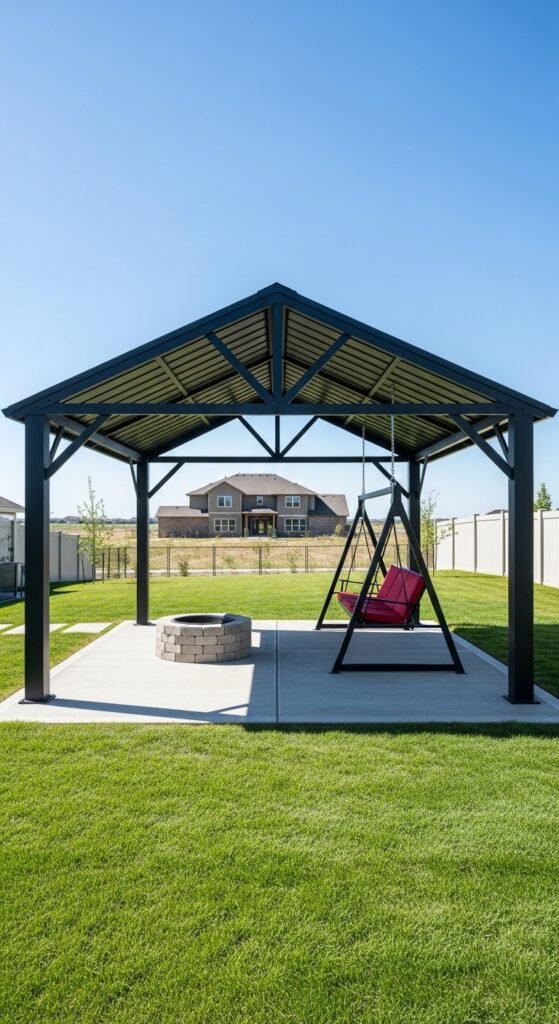
This design often utilizes mixed materials, such as warm cedar ceilings contrasted with cool concrete pillars or black metal fascia. It creates a defined architectural frame for the view beyond, drawing the eye to the landscape. It is an excellent choice for urban backyards where vertical space might be limited by trees or power lines.
Pro Tip: Install a ceiling fan flush with the flat roof to keep air circulating without disrupting the clean horizontal lines.
Barn-Style Wooden Pavilion
Embracing the rustic charm of the countryside, the barn-style pavilion features high vaulted ceilings, exposed heavy timber trusses, and robust wooden posts. This design often uses a gable roof with a steeper pitch, reminiscent of traditional barns. The use of rough-sawn lumber or reclaimed wood adds texture and history to the structure.
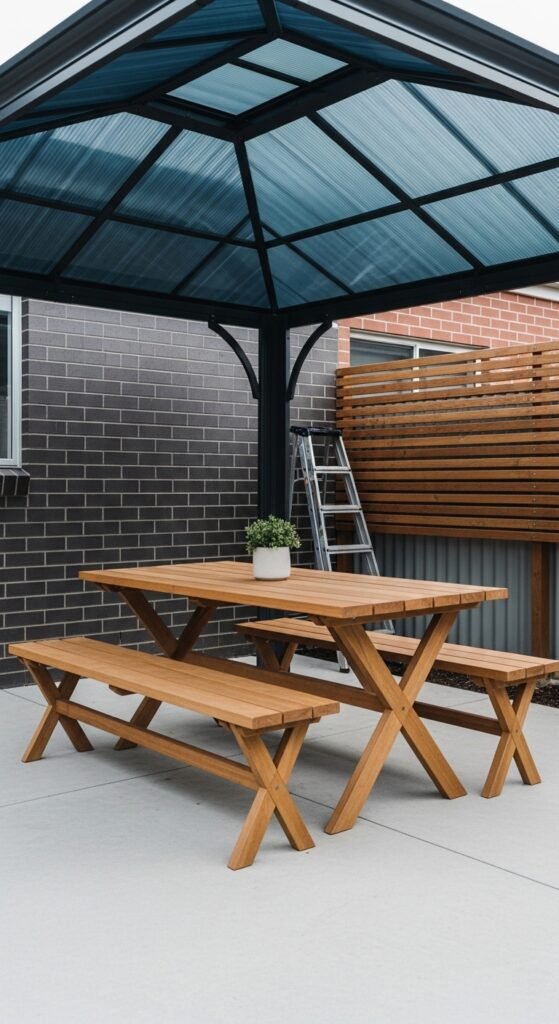
This style is perfect for large families or those who love to host grand gatherings. The high ceilings make the space feel massive and airy, allowing for smoke from a grill or fire pit to dissipate easily. It pairs wonderfully with stone patios and farmhouse-style furniture.
Pro Tip: Stain the wood in a rich walnut or leave it to weather naturally to silver-gray for an authentic rustic vibe. Save this idea to your Pinterest.
Traditional Bungalow Pavilion
The bungalow pavilion draws inspiration from Craftsman architecture. Key features include tapered columns resting on stone pedestals, low-pitched hipped roofs, and wide overhanging eaves. This style emphasizes hand-crafted details and natural materials, making it a timeless addition to any garden.
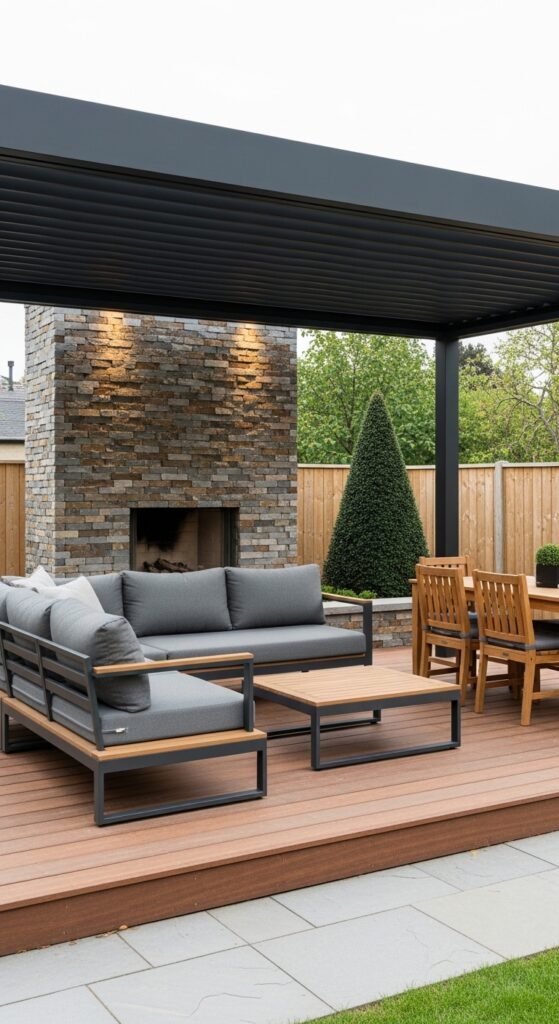
The substantial columns give the structure a sense of permanence and grandeur. It anchors the backyard and serves as a formal focal point. This design works best when it mirrors the architectural style of the main house, creating a seamless transition from indoor to outdoor living.
Pro Tip: Add decorative knee braces or corbels under the eaves to enhance the Craftsman aesthetic.
Backyard Pavilion With String Lights
Lighting can completely transform the mood of a pavilion, taking it from a daytime shade structure to a magical evening retreat. This concept focuses on integrating string lights directly into the design. You can drape edison bulbs across the rafters, wrap them around the posts, or create a perimeter glow along the fascia.
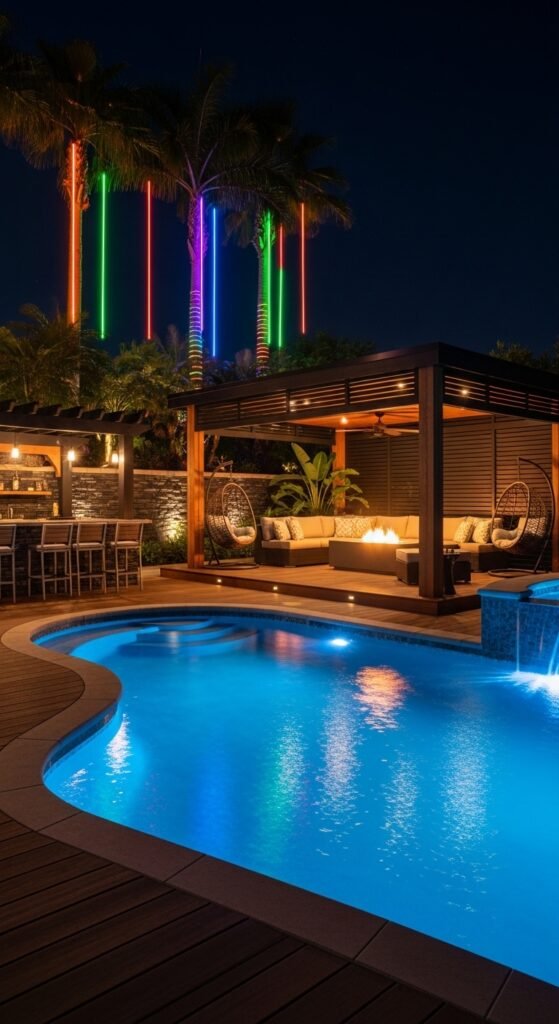
The warm glow of string lights creates an instant “hygge” atmosphere, perfect for dinner parties or late-night conversations. Unlike harsh floodlights, string lights offer soft, ambient illumination that flatters faces and highlights the textures of the pavilion materials.
Pro Tip: Use a dimmer switch for your string lights to adjust the brightness from functional dining light to romantic mood lighting.
Cantilever Pavilion
A cantilever pavilion is a feat of modern engineering and design. By supporting the roof structure on just two posts (or a single side wall), the other corners are left completely open and unobstructed. This “floating” roof effect is incredibly striking and practical for specific layouts.
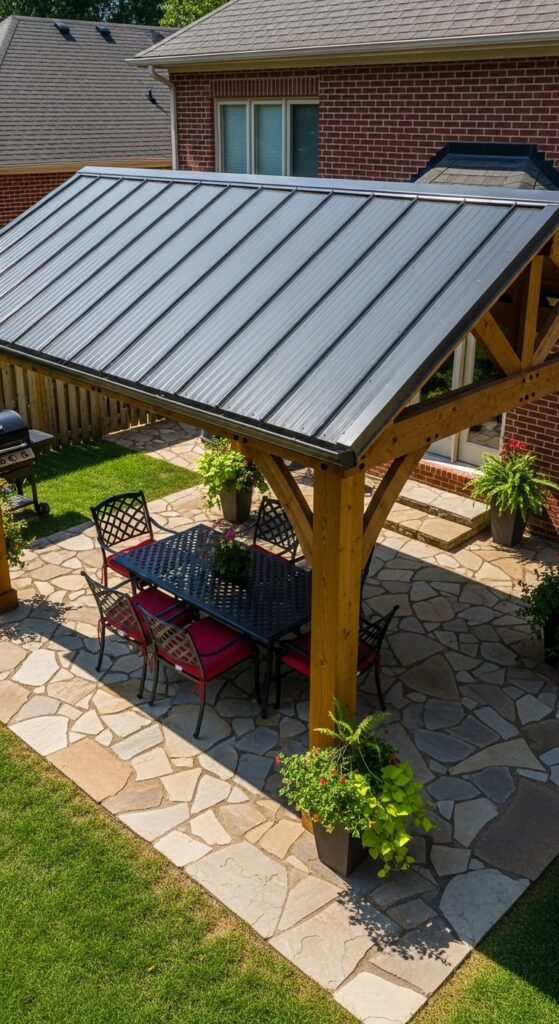
This design is ideal for poolside applications where you want shade over lounge chairs but don’t want posts obstructing the walkway or the view of the water. It maximizes usable floor space and creates a very open, airy flow.
Pro Tip: Consult a structural engineer for this design. The footings for the support posts need to be massive to counter the weight of the overhanging roof.
Pavilion With Cupola
A cupola is a small, dome-like structure that sits on top of the main roof ridge. While it adds a charming, classic silhouette to the pavilion, its primary function is ventilation. Hot air rises and escapes through the vented cupola, drawing cooler air in from the sides. This natural convection keeps the pavilion significantly cooler on hot summer days.
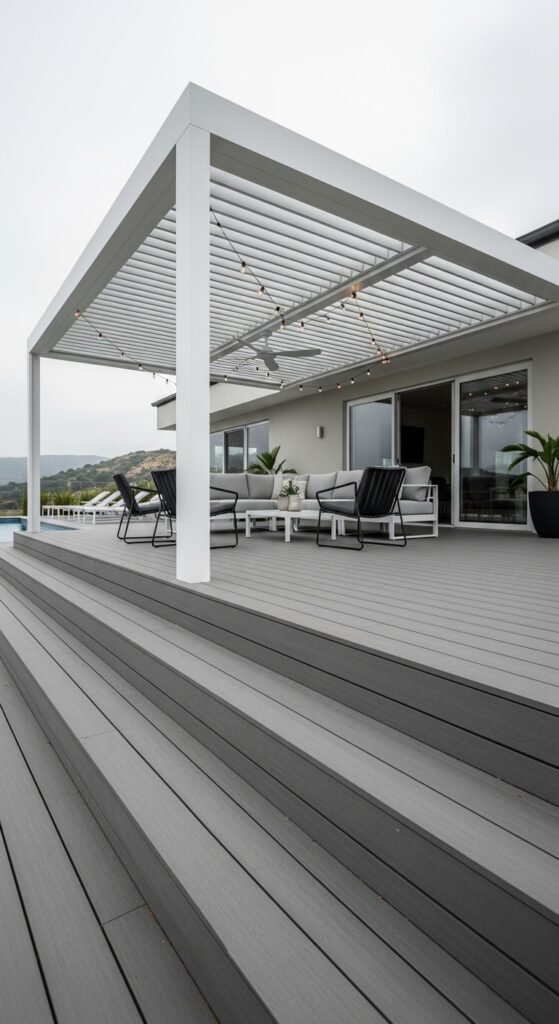
aesthetically, a cupola breaks up a large expanse of roof and adds a decorative finial or weathervane for a touch of personalization. It works particularly well with traditional, colonial, or farmhouse styles.
Pro Tip: Install a light inside the cupola to create a glowing beacon in your backyard at night.
Modern Farmhouse Pavilion
The modern farmhouse trend shows no signs of slowing down. This pavilion style combines the clean lines of contemporary design with the cozy materials of a farmhouse. Think stark white painted wood or siding contrasted with black metal roofing and black hardware.
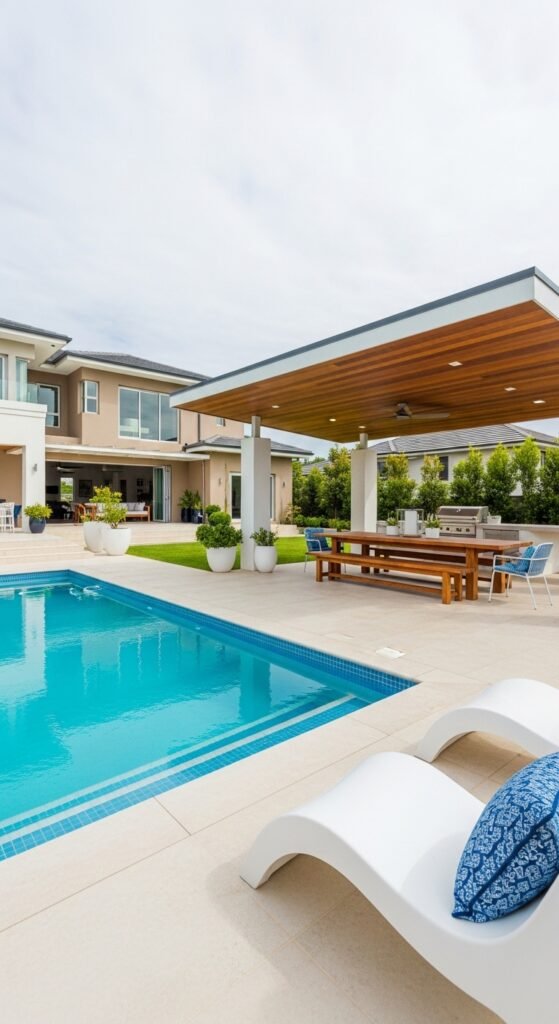
The high-contrast color palette is visually striking and looks clean against a green lawn. You might see X-bracing on the sides for a decorative touch that also adds structural stability. This pavilion serves as a chic, stylish backdrop for outdoor dining tables made of reclaimed wood.
Pro Tip: Use galvanized steel planters around the base to tie in the industrial-farmhouse look.
“Get The Look” : Modern Farmhouse
- Lighting: Oversized black metal lanterns or gooseneck barn lights.
- Furniture: Teak dining table with black metal chairs.
- Textiles: Buffalo check pillows in black and white.
- Flooring: Stamped concrete or light-colored pavers.
Industrial Beam Pavilion
For a raw, edgy look, the industrial beam pavilion exposes the structural skeleton. This design often uses I-beams (steel girders) painted black or left to rust naturally for a corten effect. The roof might be corrugated metal or even a wire mesh for climbing vines.
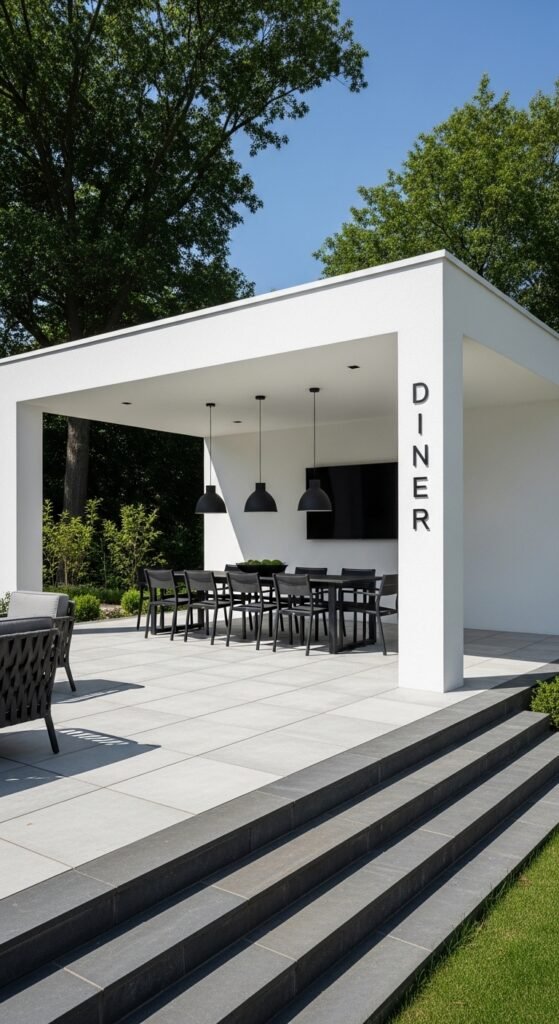
This style fits perfectly in urban lofts or converted warehouse gardens. It celebrates the beauty of construction materials rather than hiding them. It is low maintenance and virtually indestructible.
Pro Tip: Soften the hard metal edges with hanging fern baskets or climbing wisteria.
Poolside Cabana Pavilion
A poolside pavilion, often called a cabana, is designed for leisure and luxury. It typically features three open sides and one closed wall that can house a changing room, storage for pool toys, or a bathroom. The flooring should be non-slip and heat-resistant, like travertine or cool-deck concrete.
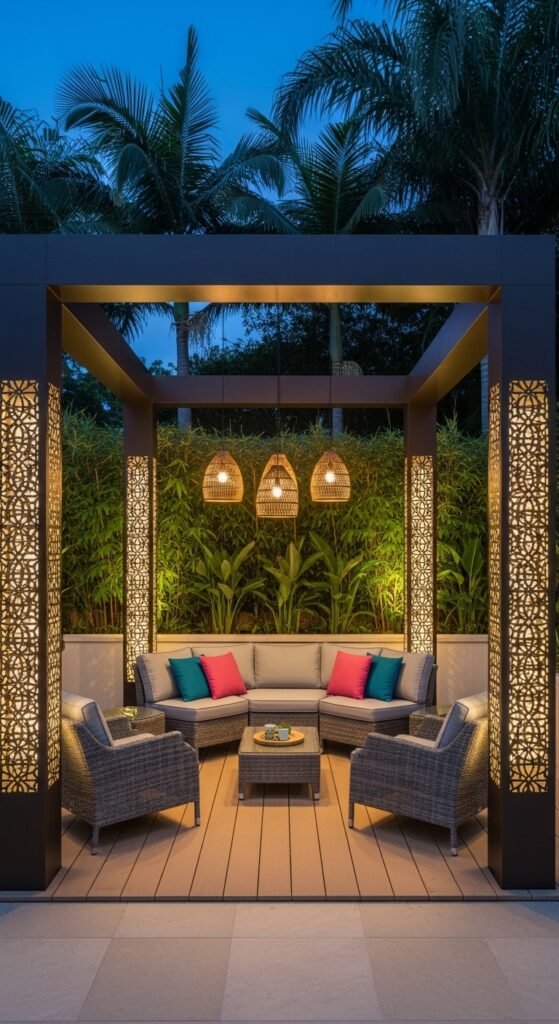
Furnish this space with deep seating, waterproof fabrics, and perhaps a mini-fridge for cold drinks. It provides a necessary respite from the sun for swimmers and a prime observation spot for parents.
Pro Tip: Add outdoor curtains on the open sides to create a private changing area or nap space on demand.
Outdoor Kitchen Pavilion
Taking the barbecue experience to the next level, this pavilion is designed specifically to house a full outdoor kitchen. The roof protects expensive grills, pizza ovens, and refrigerators from the elements. Good ventilation is crucial here to prevent smoke buildup.
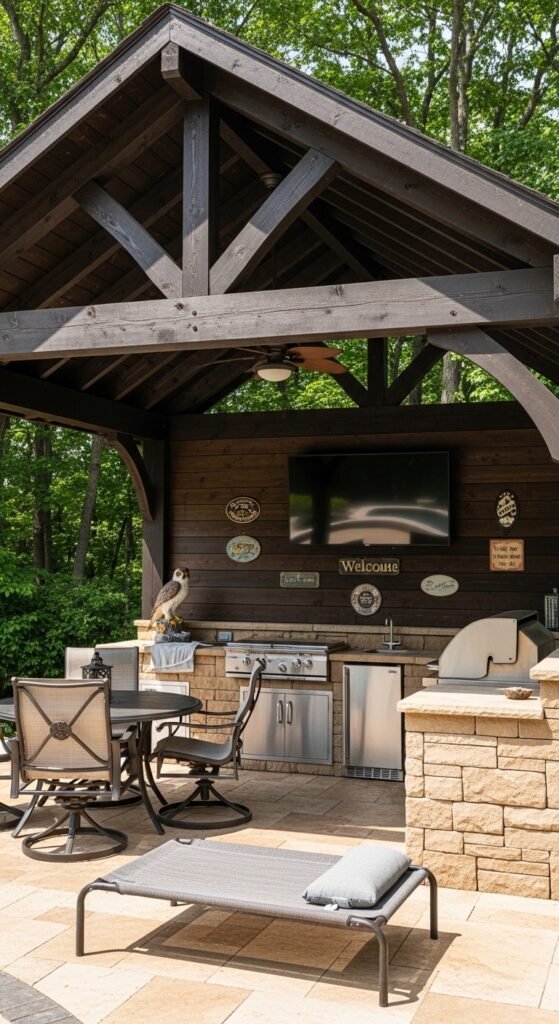
Design the layout with a bar counter for guests to sit and chat with the chef. The structure defines the cooking zone and separates it from the lounging areas of the yard.
Pro Tip: Install plenty of electrical outlets on the backsplash for blenders, rotisseries, and phone chargers. Save this idea to your Pinterest.
Stone Pillar Pavilion
Stone pillars add a sense of history, weight, and permanence to a backyard structure. Whether you use stacked slate, river rock, or limestone, the stone bases protect the wooden posts from ground moisture and rot.
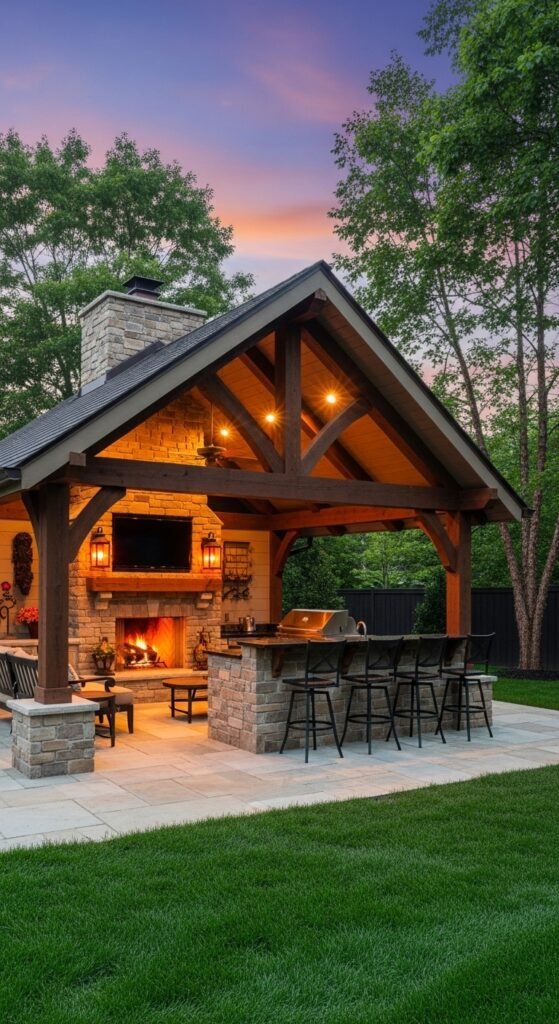
This style blends seamlessly with natural landscapes, especially if the yard has existing retaining walls or rock gardens. It feels like an extension of the earth itself.
Pro Tip: Match the stone on the pavilion pillars to the stone on your home’s facade for a cohesive property design.
Fireplace Focal Point Pavilion
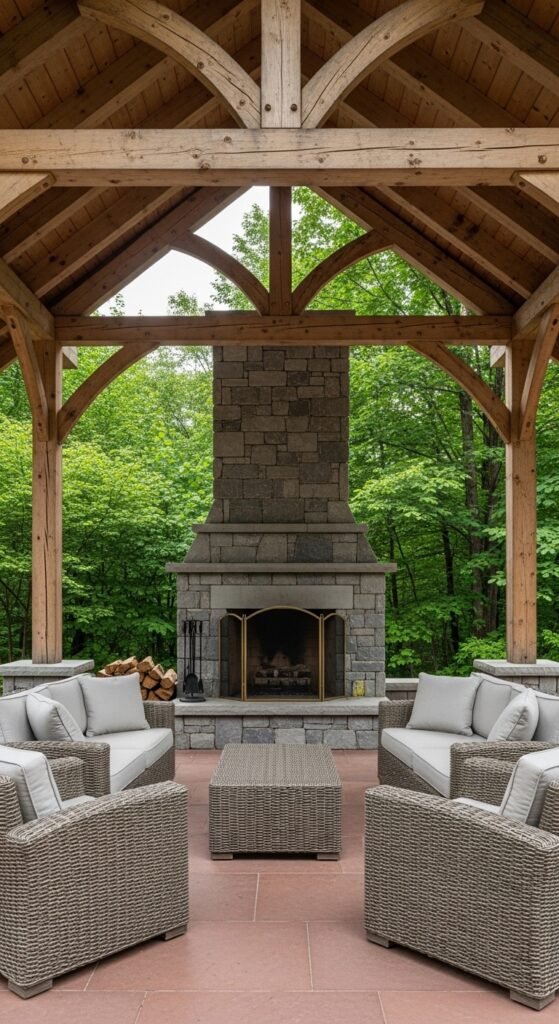
A pavilion centered around a massive outdoor fireplace creates the ultimate gathering spot. The fireplace, usually built into one of the open walls or a privacy wall, anchors the space and provides warmth, extending the outdoor season into late autumn and winter.

Arrange comfortable sofas in a U-shape facing the hearth. This setup mimics a living room, encouraging conversation and relaxation.
Pro Tip: Include wood storage niches built into the fireplace structure to keep logs dry and accessible.
Japandi Style Pavilion
Japandi is the harmonious blend of Japanese rustic minimalism and Scandinavian functionality. A Japandi pavilion features clean lines, light wood tones (like ash or white oak), and a low profile. The design is uncluttered and intentional.
Use slat screens for privacy and bamboo accents. The furniture should be low to the ground and neutral in color. This style creates a Zen-like atmosphere perfect for meditation or quiet morning coffee.
Pro Tip: Surround the pavilion with gravel and moss instead of grass to complete the Zen garden aesthetic.
Living Roof Pavilion
A living roof, or green roof, is covered with vegetation such as sedum, succulents, or grasses. This eco-friendly design not only looks stunning but also provides excellent insulation, keeping the area beneath cooler. It absorbs rainwater, reducing runoff issues in the yard.
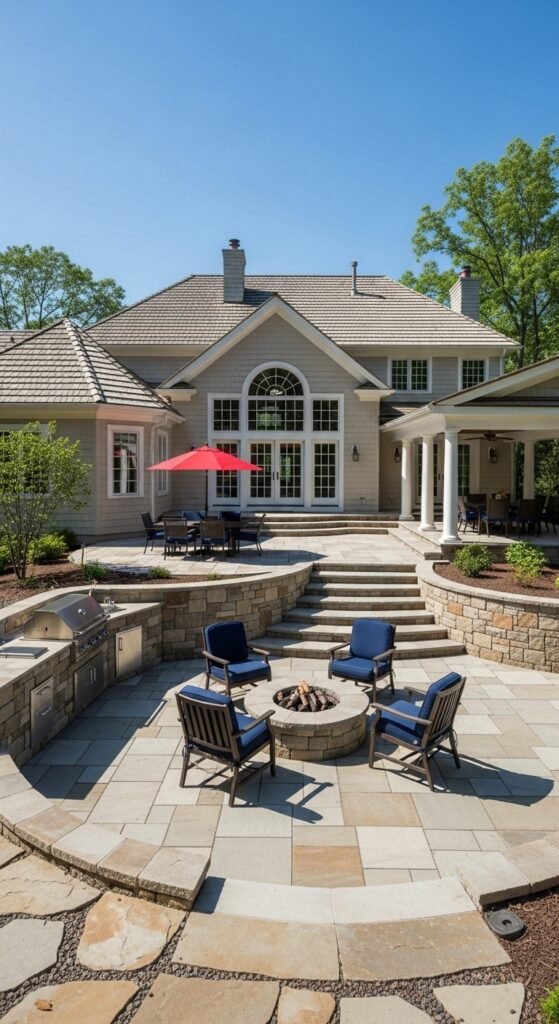
The structure requires reinforced framing to support the weight of the soil and water, but the visual payoff is a pavilion that blends entirely into the garden canopy.
Pro Tip: Choose drought-tolerant plants for the roof to minimize the need for irrigation.
Boho Chic Pavilion With Curtains
Boho style is all about relaxed vibes, layers of texture, and comfort. A simple wooden pavilion can be transformed into a Boho paradise with the addition of flowing white curtains. The curtains soften the hard lines of the structure and catch the breeze, creating dynamic movement.
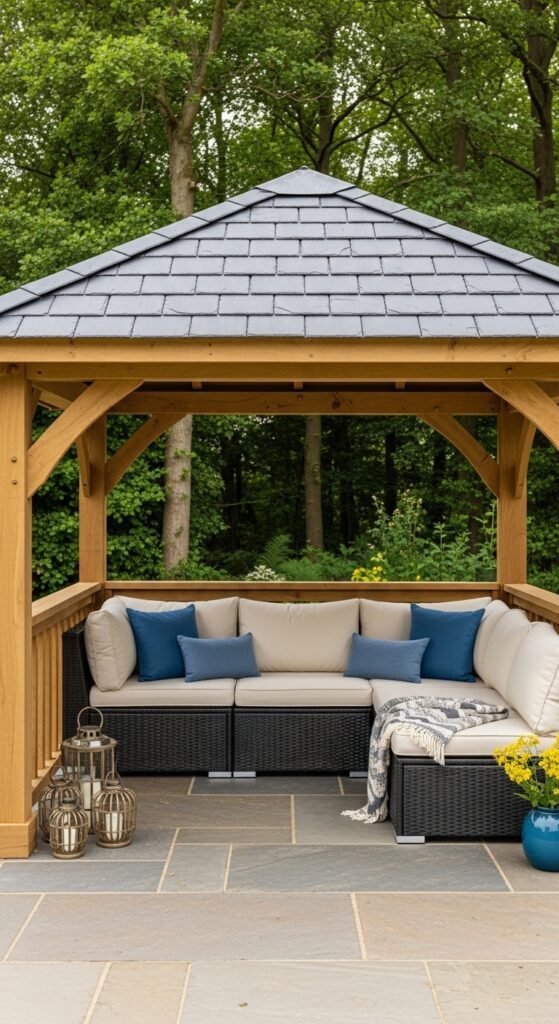
Layer rugs on the floor, use poufs for seating, and hang macramé planters. The curtains also offer adjustable sun control and privacy as the sun moves across the sky.
Pro Tip: Use outdoor-rated fabric like Sunbrella for the curtains to prevent mildew and fading.
Attached Lean-To Pavilion
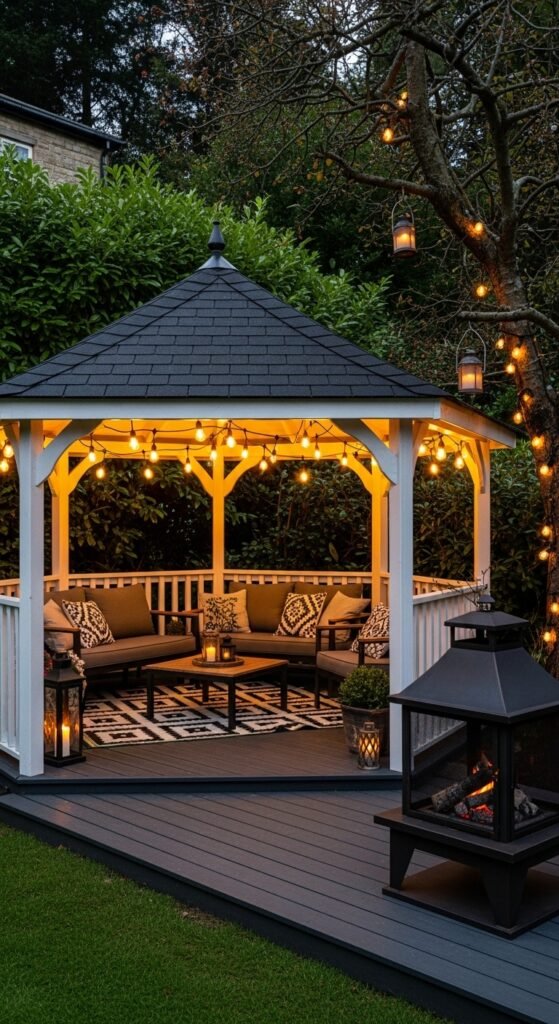
An attached pavilion, often called a lean-to, is anchored to the side of the existing house. It uses the home’s wall for support on one side and posts on the other. This is a cost-effective way to extend your indoor living space directly onto the patio.
Because it is attached, it offers seamless protection from rain right out the back door. It acts as a transition zone between the interior and the garden.
Pro Tip: Ensure the roof pitch matches or complements the house roof to make it look like an original part of the build.
Mediterranean Tiled Pavilion
Transport your backyard to the coast of Italy or Spain with a Mediterranean pavilion. The defining feature is a roof made of terracotta clay tiles (barrel tiles). The structure itself is often stuccoed masonry or heavy timber.
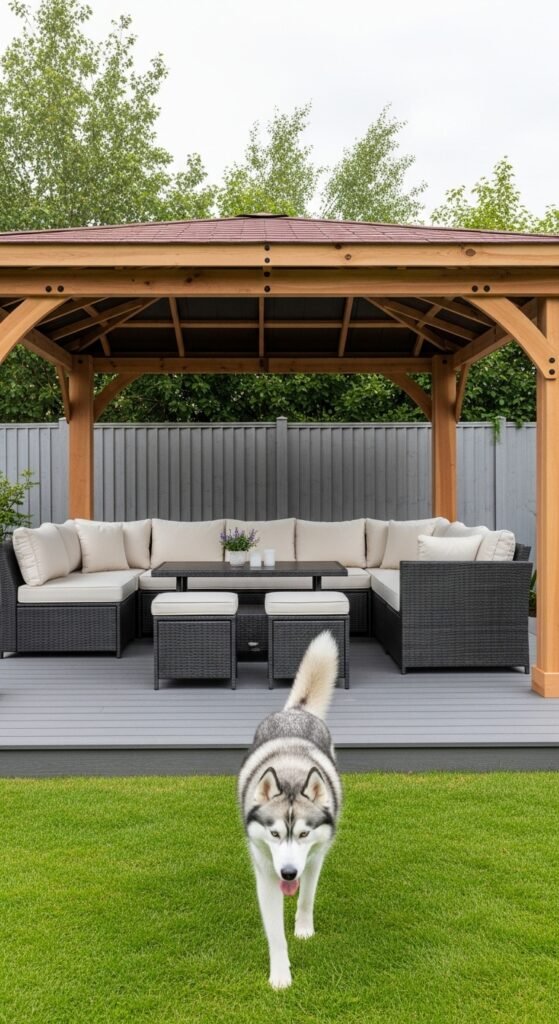
Arched openings and wrought iron details complete the look. This style provides excellent thermal mass, keeping the space cool in hot climates.
Pro Tip: Plant bougainvillea or jasmine to climb up the pillars for a fragrant and colorful accent.
Gothic Revival Pavilion
For those who love drama and history, a Gothic Revival pavilion features pointed arches, intricate trellis work, and perhaps a steepled roof. It acts as a folly or a garden centerpiece, drawing the eye and creating a sense of romance.
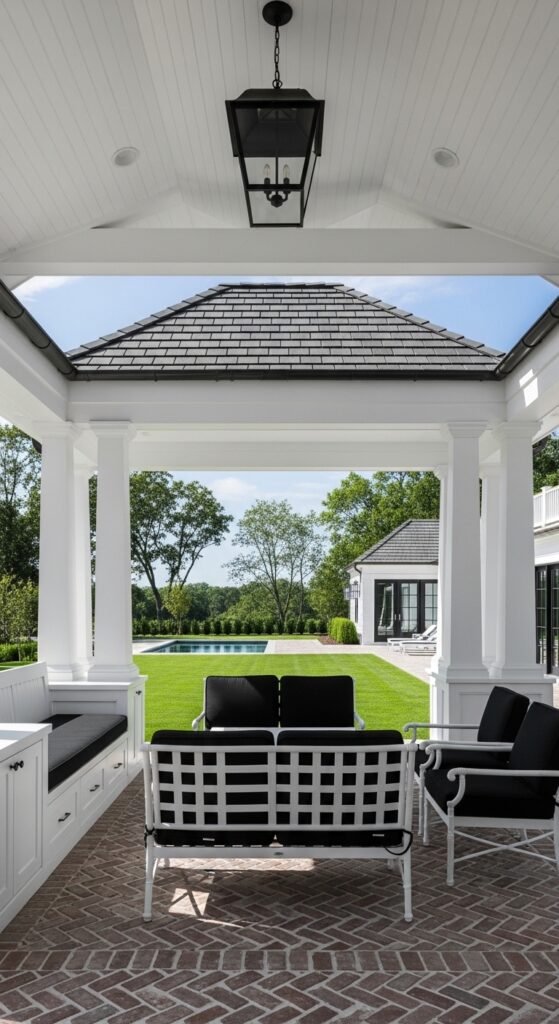
Painted in dark green or black, it stands out against the foliage. This style is less about expansive entertaining and more about creating a picturesque vignette in the garden.
Pro Tip: Place a vintage iron bench inside to complete the Victorian garden feel.
Mid-Century Modern Pavilion
Inspired by the architecture of the 1950s and 60s, this style features a flat or butterfly roof, skinny metal posts, and a connection to nature. The emphasis is on horizontal lines and openness.
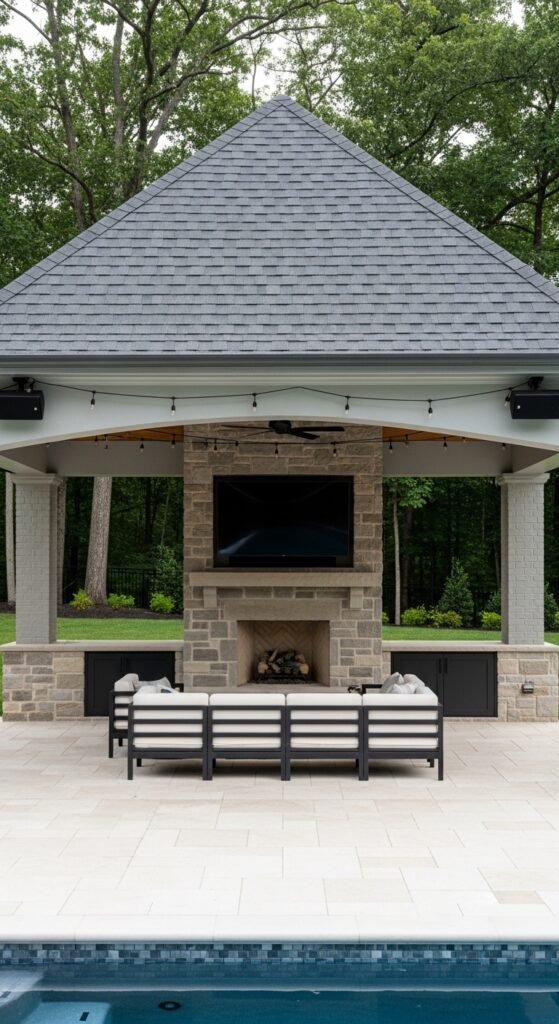
Often paired with a concrete patio and retro furniture (think Acapulco chairs), this pavilion looks sleek and timeless. It is perfect for modern ranch-style homes.
Pro Tip: Use a breeze block wall on one side for a retro privacy screen that allows airflow.
Rustic Log Pavilion
Ideal for mountain homes or wooded lots, a log pavilion uses whole, peeled logs for the posts and beams. The joinery is often visible, showcasing the craftsmanship. It feels solid, cozy, and completely natural.
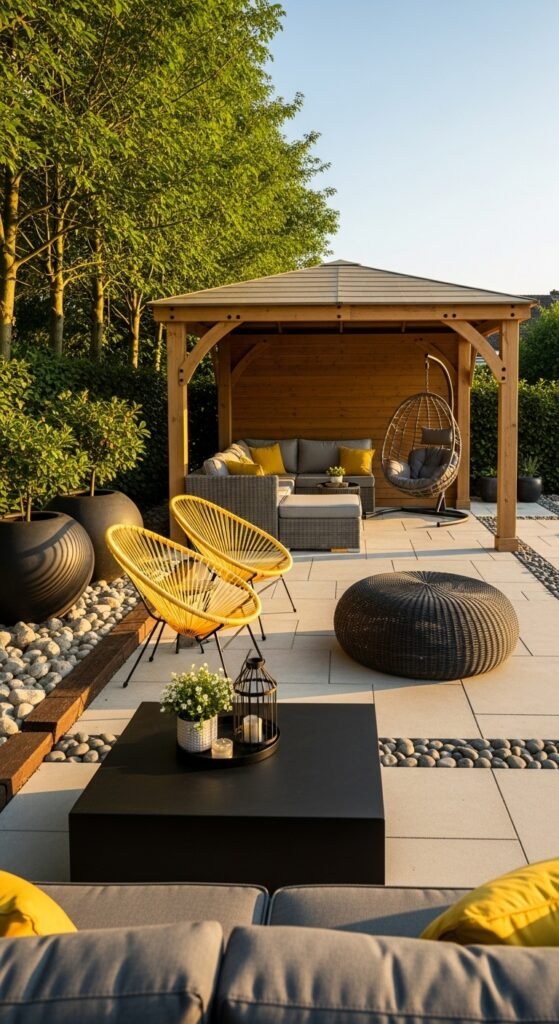
This is the heaviest visual style and requires a large landscape to balance it. It creates the perfect shelter for a stone fire pit or a hot tub.
Pro Tip: Seal the logs regularly to prevent boring insects and water damage.
L-Shaped Corner Pavilion
An L-shaped pavilion wraps around a corner of the yard or patio. This shape naturally creates two distinct zones—perhaps dining in one wing and lounging in the other. It fosters a sense of enclosure and privacy without walls.
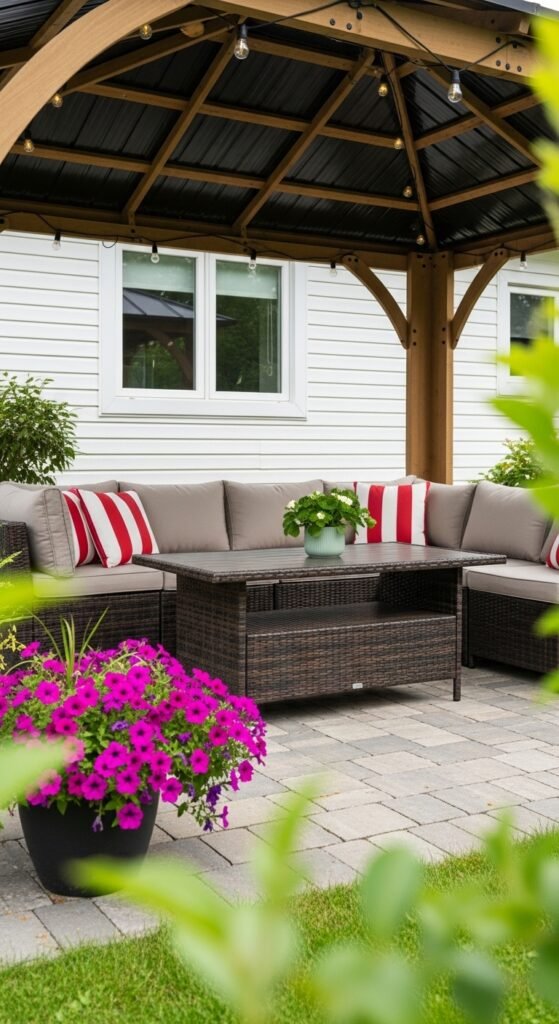
This layout is excellent for maximizing the use of a corner lot. It directs the view inward toward the yard rather than out toward the neighbors.
Pro Tip: Place a fire pit or water feature in the crook of the “L” to serve as a central focal point for both wings.
Translucent Polycarbonate Pavilion
If you want rain protection without blocking the sun, a polycarbonate roof is the answer. These multi-wall plastic sheets are durable, lightweight, and translucent. They block harmful UV rays but let the light pour through.
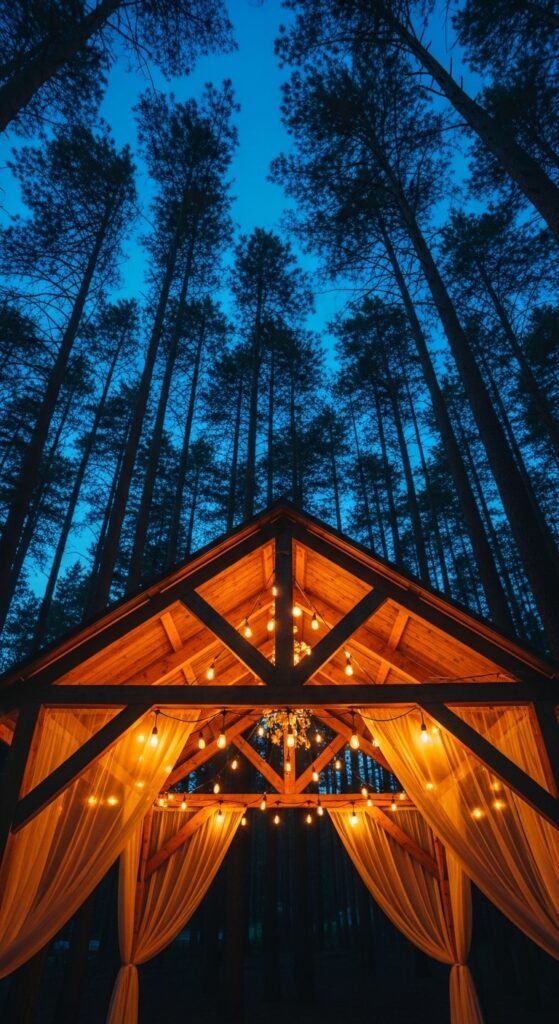
This creates a greenhouse-like effect, making it a bright and cheerful space even on cloudy days. It is a modern, budget-friendly alternative to glass.
Pro Tip: Choose a tinted polycarbonate (bronze or gray) to reduce glare and heat buildup.
Asian-Inspired Tea House
An Asian-inspired pavilion brings tranquility and balance. Key features include curved roof lines, intricate wood joinery without nails, and a raised floor platform.
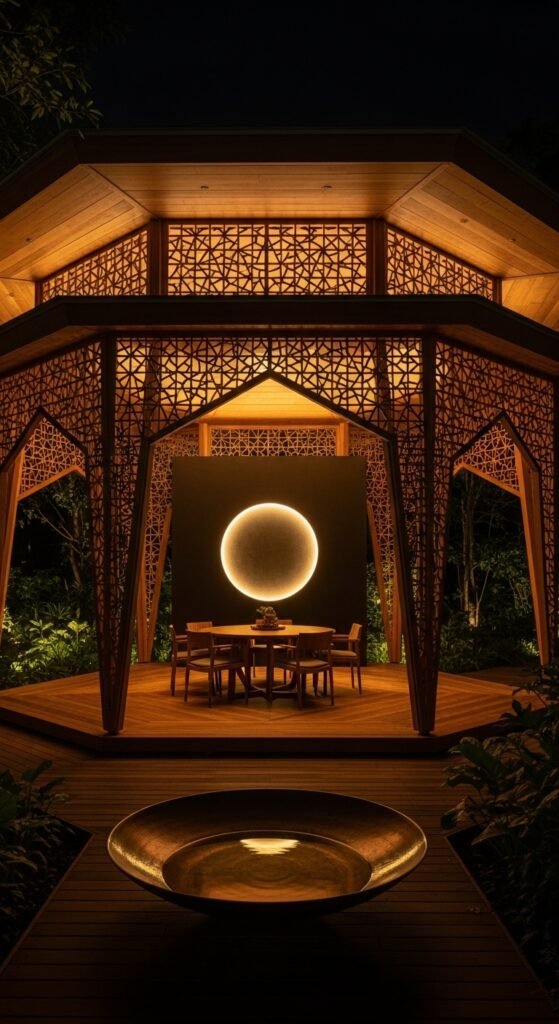
Often situated near a koi pond or bamboo grove, this structure is for contemplation. It is usually smaller and more intimate than a standard entertainment pavilion.
Pro Tip: Use bamboo shades that can be rolled down for privacy and sun control.
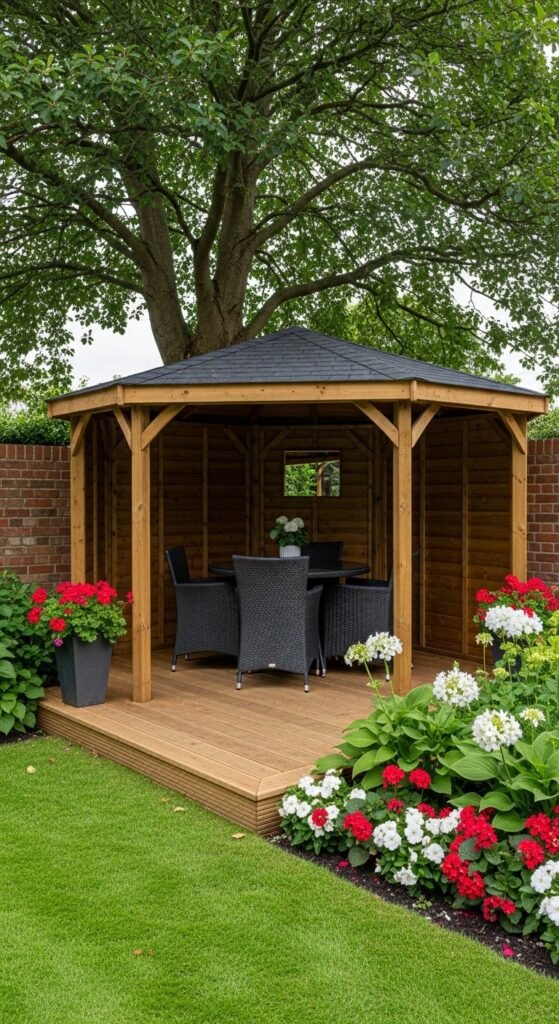
Geometric Hexagonal Pavilion
While rectangular pavilions are most common, a hexagonal (six-sided) or octagonal shape offers a classic gazebo feel but with the open structure of a pavilion. The rounder shape encourages conversation, as seating is typically arranged in a circle.
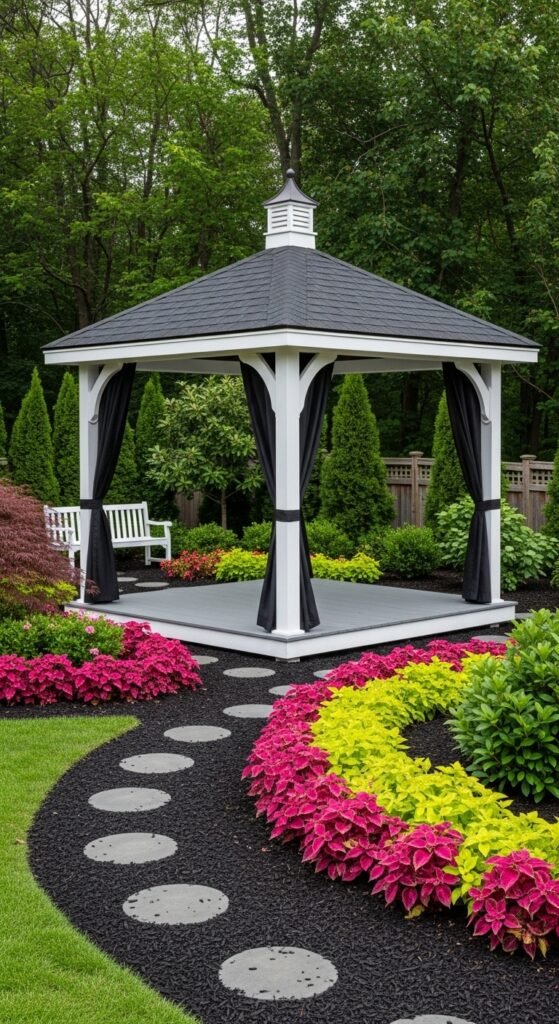
This shape works well as a standalone island in the middle of a lawn or garden. It breaks up the grid-like patterns of fences and patios.
Pro Tip: Build a built-in bench around the perimeter of the interior for ample seating without cluttering the center.
Coastal White Pavilion
The coastal look is fresh, bright, and airy. This pavilion is painted entirely crisp white. It often features beadboard ceilings and shiplap details. The white paint reflects sunlight, keeping the structure cool.
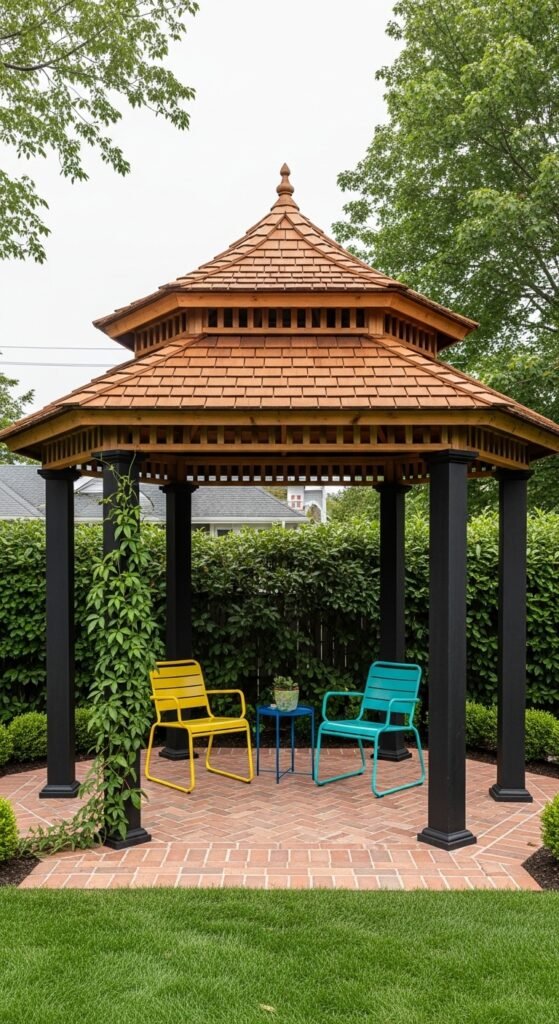
Pair it with navy blue cushions and nautical decor. It creates a resort-like vibe right in your backyard.
Pro Tip: Use high-quality exterior paint and primer to prevent peeling, as white shows dirt and wear more easily than stained wood.
Popular Asked Questions
What is the difference between a gazebo and a pavilion?
The main difference lies in the floor and the shape. A gazebo is typically octagonal or round, has a built-in raised floor, and often features half-walls or railings. A pavilion is usually rectangular or square, is completely open on the sides (no railings), and does not have a built-in floor; it is usually built directly on a concrete patio or deck.
Do I need a permit for a backyard pavilion?
In most cases, yes. Because a pavilion is a permanent structure with a solid roof, most municipalities require a building permit to ensure it meets safety codes and zoning setbacks. Always check with your local city planning office before starting construction to avoid fines.
How much does it cost to build a 20×20 pavilion?
The cost varies wildly based on materials and labor. A DIY kit might cost between $3,000 and $6,000. A custom-built wood pavilion by a contractor can range from $10,000 to $25,000. High-end materials like steel, stone, or outdoor kitchens can push the price over $30,000.
What is the best material for a pavilion roof?
Metal roofing (standing seam) is often considered the best choice for pavilions. It is incredibly durable, requires almost no maintenance, sheds snow and rain easily, and can last 50 years or more. Asphalt shingles are a cheaper alternative that can match your home’s roof.
Does a pavilion add value to a home?
Yes, a well-built pavilion adds “livable” square footage to your outdoors. It increases the curb appeal and functionality of the backyard. While you may not get a dollar-for-dollar return on investment (ROI), it is a highly desirable feature for homebuyers who prioritize outdoor entertaining.
Conclusion
Investing in a backyard pavilion is one of the best ways to upgrade your lifestyle and property value. Whether you choose a sleek small steel pavilion for a modern look or a barn-style wooden pavilion for rustic charm, the key is to select a design that complements your home and meets your specific needs for shade and privacy.
Which of these pavilion styles would best fit your backyard vibe?
Follow us on Pinterest for more backyard pavilion ideas inspiration.