
Beach house design ideas are shifting away from kitschy nautical themes toward sophisticated, organic luxury. You want a home that feels like a permanent vacation, but you might be struggling to balance “coastal” with “classy.” Many homeowners fall into the trap of overusing seashells and anchor motifs, resulting in a space that feels more like a souvenir shop than a sanctuary.
This guide provides a curated list of 30 actionable design strategies to transform your space into a breezy, high-end coastal retreat. We focus on textures, lighting, and color palettes that mimic the seaside environment without being literal. From choosing the right shade of “sea salt” white to selecting durable, sand-friendly furniture, you will find specific solutions here to elevate your interior.
Check out our related guide on [Modern Farmhouse Decor] for more rustic inspiration.
Key Takeaways
- Texture Over Theme: Focus on natural materials like rattan, jute, and linen rather than literal beach motifs.
- Light is Luxury: Maximize natural light with sheer treatments and strategic mirror placement.
- The New Palette: Move beyond basic blue and white; incorporate sandy beiges, soft greens, and weathered grays.
- Indoor-Outdoor Flow: Use consistent flooring and wide openings to blur the lines between your living room and the patio.
- Durability Matters: Select performance fabrics and slipcovers that can withstand sand, sun, and moisture.
Table of Contents
- Tropical Resort Style Bar Cart
- Indoor Hallway Pier
- Sun-Drenched Sea Colors
- Coastal Wood And White
- Comfy Dining Nook In Soft Colors
- Accentuate The Outdoors
- Nautical Art Piece
- Statement Shiplap Wall Bath
- Whitewashed Ceiling Nautical Dining Room
- Coastal Traditional Bright Bedroom
- Seafoam Green With Rustic Wood Accents
- Classic Nautical Stripes And Elements
- Beachy Rattan In A Bright Sunroom
- Add Beach Flair With Textures
- Greyed Wood Echoes Coastal Hues
- Popular Asked Questions
- Conclusion
Tropical Resort Style Bar Cart
Creating a dedicated beverage station is a fantastic way to bring the vacation vibe into your living space. A tropical resort-style bar cart serves as both a functional entertaining piece and a stylish focal point. Look for a cart made of bamboo, rattan, or gold metal to establish that high-end hotel aesthetic. Style it with crystal decanters, vintage glassware, and fresh greenery like a monstera leaf in a simple vase.
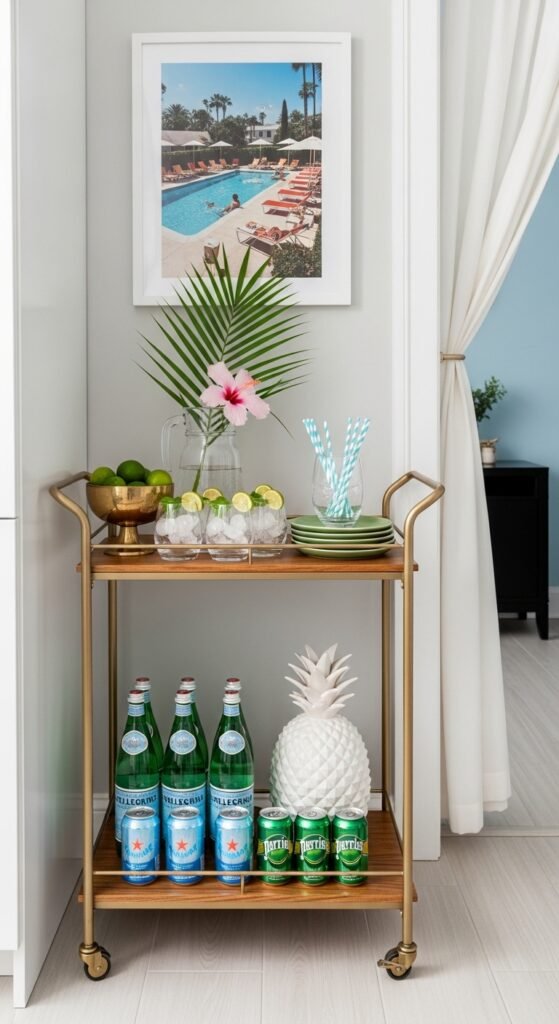
The key to this look is balance. Do not overcrowd the shelves. Leave negative space so the beautiful materials of the cart can shine through. You can add a small bowl of limes or a pineapple to introduce a pop of organic color that feels fresh and inviting. This setup encourages a relaxed atmosphere where guests feel welcome to serve themselves, mimicking the ease of a poolside cabana.
Pro Tip: Keep a small woven basket on the bottom shelf to store napkins and stirrers, keeping the top surface clutter-free.
Indoor Hallway Pier
Long hallways often become dark, unused spaces, but in a beach house, they offer a unique opportunity to mimic the feeling of a pier. By using horizontal wood paneling or shiplap on the walls, you draw the eye forward, creating a sense of movement similar to walking down a boardwalk. Light timber flooring enhances this effect, especially if the planks are wide and run parallel to the walls.
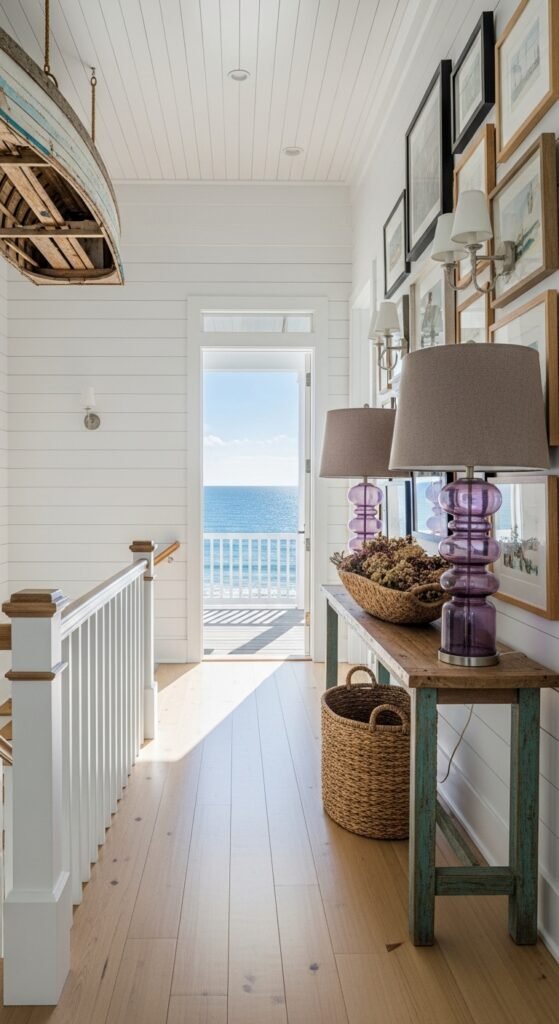
Lighting is crucial here. Instead of a single overhead fixture, consider a series of wall sconces that resemble maritime lanterns. This rhythm of light breaks up the length of the hall and adds warmth. You can also hang a series of coastal landscape photos in matching frames to create a gallery wall that tells a story of the sea without being overly literal.
Pro Tip: Place a runner rug with horizontal stripes to visually widen a narrow hallway while reinforcing the nautical theme.
Sun-Drenched Sea Colors
A sun-drenched palette goes beyond simple blue and white. It captures the warm, golden hour hues of the coast. Think buttery yellows, soft corals, and warm sandy beiges mixed with faded aquas. These colors work best in rooms that receive plenty of natural light, as the sunlight will amplify their warmth and make the room glow.
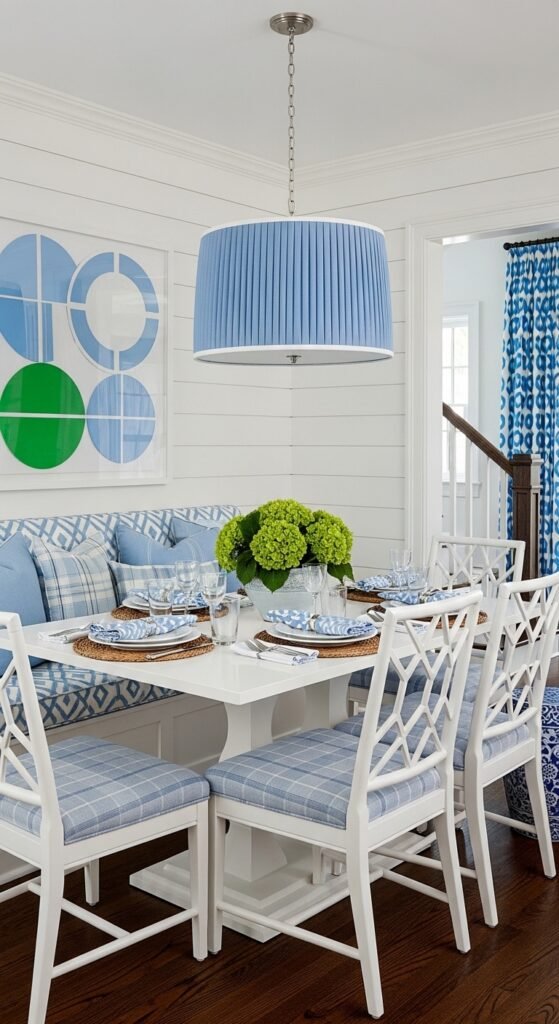
To implement this, start with a warm white base on the walls. Add color through textiles like throw pillows, curtains, and area rugs. The goal is to create a soft, washed-out look, as if the colors have been naturally faded by the sun and salt air. This approach feels more organic and lived-in than using sharp, saturated primary colors. It evokes a lazy Sunday afternoon spent napping in a hammock.
Pro Tip: Use linen curtains in a pale yellow or coral shade; the sunlight filtering through the fabric will cast a warm, flattering light throughout the room.
Coastal Wood And White
The combination of natural wood and crisp white is the backbone of modern coastal design. This pairing creates high contrast without the harshness of black and white. It feels fresh, airy, and grounded all at once. Use white for the walls, ceilings, and larger upholstery pieces to maximize light reflection. Then, introduce wood tones through coffee tables, shelving, and flooring.
The type of wood matters significantly. Blonde woods like oak, ash, or birch are ideal for a Scandinavian-inspired coastal look. For a more rustic or tropical feel, darker woods like teak or walnut can add depth. The texture of the wood should be matte or satin rather than high-gloss, emphasizing the natural grain and organic feel. This design principle relies on the warmth of the timber to prevent the all-white space from feeling clinical.
Pro Tip: Add a wooden bowl or tray to a white coffee table to instantly warm up the vignette.
Comfy Dining Nook In Soft Colors
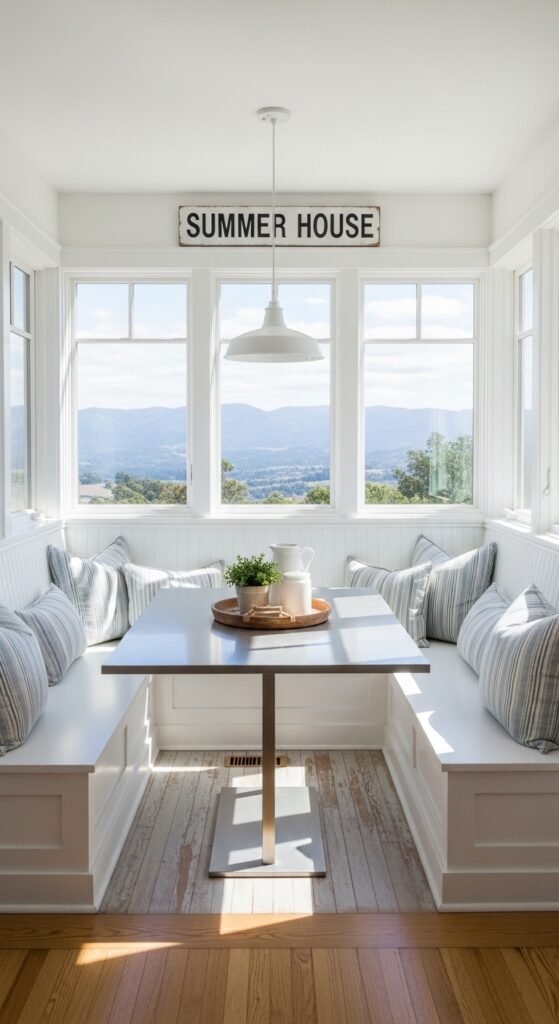
A dining nook is the perfect place to experiment with soft, comforting coastal colors. Built-in banquette seating maximizes space and provides a cozy, intimate atmosphere. Upholster the bench cushions in a durable, stain-resistant fabric in a soft hue like seafoam green, pale blue, or misty gray. These colors promote relaxation and digestion, making them perfect for mealtime.
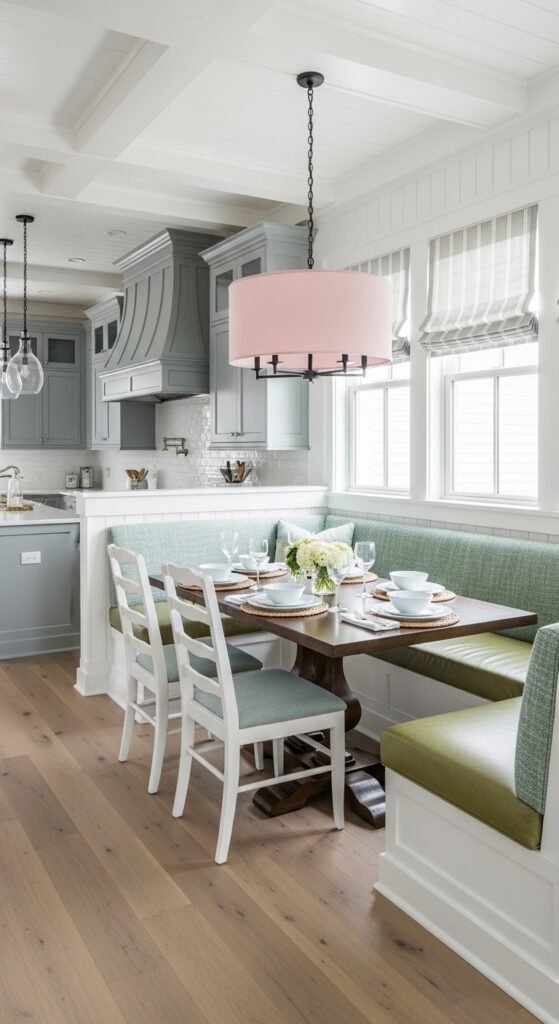
Pair the soft upholstery with a sturdy pedestal table in white or light wood. Plenty of throw pillows are essential for comfort and style. Mix patterns like subtle stripes, gingham, or solids in varying shades of your chosen color palette. This layering adds visual interest and makes the nook feel inviting. A pendant light made of woven seagrass hanging above the table completes the look, adding texture and defining the space.
Pro Tip: Install drawers under the banquette seating for hidden storage of beach towels or seasonal table linens.
Comparison: Rattan vs. Wicker Furniture
| Feature | Rattan | Wicker |
|---|---|---|
| Material | A specific type of natural vine/palm. | A weaving technique (can be rattan, willow, or synthetic). |
| Durability | Very strong and durable core. | Depends on the material used; synthetic is best for outdoors. |
| Best Use | Indoor furniture, structural frames. | Outdoor patio furniture, baskets, accents. |
| Vibe | Organic, sturdy, tropical. | Intricate, classic, airy. |
Accentuate The Outdoors
In beach house design, the view is often the most important art piece. Your interior design should frame and accentuate the outdoors rather than compete with it. Keep window treatments minimal. Sheer curtains or simple roller shades that can be completely hidden are ideal. If privacy isn’t a major concern, leaving windows bare allows for an unobstructed connection to the landscape.
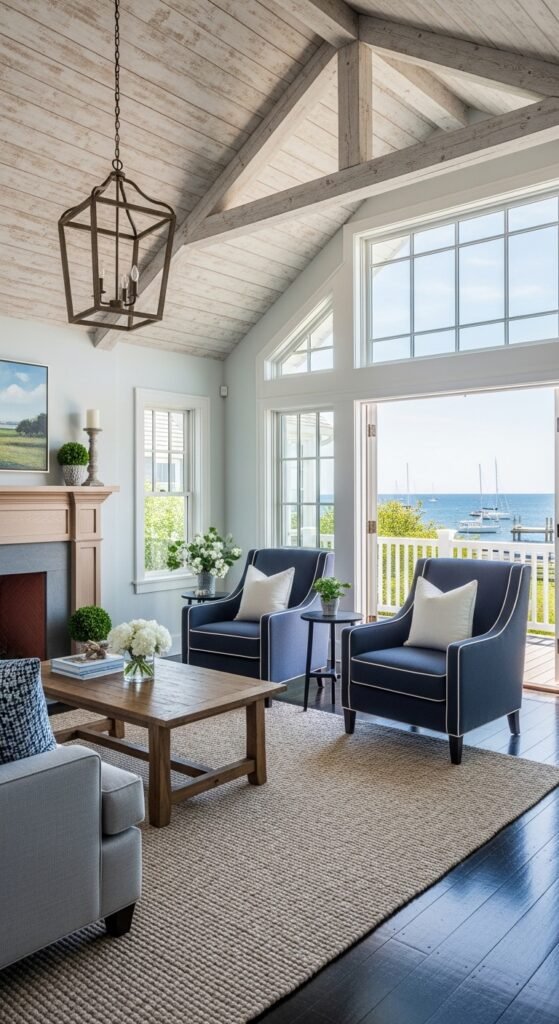
Arrange your furniture to face the windows or sliding glass doors. This orients the room toward the view and encourages indoor-outdoor living. Use low-profile furniture that doesn’t block sightlines. For example, a bench or a low-back sofa placed in front of a window allows you to enjoy the vista even while seated elsewhere in the room.
Pro Tip: Paint window frames in a dark color like charcoal or navy to create a “picture frame” effect that draws the eye to the view outside.
Nautical Art Piece
A single, large-scale nautical art piece can define a room more effectively than a dozen small trinkets. Look for oversized photography of crashing waves, a vintage maritime map, or an abstract painting in ocean hues. The scale is important here; a large piece creates a focal point and anchors the room.
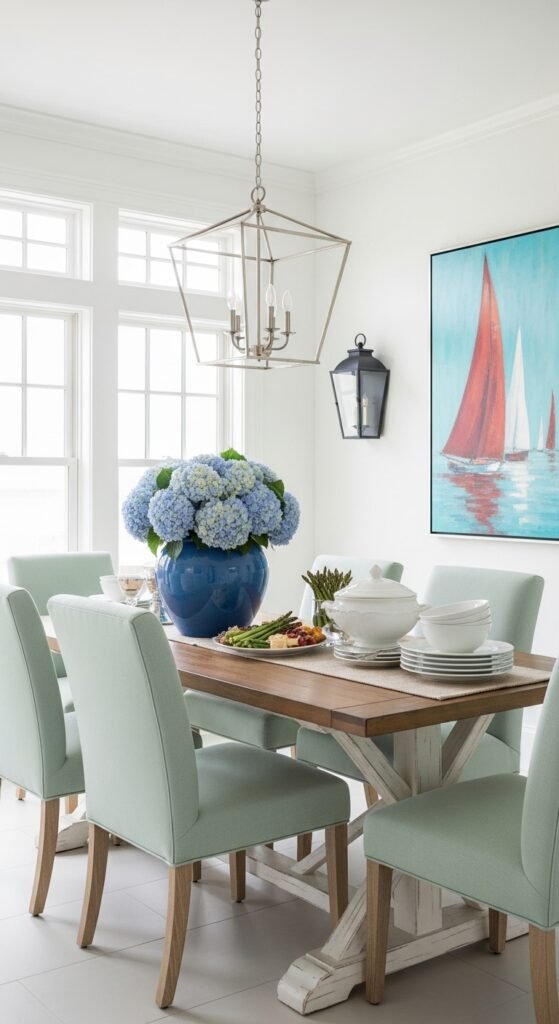
When selecting art, consider the mood you want to set. A black and white photograph of a pier feels moody and sophisticated, while a colorful painting of a regatta feels energetic and preppy. Frame the art simply to let the image speak for itself. A thin white or light wood frame usually works best in coastal interiors. This approach avoids the clutter of a gallery wall and maintains the serene, airy vibe of the beach house.
Pro Tip: Lean a large piece of art against the wall on a mantle or console table for a casual, laid-back look.
Statement Shiplap Wall Bath
Shiplap is a classic coastal element that adds texture and architectural interest to a bathroom. Instead of covering the entire room, create a statement wall behind the vanity or the bathtub. Install the boards horizontally to make a small bathroom feel wider. Painting the shiplap in a crisp white creates a clean, spa-like atmosphere, while a soft gray or navy adds drama and depth.
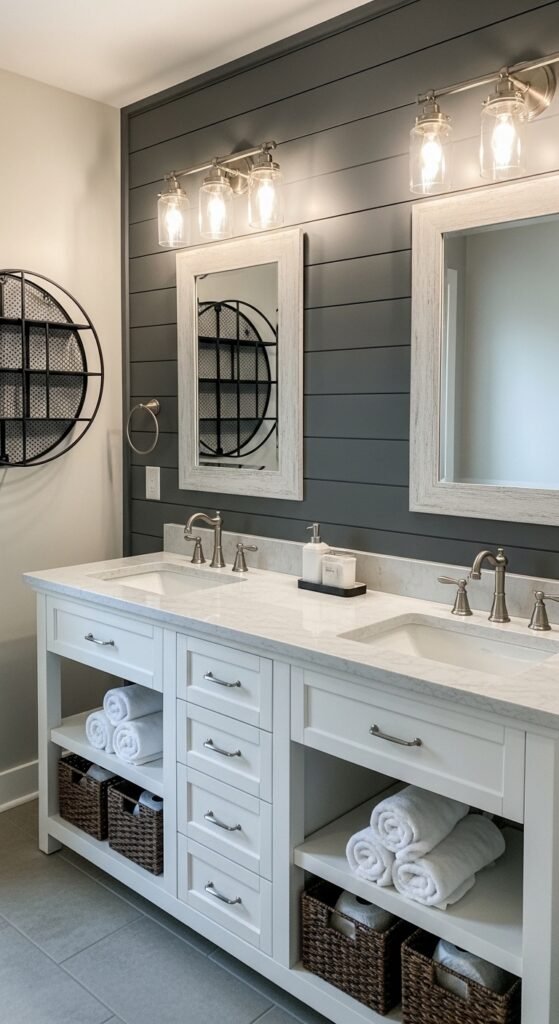
Pair the shiplap with mixed metals for a modern twist. Brass sconces and faucets look stunning against white wood and add a touch of warmth. A round mirror breaks up the linear lines of the shiplap and softens the overall look. This design choice is practical as well, as wood paneling is often more durable and easier to clean than painted drywall in high-humidity areas if sealed correctly.
Pro Tip: Use PVC or composite shiplap in bathrooms to prevent warping or water damage over time.
Whitewashed Ceiling Nautical Dining Room
Don’t forget the “fifth wall” when designing your beach house. A whitewashed wood ceiling adds incredible character and height to a dining room. The whitewash technique allows the grain of the wood to show through, providing texture without the visual weight of dark timber. This draws the eye upward and makes the room feel airier and more spacious.
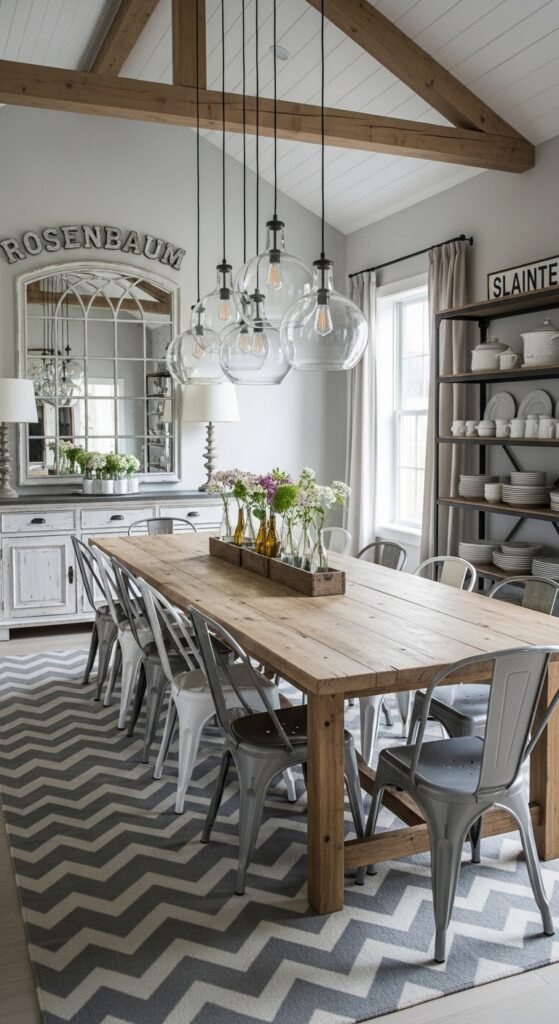
Complement the ceiling with a substantial dining table and comfortable chairs. A large, linear chandelier—perhaps made of iron or rope—can hang from the wood beams to ground the space. This design works particularly well in rooms with vaulted ceilings, emphasizing the architectural structure. It evokes the feeling of being inside the hull of a ship or an old boathouse, adding authentic coastal charm.
Pro Tip: If you have low ceilings, run the ceiling planks parallel to the longest wall to exaggerate the room’s proportions.
Coastal Traditional Bright Bedroom
A coastal traditional bedroom combines the comfort of classic design with the brightness of the seaside. Start with a symmetrical layout: a bed flanked by matching nightstands and lamps. Choose furniture with traditional silhouettes but in lighter finishes like white lacquer or pickled oak. The bedding should be plush and layered, with a focus on high-quality white linens.
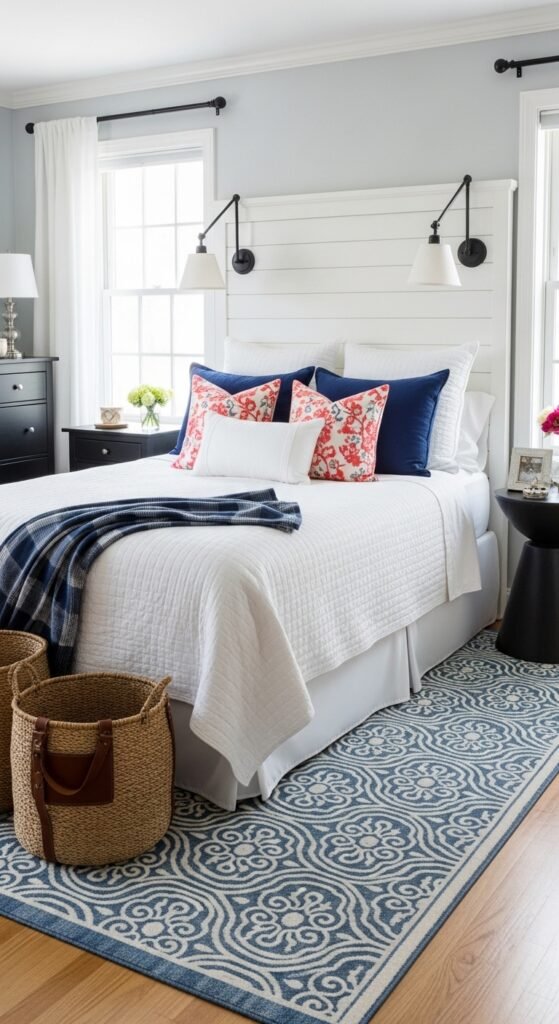
Inject color through a patterned headboard or an upholstered bench at the foot of the bed. Classic patterns like toile, stripes, or trellis in shades of blue work beautifully. The goal is to create a space that feels timeless and elegant but also relaxed. Fresh flowers and a stack of books on the nightstand add a lived-in, personal touch that prevents the room from feeling like a showroom.
Pro Tip: Use a bed skirt to hide the bed frame legs and add another layer of soft textile to the room.
Get The Look: Coastal Bedroom Essentials
- Crisp White Sheets: High thread count percale for that cool, crisp hotel feel.
- Woven Bench: A rattan or rope bench at the foot of the bed for texture.
- Glass Lamp Bases: Clear or sea-glass colored lamps keep the look airy.
- Jute Rug: A natural fiber rug to ground the space and add warmth.
- Light Quilt: A cotton quilt for layering on cool breezier nights.
Seafoam Green With Rustic Wood Accents
Seafoam green is a quintessential beach color, but it can look dated if not styled correctly. The secret is to pair it with rustic, weathered wood accents. The roughness of the wood contrasts with the delicate, pastel nature of the green, creating a balanced and mature look. Use seafoam green on the walls or as the main color for cabinetry.
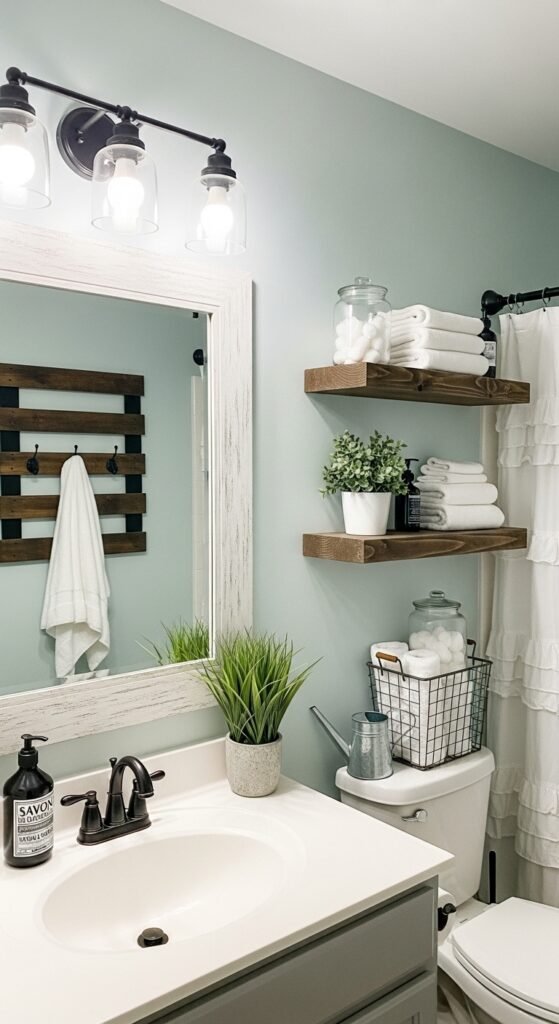
Introduce rustic wood through open shelving, a reclaimed wood coffee table, or exposed ceiling beams. The wood should look like it has a story, perhaps mimicking driftwood found on the shore. This combination brings the colors of nature indoors—the green of the water and the brown of the driftwood. It’s a calming palette that feels grounded and organic.
Pro Tip: Use matte paint finishes for seafoam green; glossy finishes can make the color look like a retro diner.
Classic Nautical Stripes And Elements
Nautical stripes are a hallmark of beach house style, but they should be used with restraint to avoid a costume-like effect. Choose one or two key pieces to showcase this pattern, such as a rug, an armchair, or a set of throw pillows. Navy and white is the classic combo, but gray and white or red and white can also work depending on your overall palette.
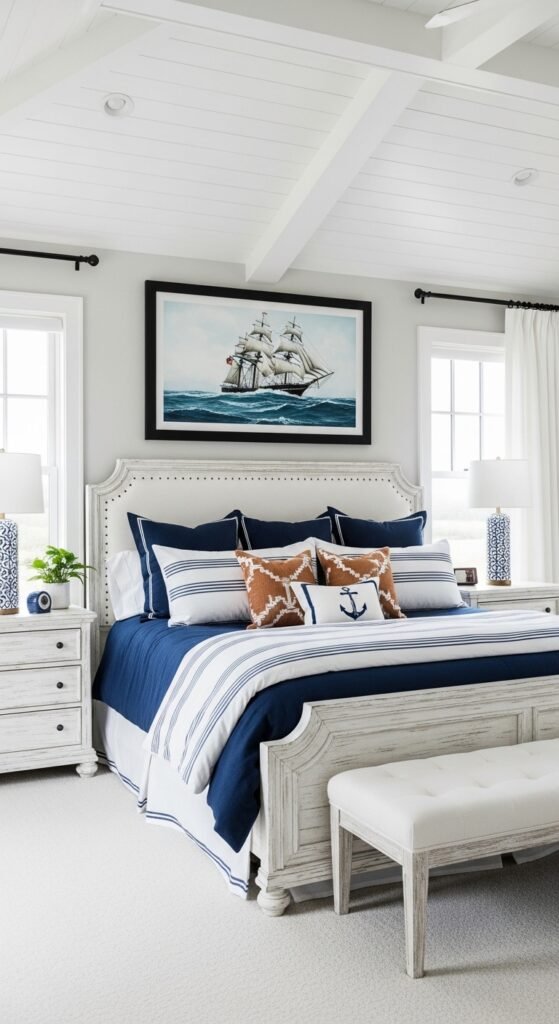
Incorporate other nautical elements subtly. A brass telescope on a desk, a cleat used as a drawer pull, or a rope doorstop are small details that nod to the theme without screaming it. The goal is to suggest a maritime influence through materials and hardware rather than literal imagery of anchors and lifebuoys. This approach results in a space that feels curated and sophisticated.
Pro Tip: Vary the width of your stripes. Mix a wide cabana stripe on a rug with a thin ticking stripe on a pillow for visual interest.
Beachy Rattan In A Bright Sunroom
A sunroom is the ideal habitat for rattan furniture. This material is lightweight, durable, and inherently coastal. A set of rattan armchairs or a daybed creates a relaxed, casual seating area perfect for reading or napping. Pair the rattan with plush white cushions to ensure comfort. The contrast between the structured woven frame and the soft fabric is visually appealing.
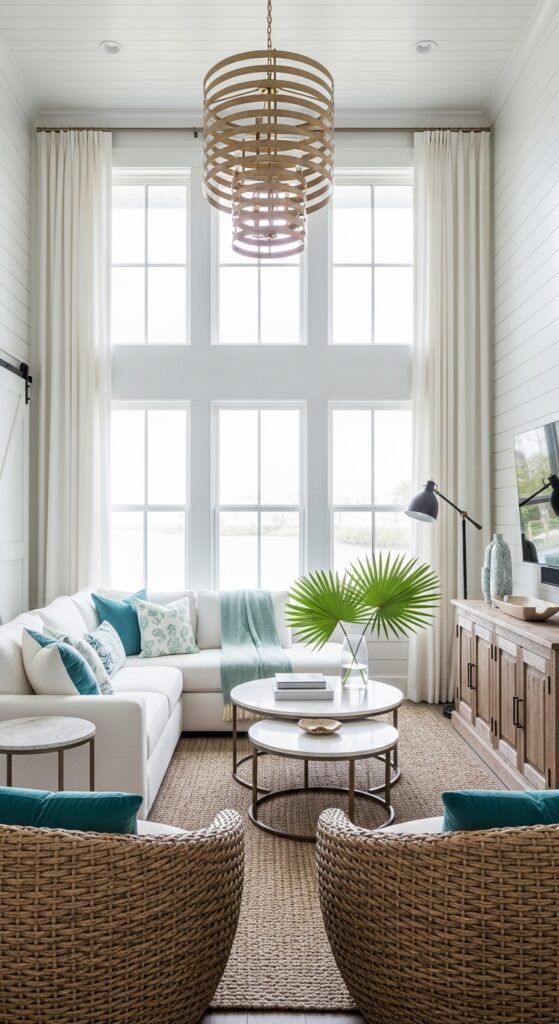
Keep the rest of the room bright and uncluttered. Plants thrive in sunrooms and complement the natural look of rattan perfectly. Large potted palms or hanging ferns blur the line between indoors and outdoors. Add a sisal or seagrass rug to protect the floor and add another layer of natural texture. This room should feel like an extension of the garden or beach outside.
Pro Tip: Vintage rattan pieces often have unique shapes and better construction than modern reproductions. Check estate sales for treasures.
Add Beach Flair With Textures
If you prefer a neutral color palette, texture is your best friend. A monochrome white or beige room can look flat without it. Layer different tactile materials to add depth and warmth. Think chunky knit throws, nubby wool rugs, smooth velvet pillows, and rough woven baskets. These contrasting textures mimic the variety found in nature—smooth sand, rough rocks, soft water.
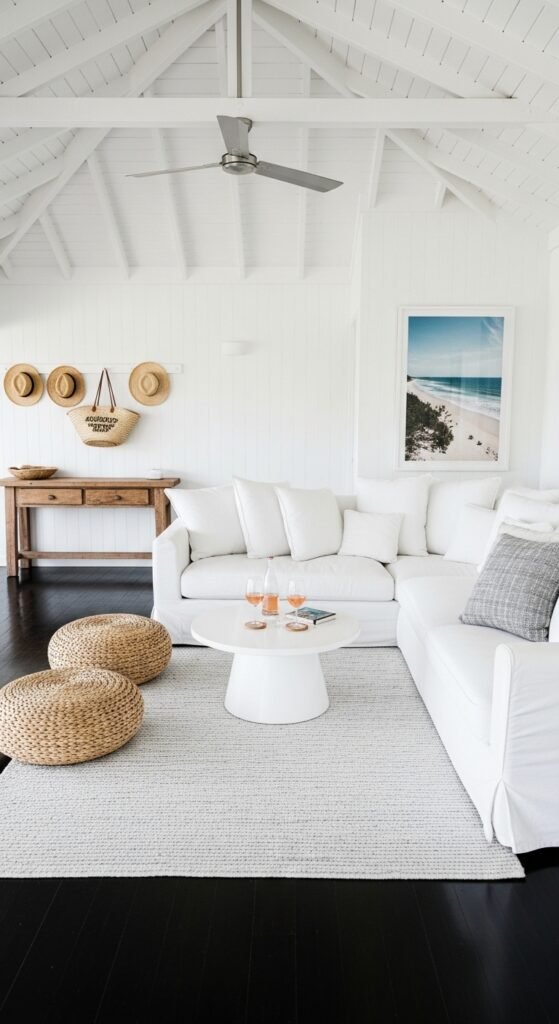
Incorporating elements like grasscloth wallpaper adds instant warmth and sophistication to a room. It provides a subtle backdrop that feels organic and high-end. Even small details like a fringed edge on a pillow or a hammered metal tray contribute to the overall sensory experience. A textured room feels cozy and inviting, encouraging you to touch and interact with the space.
Pro Tip: Mix at least three different textures in every room to prevent the design from feeling one-dimensional.
Greyed Wood Echoes Coastal Hues
Greyed or “weathered” wood mimics the look of timber that has been exposed to the elements—sun, salt, and wind. It has a beautiful, silvery patina that fits perfectly in a coastal home. Use this finish for flooring, dining tables, or sideboards. It pairs exceptionally well with cool blues, greys, and crisp whites.
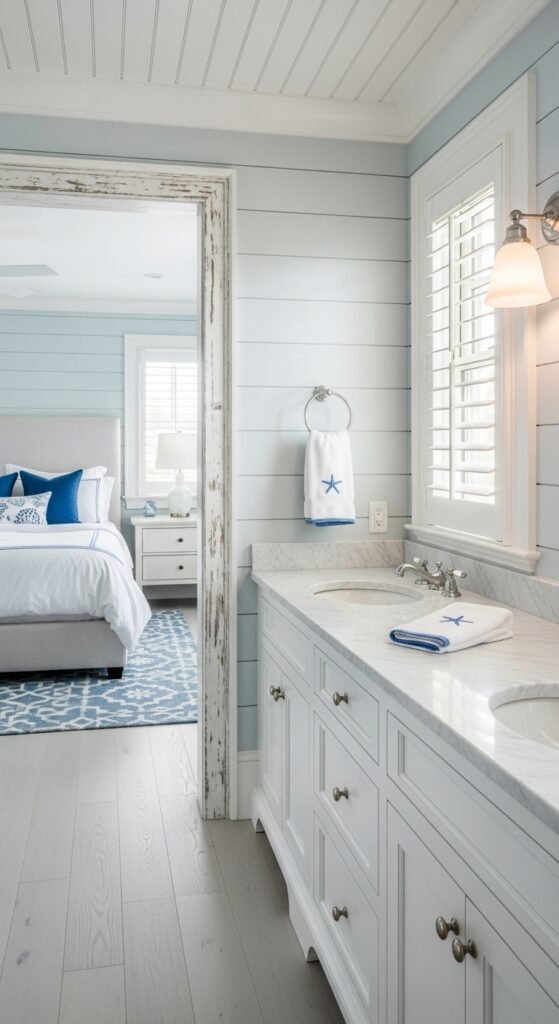
Unlike warm honey-toned woods, greyed wood has a cooler undertone that feels modern and chic. It works well in both rustic and contemporary settings. You can achieve this look with custom stains or by using reclaimed wood. This material choice brings a sense of history and ruggedness to the interior, reminding you of the power of the ocean environment.
Pro Tip: Save this idea to your Pinterest. When using greyed wood flooring, choose wide planks to enhance the relaxed, farmhouse-coastal vibe.
Comparison: Real Wood vs. Faux Wood Tiles
| Feature | Real Wood | Faux Wood (Porcelain/LVP) |
|---|---|---|
| Authenticity | Unmatched natural grain and warmth. | High-quality prints can look very realistic. |
| Water Resistance | Low; can warp with moisture/humidity. | Excellent; waterproof and ideal for wet zones. |
| Maintenance | Requires refinishing and careful cleaning. | Very low maintenance; easy to mop. |
| Comfort | Warm and soft underfoot. | Can be cold and hard (tiles). |
Popular Asked Questions
What are the top beach house design trends for 2026?
The biggest trends for 2026 include a shift toward “Organic Modern” styles. This means using sustainable materials, richer wood tones (instead of just bleached wood), and moody accent colors like deep green and charcoal. The “cheesy” decor like signs that say “Beach” is out; curated, high-quality craftsmanship is in.
How do I make my house look like a beach house without being cheesy?
Focus on the feeling of the beach rather than literal symbols. Use a color palette inspired by nature (sand, sea, sky), maximize natural light, and use textures like linen, jute, and rattan. Avoid mass-produced nautical decor. Instead, use abstract art, driftwood, or a simple vase of beach grass.
What colors are best for a coastal interior?
Beyond the classic white and blue, look to the shoreline for inspiration. Sandy beiges, soft greys, seafoam greens, and warm corals are excellent choices. For a modern twist, incorporate matte black or navy for contrast.
How can I decorate a beach house on a budget?
Upcycling is your best friend. Paint existing furniture white or blue for a fresh look. Use slipcovers to update old sofas. Gather natural elements from outside—like driftwood, shells, or rocks—to use as free decor. Focus on decluttering and letting in light, which costs nothing but transforms a space.
What is “organic modern” coastal design?
This style blends the clean lines of modern design with the warmth of natural coastal elements. Think of a sleek, modern sofa paired with a raw wood coffee table and a jute rug. It prioritizes natural materials and neutral colors but maintains a clutter-free, contemporary silhouette.
Conclusion
Designing the perfect beach house is about capturing the essence of the coast—the light, the breeze, and the relaxed pace of life. Whether you prefer a traditional nautical look or a modern minimalist surf shack, the common thread is comfort and connection to nature. By focusing on durable materials, soothing color palettes, and organic textures, you can create a sanctuary that feels like summer all year round.
Which of these beach house design ideas will you try first? Let us know in the comments below!
Follow us on Pinterest for more beach house design ideas inspiration.