The era of beige and all-white minimalism is officially fading. In its place, a bold, sophisticated trend is taking over interior design: the black and green bedroom. This color combination might sound intense, but when executed correctly, it creates a “cocooning” effect that is deeply restorative. Black anchors the space with a sense of infinite depth and quiet, while green brings in the vitality of nature, creating a sanctuary that feels both grounded and alive.
Whether you are looking for a dramatic Art Deco vibe or a serene forest-inspired escape, this palette offers surprising versatility. It solves the common problem of bedrooms feeling “cold” or “impersonal” by instantly adding layers of mood and character without requiring a total renovation.
Key Takeaways
- Psychological Balance: Black represents rest and silence, while green symbolizes growth and renewal, making this the ultimate duo for sleep hygiene.
- Lighting Matters: In dark rooms, warm lighting (2700K bulbs) is non-negotiable to prevent the space from feeling cave-like.
- Texture is King: To avoid a flat look, you must mix light-absorbing textures (velvet, matte paint) with light-reflecting ones (brass, glass, silk).
- The 60-30-10 Rule: Use green as your dominant color (60%), black as your secondary (30%), and a metallic or neutral accent like gold or cream (10%) for the perfect mix.
Table of Contents
- Urban Jungle Retreat
- Emerald Accents
- Monochrome Magic
- Forest Noir
- Gothic Glamour
- Comparison: Matte vs. Gloss Finishes
- Art Deco Luxe
- Earth Meets Metal
- Botanical Burst
- Vintage Velvet
- Industrial Envy
- Get The Look: The Moody Essentials
- Serenity Suite
- Minimalist Mocha Mix
- Regal Refinement
- Whimsical Wilderness
- Nordic Nights
- Comparison: Paint vs. Wallpaper
- Chic Clover Charm
- Abstract Atmosphere
- Textured Tranquility
- Contemplative Caves
- Futuristic Flora
- Popular Asked Questions
- Conclusion
Urban Jungle Retreat
This style leans heavily into the “biophilic” design trend, which seeks to connect indoor spaces with the natural world. By painting your walls a matte charcoal black, you create a void-like backdrop that makes greenery pop with incredible vibrancy. The key here is to use real or high-quality faux plants as your primary “green” source rather than paint. Large monstera plants, trailing pothos on black floating shelves, and a fiddle leaf fig in the corner soften the harshness of the black walls.
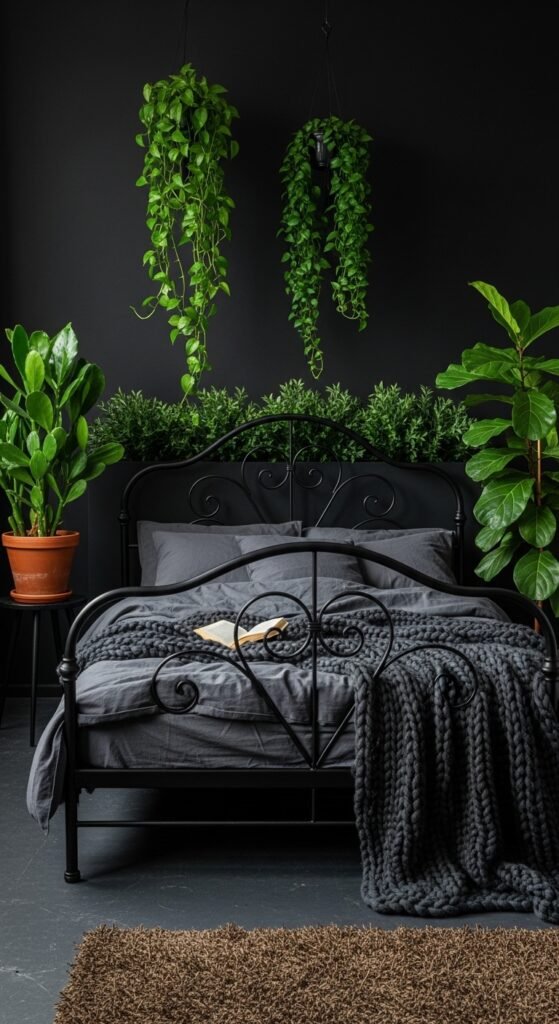
The contrast between the organic, chaotic shapes of the leaves and the rigid, dark architecture creates a dynamic visual tension. To keep it livable, incorporate natural wood furniture, such as a walnut bed frame or rattan side tables. The wood tones bridge the gap between the living plants and the dark walls, ensuring the room feels warm rather than sterile.
Pro Tip: Dust on plant leaves is highly visible against black walls. Wipe leaves weekly with a microfiber cloth and a drop of neem oil for a glossy shine.
Emerald Accents
If you aren’t ready to paint your walls black, this approach flips the script. Start with a neutral or soft gray base and introduce black and green through furniture and textiles. A statement bed frame in black velvet or blackened metal serves as the anchor. Layer this with bedding in rich, jewel-tone emerald. The deep green fabric against the black furniture creates a look of instant luxury, reminiscent of high-end boutique hotels.
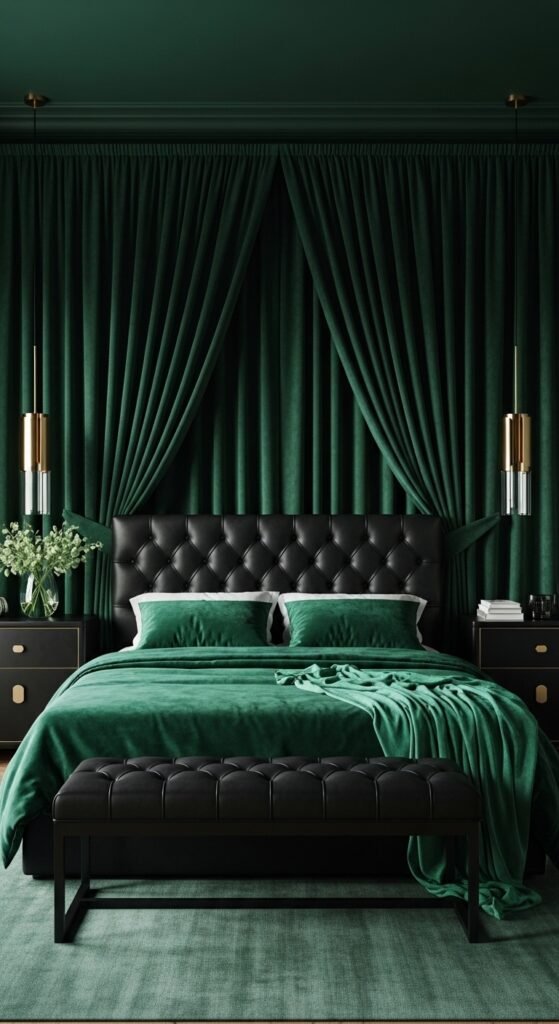
This style relies on the sheen of the materials. Velvet absorbs light in a way that makes colors look deeper and more expensive. Pair these heavy fabrics with metallic touches, specifically brushed brass or gold. A gold bedside lamp or a brass mirror frame will catch the light and break up the visual weight of the dark furniture.
Pro Tip: Use “European shams” (large square pillows) in black velvet behind your standard emerald pillows to create depth on the bed.
Monochrome Magic
Monochrome doesn’t have to mean black and white. In this concept, you explore the entire spectrum of green, using black only as a defining outline. Imagine walls painted in a mid-tone moss green, with darker forest green bedding and lighter sage throw blankets. The black comes in through the trim, baseboards, and window frames. Painting the architectural details black acts like eyeliner for the room; it sharpens the edges and defines the space.
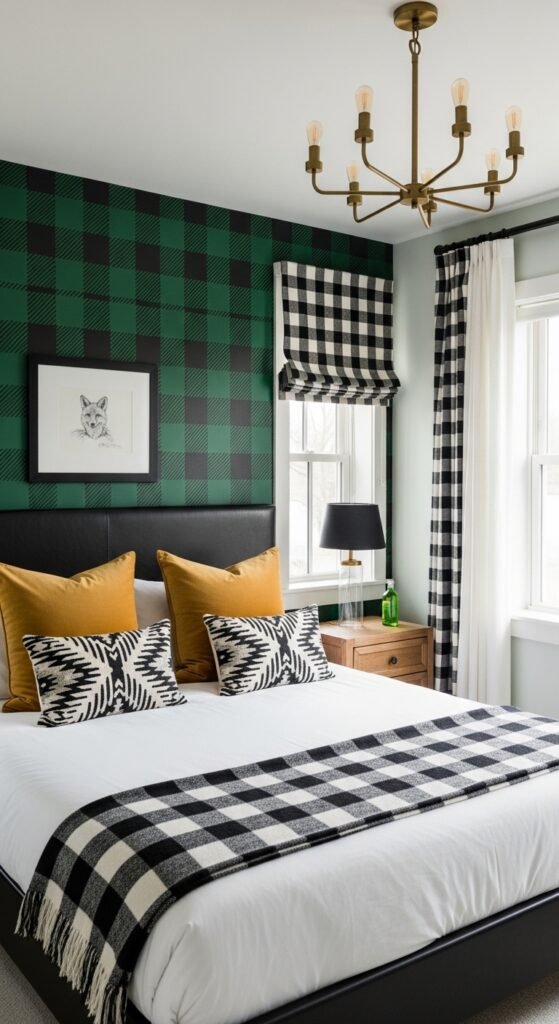
This technique is excellent for historic homes with interesting molding. The black trim draws attention to the craftsmanship while the green walls keep the atmosphere soothing. It is a sophisticated way to use color that feels intentional and architectural rather than just decorative.
Pro Tip: Use a semi-gloss finish for the black trim and a flat matte finish for the green walls to maximize the contrast in texture.
Forest Noir
Forest Noir is about total immersion. This design involves “color drenching,” where the walls, baseboards, and even the ceiling are painted in a deep, near-black forest green. This blurs the boundaries of the room, making small bedrooms actually feel larger because the corners disappear in the shadows. The furniture should be matte black to blend seamlessly into the surroundings, creating a sleek, built-in look.
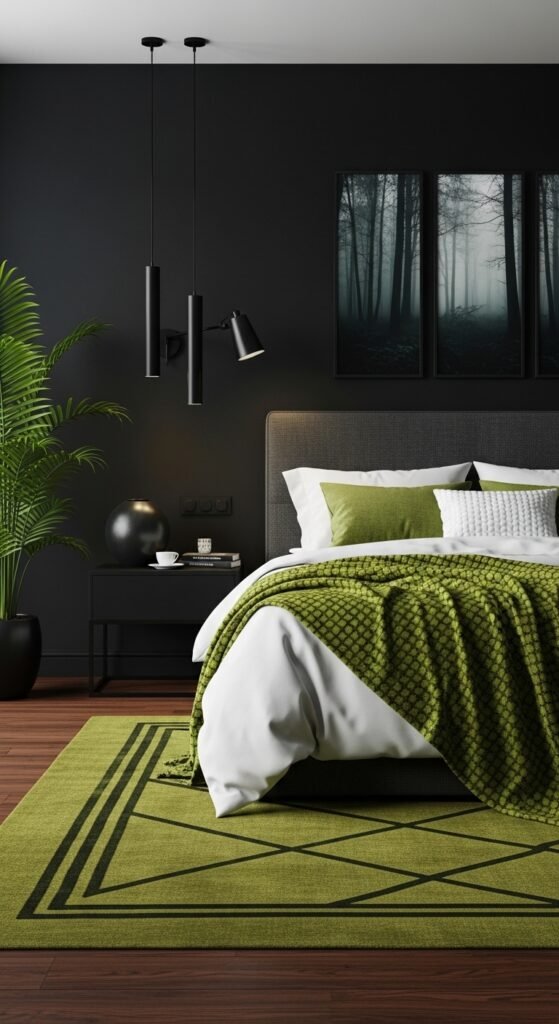
To prevent the room from feeling claustrophobic, lighting is critical. Use warm, ambient lighting that glows rather than shines directly. Sconces with amber-tinted glass or hidden LED strips under the bed frame can create a magical, twilight forest atmosphere. The lack of high contrast allows your eyes to rest completely, making this one of the best choices for insomniacs.
Pro Tip: Save this idea to your Pinterest if you love moody, sleep-inducing spaces.
Gothic Glamour
Gothic Glamour embraces the drama of the Victorian era but updates it for the modern eye. Think intricate wallpapers featuring dark botanical prints—entwined vines, ferns, or florals on a black background. This style is not afraid of ornamentation. A black chandelier with green crystal drops or a vintage tufted armchair in dark jade velvet fits perfectly here.
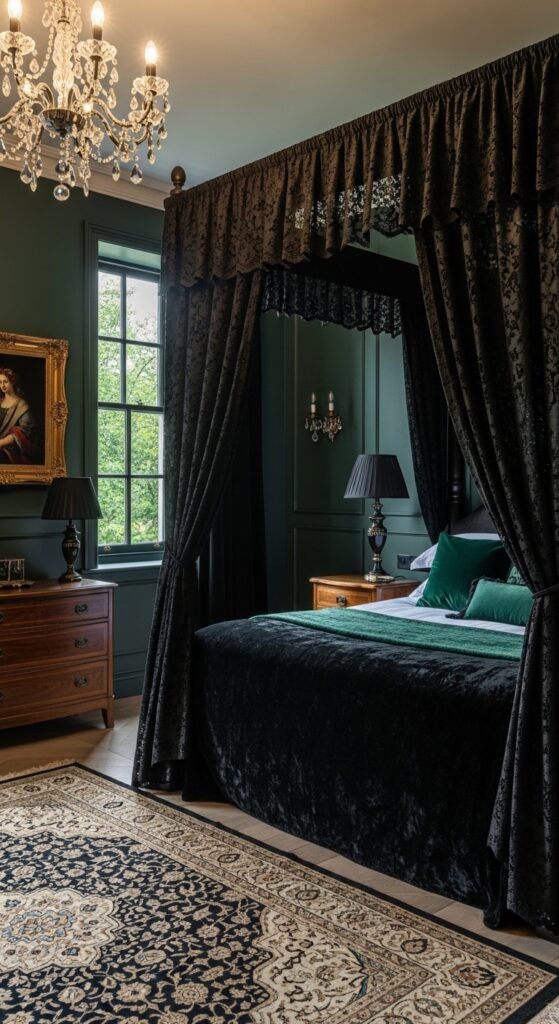
The key to keeping it from looking like a Halloween set is the quality of the materials. Avoid cheap plastics; opt for solid wood, glass, and heavy fabrics. A large, ornate black mirror leaning against a dark green wall adds grandeur and reflects light to brighten the dark palette. This style tells a story of romance and mystery.
Pro Tip: Scour antique shops for vintage brass picture frames. The patina of old metal looks stunning against dark gothic floral wallpaper.
Comparison: Matte vs. Gloss Finishes
| Feature | Matte Finish (Flat) | Gloss Finish (Satin/High-Gloss) |
|---|---|---|
| Visual Effect | Absorbs light; creates a velvety, soft look. | Reflects light; creates energy and drama. |
| Best For | Hiding wall imperfections; creating a “cozy” vibe. | Highlighting architectural details (trim, doors). |
| Maintenance | Harder to clean; scuffs easily. | Easy to wipe down; durable. |
| In This Trend | Use on walls (Black or Green) for depth. | Use on furniture or trim for contrast. |
Art Deco Luxe
The Art Deco movement of the 1920s loved bold contrast, and nothing is bolder than black and malachite green. This style uses geometric shapes and sharp lines. Look for wallpaper with gold geometric fans or hexagons on a black background. Pair this with a curved, shell-shaped headboard in rich green velvet.
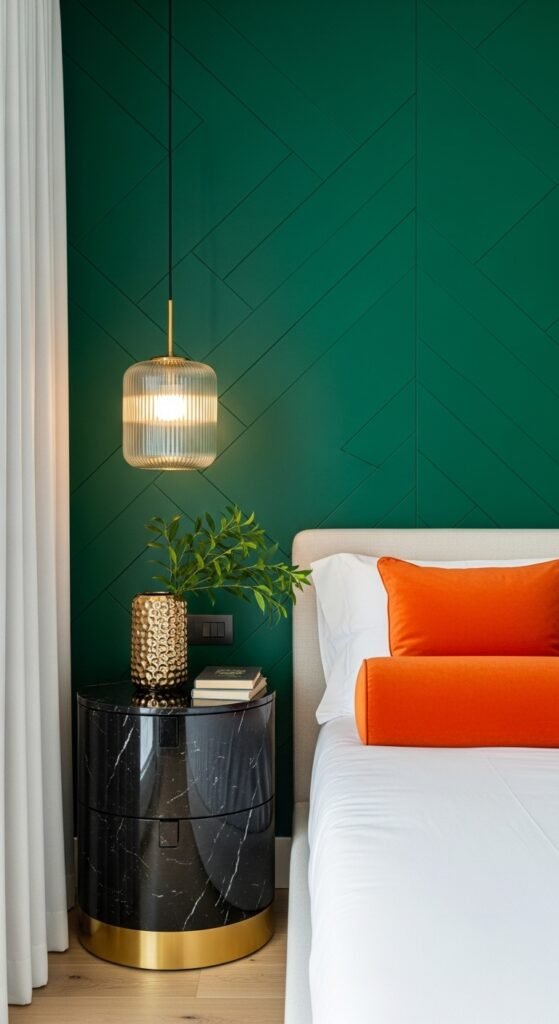
The flooring plays a huge role here. A black and white checkered rug or a dark wood floor with a geometric green runner sets the stage. Furniture should have sleek lines and glossy finishes—think black lacquer nightstands with gold handles. This is a high-energy, glamorous look that feels tailored and expensive.
Pro Tip: Symmetrical placement of lamps and nightstands is crucial for the Art Deco look. It creates a sense of order and grandeur.
Earth Meets Metal
This design strips away the glamour for a raw, grounded aesthetic. It pairs organic, muddy greens (like olive or army green) with industrial black metal. Think of a black iron pipe bed frame set against a textured lime-wash wall in olive green. The texture of the lime wash adds movement and an “imperfect” beauty that feels very human and approachable.
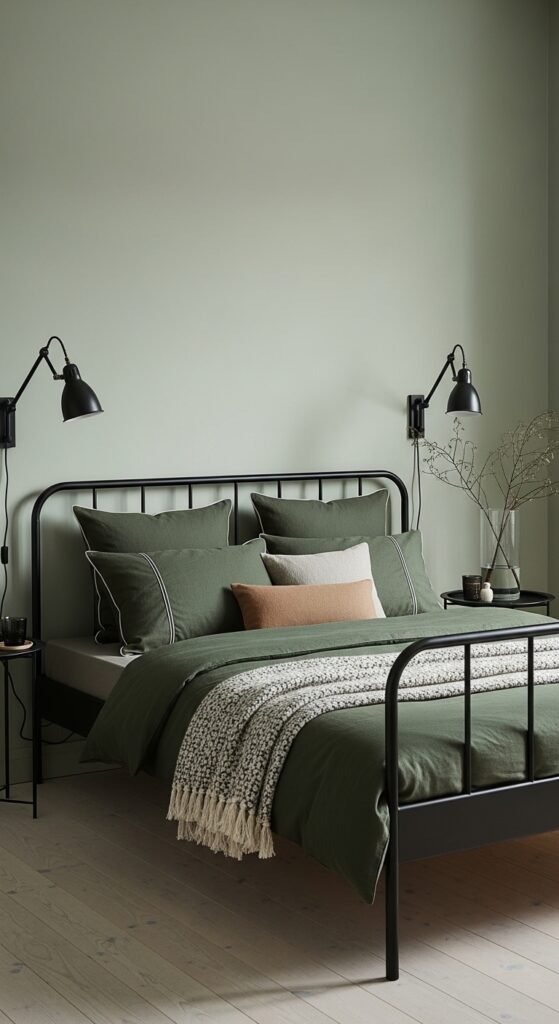
Accessories should be raw and natural. A chunky knit wool blanket in charcoal, a leather chair in a cognac or black finish, and unpolished concrete planters complete the look. This style is masculine, sturdy, and unpretentious, focusing on the honesty of the materials rather than decoration.
Pro Tip: Use warm-toned Edison bulbs in your exposed metal light fixtures to counteract the coolness of the black metal.
Botanical Burst
Unlike the “Urban Jungle” which uses real plants, Botanical Burst focuses on artistic representation. The centerpiece is often a large-scale mural or oversized wallpaper print featuring giant tropical leaves or forest scenes on a black backdrop. This becomes the focal point of the room, usually behind the headboard.
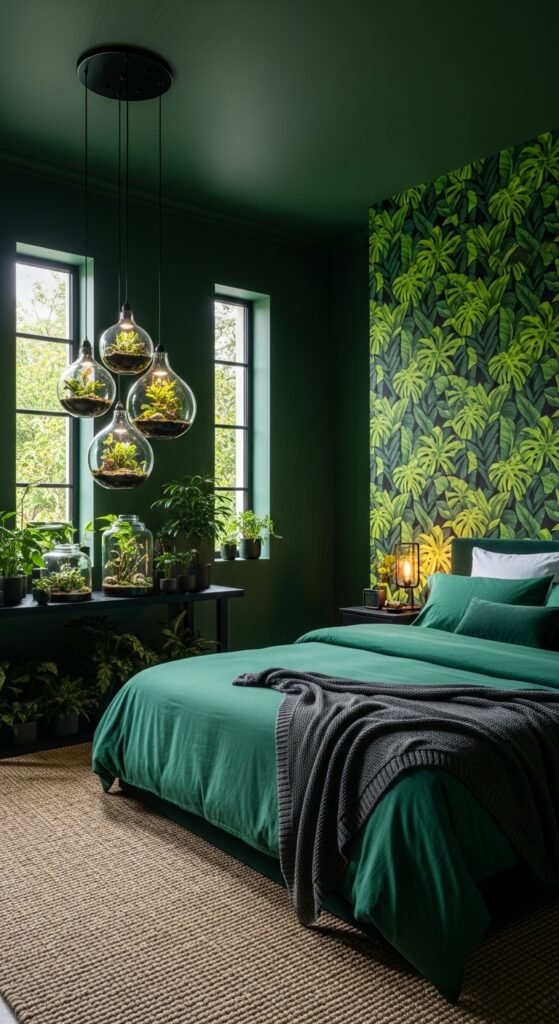
Because the wall is so busy, the rest of the room should be relatively quiet. Solid black bedding with green piping, or vice versa, keeps the focus on the art. This is a fantastic solution for renters who want a dramatic change without painting the entire room; peel-and-stick murals are easy to install and remove.
Pro Tip: If you use a busy botanical wallpaper, choose solid-colored curtains that match the darkest green in the print to frame the window without clashing.
Vintage Velvet
Texture is the main character in this bedroom idea. Velvet absorbs light, which makes dark colors feel incredibly soft and inviting rather than harsh. A floor-to-ceiling tufted velvet headboard in deep emerald acts as soundproofing and a visual anchor. Pair this with heavy black velvet drapes that pool slightly on the floor for a sense of decadence.
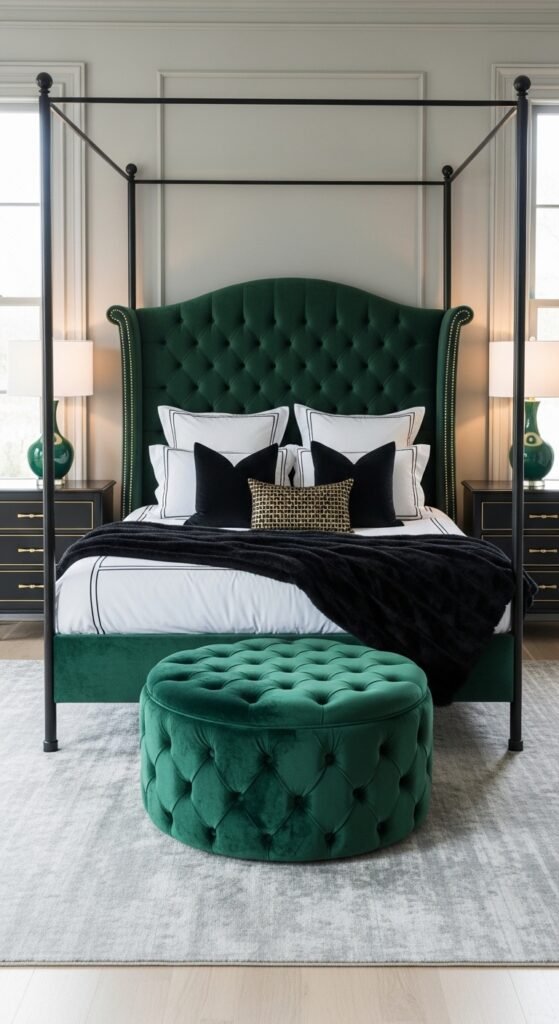
To keep the room from feeling too heavy, mix in lighter vintage elements like a distressed Persian rug with hints of cream and faded green. A vintage wooden dresser painted matte black with original brass hardware adds history and soul to the space.
Pro Tip: Velvet attracts dust and pet hair. Keep a lint roller in your nightstand drawer to keep your headboard looking pristine.
Industrial Envy
Industrial design often leans on brick and gray, but green and black offer a fresh twist. If you have exposed brick, consider painting it a semi-gloss black. This preserves the texture but modernizes the look. Contrast this with industrial green metal furniture—like a vintage locker used as a wardrobe or a green metal filing cabinet repurposed as a nightstand.

Lighting should be functional and metallic. Black track lighting or pendant lights with metal cages fit perfectly. The bedding should be simple linen in a softened, washed-out green to balance the hardness of the industrial elements. It is a look that feels creative, young, and edgy.
Pro Tip: Use a “warm white” smart bulb in industrial fixtures so you can dim the lights. Industrial spaces can feel cold if the lighting is too harsh.
Get The Look: The Moody Essentials
- The Paint: Sherwin Williams “Greenblack” (A chameleon color that shifts between black and deep green).
- The Fabric: Performance Velvet (Durable, easy to clean, and luxurious).
- The Metal: Antique Brass (Adds warmth to cool dark tones).
- The Plant: Snake Plant (Thrives in low light, looks sculptural against dark walls).
- The Light: Smoked Glass Sconces (Diffuses light for a moody glow).
Serenity Suite
For those who find high contrast too stimulating, the Serenity Suite offers a softer approach. Use a pale, dusty sage green for the walls—a color known to lower blood pressure and reduce anxiety. The black elements here are thin and delicate: thin black picture frames, a slender black curtain rod, or a black line-drawing art print.
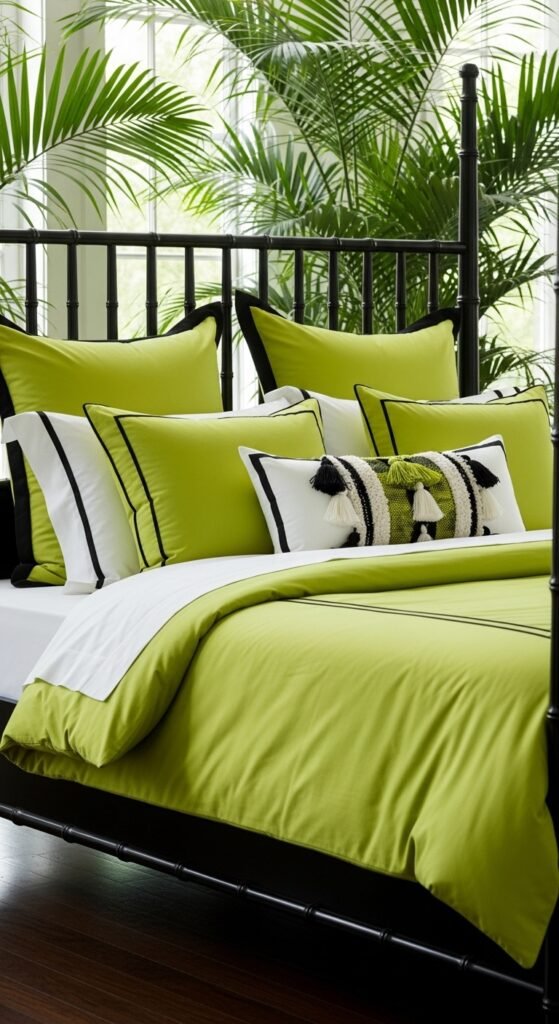
The black acts as a grounding wire, preventing the pastel green from floating away or looking like a nursery. The bedding should be a mix of white and sage, keeping the overall value of the room light and airy. This is the perfect “black and green” compromise for small rooms with limited natural light.
Pro Tip: Add a black-and-white striped throw pillow. The pattern adds a touch of Parisian chic to the soft sage palette.
Minimalist Mocha Mix
Black and green can sometimes feel cold. The solution? Add brown. This triad—Black, Green, and Mocha—is earthy and rich. Start with black walls, but layer in a leather headboard in a deep mocha brown. Use bedding in an olive green linen. The brown leather warms up the black, while the green connects the two.
This style relies on natural materials. A jute rug, a wooden bench at the end of the bed, and unglazed pottery on the dresser add texture. It is a “sophisticated cave” vibe that feels masculine and cozy. It avoids the sterility of pure black minimalism by introducing the warmth of earth tones.
Pro Tip: Save this idea to your Pinterest if you love earthy, grounded interiors.
Regal Refinement
This style is not for the faint of heart. It involves high-gloss, lacquered walls. When you paint a wall in high-gloss black or deep emerald, it becomes reflective, almost like a mirror. This bounces light around the room in a fascinating way, making the space feel expansive and liquid.
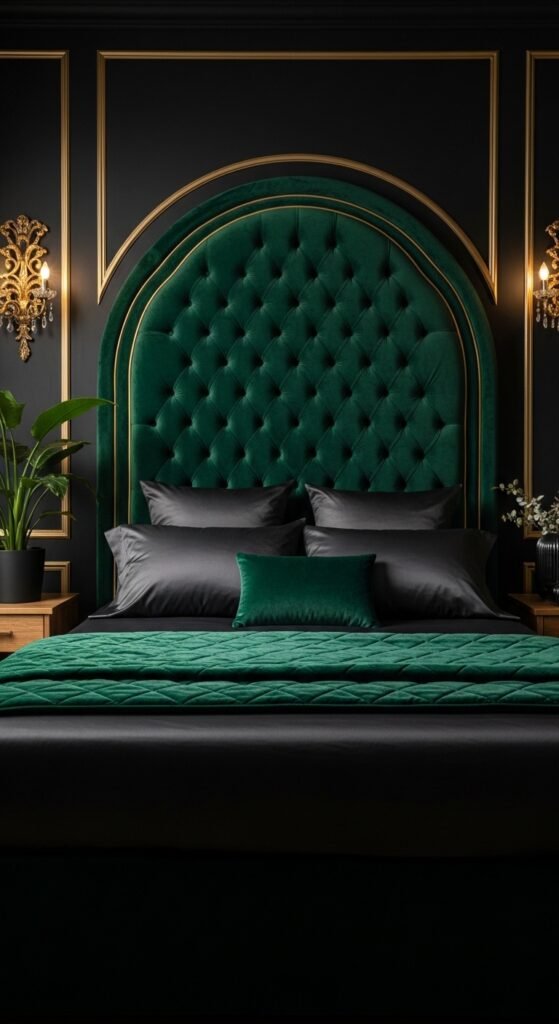
Pair these glossy walls with matte fabrics to create contrast. A matte velvet bed in the opposing color (green bed on black walls, or vice versa) looks stunning. This look is high-maintenance because gloss shows every imperfection in the drywall, but the payoff is a room that looks like a jewelry box.
Pro Tip: High-gloss paint requires perfect wall preparation. Consider hiring a professional skim-coater before attempting this look.
Whimsical Wilderness
This is a playful, storybook take on the color scheme. Think of enchanted forests and fairytales. Use a mural that depicts a foggy forest scene with black tree trunks and misty green canopies. The furniture can be eclectic—perhaps a painted green dresser with mismatched knobs or a black iron bed with a canopy.
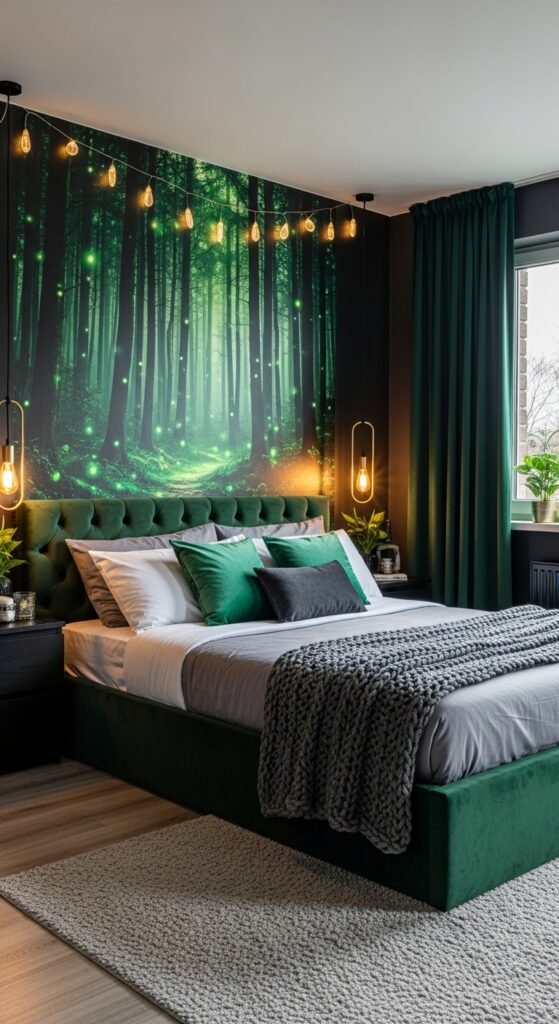
Lighting plays a huge role in the “whimsy.” String lights, moon-shaped lamps, or a projector that casts stars on the ceiling add to the magic. This style allows for more clutter and “treasures” on display, making it feel personal and lived-in.
Pro Tip: A canopy or mosquito net over the bed adds instant height and drama, enhancing the “sleeping in a forest” vibe.
Nordic Nights
Scandinavians know how to handle dark winters. The “Nordic Nights” style combines the coziness of Hygge with a dark palette. The walls are a deep, matte pine green. The floor is often painted white or light wood to bounce light. The bedding is strictly black and charcoal gray, but in layers of wool, linen, and sheepskin.
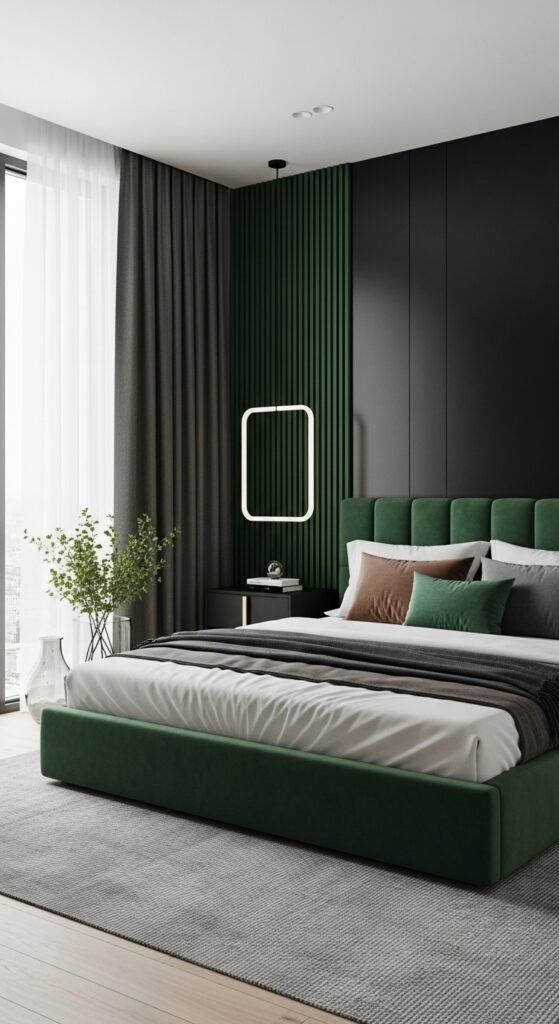
The contrast comes from the texture rather than the color. A chunky knit black throw on a smooth green duvet creates visual interest. Furniture is minimal, functional, and low to the ground. The lack of clutter is essential; every object must be beautiful or useful.
Pro Tip: Candles are essential for the Hygge vibe. Group varying heights of white pillar candles on a black tray for a safe, cozy glow.
Comparison: Paint vs. Wallpaper
| Feature | Paint (Accent Wall) | Wallpaper (Patterned) |
|---|---|---|
| Cost | Low ($30-$60). | Medium to High ($100-$500+). |
| Installation | DIY friendly; easy to correct. | Requires patience; pattern matching is tricky. |
| Impact | Creates a solid mood/atmosphere. | Adds art, narrative, and texture. |
| Flexibility | Easy to paint over if you change your mind. | Removal can be tedious (unless peel-and-stick). |
Chic Clover Charm
This style uses a brighter, punchier green—like clover or kelly green—against stark black. It is energetic and preppy. Imagine a black and white striped rug, white walls, and a bold kelly green upholstered headboard. The black appears in high-contrast accessories: black lampshades, black lacquered side tables, and black trim.
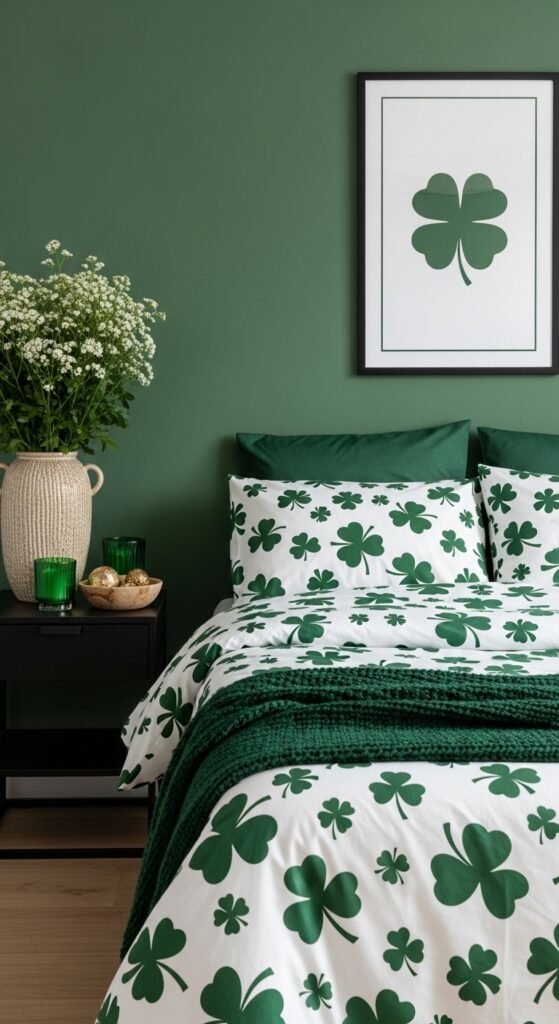
This look is crisp and clean. It wakes you up in the morning rather than lulling you to sleep. It works exceptionally well in guest bedrooms where you want to make a cheerful, stylish impression without being too somber.
Pro Tip: Fresh white flowers (like tulips or hydrangeas) in a black vase look incredible against the bright green accents.
Abstract Atmosphere
Treat your bedroom like a modern art gallery. The walls might be white or soft gray, serving as a canvas for massive abstract art pieces featuring black and green splashes. The bedding pulls colors from the art—perhaps a black duvet with abstract green throw pillows.
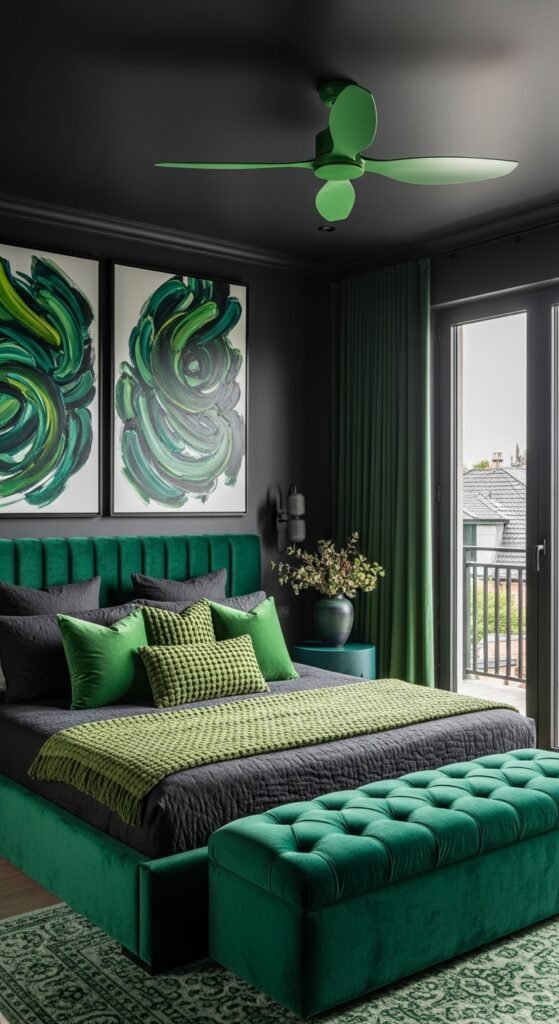
The furniture should be sculptural. A weirdly shaped green armchair, a geometric black side table, or a rug with an irregular shape. This style is about breaking rules and creating a space that stimulates creativity. It is less about “cozy” and more about “inspiring.”
Pro Tip: If you can’t afford large art, buy a large canvas and DIY your own abstract black and green painting. It’s a fun weekend project that perfectly matches your room.
Textured Tranquility
If you are afraid of color, focus on texture. Keep the room monochrome black, but introduce green through subtle, natural textures. A woven seagrass rug dyed green, a rough-hewn green stone bedside table, or a blanket made of green boucle yarn.
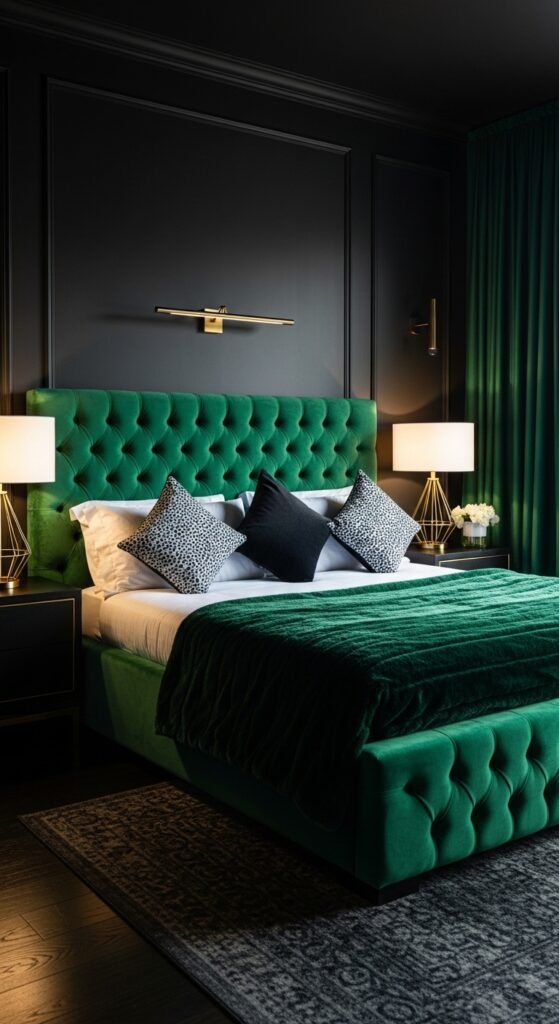
The variation in surface feel—rough, smooth, soft, hard—keeps the eye moving even without bold color contrast. This is a very sophisticated, tactile approach to design that feels expensive and curated.
Pro Tip: Layer rugs. A large flat-weave black rug with a smaller, fluffy green sheepskin rug on top creates an inviting spot to step out of bed.
Contemplative Caves
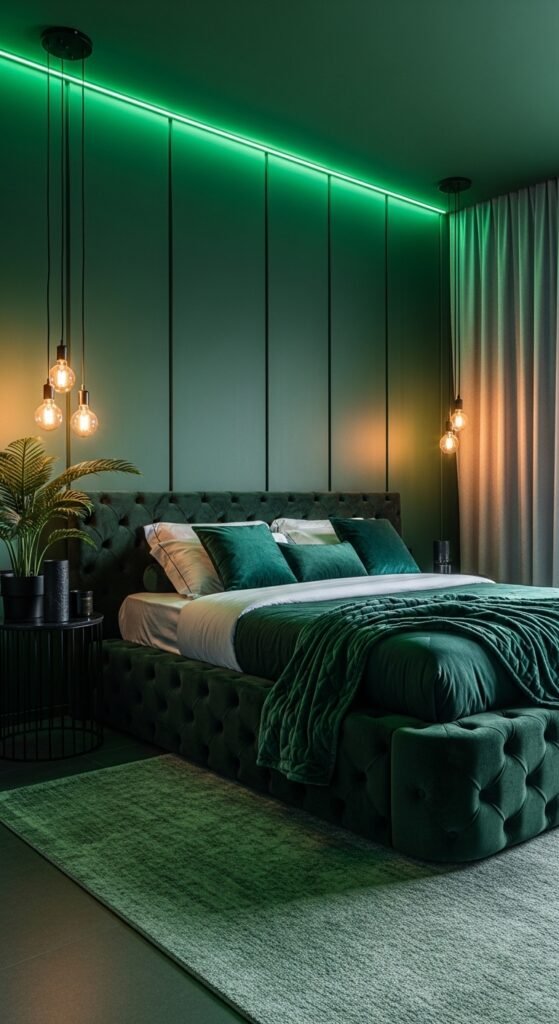
This is the ultimate introvert’s bedroom. It involves painting the walls, ceiling, trim, and doors in the same shade of black. The green is introduced solely through lighting—green LED strips under the bed, behind the headboard, or in a cove ceiling.
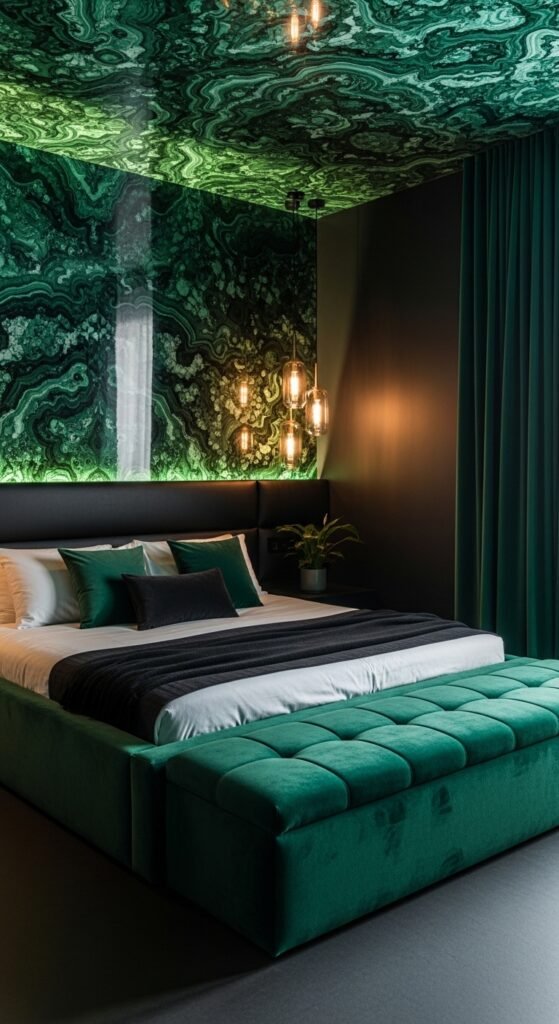
This creates a futuristic, floating effect. The room feels disconnected from the outside world, a true escape pod. It is fantastic for gaming setups or for people who work night shifts and need total darkness to sleep during the day.
Pro Tip: Install a dimmer switch. Being able to control the intensity of the green light changes the mood from “sci-fi” to “subtle glow.”
Futuristic Flora
Combining the “Contemplative Cave” with “Urban Jungle,” this style mixes tech and nature. Think smart gardens with grow lights (which often cast a purple/white glow) set against black walls. Use neon signs in green (e.g., a monstera leaf shape) as art.
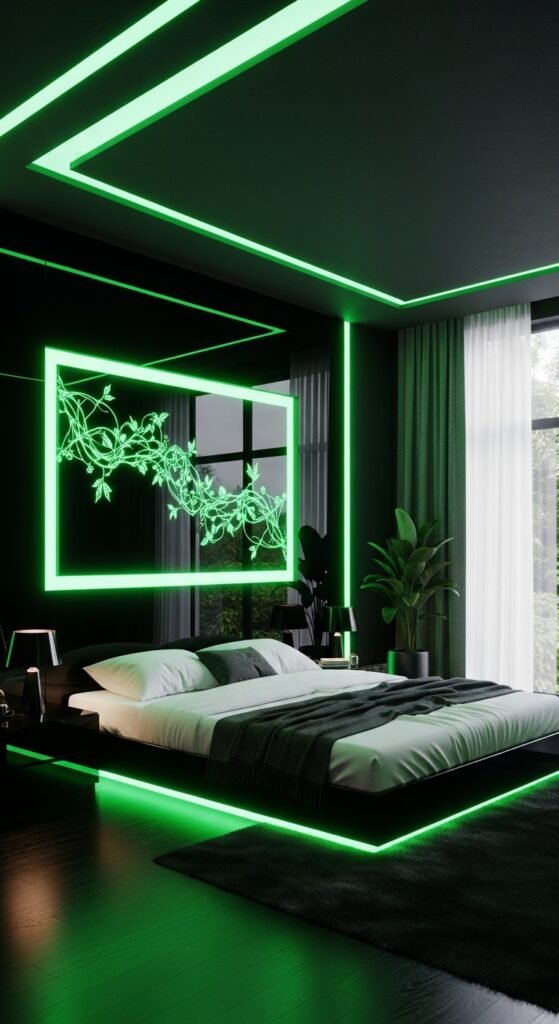
The furniture is sleek, modern, and perhaps acrylic or glass to let the light pass through. It is a cyberpunk aesthetic that feels young and vibrant. It celebrates the contrast between the artificial light and the natural plant forms.
Pro Tip: Use smart plugs for your neon lights and grow lights so they automatically turn off when it’s time to sleep.
Popular Asked Questions
Is black and green a good color combination for a bedroom?
Yes, absolutely. In color psychology, green is the most restful color for the human eye, representing nature and safety. Black represents depth and silence. Together, they create a space that feels enclosed, safe, and deeply relaxing. It is a perfect antidote to the high-stress, bright-screen world we live in.
What colors go with black and green in a bedroom?
To balance the darkness, Gold and Brass are the best metallic accents as they add warmth. Crisp White works well if you want high contrast and a modern look. For a moodier, earthier vibe, Mustard Yellow, Burnt Orange, or Mocha Brown are excellent choices. Dark Wood tones (like walnut) also complement this palette beautifully.
How do I make a small bedroom look good with black walls?
The myth that dark colors make a room look smaller is only half true. Dark colors blur the edges of a room, which can actually make the space feel limitless. The trick is to paint the ceiling the same dark color as the walls so the eye doesn’t know where the wall ends. Also, use large mirrors to reflect light and create a “window” effect.
Is black bad feng shui for a bedroom?
Not necessarily. While traditional Feng Shui advises against all-black rooms (too much Yin/Water energy can lead to lethargy), balancing it with Green (Wood element) creates a productive cycle. Water feeds Wood, symbolizing growth and vitality. As long as you have good lighting and balance the dark with soft textures, it can be a very harmonious space.
Conclusion
The black and green bedroom trend is more than just a fleeting aesthetic; it is a shift towards embracing our homes as personal sanctuaries. By stepping away from the safety of beige and diving into the depth of forest tones and midnight hues, you create a space that wraps around you at the end of the day.
Whether you choose the biophilic route with an Urban Jungle or the sleek path of Art Deco Luxe, the key is confidence. Paint that wall, buy that velvet duvet, and enjoy the rich, restorative atmosphere you have created.
Which of these moody styles would you dare to try in your own home? Let us know in the comments below!
Follow us on Pinterest for more black and green bedroom ideas inspiration.